
Under the provisions of the Constitution, the Secretary of State was directed to commission the surveying of each county in the state to determine the exact geographic center of each county. Then, measurements were madetodetermineifthetown named in the Constitution as the county seat was within six miles of the geographic center. If so, that town received the supermajority vote protection spelled out in the Constitution unless the challenging town was one mile closer to the geographic center. The measurements were to be made from the geographiccentertothenearest town or city limits of the county seat and the competing town as those boundaries existed on January 21, 1907. This prevented towns from annexing more land to expand their boundaries and changing the votes needed in an election. On May 5, 1908, Secretary of State William Cross certified a map of Marshall County, designating the geographic center as a spot about “130 feet east of the quarter section corner between Sections 15 and 25” of Township 6, South, Range 5, East of the Indian Meridian. The map also showed the exact spot and then the measurements to the nearest corporate limits of Madill and Kingston. For those wondering where that spot is located, it is 2.5 miles due south of the intersection of Highway 70 andHighway70F,thenabout 130 feet east of Highway 70F. According to the Secretary of State’s official map, in 1908, Madill was precisely four miles from the geographic center of Marshall County, and Kingston was 2.62 miles from the geographic center. This meant that to move the county seat from Madill, Kingston only needed a vote of fifty percent plus one to prevail. This was a significant problem for Madill. The determination that Kingston was 1.38 miles closer to the geographic center meant the odds that Kingston could prevail in the election were much higher. The difference between a simple majority and a super-majority vote was 2,059 feet.
Because Kingston was over one mile closer to the geographic center of Marshall County than Madill, this triggered the “simple majority” rule in the Oklahoma Constitution instead of the 60 percent super-majority rule. This change in vote requirements greatly concerned the Madill supporters. It meant the odds of Kingston prevailing were substantially higher than if a super-majority was required.
Because of this, the Madill supporters began attempts to refute the “official” map certified by Oklahoma Secretary of State Bill Cross. In one newspaper article it was declared: 'We, the people of Madill refuse to accept the official map of Marshall County, made under the supervision of Bill Cross, Secretary of State, and sworn by him to be correct.”
The article stated: 'We hired private parties to make maps of Marshall County for the benefit of Madill, which were compiled from public records and 'other reliable sources.'
In a separate article in the Marshall County Democrat, the editor stated the following. “TALKING ABOUT MAPS. Why did the Messenger leave its map out of last week's issue? The Messenger has proclaimed publishing it an 'OFFICIAL' map and warned the public against ALL other maps. Yet, this Kingston 'official' map does not show any place except the gee-o-GRAFT-ic-al center, Kingston and Madill.
“Are there no other towns or places in Marshall county? There are other towns in Marshall county. The “official” Kingston map does not consider them towns worth mentioning.Woodville,Lebanon, Cumberland, McMillan, Aylesworth, etc., you are too insignificant to appear on Kingston's 'official' map.
Oh! Kingston how could you? You, who profess so much love and affection for the 'small' town, you, who pour out such gobs of taffy to the 'sun-brown-ed” farmers. How could you?”
“The Kingston county seat 'sweaters' must be so absorbed in the importance (?) of their own little 'burg,' they can see no other place in Marshall county, except the gee-o-GRAFT-ic-al center.
“A man named Peckham, in Oklahoma City, made the 'official' Kingston map. Secretary Bill Cross couldn't make a map in a year. The first map Peckham made located the town of Kingston just one mile nearer the 'geographical' center than Kingston really is, or than it now appears, on the 'official' Kingston map.
Secretary Cross certified the correctness of this first map, notwithstanding the glaring error therein. But Secretary Cross was not to blame, for he knows nothing about maps or map making. Then, too, he may have been furnished with information not strictly 'OFFICIAL.'
Madill people pointed out the error in Mr. Peckham's first map to Secretary Cross and showed him the official record to prove the error. Then Mr. Peckham changed his map to conform with the record, and then Secretary Cross certified it again, and then Kingston proclaimed it 'official,' and now the Messenger refrains from publishing it.”
The Madill News had a slightly different take on the “map” controversy when the editor wrote the following. “Speaking of maps and the Messenger's ever-ready injunction to guard against every map except Bill Cross' official map, we know a funny little story about Kingston and two maps.”
“We can't tell the whole tale, but map No. 1 had Kingston located one mile further west, thereby representing her nearer the center ofthecountyandonemilefurther from the Washita. Now, for reasons which, perhaps, the Messenger would rather we would not tell, map No. 1 did not appear, and No. 2 appears without a railroad town, or anything else, except Kingston, Madill and the geographical center.”
“Of course no one doubts Kingston's sincerity in this matter of maps, or anything else she has done so crookedly, It is just a matter of ignorance, and one to be looked over as the faults of a wayward child. We just want the people to know that the reformed man is sometimes the greatest howler about keeping the records straight. See?
ThemapthattheMarshall County Democrat and the Madill News relied upon was amapthatwascompiledfrom records of the United States Survey and the Federal Land Offices of Tishomingo and Ardmore. In a statement issued within the pages of the Marshall County Democrat, it was stated as follows.
“WE, THE PEOPLE OF MADILL, take this occasion to present to the whole people of Marshall County, a county map, which has been compiled from the records of the United States survey, the Federal land offices at Ardmore and Tishomingo, and other reliable sources.
We ask a careful study of this map and the statement of facts herewith, in connection with the contest for the re-location of the County Seat, brought on by some of the people of Kingston. The geographical center of the county is situated in section 15, township 6 south range 5 east. It is 4 miles south of Madill, and 22-3 miles northwest of Kingston.”
“According to the United States census taken in September, 1907, the center of population is in section 4, township 6 south range 5 east. It is about 1 1-4 miles south of Madill, and quite six miles northwest of Kingston. Madill has two railroads, one running east and west, the other running north and south through the entire length and breadth of our county. Kingston has but one railroad. The railroads entering Madill serve efficiently a very large percentage of the 8000 people living north of a line drawn east and west through the geographical center of our county.
Owing to Kingston's isolated location, her railroad serves but a very small percentage of the 5300 people living in the south half of the county. Six railroad stations north of a line drawn east and west through the geographical center of the county, give the people of our countyample,easyandcheap transportation to and from Madill. There is but one railroad station (Woodville), from which people living in our county can reach Kingston unless they pass through Madill.
The U. S. census of 1907 shows 1587 people living in the town of Madill. Of this number, 425 are males over 21 years of age and voters. The same census shows 2127 people living in Willis Township, which embraces a large part of the south half of our county, including the town of Kingston. Of this number, 492 are males over 21 years and voters. Thus, Madill town has within 67 as many voters as the whole of Willis township, including the town of Kingston. Madill township comprises less than 1 square mile. Willis Township comprises more than 100 square miles. When we add the 2685 people in Taliaferro township, of whom 618 are males over voting age to Madill's population, we have 4272 people, of whom 1043 are of voting age, living within a radius of 5 miles of Madill. When we consider that this population and voting strength is within a fraction as large as the whole population of the south half of our county, the claim that Kingston is the more available place for our county seat becomes ridiculous.”
In response to these articles, the Kingston Messenger wrote the following. “A CAMPAIGN LIE. Madill henchmen are making the false charge that the official map of Marshall County, the correctness of which is certified to by Secretary of State, Bill Cross is wrong; that it shows Kingston to be one mile nearer the geographical center of the county than it really is; that Barlow Roberts 'undoubtedly' put up money to secure Bill Cross' signature to this map.
Bill Cross and Barlow Roberts are gentlemen of the highest integrity; their namesaresynonymsofhonor among all people who know them; they are perfectly incapable of being parties to any dishonorable act or deed. The Messenger denounces these charges as slanderous, campaign lies.
We are in possession of a sworn statement by an honest farmer that a Madill henchman gave utterance to these lies, and, the same is ready for publication.”
In a different article, the Kingston Messenger added more. “In attempting to mislead the people, both the Madill News and Marshall CountyDemocratstatedthat the geographical center of Marshall County 'is 4 miles south of Madill and 22.3 milesnorthwestofKingston.' What is the matter with those Madill fellows, are they crazy or do they believe the people of this county are fools? The official map, the correctness of which is sworn to by Secretary of State, Bill Cross, shows the geographical center of the county to be 2.62 miles northwest from Kingston.”
“If this false statement had appeared in just one of the Madill papers, or if a correction had been made the following week by either of the papers, the Messenger would have considered it as a possible error, but the fact that it was published in both papers and no correction made by either, it is sufficient to justify anyone in believing it was done by design for the sole purpose misleading the people, which is in keeping with Madill campaign tactics.”
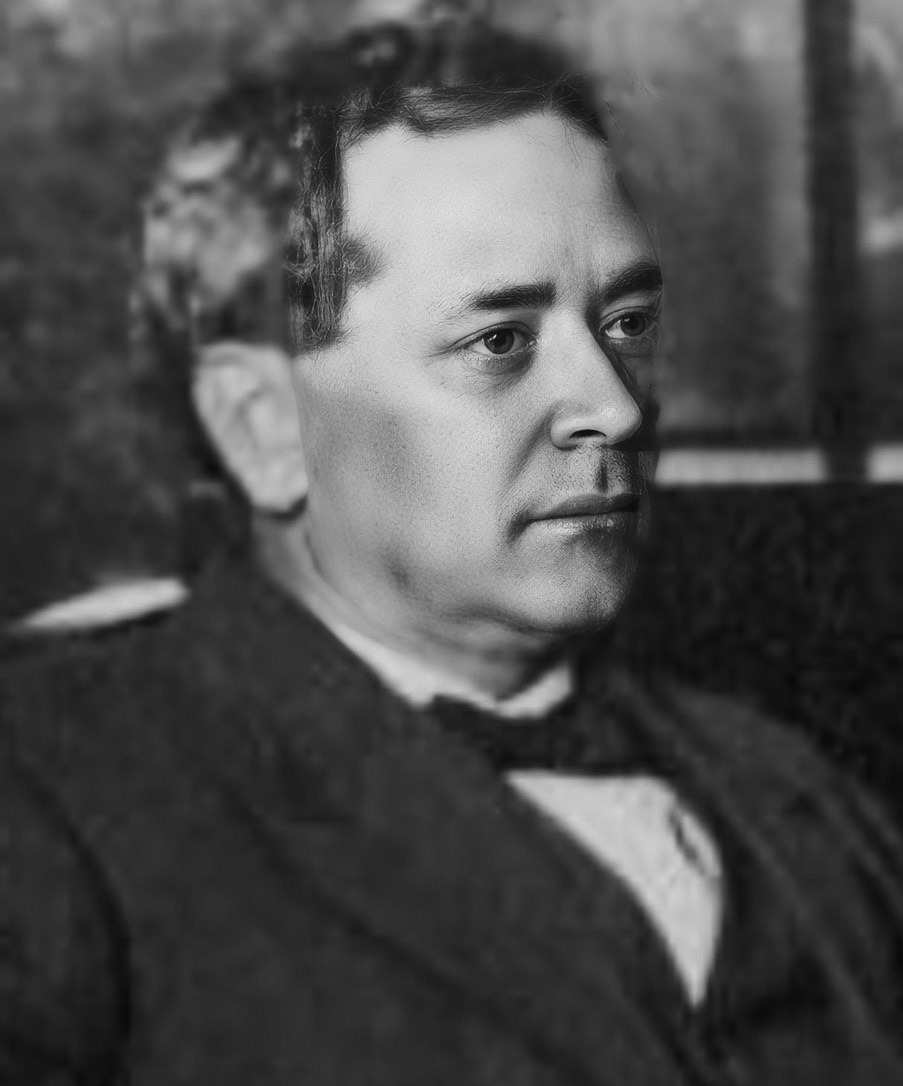
At this point, the campaign between Madill and Kingston had devolved into personal attacks on state officials and local citizens. As I previously reported, Secretary ofStateWilliamMacklin “Bill” Cross was considered, by all, a very honorable man. He was born in McNeary County, Tennessee, on July 4, 1847. At fourteen, he entered the Confederate Army and served as a drummer in Company K, One Hundred and Fifty-fourth Tennessee Regiment. His father was also a Colonel in the same company, and the two served together until his father was killed in the Battle of Shiloh, also known as the Battle of Pittsburg Landing. This was a significant battle in the American Civil War, fought on April 6–7, 1862. The fighting occurred in southwestern Tennessee, part of the war's Western Theater.
During the Battle of Shiloh, Bill Cross was wounded and captured by the Union Army. He was eventually released in a prisoner exchange, and he returned to the front line, serving in the army of General Joseph E. Johnston.
After the war, Cross entered Kentucky University in Lexington, Kentucky, but he only studied for one year and left the university for financial reasons. He then began working in a dry goods store and became a traveling salesman. It was during this time that Cross moved to Oklahoma.
Cross entered the political arena in Oklahoma and was nominated for delegate to Congress in 1902, but was defeated. He was then nominated as the democrat candidate for secretary of state and was elected as Oklahoma’s first Secretary of State in September of 1907 when the constitution was ratified. He died in office on August3,1910,afterwinning the 1910 Democrat primary for Oklahoma State Auditor.
Until the fight between Madill and Kingston, no one had questioned Bill Cross's integrity. But discrediting the official map, certified by Cross, was necessary for the Madill supporters to affect the issue of the number of votes needed to move the county seat from Madill to Kingston.
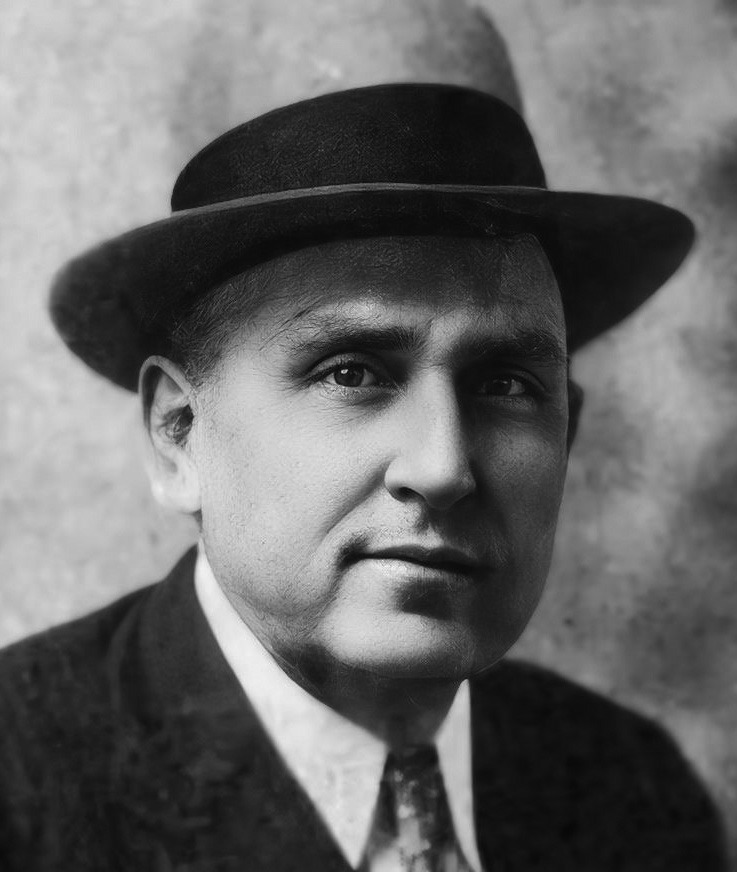
Barlow Roberts, the other man accused by the Madill supporters of playing a role in the map controversy, was also a highly respected man until the county seat fight. Roberts was in Kentucky Town, Grayson County, Texas, on February 10, 1868.
Around 1900, Roberts moved to Indian Territory and began working in the banking business. He was the first cashier for the First National Bank of Helen, later Kingston. He then became president of the First National Bank of Kingston. Over the next few years, he was the president of the Marshall County State Bank of Kingston and the Madill State Bank.
In July 1907, the Oklahoma ConstitutionalConvention appointed Barlow Roberts, Homer Moss and David Russell as the first County Commissioners of Marshall County. He served in that position through statehood and for a few more years.
In January of 1911, Roberts left Madill and moved to McAlester, where he served as the president of the McAlester Trust Company. He eventually moved to Sherman, Texas, where he continued in the banking and insurance business. He passed from this life on October 27, 1945.
Despite his evident integrity, the Madill News tried to malign Roberts. One of the News’ most scurrilous attacks came when the editor wrote: “Oh for a weeping penitent to wash Barlow Roberts' feet with her tears and dry them with her hair!”
This attack by the editor of the Madill News elic- ited a strong rebuke from the Kingston Messenger. “FLOWING TEARS. 'Oh for a weeping penitent to wash Barlow Roberts' feet with her tears and dry them with her hair.'-Madill News.
W. J. Bell is one of the proprietors of the paper that published the above. He knowswhatitistoshedtears, and therefore ought to be able to write on the 'tear' subject. A short time since (before the county seat contest was on) Mr. Bell came from Madill to Kingston, asked for a private conversation with Barlow Roberts, which was granted, and then Billy proceeded to shed his tears of woe to Barlow.
Billy said his tears were caused by troubles with his Madill banker; that he wished Barlow would dry his tears 'with a loan;' that he owed the Madill bank; that his note was due; that the bank had refused to renew the note and was crowding him for pay tears' in the desired manner, Barlow 'dried Billy's and Billy went home rejoicing, and paid off his note at his home bank in his home town of Madill with money borrowed from ANOTHER MARKET, A COMPETING MARKET. This occurred before the county seat contest had started.
After the county seat contest had begun, Mr. Bell's standing with his home bank improved, and he was again abletoborrowmoneyathome with which to pay off his note at the Kingston bank.
Just a few words in conclusion, Billy: Your business tactics in this transaction have denied your editorial words in your paper which were as follows: The greater the number of competitors GATHERED at ONE place the greater the COMPETITION and the BETTER the MARKET.' You have three banks 'gathered' in Madill, and your actions indicate that COMPETITION there is not greater and the money market is not better. Now, Billy, if competing money markets (not one market) of two or more towns, are good for a newspaperman, are not twomoney marketsalso good for a farmer? If competing moneymarketsoftwoormore towns are good for a farmer, are not two or more selling markets of two or more towns also good for a farmer?”
Lines were being drawn in the sand. The gloves were off. Attacks were becoming personal. And the war was getting more hostile by the week. Just think what would have happened if Twitter (X) had been around in 1908. And you thought Donald Trump was “mean.”
There is nothing new in politics. It was ugly in 1908, just as it is today. And in some ways, it may have been even more dirty and ugly than today.