
In the turbulent history of justice in Indian Territory, few trials have more clearly revealed the gap between privilege and danger than that of John Duke McLaughlinandJamesWasson. Accused of deliberately murdering Henry Martin, McLaughlin appeared before the stern court of Judge Isaac C. Parker—Fort Smith’s “Hanging Judge,” whose court showed little mercy and relied on the hangman’s rope. But unlike men like James Wasson—poor, friendless, and destined to fail because of the influence of a wealthy, powerful family—McLaughlin entered Parker’s courtroom with a strong family background. His family, one of the most influential in the territory, assembled a defense as formidable as any the Western District had ever witnessed: a team of legal giants whose names carried more weight than the evidence itself.
The irony was obvious. McLaughlin’s lead lawyer, Colonel William M. Cravens, was the first cousin of Jordan Edgar Cravens, who had previously represented the government in prosecuting James Wasson just a few months earlier. Additionally, one of McLaughlin’s other lawyers, Colonel James Kent Barnes, had defended Wasson in his trial and made an urgent plea for mercy on his behalf. That family members took opposite sides in the Wasson and McLaughlin trials shows more than coincidence— it underscores how wealth and social standing can influence loyalties and affect the course of justice.
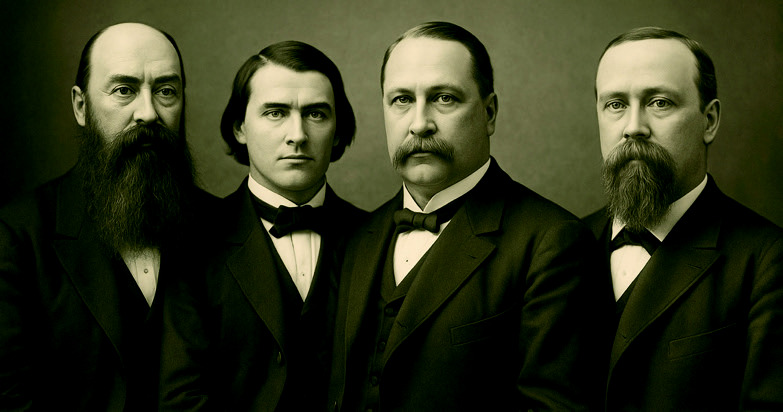
Alongside Cravens and Barnes stood Colonel Benjamin Taylor DuVal, a Confederate lawmaker and one of Arkansas’s most experienced political operatives, as well as Major Thomas H. Barnes, a war veteranandlong-serving U.S. District Attorney. Together, these four formed a defense team unlike any other—a mix of old Southern heritage, federal authority, and courtroom expertise. This was not a defense based on innocence; it was based on access.
The story of that elite alliance unfolds through their careers, kinships, wartime pedigrees, and skillful handling of a case that drew intense regional attention. It serves as more than a legal advocacy case; it also reveals how bloodlines, political influence, and social standing could be mobilized to defend a single individual. Four of Arkansas’s top attorneys— DuVal, Cravens, and the Barnes brothers—stood with McLaughlin, creating a defense whose strength and reputation were unmatched in the renowned courts of the Western District.
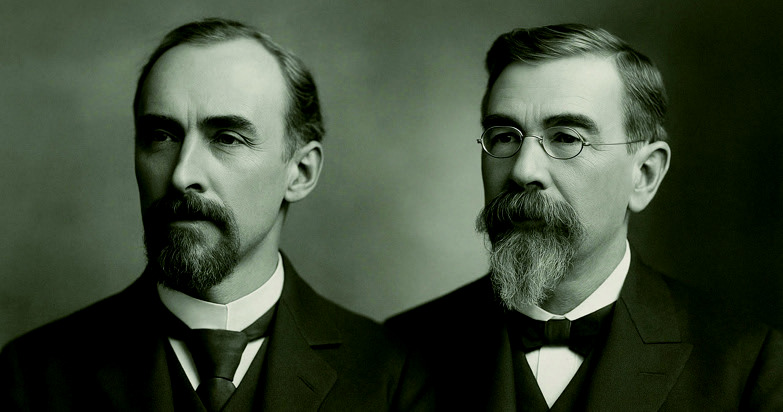
But before them stood no weak opposition. The prosecution was led by Montillus Hines Sandels and George A. Grace—two seasoned, battle-hardened attorneys with deep roots in federal law and the unwavering resolve demanded by the frontier bench. Sandels, the U.S. Attorney and future Supreme Court Justice, brought intellect sharpened by public service; Grace, a Civil War veteran and veteran federal prosecutor, contributed discipline and courtroom precision. Together, they represented not just the government’s case but the principle that justice should not yield to wealth or influence.
Colonel Benjamin Taylor DuVal – Statesman of Two Republics Benjamin Taylor DuVal was born into a land that was both young and restless. He entered the world on January 21, 1823, in Wellsburg, Virginia—later part of West Virginia—at a time when the frontier was still vast and the American experiment was still alive from the revolution. His family moved to Fort Smith, Arkansas, in 1825, placing him on the frontier's edge as the nation moved westward. It was there, among Arkansas's muddy rivers and red clay, that DuVal would lay the foundations for a career that would encompass war, law, politics, and the core of the Southern cause.
Educatedbyprivatetutors and later at St. Joseph’s College inBardstown,Kentucky, DuVal was a representative of the classical Southern gentry. He studied law under two leading figures of Arkansas law—Judge Jesse Turner and General Albert Pike—and was admitted to the bar in 1847. The DuVal family was not just local aristocracy; they were deeply involved in the civic and legal life of the region. His sister, Catherine, married Elias Rector, a U.S. Marshal for the Western District, and his younger brother, Elias, became a respected doctor.
His legal acumen would be rivaled only by his political daring. By 1851, DuVal had ascended to chief clerk of the Arkansas House of Representatives, where he authored the legislation that created Sebastian County. He was elected to the House in 1858 and again in 1860, serving briefly as Speaker of the House. When the storm clouds of secession gathered, DuVal was no passive observer— he was a catalyst. As a trusted ally of secessionist firebrand Thomas C. Hindman, DuVal introduced the bill that authorized Arkansas’s secession convention. In 1861, the state formally joined the Confederacy, and DuVal donned the uniform of the Confederacy.
As paymaster-general for Arkansas’s Confederate forces and later as quartermaster underGeneralJames F. Fagan, DuVal witnessed the horrors of war firsthand— fromtheblood-soaked hills of Helena to the chaos of Pilot Knob. He also took part in General Sterling Price’s failed Missouri campaign, where Confederate hopes clashed with Union resolve. Although he was never a battlefield commander, Du-Val’s logistical efforts were vital, supplying and equipping regiments that might have otherwise fallen apart.
When the war ended, Du-Val returned to Fort Smith to resume his legal practice. He could have faded into bitterness andobscurity, likemany ex-Confederates. Instead, he surprised friend and foe alike by supporting reform Republican Joseph Brooks in the 1872 gubernatorial race—a move that would embroil Arkansas in the bloody Brooks-Baxter War. DuVal was slated to become the Attorney General under a Brooks governorship.
The roots of the Brooks-Baxter War lay in the disputed gubernatorial election of 1872. Elisha Baxter, a moderate Republican with conservative leanings, was declared the winner over Joseph Brooks, a Radical Republican and Methodist minister who championed African American civil rights and staunch Reconstruction policies. Though initially accepting defeat, Brooks alleged that the election had been marred by fraud and filed a legal challenge. In April 1874, a Pulaski County circuit court—widely seen as politically motivated— ruled in Brooks’s favor and declared him the rightful governor.
What followed was a swift and surreal seizure of power. Armed with a court order, Brooks and a contingent of loyal militia marched into the State House and physically removed Baxter from office. Baxter, however, refused to yield, setting up his rival governmentjustblocksaway. For the next several weeks, Arkansas existed under two competing administrations, each claiming legitimacy, each drawing support from armed followers.
Militias loyal to both sides converged on Little Rock, fortifying buildings, digging trenches, and preparing for battle. Sporadic violence broke out across the state. The nation watched as Arkansas, only recently restored to the Union, descended into civil strife once more. President Ulysses S. Grant, initially uncertain whom to recognize, eventually threw his weight behind Baxter—fearingBrooks’sfaction might prolong instability and undermine national Republican unity.
With federal support, Baxter’s forces gained the upper hand, and Brooks was forced to relinquish his claim and flee. Though bloodshed had been limited, the damage to Arkansas’s reputation was lasting. The Brooks-Baxter War had laid bare the fragility of government in a fractured South, where legitimacy could be claimed not just through ballots, but at the barrel of a gun.
In the aftermath, Baxter called for a constitutional convention to restore order and chart a new course. The resulting 1874 Arkansas Constitutionsignaledtheend of Radical Republican rule in thestate. Itusheredin theera of Democratic “Redemption,” duringwhichwhiteconservatives regained control and began dismantling Reconstruction reforms. Though DuVal lost his bid for attorney general, he retained the admiration of peers on both sides of the political aisle.
By the 1890s, he had returned to the legislature one final time, again serving briefly as Speaker of the House. Age had done little to erode his stateliness or rhetorical grace. He remained a towering presence in the courts of Fort Smith, an elder statesman of a vanishing South. He died in 1905 in San Diego, where he had gone in search of relief from illness. But his body was returned home, to be buried in Calvary Cemetery beneath the soil of the town he helped raise from river post to courthouse citadel.
To the McLaughlin family, DuVal represented more than experience—he embodied Southern resilience and statesmanship. His very presence in the courtroom lent an air of gravity, of ancestral nobility. He did not merely argue points of law; he conjured the weight of history, bending the court’s ear not with shrill pleas but with the solemn cadence of a man who had shaped the law itself.
Colonel William M. Cravens – The Dean of the Southwestern Bar If DuVal was the political soul of the McLaughlin defense, then William M. Cravens was its legal backbone. His presence in the courtroomcommandeddeference, not through theatrics, but through a calm, unyielding dignity earned across decades of war, practice, and civic devotion. He was a master of the spoken word, whose oratorical style could stir jurors like scripture and silence rivals like thunder.
Born in Fredericktown, Missouri, in 1833, Cravens was a son of the antebellum South. The Cravens family traced its Irish lineage back through the misty hills of Ulster and into the bloodsoaked trenches of Revolutionary America.Hisparents, Jerre and Kitty Murphy Cravens, instilled in him a sense of duty and moral clarity that would guide him through both war and his career in jurisprudence.
Cravens graduated from ArkansasCollegein1858and then studied law at Cumberland University in Tennessee, a cradle for Southern legal minds. By 1860, he was already a prosecuting attorney over eight counties in southwestern Missouri—an area thick with tension and prone to early outbreaks of CivilWarviolence.Whenwar came in 1861, Cravens did not hesitate. He resigned his post and enlisted in the 21st Arkansas Infantry under his first cousin, Colonel Jordan E. Cravens.
His war record reads like a catalog of Confederate desperation. He foughtunder General Beauregard at the siege of Corinth, where his horse was shot from beneath him. He retreated through the mud with Generals Van Dorn and Price after the Hatchie River. He clashed with Grant and Rosecrans in the Western Theater. By 1863, he was transferred to Indian Territory and ultimately surrendered with Dockery’s Brigade in Marshall, Texas. Yet unlike many of his comrades, Cravens emerged from the ashes of the Confederacy with neither hatred nor inertia. He turned to the law—not as vengeance, but asredemption.InFortSmith, he built a reputation as the finest criminal defense attorney west of the Mississippi. When the federal court under Judge Parker expanded its grip into Indian Territory, Cravens became a fixture of high-profile capital trials.
He did not pander to juries or showboat before the press. Instead, he worked methodically, dismantling prosecutions piece by piece, instilling doubt with the deftness of a surgeon and the gravitas of a theologian. His knowledge of criminal procedure was encyclopedic. His demeanor in court was controlled, always respectful, always persuasive. He made it his business to know every federal marshal, every court clerk, every local paper editor. Cravens did not just practice law—he immersed himself in the practice of it.
In defending McLaughlin, Cravens played a dual role: both as a legal tactician and as a courtroom elder. He guided the younger Barnes brothers, kept DuVal's political fire tempered, and acted as the defense's anchor whenthestormsoftestimony threatened to sway the jury. He challenged prosecution witnesses with surgical efficiency, never raising his voice, but making each question a quiet, sharpedged blade. And when he addressed the jury, he appealed not just to reason, but to conscience—the collective weight of community, of mercy, of lineage.
McLaughlin’sfamilycould not have chosen a better man to sit beside their son. Cravens lent legitimacy to a case that reeked of political favoritism. His reputation buffered against cries of injustice, and his presence served as the embodiment of Southern jurisprudence— dignified, resolute, and ever commanding.
When Colonel Cravens died in 1919, the bar of Fort Smithmournednotonlyacolleague but an era. The final great criminal mind of frontier Arkansas had passed. But his defense of John Duke McLaughlin would remain etched in memory—not for the sensationalism of the crime, but for the display of law at its most tactical, and privilege at its most shielded.
Colonel James Kent Barnes – The Republican Strategist Turned Defender
James K. Barnes was born in Irvine, Kentucky, in December1845(somerecords place his birth in 1848), the son of Sidney M. Barnes, a respected legal scholar and delegate to the Arkansas Constitutional Convention of 1874. From the first, young Jameswassteepedinlawand political ambition. He studied in Lancaster and later under the future governor and U.S. Senator William O. Bradley—a formative mentorship that instilled in him both conservative discipline and Republican zeal.
Barnes arrived in Little Rock in 1871, where he studied law in the offices of Benjamin & Barnes and was soon admitted to the bar. His risewasrapid.Hewaselected City Solicitor of Little Rock andmarriedMaryM.Yonley, the niece of Judge S.T.D.W. Yonley, a former Chief Justice oftheArkansasSupreme Court. It was a marriage not only of hearts, but of dynastic legal pedigree. Soon after, the couple moved to Fort Smith, arriving by steamboat—an emblematic journey from political pupil to frontier power broker.
In Fort Smith, Barnes became a fixture of civic life, serving multiple terms as city alderman and twice as postmaster. His big break came with the death of his brother Thomas H. Barnes, whose position as U.S. District AttorneyfortheWestern District of Arkansas he inherited. From that moment, James K. Barnes embodied the legal voice of the federal government in one of the most violent jurisdictions in the country.
Yet for all his federal allegiance, Barnes remained a man of the old South. A lifelong Republican, he served on the State Executive Committee for more than thirty years. He became one of the famed 306 delegates at the 1880 Republican National Convention who remained loyal to General Ulysses S. Grant. Barnes was no political dilettante. He was a gatekeeper—one of the few Arkansans whose hand influenced federal appointments, legal strategies, and judicialtemperamentsacross a generation.
His style was one of quiet precision. He was never known to speak ill of opponents, a rare virtue in his combative age. Even when provoked, his tongue was tempered.Hemaintainedthe respect of Democrats and Republicans alike, never known to abuse his office or betray a confidence. In a courtroom setting, he was less theatrical than Cravens, more restrained than DuVal—but possessed a lethal calm that made his cross-examinations all the more deadly.
The McLaughlins, acutely aware of the court’s power dynamics, understood that securing Barnes would send a message to judge and jury alike: the accused was not just defended; he was protected. Barnes’spresencealso created a connection to Wasson’s defense, where Barnes had firsthand experience of what seemed effective and what didn’t.
Barnes’s contribution to the defense was less visible than DuVal’s speeches or Cravens’ commanding arguments, but no less pivotal. He drafted the motions that suppressed evidence, the memoranda that lobbied quietly for leniency, the whispered arguments in chambers that turned the tides of procedural fortune. He knew every nuance of federal code, every weakness in Judge Parker’s otherwiseironcladcourtroom structure.
To the jury, Barnes projected an image of stability. He was not the flamboyant advocate, but the careful counselor, the man who had oncestoodwheretheprosecutor now stood. His presence alone suggested that the case against McLaughlin must be flawed—whyelsewouldsuch a man lend his name and career to its defense?
WhenBarnesdiedin1909, the bar convened in solemn tribute. Judge Rogers adjourned court in his honor. Resolutions were passed. Eulogies flowed not only from colleagues but from former adversaries. They called him faithful, silent in his criticisms, and devoted to duty. In his final years, he withdrew from political life as younger Republicans took the reins. But his legacy endured—in appointments, in precedents, and in the silent corridors of justice he once shaped.
In defending McLaughlin, Barnes reasserted the highest ideal of the law: that every man, no matter the crime, deserves the best defense that can be mustered. And for the wealthy, that defense included the best names in Arkansas legal history.
Major Thomas H. Barnes – Federal Authority and Silent Power If his brother James was the statesman of the court, Major Thomas H. Barnes was its iron hand—less visible, more abrupt, but no less influential. Where James wielded law with finesse, Thomas moved with the weightoffederalimprimatur. His reputation as United States District Attorney for the Western District of Arkansas, coupled with his record as a Union Army veteran, made him a figure of immense respect and subtle fear. He was not a man one crossed lightly in or out of court.
Born in Kentucky in the early 1840s, Thomas H. Barnes was shaped by the war and the Reconstruction era. A Union man in a family of Republican stalwarts, he entered the 24th Kentucky Volunteer Infantry during the Civil War. He rose to the rank of Major by the age of nineteen. His wartime service brought him face-toface with the discipline of military justice, a structure that would later shape his no-nonsense courtroom demeanor.
Following the war, Thomas H. Barnes moved with his father, Colonel Sidney M. Barnes, to Little Rock, Arkansas, where he immersed himself in the legal profession and the growing Republican politics. His career as a prosecutor began in 1874, when the governor appointed him Prosecuting Attorney for the Fort Smith District—a role in which he quickly gained a reputation for integrity, discipline, and fearlessness. His work in that office earned him widespread respect, and he was later called back to serve a second term as Prosecuting Attorney, further strengthening his standing in Arkansas’s legal circles. In 1884, after leaving his position as Prosecuting Attorney, Barneswaschosenas Elector-at-Large for the Republican presidential ticket of James G. Blaine. Then, in 1897, President William McKinley appointed Barnes as United States District Attorney, placing him at the forefront of federal law enforcement in one of the most unruly and violent regions of the postwar South.
His tenure as Prosecuting Attorney for the Federal Court at Fort Smith was not without consequence. The Western District of Arkansas covered Indian Territory—a jurisdiction rife with violence, cattle rustling, whiskey running, and the grisliest of murders. Federal law enforcement in such a domain required resolve, and Barnes brought it in spades. His style was neither theatrical, like Cravens, nor statesmanlike, likeDuVal;hewasa lawyerofprecision,knownfor keeping strict files, enforcing deadlines, and rarely indulging in rhetorical flourishes. He prosecuted, adjudicated, and administered with the certainty of a field officer.
In defending John Duke McLaughlin, Major Barnes crossed the aisle from enforcer to protector. Though his brother James carried much of the visible courtroom weight, Thomas’s involvement behind the scenes was decisive. He still retained strong federal relationships— from marshals to court clerks to remnants of the Justice Department. His mere presence on the defense team sent a message to anyone thinking of railroading the trial: this was no frontier outlaw. This was a man backed by the whole artillery of Fort Smith’s legal aristocracy.
Unliketheothers,Thomas H. Barnes did not live long after the trial to savor his legacy. He passed away in April of 1899 after a prolonged illness. At the time of his death, he was still the sitting U.S. District Attorney. His funeral drew federal officers, attorneys, and political figures from across Arkansas. Eulogies celebrated his “unshakable loyalty to the cause of justice” and his “quiet constancy.” They praised him as one of the last Republican titans of Reconstruction, a man forged in war and refined in the halls of law.
Thoughnotranscriptssurvive to record his courtroom voice in the McLaughlin case, his impact is undeniable. He was the legal ballast—the immovable foundation beneath the shifting currents of testimony and strategy. In federal court, where appearances mattered as much as argument, the very fact that McLaughlin had Thomas H. Barnes on his side served as a form of testimony.
The Barnes brothers, in concert, offered not only legal aid but a kind of institutional insulation.Theytransformed McLaughlinfromasuspected killer into a man shielded by decades of federal, legal, and political power. They reminded the jury that the defendant was not merely a man on trial—he was a man of standing, protected by the most trusted names in the territory.
Though outnumbered by the defense’s formidable ranks, the government’s case rested in the capable hands of two deeply respected attorneys: Montillus Hines Sandels andGeorgeA.Grace.Both menbroughttothecourtroom not only years of legal experience, but the quiet authority of public service and personal integrity. Sandels, a rising star who would go on to serve on the Arkansas Supreme Court, and Grace, a Civil War veteran and longtime federal prosecutor, stood as stalwart advocates for justice in a courtroom where the stakeswerenothinglessthan life itself. Their partnership formed a resolute counterweight to the powerful defense team, proving that the government’s pursuit of the law was no less principled, prepared, or unyielding.
Montillus Hines Sandels: A Life in Law and Service Montillus Hines Sandels, known to friends and colleagues as 'Monti,' exemplified the spirit of Arkansas's frontier legal tradition during the late 19th century. His life, thoughcutshort,wasmarked by continuous growth—from a gifted youth in Fort Smith to a respected judge on the ArkansasSupremeCourt.Instead of sentimental stories often told about the departed, Sandels’ story is best seen as a record of public service, intellectual strength, and strict personal discipline, shaped by hardship and refined in the courtroom.
Born on August 13, 1851, in Williamsport, Tennessee, Sandels was the son of the Reverend John Sandels, an Episcopal clergyman of Irish originwhohadbeeneducated at Trinity College in Dublin and had served as a professor of ancient languages at Kenyon College in Ohio. The Sandels family migrated to Arkansas in 1859, settling in Fort Smith just as the state— and the nation—teetered on the brink of the Civil War. It was here, amid the volatile borderland between law and lawlessness, that young Monti came of age.
Accounts from the period suggestthatheassumedserious family responsibilities at an unusually young age, particularly following hardships that befell his household. This early experience likely instilled the independence and seriousness that would characterize both his private and professional demeanor. Although educated mainly by his father during his formative years, Monti Sandels eventually pursued formal legal training under the guidance of John H. Rogers (later a federal judge) and William H. Walker, two prominent attorneys in Fort Smith.
By the early 1870s, Sandels had opened his law practice. In 1879, he married Bettie Bliss Johnson of Fort Smith, with whom he would have two children. His domestic life was reportedly quiet and unassuming, shaped by the same steadiness andreservethatmarked his public conduct.
Sandels’ career in public service began in earnest with his election as mayor of Fort Smith, a role he held for two terms. He was known for administering local government with integrity, tact, and minimal political flourish. His reputation for careful thought and sound legal reasoning caught the attention of national leaders. In November 1885, President Grover Cleveland appointed him United States Attorney for the Western District of Arkansas.
It was a position of no small gravity. Sandels’ prosecutorial role placed him at the center of efforts to establish federal authority over the Indian Territory, where outlaws, tribal sovereignty, and expansionist ambitions collided daily. Among his most noted cases was the prosecutionofmembersofthe infamous Starr Gang and the successful conviction of Jack Spaniard, a half-Cherokee outlaw accused of killing lawman William Irwin. Even when gravely ill, Sandels is said to have risen from his sickbed to appear in court, a testament to the unrelenting sense of duty that defined his character.
By 1889, his reputation for legal acumen and public integrity led to his election to the Arkansas Supreme Court, following the resignation of Justice William W. Smith. In 1890, he was reelected by the most significant margin of any candidate on the Democratic ticket. Despite a chronic illness that plagued his final years, Sandels proved to be a highly effective jurist. He joined a bench burdened with a significant backlog of cases and brought with him a tireless commitment to procedural clarity and expedient justice.
Colleagues later recalled that he possessed an intuitive grasp of the law. George B. Rose, an eminent lawyer and partner in what would become the Rose Law Firm, declared that Sandels had been 'born to be a judge.' According to Rose, Sandel’s intellect was matched only by his sense of fairness. Chief Justice Sterling R. Cockrill remembered him as a man determined to reform the court’s operations despite debilitating illness, calling his death 'a shadow in the land.'
But Sandels was not merely a legal technician or political appointee. He was a thinker and a moralist whose judgments were rooted in a deep, almost austere sense of ethical duty. Described as stoical and reserved, he avoided public adulation and disdained empty rhetoric. Yet those who knew him well spoke of a warmth that transcended his public demeanor—a depth of feeling and loyalty that revealed itself quietly and powerfully to those closest to him.
His life was abruptly curtailed on November 12, 1890, just shy of his fortieth birthday. His wife had died the year before, and their two youngchildrenwereplacedin the care of his sister, Kate. The brevity of his career only heightens the sense of loss expressed by his contemporaries, who believed that Arkansas had been robbed of one of its finest legal minds just as he entered his prime.
Montillus Hines Sandels is buried at Oak Cemetery in Fort Smith, now a National Historic Landmark. His name does not resound as loudly as some of his contemporaries in the pages of American jurisprudence, but amongthosewhoservedwith him, practiced before him, or were judged by him, his memory was one of rare clarity, integrity, and promise.
His life was not one lived for spectacle or personal glory. It was a life lived in fidelity to law, to public trust, and the moral architecture of justice. In the quiet dignity of his example, Monti Sandels continues to speak to those who would wear the robe or raise the gavel in earnest pursuit of the good.
George A. Grace: The ProsecutorintheShadow of the Gallows George A. Grace stood as a formidable figure in the federal courtsofWesternArkansas during the turbulent final decades of the nineteenth century—a period when law and lawlessness contested daily across the boundaries of Indian Territory. As one of the lead prosecutors in the case against John Duke McLaughlinforthemurderof Henry Martin, Grace’s legal work helped shape the highstakes courtroomdramathat played out in Fort Smith under the watchful eye of Judge Isaac C. Parker.
BorninTennesseein1846, Grace came of age during the most violent and formative period in American history. As a young man, he enlisted in the Union Army during the Civil War and served with distinction as a sergeant major in the 13th Tennessee Cavalry from 1864 to 1865. His wartime experience instilled a sense of duty, order, and national service that would later define his career in law and public service.
Following the war, Grace pursued a legal education, graduating from Albany Law School in 1872. His legal training—steeped in classical instruction and sharpened by wartime discipline— prepared him for the demands of a frontier legal environment where federal law was often the only reliable shield against chaos.
By the 1880s, Grace had established himself in Fort Smith, Arkansas, then the seat of the United States District Court for the Western District of Arkansas. He served as an Assistant U.S. Attorney for ten years, during which he worked directly with Judge Isaac C. Parker and fellow prosecutors, including Joseph C. Edwards. He handled numerous highprofile criminal cases, many involving crimes committed in Indian Territory, including murder, robbery, and obstruction of justice. His courtroom manner was measured and precise, and he developed a reputation for his meticulous preparation and steadfastness in the face of formidable opposition.
Despite the presence of elite defense attorneys— Benjamin T. DuVal, William M. Cravens, and the Barnes brothers—Grace remained committed to pursuing justice. Although the trial resulted in hung juries and eventual acquittal, Grace’s efforts underscored his integrity and perseverance.
After leaving Fort Smith, Grace relocated to South McAlester in Indian Territory, wherehetransitionedinto a broader judicial and civil role. He served as a Master in Chancery and held a federal judgeship in the Indian Territory, stationed at McAlester. His work there reflected the continuing need for strong, impartial legal figures as the region transitioned from tribal sovereignty toward incorporation into the state of Oklahoma. As a judge, Grace presided over complex civil disputes and equity proceedings, applying his years of prosecutorial and legal experience to help stabilize a jurisdiction on the edge of change.
He also became a partner in the firm of Grace & Fitzpatrick Bros., contributing to the region’s legal and civic growth through private practice. His reputation for fairness and clarity continued to define his approach, whether on the bench or in counsel.
George A. Grace died on February 19, 1922, in Leavenworth, Kansas, at the age of 75. He was buried with honors in Leavenworth National Cemetery, a fitting resting place for a Civil War veteran who had devoted his life to the rule of law. His years of legal service—on the battlefield, in the courtroom, and public administration— form a chapter in the story of American justice on the frontier.
Grace was not a man of bluster or headlines. He was the quiet architect behind many of the federal prosecutions that held the Indian Territory accountable to the law. In his steady, uncelebrated way, he helped lay the groundwork for what would become modern Oklahoma and the enduring presence of federal justice in the American West.
In remembering the legal saga of John Duke McLaughlin, George A. Grace deserves his place—not only as a prosecutor in a trial that strained the limits of justice, but as a reminder that the law’s guardians often labor in obscurity, even as they carry the weight of its demands. Grace was, in the best sense, a public servant. And in the volatile arena of frontier law, that was no small thing.
As the second week of April 1886 neared, the stage was set for one of the most significant trials ever held in Judge Parker’s courtroom. On one side was John Duke McLaughlin, defended by four of Arkansas’s top legal minds—DuVal, Cravens, and the Barnes brothers— whosecombinedprestigeand strategic skill formed a formidable defense. Opposing them was the government’s prosecution, led by Montillus Hines Sandels and George A. Grace, men of integrity, experience, and steadfast determination. With James Wasson scheduled to hang for the same crime just days later, the stakes had never been higher. The courtroom was about to become a testing ground—notonlyforthefacts of the case but also for the competing forces of wealth and law, legacy and accountability, and the true meaning of justice on the edge of the American frontier.