
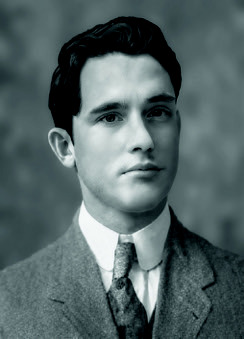
It has been several weeks since we last visited the remarkable life and career of Charles Arthur Coakley. The interruption was not because his story had run its course. It was prompted first by my surgery and the weeks of recovery that followed, and then by the two-part series commemorating the 250th anniversary of the Declaration of Independence. Those subjects deserved their place, but now it is time to return to Coakley and to the extraordinary journey that began in the courtrooms of Marshall County.
Before continuing, however, it may be helpful to pause and remember why a lawyer who left this county more than a century ago still deserves our attention.
Coakley was not born into prominence, nor did he arrive inMadillwithafamousname already attached to him. He built his reputation the oldfashioned way—in county offices, small-town law offices, and crowded courtrooms where nothing came easily and every verdict had to be earned. During his years in Marshall County, he served as County Attorney, entered private practice, formed a partnership with Franklin Elmore Kennamer, and began appearing in some of the most serious and closely followed criminal cases in this part of Oklahoma.
The earlier installments of this series followed Coakley from his beginnings as a young county attorney into the courtroom battles that first revealed the advocate he was becoming. Most important amongthemwerethe Honeysuckle murder trials. Those cases placed a young and still-developing lawyer before packed courtrooms, divided communities, and juries called upon to decide questions of life, death, guilt, and self-defense. Coakley’s work in those trials showed that he possessed more than legal knowledge. He had courage, presence, discipline, and the rare ability to take complicated facts and turn them into a story a jury could understand.
Those qualities would eventually carry him far beyond Marshall County. In later years, Charles Arthur Coakley would become one of Oklahoma’s most celebrated trial lawyers, a man whose courtroom arguments were reported across the state and, in his most famous case, across the nation. He would become known for defending the accused in sensational murder prosecutions, for commanding the attention of juries, and for possessing the kind of courtroom presence that could alter the course of a trial.
But legends do not begin as legends.
Before Coakley reached the great courtrooms of Ardmore and before newspapers across America began printing his name, he had to be tested here. Marshall County was his proving ground. It was here that he learned to prosecute and defend, to examine witnesses, to confront hostile evidence, to endure public criticism, and to carry the responsibility that comes when another person’s future rests partly in the hands of an advocate.
The story now resumes in the years immediately following the Honeysuckle trials, a period that would test Charles Arthur Coakley far beyondtheordinarydemands of private practice. Those trials had already established him as a lawyer of unusual nerve and ability, a man capable ofstandingbeforeajury in the gravest of cases and holding his ground. He had served as Marshall County Attorney, returned to private practice, and begun building a reputation that reached well beyond the walls of the local courthouse.
But the next chapter would call upon more than his courtroom skill.
The United States entered the First World War, and Marshall County was asked to provide men, money, supplies, and sacrifice. Coakley was appointed to one of the most important and controversial public bodies in the county, traveled through rural communities urging citizens to purchase Liberty Bonds, briefly considered a race for district judge, and ultimately accepted a commission as a major in the United States Army. He would find himself entrusted with decisions that touched families across the county and with duties that were often unpopular, deeplypersonal,and at times dangerous.
Even as those responsibilities drew him into the nation’s war effort, the courtroom continued to call. A succession of sensational homicidecasesbroughtCoakley again before Marshall County judges and juries, sometimes as counsel for the accused and sometimes as a lawyer specially chosen to assist the State of Oklahoma. Eachcasewidenedhisexperience, sharpened his instincts, and strengthened his command of the courtroom.
The Honeysuckle trials had shown that Charles Arthur Coakley was a lawyer to be reckoned with. The years that followed would reveal the full range of the man.
On April 6, 1917, after nearly three years of neutrality, the United States declared war on Imperial Germany and entered the First World War. President Woodrow Wilson immediately faced an enormous problem. The regular United States Army was far too small to fight a modern war on the European continent, and America would have to build a vast fighting force almost overnight. Congress responded by passing the Selective Service Act of 1917 on May 18, 1917. Rather than relying entirely upon volunteers, the Act required nearly every eligible male citizen, together with many resident aliens within specified age groups, to register for military service. By the end of the war, almost twentyfour million American men would register under the SelectiveServiceSystem,and nearly three million would ultimately be inducted into military service.
The federal government could not possibly administer such an undertaking entirely from Washington. Instead, it placed much of the responsibility in the hands of local communities. Across the country, thousands of local draft boards, commonly known as County Exemption Boards, were established. To modern readers, the name may suggest some minor or obscure committee. In 1917 and1918,however,therewas nothing minor about it. The County Exemption Board was one of the most important, powerful, and controversial governmental bodies in every county in America. It registered eligible men, reviewed questionnaires, classified registrants, considered claimsforexemptionordeferment, examined dependency and occupational claims, weighed affidavits and testimony, and ultimately helped decide whether a man would remain at home or be ordered into military service.
The work demanded far more than the shuffling of forms. Every file represented a family, and every classification carried consequences that could alter several lives at once. One decision might leave a farmer at home because his crops were considered necessary to the nationalfoodsupply.Another might send the only son of a widowedmother to atraining camp and perhaps later to France. Other cases involved married men supporting young children, physicians neededbytheircommunities, railroad workers essential to transportation, or laborers employed in industries considered vital to the war effort. The Board was not beingaskedwhetherAmerica should fight, for Congress had already answered that question. Nor was it being asked to judge one man as more courageous or patriotic than another. Its duty was to apply the law enacted by Congress and the regulations issued by the Provost Marshal General fairly and impartially, without yielding to personal friendship, family influence, political pressure, or public anger.
Because those decisions requiredjudgmentandpublic trust, respected local citizens were chosen to serve. Lawyers, physicians, bankers, merchants,andbusinessmen were frequently selected because their professions required discretion, experience, and sound judgment. Marshall County’s Exemption Board consisted of three men: J. L. Woody, who served as chairman; Charles A. Coakley, who served as clerk; and Dr. T. A. Blaylock, the Board’sexaminingphysician. Each man had a distinct role, but together they carried the grave responsibility of applying the federal draft laws to the men of Marshall County and deciding claims that could determine whether a registrant remained at home or entered military service.
Coakley’s appointment as clerk spoke volumes about the confidence already placed in him. Although still a relatively young attorney, he had served as Marshall County Attorney, distinguished himself in private practice, and emerged from the Honeysuckle murder trials with a reputation as one of the best courtroom advocates in southern Oklahoma. Now, alongside Woody and Dr. Blaylock, he was being entrusted with one of the hardest civic responsibilities of the war.
It was also one of the least popular public offices in America. No matter how carefully the Board followed the law, someone would leave disappointed, frightened, or angry. When an exemption was denied, another young man prepared to leave Marshall County for military training. Mothers pleaded, wivesfearedwidowhood,children faced the possibility of losing their fathers, and employers struggled to replace skilled workers. In a small county, the Board members knewmanyofthemenwhose futures they were deciding. They knew their families, their employers, and their neighbors. No decision remained anonymous. Every classification had a name attached to it, and every name belonged to someone’s son, husband, brother, or friend.
As the war continued, disappointment sometimes hardened into resentment, and resentment sometimes became something darker. On the morning of Friday, January 18, 1918, the members of the Marshall County Exemption Board arrived at their offices in the McMillan Building in Madill (Southern Coach Works building today) and found a full stick of dynamite tied to the doorknob. Beside it was a crudely written and unmistakably threatening note: “Tyler, Oklahoma. Some big men are getting boys by. By God, this stuff will fix this crooked gang. Nite Rider. We will see.”
The meaning was plain. Someone believed that influential men were escaping military service and had decided to threaten the officials responsible for administering the draft. Whether the dynamite was intended to explode, to terrorize, or both, it was no idle expression of dissatisfaction. It was a direct threat against Charles A. Coakley, Dr. T. A. Blaylock, and John L. Woody—the three men who made up the Marshall County Exemption Board—and against the federal systemtheyrepresented.
When the Madill Record reported the incident on January 31, 1918, it did so beneath the alarming headline, “Ally of Germany Threatens Local Exemption Board.” A second headline declared that an “unscrupulous blackguard” had placed dynamite on the door of the Board’s office. The newspaper treated the incident not merely as a threat against three local citizens, but as an attack upon the government itself at a moment of national crisis.
The Record identified the members of the Board and immediately came to their defense. “The Marshall County Exemption Board is composed of Charles A. Coakley, Dr. T. A. Blaylock and John Woody,” the paper stated. “They are three honest, conscientious, hardworking men.” It insisted that the Board had been fair in its consideration of every questionnaire brought before it and added that “no soundminded, reasonable man” could honestly deny that fact.
The paper praised the Board’s diligence in unusually strong terms. “No better selection of men could be made in the entire county,” it declared. “These men work day and night to see that every person gets justice and fair treatment.” Their importance to the war effort could scarcely be overstated. The local Board, the article explained, was essential to the success of the draft. Without it, the system simply could not function.
The newspaper then turned its fury upon the person who had placed the dynamite. It described him asa“low-browedblackguard” who should be captured and punished according to the seriousness of his crime. The incident, the editor warned, wasfargraverthanmanycitizens appearedtounderstand. It was “a serious proposition,” one demanding action from every “red-blooded American citizen in Marshall County.” The person responsible, the paper declared, should be “hunted down as a mad-dog” and placed where he could never again threaten a part of the government by such a “dastardly deed.”
Thethreatwasmademore disturbing by the revelation that it was not the first one directed at the Board. The Record reported that the members had received another threatening letter on January 4, only two weeks before the dynamite was discovered. That earlier communication had been sent to federal authorities in Washington, and the editor expressed the hope that the author of both threats would soon be in federal custody.
The newspaper’s concern was not exaggerated. The Board members occupied an unusually exposed position. They were required to make intensely personal decisions affecting men they knew and families they encountered every day. Every exemption granted could produce an accusation of favoritism. Every exemption denied could create bitterness, fear, and anger. Those dissatisfied with a classification knew exactly where the Board worked and exactly who had made the decision.
“The time is here when the exemption board of Marshall County needs and must have the hearty support and cooperation of every American in the county,” the Record declared. “When our citizens are threatened as in this case, it’s time for us to get busy.”
The paper reminded its readersthatWoody,Coakley, and Blaylock had not created the draft, declared war, or personally chosen to send Marshall County men into military service. They were performing work required by the federal government. “These men are doing a work that must be done,” the editor wrote. “They are doing it for the government, because the government said do it. They do not want to send any man to war—but men have gone from Marshall County, and more will go.”
That passage captured the terrible burden placed upon local draft boards. The men who served upon them were not distant bureaucrats hidden in Washington. They were neighbors deciding the legal claims of neighbors. They saw the wives, mothers, fathers, and children who would live with the consequences. Yet they were still required to apply the law, even when the result was painful and even when the decision made them targets of resentment.
The Record urged the county to recognize just how dangerous the Board’s position had become. “From the above, you can readily see the dangerous place our board is placed in,” the editor wrote. The Board members were performing their duty “as true, patriotic American citizens should,” and every man in the county, the paper insisted, should see that they received protection from “such dastardly assassins as the whelp that visited the board and left his card—a full stick of dynamite.”
The rhetoric then rose to the fevered pitch common in wartime America. “There are only two classes of citizens in the United States today—Americans and anti-Americans,” the newspaper proclaimed. “If you are with the board and government, you are an American; if you are not, then you ought to be six feet under the ground. There is no half-way ground in this matter, you are with the board or against it. If you are with the board, then let’s support and protect it. If you are against it—God pity you!”
Anonymous threats and dynamite, however, were not the Board’s only difficulties. The Record also complained that some citizens dissatisfied with their draft classifications were attempting to influence the processthrough affidavits, personal pressure, and organized resentment. “Men in this county have received their questionnaires and are dissatisfied with the class in which they have been placed,” the paper observed. “Good friends of these men areusingeverymeanswithin their power to try and have them placed further down the line.”
The editor suggested that some citizens had gone “far beyond their authority” in gathering affidavits and attempting to build cases for reclassification. The Board, the article insisted, ruled upon each matter according to its best judgment and the evidence contained in the registrant’s questionnaire. Yet some men had encouraged disappointed registrants to become “sore” and to hold grudges against the Board itself.
The newspaper did not deny the right of appeal. Indeed, it expressly acknowledged it. “Of course any man has a right to appeal from the decision of the local board,” the editor wrote. “That is their privilege as American citizens.” What it condemned was not the lawful exercise of that right, but the deliberate attempt to inflame suspicion and hostility toward the men administering the law.
“Whensomepie-facedtwoby- four devil places the seed of discontent in the minds of the less informed and causes them to rise up against the board and government,” the editor thundered, “then that man should be handled in the samemannerasthemanthat tied the dynamite to the door of the board.”
The article closed with a blunt wartime challenge: “Be an American or go to Germany. We have no room for ‘slackers’ and pro-Germans in Marshall County.”
The language is severe by modern standards, but the fear behind it was real. A stick of dynamite had been fastened to the door of a public office. A threatening note had accused the Board of corruption and warned, “We will see.” Another threat had arrived only days earlier. The men responsible for deciding draft classifications were being told that violence might follow if their decisions displeased the wrong person.
For Coakley, service on the Marshall County Exemption Board was therefore more than an honorary appointment or a routine civic obligation. It placed him at the center of one of the most divisive issues of the war and made him a target for those who believed the draft had treated them unfairly. He and his fellow Board members worked under the weight of federal law, public expectation, private pleas, political pressure, and, ultimately, the threat of physical violence.
The episode reveals the gravity of the position and the character required to remain in it. Coakley was still a relatively young lawyer, but he was being asked to exercise judgment over matters that could alter the course of a man’s life and leave lasting consequences for an entire family. He was also being asked to continue that work after someone had tied dynamite to his office door.
He did not walk away. For Coakley, service on the Marshall County Exemption Board revealed another dimension of the man who was rapidly becoming one of Oklahoma’s finest trial lawyers. While building his privatepracticeandhandling difficult cases, he accepted one of the most controversial and dangerous civic duties of the First World War. The position demanded impartiality, courage, sound legal judgment, and a willingness to make unpopular decisions in the face of criticism. In Marshall County, it also required the fortitude to continue serving despite threats of violence.
Coakley’s work on the ExemptionBoardwasnotthe limit of his involvement in the war effort. The federal government needed more than soldiers. It needed money, supplies, organization, and a public willing to make sacrifices. Liberty Bonds were sold to ordinary Americans to finance the immense cost of the war. Buying a bond was presented not merely as an investment, but as an act of patriotism, a way for those remaining at home to stand behind the men being sent into military service.
Coakley became one of the local speakers who traveled through Marshall County, urging citizens to purchase those bonds. On one Sunday afternoon, Coakley and Joe Hannan traveled to the McMillan community to speak at a Liberty Bond meeting. Twenty-three men attended, and according to the newspaper, every one of them bought a bond. The paper could scarcely contain its enthusiasm. “Isn’t that great!” it exclaimed. “This is the only community that we know of where every person present at meetings held in every school house in the county last Sunday bought a bond.”
The article praised the people of McMillan as “a patriotic lot,” noting that many young men from that section had already gone into the service and that the people remaining at home were backing them “with their dollars.” In the heated language of wartime journalism, the paper declared that this was “the kind of citizenship that has sealed the Kaiser’s doom.”Coakleywastherefore doing more than helping determine which men would be called into service. He was also helping persuade the people of Marshall County to finance the war those men were being sent to fight.
His wife was equally active. Mrs. Charles A. Coakley became involved in the effort to provide every departing Marshall County soldier with what was known as a “comfort kit.” These kits contained small personal articles that a soldier might need or appreciate while away from home. The contents may have been modest, but to the families and women who prepared them, the kits were tangible expressions of affection, gratitude, and concern.
Mrs. Coakley explained that from the time the final calls began going out for Marshall County’s young men, not one boy had been permitted to leave without a comfort kit. The organization had begunwithoutmoney.Empty kitsweresentthroughoutthe county and returned after citizens filled them. Donations were requested and, according to Mrs. Coakley, were seldom refused. By the time of her public appeal, morethan$1,200hadalready been spent on the project, a substantial sum for that era.
She announced the creation of a permanent “Comfort Kit Fund” and asked citizens to send contributions to Mrs. P. D. Whiting, the treasurer, or leave their donations at the Madill National Bank. “It does not take much for anyone, provided everybody helps,” she wrote. Her appeal carried a simplebutpowerfulmessage. Marshall County’s soldiers were being asked to give almost everything, and those remaining at home ought to be willing to give something.
Thus,whileCharlesCoakley served on the Exemption Board and spoke at Liberty Bond meetings, his wife helped make certain that the county’s soldiers did not leave home empty-handed. Their work reflected the broader nature of the American war effort. The men in uniform carried the rifles, but entire communities stood behind them, raising money, preparing supplies, comforting families, and sustaining morale.
In the summer of 1918, Coakley briefly considered yet another form of public service. He was encouraged to seek election as District Judge of the Sixth Judicial District, which included Marshall andBryanCounties.An article in the Madill Record reported that supporters in both counties were urging himtoentertherace.Thepossibility was not an idle one. Coakley was a former county attorney, an increasingly prominent trial lawyer, and a man whose public service on the Exemption Board had placed him before the people of the district in a position of great responsibility.
For a time, he considered the idea. Then, on July 11, 1918, the Madill Record published his formal withdrawal from the race. Coakley’s statement was brief, but the wording now appears especially significant. “I have been considering making the race for District Judge of the Sixth Judicial District but have decided not to run,” he wrote.“Ifeelthatmytimecan be better devoted at this time to other work. I am sincerely gratefultothemanypeoplein Marshall and Bryan counties who so kindly offered their support when my candidacy was under consideration.”
At the time, readers may not have known precisely what “other work” Coakley had in mind. The answer soon became clear. After withdrawing from the judicial race, he accepted a commission as a major in the United States Army and left Madill for Washington, D.C., to report to the War Department. The sequence is important. Coakley did not step aside because he lacked support or doubted his ability to win. He withdrew because he believed his time could be better devoted elsewhere, and that work proved to be service in the Army.
The Madill Record reported that Coakley had received his commission several days before his departure, although important business matters had briefly delayed him. He was assigned to the War Department in Washington and was expected to transfer later to the regular Army for active service. The war ended before that occurred. Coakley did not go overseas or serve in combat, but he did enter the Army, hold the rank of major, leave his home and law practice, and report for duty during the nation’s greatest military mobilization to that time.
The Record welcomed the appointment warmly, declaring, “The Record is glad to see him receive this appointment and we know that he will make good, anywhere they place him.” By then, Coakley had already devoted much of the war period to public service. He had helped administer the draft, endured threats directed at the Exemption Board, traveled through rural communities promoting Liberty Bonds, and watched as his wife worked to provide comfort kits for departing soldiers. His Army commission was therefore not an isolated act, but the culmination of a sustainedcommitmenttothe national war effort.
It would be wrong to place his service on the same footing as that of the men who fought in France. Coakley served in Washington, not in the trenches. Yet that distinction does not diminish the fact that he accepted a wartime commission, set aside his own ambitions, and answered the call when another path might have been easier. His service became one more chapter in the making of the lawyer who would later be known throughout Oklahoma as one of the most formidable advocates ever to stand before a jury.
The war years, however, did not remove him from the courtroom for long. Before and after his military service, MarshallCountywasshaken by a succession of sensational homicide cases, and Coakley’s role in them revealed a lawyer who was becoming increasingly skilled on both sides of criminal litigation.
A Lawyer Becoming a Legend The dramatic acquittal in the first Honeysuckle trial, the partial conviction in the second, and the intense attention surrounding both proceedings had established Coakley as one of the most capable courtroom advocates in southern Oklahoma. They did not make him famous overnight. Great trial lawyers are seldom forged in a single case. They are shaped little by little through a succession of difficult controversies, each demanding something different from the advocate standing before the jury. The years following the Honeysuckle trials became exactly that kind of proving ground.
During that period, Marshall County continued to experience a series of sensational homicide prosecutions. The courthouse again filled with anxious spectators. Newspapers devoted column after column to testimony, arguments, rulings, and verdicts. Lives and reputations once more hung in the balance. Yet something had changed. Charles Arthur Coakleywasnolongersimply the young lawyer who had surprised many observers by defending John Wesley Honeysuckle. His performance in those cases had earned him something more valuable than a favorable verdict. It had earned him the confidence and respect of the legal profession itself.
Perhaps the clearest evidence of that confidence came from an unexpected source. Although Coakley had returned to private practice after serving as Marshall County Attorney, he was twice called upon to assist the State of Oklahoma in prosecuting murder cases. Today, many assume that criminal lawyers spend their careers exclusively on one side of the courtroom or the other. That was not necessarily true in early Oklahoma. County attorneys often enlisted respected members of the private bar to serve as special prosecutors in particularly important or difficult cases. Such appointments were not mere political favors. They were acknowledgments of professional ability. When a prosecution carried exceptional public importance, the county sought its strongest trial lawyers, regardless of whether they ordinarily maintainedprivatepractices.
For Coakley, that confidence spoke volumes. Within only a few years of defending the county’s most notorious murder defendant, he found himself standing before Marshall County juries not on behalf of the accused, but with theStateofOklahoma.Those prosecutions, though largely forgotten today, show a lawyer rapidly maturing into one of the premier courtroom advocates of his generation. They also provided preparation for the extraordinary case that later awaited him inArdmore,acasethatwould carry his name into newspapers across America.
The first involved the killing of Will Holt. On the evening of June 30, 1917, violence shattered the countryside west of Madill. News reached town that Holt had been shot to death and that Ed Rahhall had been seriously wounded near the McMillan community. Sheriff John Glenn immediately gathered a deputy and hurried toward the scene. Before reaching it, he encountered Andrew Crowson, a nineteen-yearold Marshall County native, who was taken into custody and lodged in the county jail. Charges of murder and assault with intent to kill soon followed.
The Madill Record portrayed not only tragedy, but bewilderment. Crowson, the paper reported, “was raised in Marshall County,” and “his conduct is said to have been good—that he was a peaceable young man.” Holt, meanwhile, “was well known to many of Madill’s citizens and was well liked.” He left behind a wife and four children. Rahhall, who survived his wounds, had been married only one week before the shooting.
The newspaper candidly admitted that it had been unable to obtain reliable information concerning what had caused the violence. It wrote that it had “no desire to attempt to give the facts” until trustworthy information became available. Instead, the editors dwelled upon the humancostofthetragedy,observing that “none but those who have sat in the shadow of a great bereavement can justly weigh such a sorrow.”
One week later, on July 7, 1917, Andrew Crowson appeared before Justice of the Peace Isaac O. Lewis for a preliminary examination. The courtroom was crowded with approximately two hundred citizens, many of them neighbors from the McMillan community where the shooting had occurred. The Madill Record noted that Will Holt’s widow sat quietly through the proceedings beside Holt’s gray-haired father, both listening as witnesses recounted the events that had torn their family apart only days earlier.
Only the State presented evidence at the preliminary hearing. According to the newspaper, the testimony portrayed the killing as one committed “without cause.” The editor went so far as to suggest that the evidence showed “a premeditated and well-planned murder.” Yet even while describing the State’s case in stark terms, the paper admitted that Andrew Crowson himself presented a mystery.
Crowson was described as “a well appearing young man about twenty years of age,” who appeared “little disturbed over the crime for which he is held.” The newspaper remarked that “his appearance would indicate that he is a young man who has had parental care and training,” and added the curious observation that “his cool and self-satisfying appearance would indicate to the observer that there must be a cause behind this crime.” It was an unusually human observation. Even while reporting evidence strongly favoring the prosecution, the editor seemed unable to reconcile the accused man’s demeanor and background with the violence of the crime.
Justice Lewis found probable cause and ordered Crowson held without bail on the murder charge. Bail of $5,000 was fixed on the companion charge of assault with intent to kill Ed Rahhall. Throughoutthehearing, the Record noted, Crowson remained remarkably composed. Before his attorney could answer whether he wished to proceed on the second charge, Crowson himself interrupted and declared, “We are ready, go ahead.” The paper observed that he appeared “cool throughout the evidence relating to the fatal shooting of Holt,” whispering only occasionally to his lawyer.
By the time the case reached District Court in December 1917, Coakley had assumed a very different role than he had occupied during the Honeysuckle trials. This time, he stood with the prosecution. The State assembled an impressive trial team consisting of County Attorney George L. Sneed, Judge George S. March, Judge E. S. Hurt, and Coakley from the private firm of Kennamer & Coakley. That a private attorney would be invited to assist in a murder prosecution was significant. It reflected the confidence the county placed in Coakley’s courtroom ability only two years after he had defended John Honeysuckle against two murder charges.
The trial proved every bit as difficult as the preliminary hearing had suggested. After hearing the evidence, the jury deliberated for more than forty-eight hours before announcing that it could not agree upon a verdict. Judge Jesse M. Hatchett declared a mistrial, and Crowson was returned to the county jail to await another trial at the following spring term. The hung jury was itself revealing. Despite the newspaper’s earlier characterization of the killing as seemingly without justification, twelve jurors could not unanimously determine Crowson’s guilt.
The case did not end there. In February 1918, Crowson sought release on bail, and bail was fixed at $10,000 pending retrial. (Roughly $200,000 today) By September 1919, however, the Red River Farmer reported that the companion charge of assault with intent to kill had been dismissed because Crowson was “now serving a fifteen-year sentence in the state penitentiary for murder.” Three years later, in August 1922, he publicly announced his intention to seek parole from Governor James B. A. Robertson, stating simply that he believed he had “been sufficiently punished for the crime for which I was convicted.”
For Coakley, the Crowson prosecution represented another stage in the education of a great trial lawyer. In the Honeysuckle cases, he had persuaded one jury to acquit and another to avoid a murder conviction. In Crowson, he helped construct the State’s case. He now saw a homicide trial from the opposite side of the counsel table. Every witness, objection, cross-examination,andargument offered another lesson inthepsychologyofjuriesand the art of persuasion.
Hardly had the Crowson case faded from the headlines before Marshall County was shaken by another tragedy, one made even more explosive because the victim wore a badge. On the evening of December 26, 1917, Deputy Sheriff Dave Glenn was shot during an encounter near Lebanon. Glenn was more than just another peace officer. He was the brother of Marshall County Sheriff John Glenn and had served as a deputy sheriff for some time. News of the shooting spread rapidly throughout the county.
The Madill Record reported that Dave Glenn had been rushed to a sanitarium in Sherman, Texas, after suffering two gunshot wounds from a revolver fired by a man identified as Chap Scott. Although he was initially reported alive, his condition remained grave. Five days later, on January 3, 1918, the newspaper carried the sad headline, “Dave Glenn Succumbs to Wounds.” Despite emergency surgery, Glenn died at the Sherman sanitarium on Monday afternoon. His funeral was held at Whitesboro, Texas, and friends from throughout Marshall County attended.
The criminal proceedings began almost immediately. On January 5, 1918, Chap Scott and his brother, Dave Scott, appeared before Justice Isaac O. Lewis for a preliminary hearing. The Madill Record declared that “possibly the largest crowd ever present at a preliminary hearing in Marshall County” packed the district courtroom. Chap Scott stood accused of firing the fatal shots, while Dave Scott was charged as an accomplice.
Again, Coakley appeared for the prosecution. The State was represented by County Attorney George L. Sneed, Assistant County Attorney O. G. Rollins, and Coakley and his partner Kennamer. The defense assembled an equally formidable team consisting of E. S. Hurt, J. O. Minter, and H. H. Brown of Ardmore. Following the hearing, Justice Lewis ordered both defendants held without bail pending trial in the District Court.
Thelegalbattlequicklyexpanded beyond the criminal prosecution. Within days, the Scott brothers filed petitions for writs of habeas corpus, contending that Chap Scott had acted in self-defense and that there was no evidence connecting Dave Scott to the shooting. District Judge Jesse Hatchett heard extensive testimony. Once more, the State relied upon County Attorney Sneed together with Kennamer & Coakley. Judge Hatchett denied relief to Chap Scott, who remained in jail without bail. Dave Scott was granted bail in the amountof$10,000,thoughhe remained incarcerated until it could be posted.
The Scott litigation also demonstrated the remarkable breadth of Kennamer & Coakley’s practice. While assisting the State in the criminal proceedings, the firm simultaneously appeared in the civil action arising from Glenn’s death, filing a motion to revive Dave Glenn’s pending lawsuit in the name of his administrator after Glenn succumbed to his wounds. It was another reminder that early twentieth- century trial practice demanded versatility. The samelawyersmovedbetween criminal prosecutions, civil litigation, probate matters, habeas corpus proceedings, and wrongful death actions, sometimes arising from the same event.
By the opening months of 1918, Coakley had stood in courtrooms as county attorney, defense counsel, special prosecutor, and civil advocate. He had handled cases involving self-defense, domestic homicide, allegedly premeditated murder, assault, habeas corpus, and wrongful death. Each case broadened his experience. Eachsharpenedhisinstincts. Each strengthened the reputation that was steadily spreading beyond Marshall County.
Another major murder case soon placed Coakley before a crowded Marshall County courtroom, although this time he again represented the accused. On the evening of October 4, 1919, Kingston City Marshal Hans Delay shot Avery Gant behind the Kingston Hardware Company. Gant, a farmer who lived approximately six miles east of Kingston, was struck twice with a .32-caliber automatic pistol. One bullet entered below the heart. The other penetrated the intestines and lodged in the spine.
Gant was taken by train to ahospitalinSherman,Texas. His chances of survival were consideredslight,anddoctors reportedly believed that even if he lived, the bullet embedded in his spine would leave him paralyzed. He died the following Wednesday. The shooting immediately presented one of the oldest and most difficult questions in criminallaw.HadDelayfired because he reasonably believed his life was in danger, or had he killed a man who posed no immediate threat?
The first newspaper account reported that the men had a prior personal grievance involving money. Delay had been left watching the hardware store while its proprietor, Roger Cooper, stepped away. According to the initial account, Gant approached the rear of the establishment, was ordered to stop, and was then shot. An open dirk knife was reportedly found in his possession.
Delay was arrested and charged with Gant’s killing. His preliminary hearing attracted approximately twenty- five witnesses and a large crowd from Kingston and the surroundingcountryside.Because of the attendance, the hearing was held in the large district courtroom at Madill. Coakley and his partner, Kennamer represented Delay, while County Attorney Grady Rollins and former County Attorney George Sneed appeared for the State.
The testimony revealed sharply conflicting versions of the shooting. L. C. Shy, also known as Leroy Russell, testified that he was approximately twenty-five feet away when he heard the first shot. He said Gant’s hands were partly raised when the second shot was fired and that he heard Gant say, “Don’t shoot.” He then saw Delay approach the fallen man and pick up something from the ground.
Other witnesses testified that Delay picked up an open knife and said he could not permit Gant to attack him “with the cold steel.” Sims Cook had been sitting with Gant on a barrel behind the Holmes Willis Company shortly before the shooting. Cook said Delay passed them and exchanged greetings. According to Cook, Gant later walked northward while whittling on a board. On cross-examination, however, Cook admitted that Gant reached into his pocket and took out his knife as Delay passed.
The State also introduced a statement reportedly made by Gant before his death. In it,GantsaidthatheandCook had been sitting behind the store when Delay walked by. He later started south, and Delay ordered him to drop the knife. According to the statement, Gant complied, but Delay shot him anyway, accusing him of having followed him throughout the day. That statement became an important part of the prosecution’s case.
Delay told a very different story. He said the dispute began several months earlier over competing financial claims involving a pair of mares, a crop mortgage, and moneyowedbyamannamed Will Mann. According to Delay, Gant had warned him that Delay would not collect anything until Gant had received his own money. Delay also claimed that on another occasionGantconfrontedhim while holding a knife and again made a threatening statement.
On the evening of the shooting, Delay said he passed Gant and Cook behind the Holmes Willis store and saw Gant reach into his pocket and take out a knife. Delay walked on, circled the warehouse, and entered the Kingston Hardware Company. He then saw Gant approaching. According to Delay, Gant carried an open knife and a board. Gant threw the board aside but continuedadvancingwiththe knife. Delay said he warned him, “Don’t come on with that knife.” Gant allegedly replied, “You go to hell.”
Delay claimed Gant was approximately fifteen feet away when he first ordered him to drop the knife and had advanced to within about seven feet when Delay fired twice. The prosecution argued that Delay had never been in immediate danger. Rollins and Sneed emphasized the distance between the two men and contended that Gant had not been given a fair chance for his life. Franklin Kennamer delivered what the newspaper described as a passionate plea for the defense. Nevertheless, Justice I. O. Lewis concluded that Gant’s statement and the other evidence required him to hold Delay for trial in district court.
Delay was bound over on a $25,000 bond, an enormous amount for the time. The murder trial began in December 1919 and became one of the most widely attended proceedings in the early history of the Marshall County District Court. Approximately sixty witnesses testified for the State and the defense. The proceedings consumedthreedays,andthe courtroomremainedcrowded with spectators.
The evidence again centered on the seconds immediately before the shooting. WasGantinnocentlywalking toward the hardware store while holding the knife he had been using to whittle, or was he advancing upon Delay with an open blade after months of threats and hostility? The defense also introduced testimony concerning Gant’s reputation and prior conduct. Several witnesses described earlier incidents in which Gant had allegedly displayed or used a knife, threatened others with a weapon, or behaved violently.
A brother-in-law testified that Gant had used a knife against him during an altercation years earlier. Another witness said Gant had pulled a gun on him and that he considered Gant dangerous. Others described confrontations involving a knife, a club, or threats of violence. Such testimony was intended to support Delay’s contention that his fear was genuine and that Gant’s conduct on the night of the shooting must be judged against the background of his reputation and their earlier encounters.
The prosecution returned to Gant’s own words and the testimony suggesting that he had either dropped the knife or had not approached closely enough to justify deadly force. After approximately twelve hours of deliberation, the jury could not reach a verdict. One newspaper reported that the jurors stood eight for acquittal and four against. Shortly before ten o’clock Saturday night, the judge discharged them. Delay was released on his existing bond while arrangements were made for another trial. Eventually, the charges against Delay were dropped due to a belief that a conviction could not be secured. Yet again, Coakley prevailed.
The case illustrates the kind of courtroom conflict in whichCoakleywasestablishing himself. The facts were not clean, the witnesses did not speak with one voice, and the dead man could no longer explain his actions beyond the statement attributed to him.Delay’slibertydepended upon whether a jury believed that his fear had been real and reasonable. It was precisely the kind of case in which a trial lawyer’s work mattered most, not because the truth was obvious, but because it was contested.
There was another significant development while the Delay trial was unfolding. On December 11, 1919, the Madill Record reported that Mr. and Mrs. Coakley, longtime residents of Madill, had moved to Ardmore. Coakley’s Marshall County years were therefore drawing to a close even as he continued appearing in one of its most closely watched murder trials.
He was leaving the county where he had served as County Attorney, defended John Wesley Honeysuckle, helped prosecute Andrew Crowson and the Scott brothers, represented Hans Delay, served on the Exemption Board, endured threats, promoted Liberty Bonds, accepted a commission as a major in the United States Army, and built the foundation of a remarkable legal career. Madill had been his proving ground, the place where he learned to stand before crowded courtrooms, confront hostile witnesses, argue both for the State and for the accused, and carry the weight of public responsibility.
Ardmore would provide the larger stage. The most famous case of Coakley’s career still lay ahead, and it would be unlike anything he had encountered in Marshall County. Its reach would extend from Washington, D.C., across southern Oklahoma, and ultimately into the glittering world of Hollywood. Before it ended, the name Charles Arthur Coakley would appear in newspapers across the nation, and the lawyer forged in the courtrooms of Madill would find himself at the center of one of the most sensational legal dramas ever to unfold inOklahoma—andoneofthe most remarkable courtroom controversies of its era.
That saga begins next week in Part VII.