
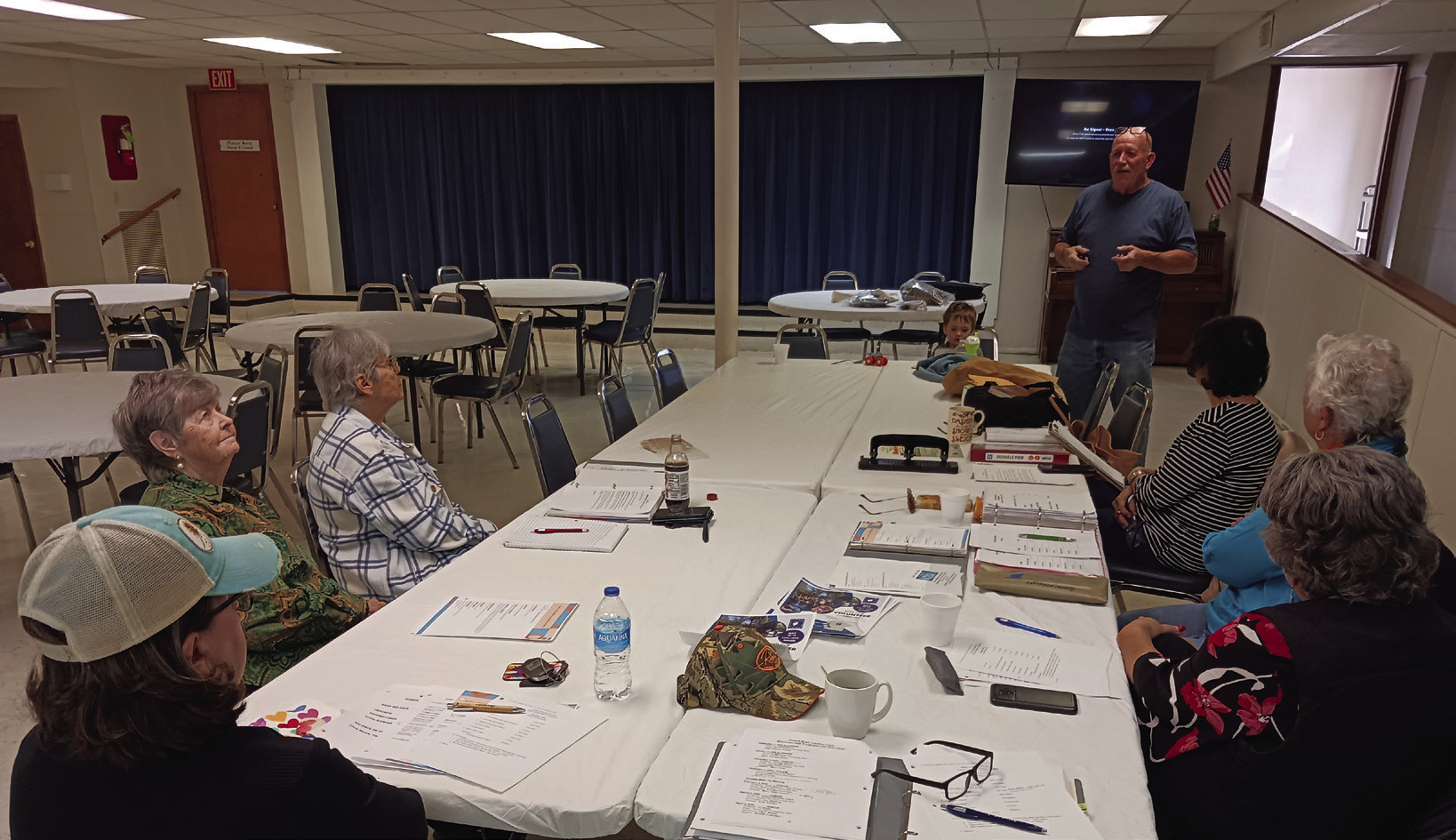
“Everything that happens in the box is for the super organism.” Pat Tickel, wellknown local beekeeper, presented a lively presentation for the Madill Rose Garden Club on Thursday, February 5, at the Madill Methodist Church Fellowship Hall.
Tickel presented an entertaining fact-filled, off the cuff delivery in his well-known “down home, good humored folksy manner.”
Bees are migrant workers first bought to The New World soon by Missionaries who wanted wax for their candles after the discovery of North America.
There are 25 thousand kinds of bees. The honeybee, of which there are nine kinds, is the only insect that produces something that man can eat.
Tickel professed to not have an organized plan for his hobby and it has grown and flourished with random thoughts and the drawing from his maternal roots in agriculture as a child. He now plants a literal buffet for the growth and development of his bees.
On his acreage he plants wheat, alfalfa, white and red clovers, hairy vetch and turnips. This past year he introduced sesame. Sesame production created its own set of problems because it is a controlled crop that required him to sign a document that he was not growing for food/ seed oil.
In addition to the nitrogen bearing legumes like hairy vetch, alfalfa and clover, the cereal grass wheat and oilseed sesame Tickel grows a bounty of flowers. Sunflowers are his primary flower with cosmos and left over from the previous owner of his property, Don and Nancy Whittaker. He grows red Turk’s cap all well-known pollinators for the bees, bumblebees and butterflies to enjoy.
Tickel’s wife, Patty, is introducing milk week to the buffet for Monarch butterflies to lay their eggs on. A bee will travel two miles for pollen.
He uses a 1935 Allis-Chambers Combine to harvest the wheat. Tickel fertilized and watered the sesame, and it grew eight feet tall. He brush-hogged it and local dove made a feast out of it.
It blooms from June until the first “killing frost.” The intention with this seed variety is to have something in bloom as much as Zone7B will allow.
The turnips are used as food for his chickens. He average egg production is 20 eggs per day.
It takes nine bees to visit a blossomtoproduceoneapple. Thereisamobilebeeindustry particularly in California thatmoveshiveson18wheelers covered with tarps during the night to move to the next crop in blossom. Blooming cycles are approximately two to three weeks requiring a great deal of planning to transport the hive boxes on to the next crop.
A bee only lives 63 days. From an egg to hatching is 21 days then day 22 to 42 is spent in the hive box and they forage from day 43 to 63. There are 30 thousand bees in one box.
The Honeybee Queen will live for multiple years. Prior to 1980, the Queen could live for up to seven years but since then, they only live up to two years. The small hive beetle and varroa mite were introduced into the United States honeybee population in 1980 from fruit imported from Asia resulting in a serious and costly effect on bees, honey and the industry.
AsMarshallCountyis“big pecan country” a question was asked if bees like blooming pecans. They do not but they will collect sticky resin to produce propolis to seal their hive box.
The Madill Rose Garden ClubthanksPatTickelforthe delightful and educational presentation on bees. Those in attendance: Jayson Pruitt, Jo Wood, Doris Farris, Lydia Shaw, Mary Jane Lowery, Chris Moore, Sue Schilling and Judy Parkey.