
When I introduced this series, I wrote that the purpose of Oklahoma Cold Cases would not investigate unsolved crimes or try to solve them. We will leave that responsibility where it belongs—with law enforcement. Instead, we will return to these old cases through the public record, separate what is known from what has merely been alleged or repeated over the years, and remember the victims whose names can too easily become lost beneath decades of theories, rumorsandunanswered questions.
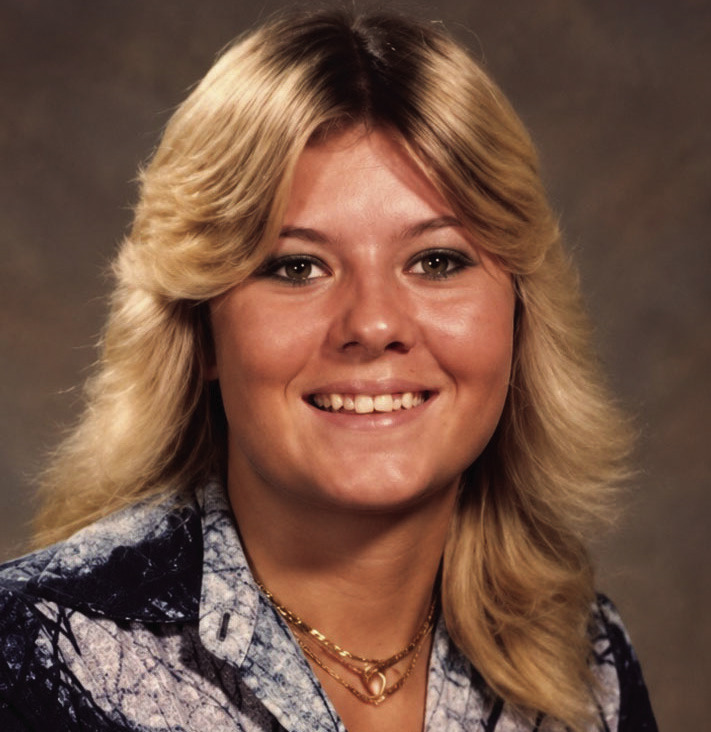
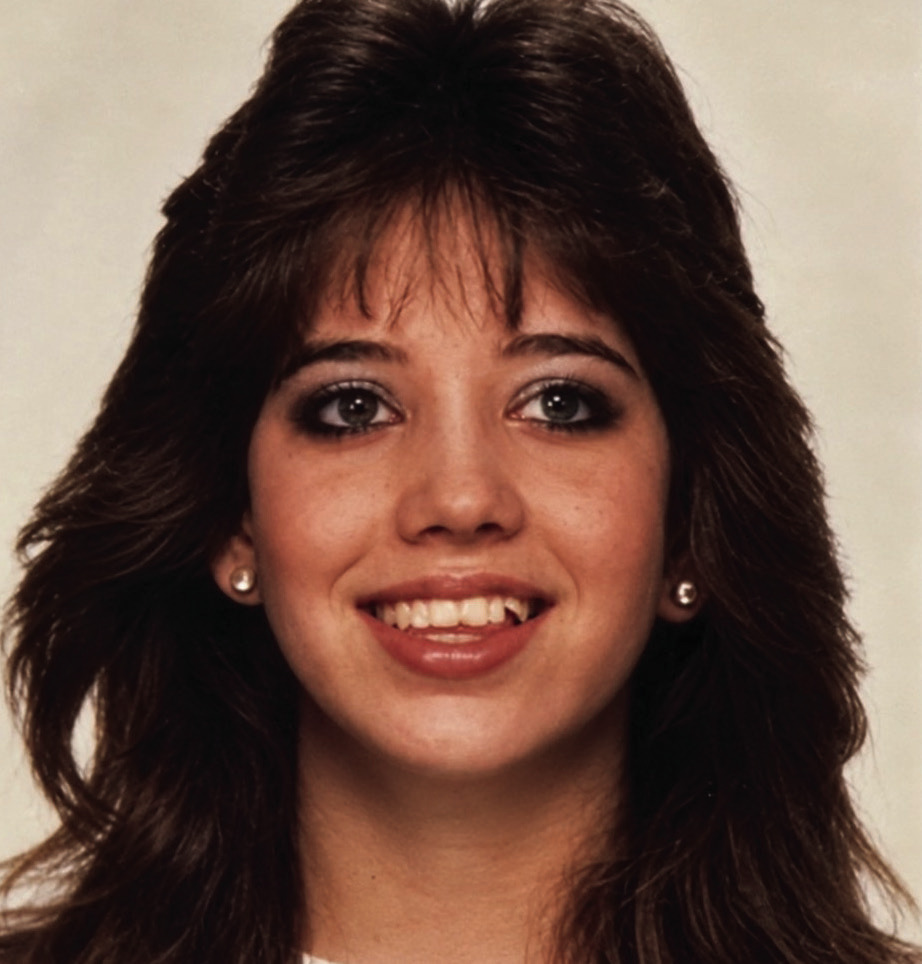
No place is more appropriate to begin than with Cheryl Genzer and Lisa Pennington. Their murders have remained unsolved for nearly thirty-nine years, but theirs is more than simply another Oklahoma cold case. The deaths of these two sisters, and their family’s decadeslong wait for answers, became a central example in the effort that ultimately produced Oklahoma’s new cold-case review law. Senator Carri Hicks specifically pointed to their case while advocating for the legislation thatbecameSenateBill1636.
Before there was a Senate bill, however, before legislative hearings and discussions about DNA testing, forensic evidence and cold-case reviews, there were simply two sisters from an Oklahoma City family who went to the State Fair.
Cheryl was the older sister. She was 25 years old in September 1987 and had recently separated from her husband. She was staying with a friend while apparently trying to determine what came next in her life. Her mother, Charlette Pennington, later recalled that Cheryl kept in regular contact with her. In fact, mother and daughter sat down together over a cup of coffee on September 23, the very day Cheryl disappeared. Among the ordinary things they talked about was work: Cheryl was trying to get a job painting houses. Nothing Charlette remembered about that conversation suggested that her daughter wastroubledorthatanything unusualwasabouttohappen.
Lisa Marie Pennington was Cheryl’s much younger sister. Born October 6, 1970, she was only 16 years old that September and was less than two weeks from her seventeenth birthday when she disappeared. Lisa was remembered as the quieter of the two sisters and, in many respects, very much a teenager of the 1980s. She loved music. Her bedroom wallswerereportedlycovered with posters of Mötley Crüe, then one of the biggest bands of the decade.
The distinction about Lisa’s age is worth making because even contemporary newspaper accounts sometimes reported that she was 17, an error that has followed the case ever since. She was not. When Lisa walked into the State Fair on September 23, she was still a 16-year-old girl. Had she lived, she would have turned 17 on October 6.
Their mother also remembered something more personal about both daughters. Cheryl and Lisa liked to look their best. It was simply part of their daily routine. Whether they had somewhere special to go apparently made little difference; they got up, showered, fixed their hair and makeup and prepared for the day. It is a small detail, perhaps, but one worth remembering. Nearly thirty-nine years of police reports, court proceedings and speculation can turn two young women into little more than names attached to a famous cold case. Before all of that, they were sisters with music they liked, clothes they chose, daily routines, plans for tomorrow and a family accustomed to having them around.
Cheryl and Lisa were two of four children of Roscoe “Rocky” and Charlette Pennington. They had two brothers, Ronnie and Alan. Later accounts report that both sistersattendedPutnamCity High School. Their brother Alan would later remember both sisters for their smiles and their enjoyment of music and life. Whatever differences existed between the more outgoing older sister and the quieter teenager, they were close enough that on Wednesday, September 23, 1987, they decided to spend the evening together at one of Oklahoma’s great autumn traditions—the Oklahoma State Fair.
It is hard to write about what happened that evening without remembering how different the world of 1987 was from the one we live in today. There were no smartphones in anyone’s pocket. No text messages. No Find My iPhone. No location history quietly recording where someone had traveled.
Surveillance cameras were nothing like the nearly ubiquitous systems we take for granted today. DNA analysis itself was only beginning to enter American criminal investigations. A person could leave home and, unless someone saw where he or she went, leave remarkably little of the electronic trail that almost all of us create today.
Communication was different as well. If family members became separated at a crowded event such as the State Fair, they generally did what people had always done: they decided beforehand where and when they would meet and trusted everyone to be there. The alternative might be finding a pay telephone and calling home, but even that only worked if someone was there to answer.
Cheryl and Lisa went to the fair that Wednesday with their brother Alan and his girlfriend. At some point during the evening, Alan left the fairgrounds to take his girlfriend home. He intended to return for his sisters, and theyagreedonaplacetomeet him when he came back.
Today, that arrangement sounds almost unnecessarily rigid. If plans changed, one sister could simply send a text: We’re over by the midway. Meet us there. In 1987, once Alan drove away, that option did not exist. If Cheryl and Lisa changed locations or their plans changed, there was no easy way to tell him. Once Alan left the fairgrounds, the prearranged meeting place mattered.
When he returned, Cheryl and Lisa were not there.
At first, their absence would not necessarily have suggested anything sinister. The Oklahoma State Fair was crowded with people, rides, exhibits, concession stands and acres of midway. Two young women could lose track of time, encounter friends or simply be delayed. Alan could not reach into his pocket and call them. He could wait at the agreed location, search the fairgrounds and ask whether anyone had seen them.
Information began to emerge about what his sisters had been doing during the evening. They had spent time with two men. One was Douglas Eugene Lawson, a young man working at the fair who operated the monorail. The other was Lawson’s friend, Lane Russell Henley III. Lawson reportedly had given the sisters free rides on the monorail. Later evidence and statements placed Cheryl and Lisa leaving the State Fair in the company of Lawson and Henley.
That fact is important because thefamiliardescription of Cheryl and Lisa as having simply “vanished from the State Fair” can create a misleading picture. They apparently did not disappear anonymously into the midway crowd. Investigators were able to identify people with whom they had spent part of the evening, and later reporting placed the sisters at a residence after they left the fairgrounds.
It is at this point that certainty begins to give way to something considerably more complicated.
Various accounts would eventually be given about where the four went after leaving the fairgrounds and what happened during the hours that followed. Some of those accounts changed. Years later, one version would become enormously important to prosecutors. Those events belong to the next part of this story. For now, it is important to distinguish whatcanreasonablybe established from what would later be alleged.
Cheryl and Lisa had gone to the Oklahoma State Fair on September 23. They were subsequently in the company of Lawson and Henley, and they were seen after leaving the fairgrounds. They did not return home.
Rocky Pennington began trying to determine where his daughters had gone. He spoke with Henley, who acknowledged that Cheryl and Lisa had been at his residence but maintained that they subsequently left. Precisely what Henley told Rocky about their departure varies among later accounts. Because those differences eventually became part of the investigation, I will leave the details for the next installment rather than select one later version and present it as settled fact.
For the Penningtons, however, the immediate question was much simpler.
Where were Cheryl and Lisa?
The family did not immediately know that a crime had occurred. Cheryl was 25. The sisters had apparently left the fair voluntarily with people they knew or had met there. There remained the possibility of an innocent explanation for why they had not returned home.
But Cheryl normally kept in touch with her mother. The coffee they had shared on September 23 became the last conversation Charlette would ever have with her daughter. Lisa did not come home either.
On September 25, two days after the sisters disappeared, they were reported missing.
At that point, there was still no body, no known crime scene and no evidence publicly establishing that either sister had been harmed. An October 8 newspaper report concerning the missing women stated that foul play was not then suspected. From the perspective of law enforcement, Cheryl and Lisa were missing persons. From the perspective of their parents, however, two daughters who should have called or come home simply had not.
That distinction must have become increasingly meaningless to Rocky and Charlette as the days passed.
Not knowing creates its own kind of torment. A death, terrible as it is, eventually provides a family with a terrible certainty. A disappearance does not. It leaves open every possibility at once. Every telephone call might bring an answer. Every reported sighting might mean something. Every car pulling intothedrivewaymightcarry someone with news. Hope remains alive precisely because certainty does not.
And then there is the waiting.
September 23 became September 24. Then September 25.
September ended.
October began. There was still no word from Cheryl or Lisa.
October 6 came and went. It was Lisa’s seventeenth birthday.
Whateverplansherfamily might once have imagined for that day had been replaced by the search for her. Somewhere in the middle of those 27 days, Lisa passed a birthday her family should have celebrated with her while they still did not know where she was.
Another week passed. Then another. For 27 days, Rocky and Charlette Pennington lived without knowing what had happened to their daughters.
The answer came on October 20, 1987, and it came entirely by accident.
A car salesman was demonstrating a four-wheel-drive vehicle to a prospective customer in what was then a relatively undeveloped part of northwest Oklahoma City. The area near Northwest 122nd Street and Santa Fe Avenue looked considerably different in 1987 than it does today. Development had not yet swallowed much of the open ground along the city’s northern edge. It was the sort of place where someone demonstrating a four-wheel-drive vehicle could leave the pavement and drive into a field.
That is apparently what the salesman did.
In the field, the two men cameuponsomethingneither had gone there looking for.
Two shallow graves. Police were called to the scene. Inside were the badly decomposed remains of two young women. The location was less than a mile from the place investigators had been toldCherylandLisawerelast seen alive.
At first, police still had to answer the question the Penningtons had been asking for almost a month: Were these Cheryl and Lisa?
OnOctober21,theanswer became official. The state Medical Examiner identified the remains through medical and dental records as 25-year-old Cheryl Genzer and her younger sister, Lisa Pennington.
Both had been shot in the head.
For 27 days, Rocky and Charlette had hoped their daughters would come home. Now they knew they never would.
Thesearchfortwomissing sisters was over.
A double-murder investigation had begun.
There were now two bodies, a burial site and physical evidence that could be collected and preserved. There was also a timeline investigators could begin reconstructing and a relatively small group of people known to have been with Cheryl and Lisa during their final hours. The question was no longer simply where the sisters had gone after the State Fair.
Someone had killed them. Someone had transported or taken their bodies to that field.
Someone had placed them in shallow graves and left them there.
For Rocky and Charlette Pennington, one unbearable uncertainty had merely been replaced by another. They knew where their daughters were. They still did not know who had killed them, why they had been killed, or whether anyone would ever be held responsible.
Those questions would follow them for the remainder of their lives.
And the answers, at least for a time, seemed within reach.
Investigators would return to the final hours of September 23 and to the people who had been with Cheryl and Lisa that night. Statements would be compared. Stories would change. Physical evidence would assume enormous importance. Eventually, a witness would provide an account that transformed the investigation, and a man would be charged with two counts of first-degree murder.
For a time, it appeared Rocky and Charlette Pennington might finally see someone answer in court for the deaths of their daughters.
They would not. Nearly thirty-nine years later, no one has ever been convicted of murdering Cheryl Genzer and Lisa Pennington.
Yet their story did not end in that field in northwest Oklahoma City. Their parents continued asking for answers. Their case survived the passing of investigators, changes in forensic science and the deaths of people connected with it. Decades later, Cheryl and Lisa’s names would be spoken at the Oklahoma State Capitol as lawmakers considered whether families of cold-case victims should have a formal way to ask that an old investigation betakenoutagainand examined with fresh eyes.
That effort eventually became Senate Bill 1636, Oklahoma’s new cold-case review law.
There is something particularly poignant about that history. Rocky and Charlette spent much of their lives asking for an answer to what happened to their daughters. Neither lived long enough to seethemurderssolved.Charlette died in 2021, preceded in death by Rocky and by both of the daughters whose deaths had shaped so much of their lives.
But the questions they kept asking did not die with them.
And so, our first journey into Oklahoma Cold Cases begins where Oklahoma’s new cold-case law, in many respects, began: with Cheryl Genzer, 25, looking for her next job, and her little sister Lisa, 16, with Mötley Crüe posters covering her bedroom walls; two sisters who went together to the Oklahoma State Fair on a Wednesday evening in September 1987 and never came home.
When I introduced Oklahoma Cold Cases, I said these articles would appear once or twice each month. That will remain generally true, but I have decided on one exception. Some cold cases simply cannot be told responsibly in a single article. When a case requires two or more parts, I will continue that story from week to week until it is finished. Asking readers to waittwoweeks—orperhapsa month—for the next chapter of a story such as this one would interrupt the narrative and, more importantly, would not do justice to the victims, their families or the cases themselves.
So, we will not leave Cheryl and Lisa here for a month.
Next week, we will return to September 1987 and examine what happened after Cheryl and Lisa were found—the people investigators focused upon, the statements that changed, the physical and forensic evidence, the man eventually charged with their murders, and why a prosecution that once appeared destined for a courtroom collapsed before a jury ever heard the case.