
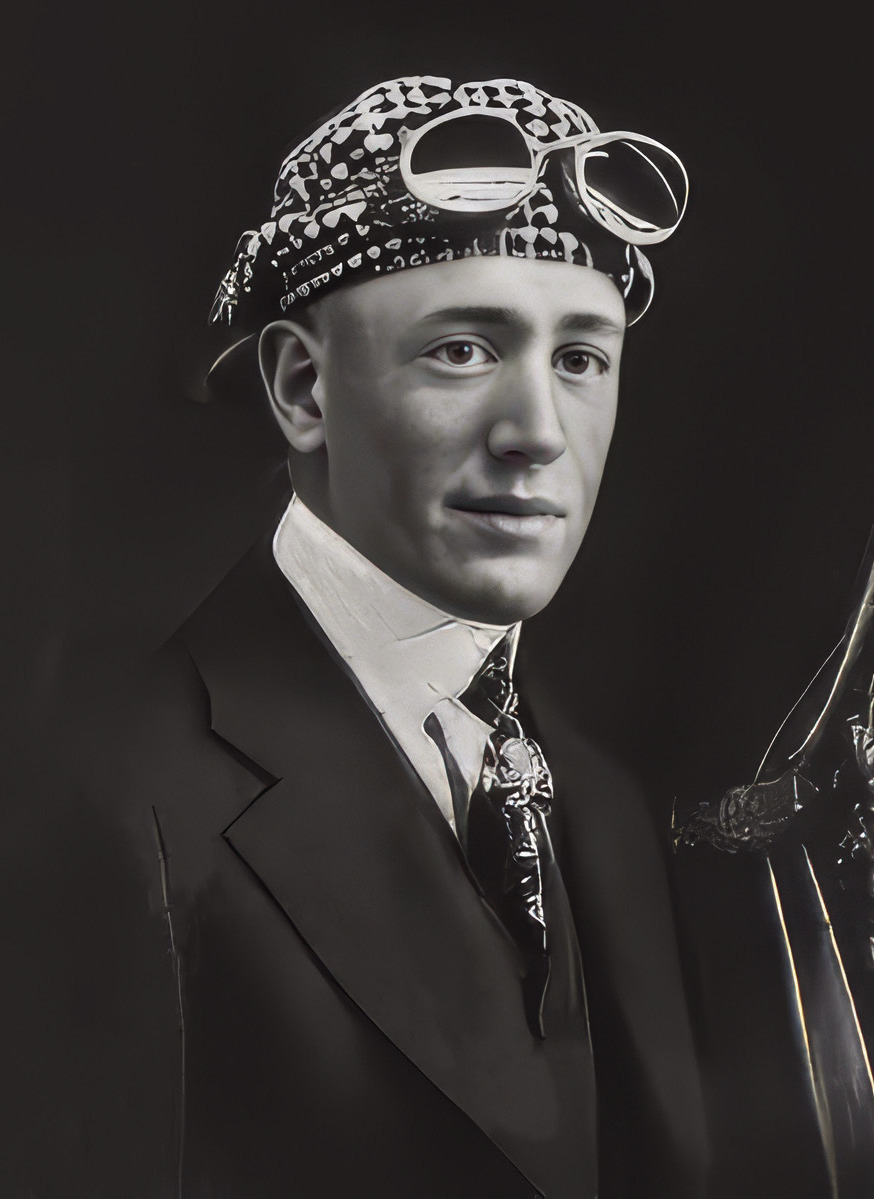
When he was a young child, Overton Bounds was enrolled as a citizen of the Choctaw Nation. His father, James Hicklin Bounds, was an enrolled member of the Choctaw Nation through intermarriage. James Bounds’ first wife, Joanna “Fannie” Martin, was Native American, and due to the Dawes Act, white men who married Native Americans were granted tribal citizenship. James and Fannie married on November 25, 1875. From that marriage, the Bounds had two sons, Young Walker Bounds and James Hicklin Bounds, Jr., all of whom were enrolled as Choctaw citizens. Sadly, Fannie passed away in 1891.
In 1893, James Bounds marriedawhitewomannamed Francis “Fannie” Martin. That marriage produced Overton in 1895 and Frank Bounds in 1896. After Frank’s birth, James Bounds sought admission ofbothOvertonandFrank to be enrolled as Choctaw Citizens, and the Dawes Commission granted their admission, making them both Citizens of the Choctaw Nation.
Following Bounds’ marriage to Francis, a white woman, the Choctaw Nation filed a protest in the United States District Court for the Southern District of Indian Territory in 1897, claiming that since Bounds was now married to a white woman, he forfeited his citizenship in the ChoctawNation.Furthermore, they argued thathis sonsOverton and Frank, both born to a white woman, should also be removed from the tribal rolls of the Nation.
Following several court hearings and years of litigation, the United States District Court for the Southern District of Indian Territory ruled in favor of James Bounds, allowing him to keep his two sons, born of a blood member of the Choctaw Nation, on the tribe's rolls. However, the courtorderedthatOvertonand Frank be removed from the rolls of the Choctaw Nation. By 1900, Overton Bounds was no longer a citizen of the Choctaw Nation, although he had been recognized as a citizen for about three years prior.
Throughout his life, Overton Martin Bounds struck an imposing image. According to his World War I draft registration card, he was “tall,” with a slender build, striking gray eyes, and reddish, rust-colored hair. It was because of his rustcolored hair that he earned the nickname “Rusty.” It was a name given to him by soldiers during his time as chief flight instructor at the New York National Guard First Aero Company training facility at Mineola, Long Island, New York. And it stuck with him.
Another reason Bounds remained an imposing figure was his athleticism. As previously reported, he was a standout athlete at Kingston High School, excelling in both football and baseball. However, the true explanation for Bounds’ physical appearance and strength was his many years of flying planes in the early 20th century.
In the dawning days of aviation, when the sky was still a frontier, and the airplane little more than a glorified kite stitched with linen and braced by wire, to be a pilot was to be something more than a dreamer. It was to be a warrior in the wind, a creature of endurance and raw resolve. Unlike modern aviators with digital instruments and hydraulic assist, the first generation of pilots flew with sinew and spirit, wrestling machines that bucked like wild horses and navigating a sky that offered no forgiveness.
To fly in the early twentieth century was to embrace a craft that was physically punishing, mentallyexhausting,andoften perilously short-lived. These early pilots were not merely men who flew—they were strong men who fought the sky and won, one flight at a time.
The earliest airplanes— those of the Wright brothers, Blériot, and Curtiss—were remarkable feats of ingenuity, but they were mechanically primitive by modern standards. Built from wood and doped canvas, braced with piano wire, and powered by low-horsepower engines, these machines offered no comfort and even less control. There were no hydraulic systems or powered servos to ease the burden of flight. Every motion— every turn, climb, or descent— was achieved through direct mechanical linkage, typically using control cables connected by pulleys to the rudder, elevator, and ailerons.
To move these surfaces against the wind, especially at higher speeds or in turbulent weather, required significant physical effort. The control stick had to be gripped and forced, often with both hands and full upper body strength. The rudder pedals resisted with stubborn force, demanding strong legs and a steady core. In many cases, pilots leaned their entire weight into amaneuver,particularlywhen fighting gusts or attempting sharp banking turns.
It was not just the act of flying that required strength—it was the entire experience. Early cockpits were exposed to the elements, lacking windshields, insulation, or climate control. A pilot faced the brunt of the air like a man riding the prow of a ship in a storm. In winter, frostbite posed a genuine threat, while in summer, dehydration and heat exhaustion could take their toll. The roar of the engine, the battering wind, and the constant vibration made every flight a feat of endurance.
Pilots typically wore heavy leather jackets, gloves, and goggles not as a fashion statement but as protection against the sky. Nevertheless, many emerged from long flights bruised, windburned, or physically exhausted. Keeping a plane steady in rough weather was like trying to hold back a storm with bare hands.
The physical strain of early flight reached its zenith during World War I, when aviation entered the realm of combat. Dogfighting in biplanes like the Sopwith Camel, SPAD XIII, or Fokker Dr.I demanded split-second reflexes and the strength to heave the aircraft into tight, punishing turns while aiming, firing, and evading enemy fire.
Pilots in the Great War often returned from sorties soaked in sweat, their hands cramped from gripping the stick, their bodies aching from G-forces unmitigated by any form of relief. Many flew multiple missions a day, all while enduring poor nutrition, lack of sleep, and constant danger. There were no parachutes for most of the war—if your plane caught fire, you either jumped or burned.
AlthoughBoundsneversaw battle, he trained many WWI pilots in the art of combat flying and dogfighting and experienced the stress and strain of combat flying.
Before and after the war, Bounds was a barnstormer, crisscrossing America, performing stunts, giving rides, and keeping the spirit of flight alive in small towns and rural fairs. These were not leisure flights—looping the loop, diving through barns, or walking on wings demanded intense core strength, balance, and fearlessness.
To be a barnstormer was to live a life of hard landings and harder scrapes, sleeping under wings and living by your hands and reflexes. The airplane may have carried them, but it was their bodies that bore the brunt of flight.
Early aviators were not only strong in body—they were unyielding in will. There was no air traffic control, no GPS, no radar. Navigation was often done by line of sight, using rivers, railroads, and sheer guesswork. Mechanical failures were common, and emergency landings in fields or pastures were a routine part of a pilot’s life.
Thesemenandwomenwere part mechanic, part athlete, part pioneer, and wholly courageous. Their strength was not just in muscle but in the resolve to keep flying when the odds—and often the aircraft— were against them.
Today, flight has become far more sophisticated and, in many ways, safer and easier. Computers assist with control inputs, cockpits are pressurized and climate-controlled, and complex failures are rare. The modern pilot’s strength lies more in decision-making, systems management, and technical proficiency.
But the legacy of those early aviators—the iron-handed men of cloth-winged planes— still lives in the spirit of the profession. Every time a jet roars down a runway, it carries with it a century of flight made possible by those who once pulled and fought their planes through the sky with nothing but strength and faith.
In an age when humans barely understood the sky, early pilots dared to dance upon it. They did so without the safety nets of modern technology, relying instead on muscle, grit, and a kind of fearless wisdom that defied gravity and death alike. Their strength was not born in the gym but in the cockpit, carved bywindandresistance,shaped by necessity and nurtured by sheer will.
To say they were strong is an understatement. They were elemental—part sky, part fire, part steel. And it is on their shoulders, weary and weathered, that modern aviation was built.
Overton Bounds exuded this image and spirit. He was a man of physical strength and mental prowess, and his steel gray eyes and rust-colored hair struck an imposing image.
After working for about two years with the Garland Aircraft Company, Bounds decided to take a break from aviation and return to another passion that predated his love of flying. In late 1929, Bounds left his position as Vice President of the Garland Aircraft Company and traveled to Paris, Texas, to try out for a position on the Paris Colts' professional baseball team.
In the heart of Northeast Texas, nestled along the Red River near the Oklahoma border, lies Paris—a town steepedinSoutherncharmand civic pride. Known today for its Eiffel Tower replica (capped with a red cowboy hat, no less), Paris was also once known for something else: baseball. And at the tail end of the Roaring Twenties and into the early 1930s, one team stood at the center of it all—the Paris Colts.
Thoughtheirtimewasbrief, the Colts were emblematic of a golden age in minor league baseball,whenthesportwasn’t just national—it was local, personal, and pulsing with the rhythm of small-town life. To understand the Paris Colts is to understand a chapter in the grand American story where community, competition, and hope converged on a dusty diamond.
The Paris Colts took the field in the Texas–Oklahoma League,aClassDminorleague that operated intermittently during the 1910s through the 1930s. The league existed to serve small towns spread across the Red River Valley and provided a proving ground for young talent chasing bigleague dreams.
Before the lights of major league stadiums reached every American household, before television and multimilliondollar contracts, professional baseball lived in the dirt and dust of small-town diamonds. It thrived on hot afternoons and rowdy nights, where entire communities gathered to cheer, curse, and celebrate a game that felt as natural as breathing. One of the purest expressions of this era was the Texas–OklahomaLeague.This minor league circuit operated on the edge of ambition and survival in a region where the game mirrored the grit of the people who played and watched it.
The Texas–Oklahoma League, often abbreviated as the T-O League, was established in 1911 during a time when baseball fever swept the nation, and even the smallest towns were eager to seize a share of the national pastime. Spanning the Red River, the league linked towns in North and Northeast Texas with their counterparts in Southern Oklahoma, creating a rugged and vibrant baseball frontier.
Classified as a Class D league—the lowest rung of professional baseball—the T-O League was a development ground, a testing ground, and sometimes a final stop for aspiring players. It provided essential experience to young prospects while giving seasoned veterans a place to hang on a little longer.
The league ran intermittently, folding and reforming in response to war, depression, and the shifting tides of economic hardship. Its most notable periods of operation were 1911–1914, 1921–1922, and 1929–1931, with each incarnation serving a slightly different lineup of towns and teams.
The T-O League’s identity was shaped by the towns it called home—places often too small for big-city distractions but big enough to build a grandstand and fill it night after night. Among the towns that fielded teams over the years were:
• Paris, Texas – Paris Colts
• Bonham,Texas–Bonham Bingers
• Sherman, Texas – Sherman Lions
• Denison, Texas – Denison Champions
• Ardmore, Oklahoma – Ardmore Indians
• McKinney, Texas – McKinney Generals
• Cleburne, Texas
• Durant, Oklahoma
• Greenville, Texas
• Gainesville, Texas These were teams forged by local pride, local money, and often local boys. The players weren’t millionaires or household names—they were waiters in the offseason, factory workers in winter, and ballplayers when the weather was warm and the crowds were ready.
The parks were humble, often no more than wooden bleachers, a press box tacked onto a roof, and chalked baselines cutting across red clay. The fans were loud, loyal, and unforgiving. And when the home team won, the whole town rejoiced.
The T-O League was not refined. It wasn’t polished. But it was passionate. The style of play was aggressive and physical. Pitchers worked deep into games. Fielders had to cope with uneven ground and make quick, instinctive plays. Hitters swung hard and ran harder. Games were often decided not by talent alone but by sheer will—and sometimes by who could endure the heat longer.
Disputes were common. Umpires faced relentless heckling.Fightswerefrequent. Yet through it all, the game thrived—imperfect, perhaps, but genuine in a way rarely seen today.
Though a Class D league, the Texas–Oklahoma League helped launch or support the careers of many players who would move up through the minor league system, and occasionally, reach the majors. It also served as a haven for older players who had tasted the big leagues and now played for the love of the game—or for the last paycheck they could earn before retirement.
Young players came hoping for a shot at advancement. Olderplayerscametogiveback what they had learned. And townspeople came to witness that great, fragile thing: the dream of baseball in motion.
The league’s cycles of life and death were shaped by the same forces that affected the broader country: World War I, the Great Depression, and the difficulty of sustaining professional sports in rural areas during lean years.
The league folded after the 1914 season, came back briefly in the 1920s, and saw another resurgence in 1929. But by 1931, the economic hammer of the Depression proved too much. Attendance dropped. Sponsorships dried up. Teams couldn’t pay players or maintain facilities. In 1932, the Texas–Oklahoma League folded for the final time.
In 1929 and 1930, Paris fielded a team named “Colts,” representing its players' youthful energy and the town's spirited identity. The Colts’ ballpark was a modest affair— wooden bleachers, chalked lines on clay, and a grandstand filled with locals sipping soda poporfanningthemselveswith straw hats. Baseball may not have been significant league caliber, but the passion was major league all the same.
Paris had a long tradition of minor league baseball, and the Colts followed teams like the Paris Snappers and Paris Grays, predecessors who had helped keep baseball alive in Lamar County since the early 1900s. The Colts, though shortlived, carried the torch through a challenging and transitional time in American history.
By 1929, the United States wasenteringtheGreatDepression. Wall Street had crashed, banks were failing, and rural towns across the South were tightening their belts. But baseballendured.Itwascheap, it was cheerful, and it gave people something to believe in when belief was in short supply. The Paris Colts were part of that balm.
Many of these men played for peanuts—literally and figuratively. They traveled by bus or train, stayed in boarding houses, and played through injuries without complaint. But to make it in professional baseball, even at the Class D level, meant something. It meant grit, grace, and a shot—however distant—at greatness.
Games were often played six days a week, with Sunday doubleheaders drawing the biggest crowds. Rivalries with nearby towns like Bonham, Sherman, McKinney, or Ardmore created an electric atmosphere. There were no pitch clocks, no analytics, and no endorsement deals—just the game in its rawest, purest form.
By 1931, the Texas–Oklahoma League was teetering, and teams like the Paris Colts felt the strain. The economic weight of the Depression was simply too much for many small-town teams to carry. Crowdsdwindled.Moneydried up. And by 1931 or 1932, the Colts were no more.
Overton Bounds played third base for the Paris Colts for one season. By all measures, he was an outstanding ballplayer, and had he chosen, he could have continued his baseball career, likely moving up to the major leagues. However, his love of flying could not be quenched, and the thrill of soaring through the clouds proved too alluring for him to resist. Thus, with the decline of the Paris Colts and the Texas-Oklahoma League, Bounds returned to aviation.
By late 1930, Bounds was the general manager for another air school in Tulsa. He worked at that flight school for several months before being hired by Ernest Whitworth Marland to be a salesman and chief pilot for a newly formed oil company in Ponca City, known originally as The Continental Oil Company, but in just a few short years, would become known by the name it still carries today, Conoco.
MoreonthatpartofOverton Bounds’ life next week..