
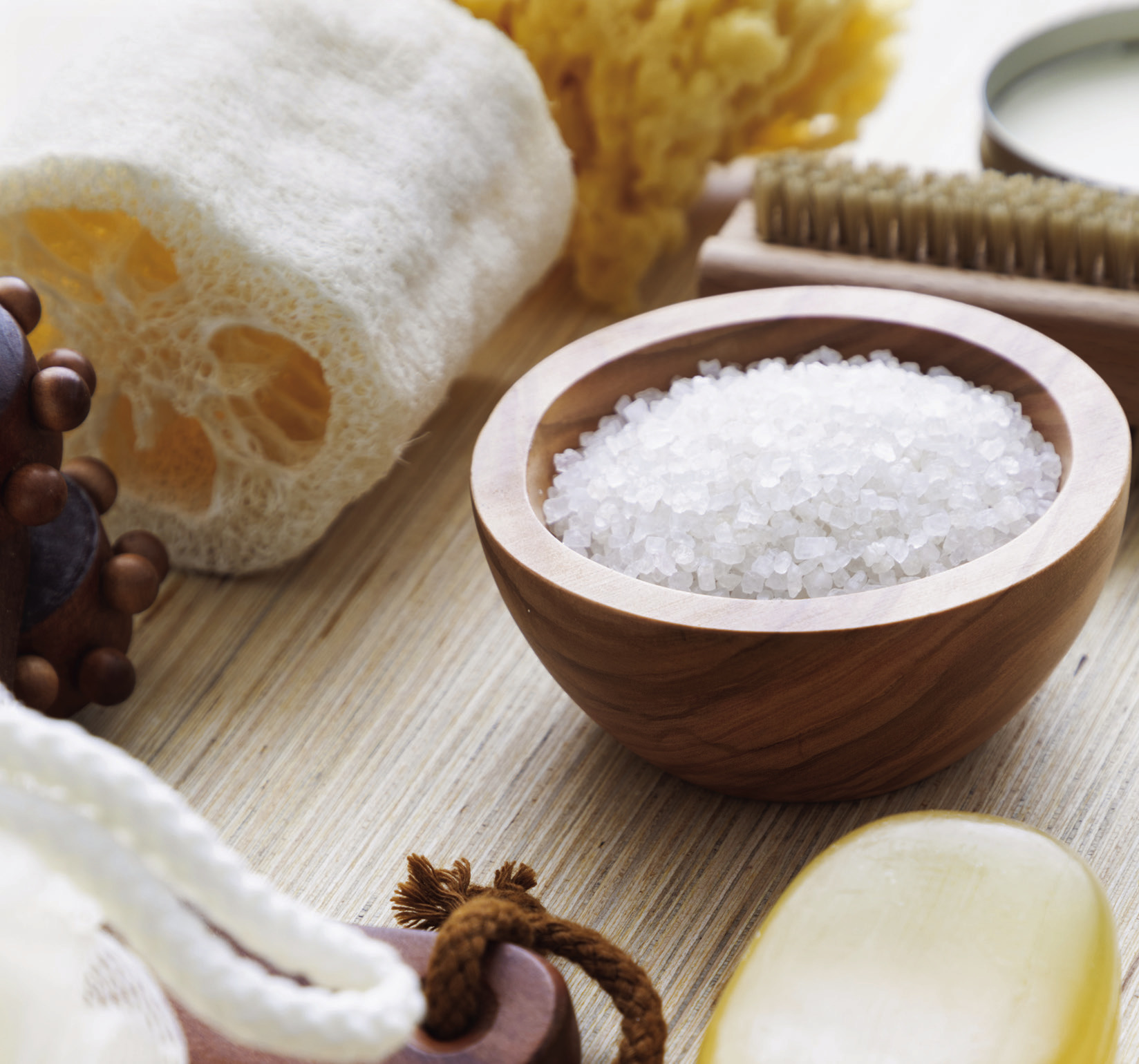
In a world of spices and seasoning, we overlook one of the most everyday household items when it comes to flavor, salt. In common usage, salt is a mineral composed primarily of sodium chloride.
When used in food, especially in granulated form, it is more formally called table salt. In the form of a natural crystalline mineral, salt is also known as rock salt or halite. Salt is essential for life in general, and saltiness is oneofthebasichumantastes.
Salt is one of the oldest and most ubiquitous food seasonings and is known to uniformly improve the taste perception of food, including otherwise unpalatable food. Some of the earliest evidence of salt processing dates to around 6000 BC, when people living around present-day Romania boiled spring water to extract salts; a salt works in China dates to approximately the same period.
Salt was also prized by the ancientHebrews,Greeks,Romans, Byzantines, Hittites, Egyptians and Indians. Salt became an important article of trade and was transported by boat across the Mediterranean Sea, along specially built salt roads and across the Sahara on camel caravans.
The scarcity and universal need for salt have led nations to go to war over it and use it to raise tax revenues. Salt is used in religious ceremonies and has other cultural and traditional significance. All salt has the same chemical makeup at its core, but how it’s cut will determine how salty it’s perceived to be.
In general, larger and courser salt will taste saltier because of the larger surface area that hits your tongue. General table salt is super fine and therefore each grain is much smaller so less surface area to be salty.
For this reason, you need a lot less flaky sea salt or similar than you would need table salt. There are six easily accessible salts, Table Salt in the United States, most table salts are iodine fortified.
The essential mineral is important for combatting iodine-related thyroid disorders. Highly processed, table salt is stripped of any minerals and often contains an anti-caking additive. Try it in pasta water and in recipes that require very exact measurements like baked goods.
Kosher salt, named for the Jewish process of meat preparation which requires that meat be devoid of blood, is large coarse crystals does an excellent job. Its milder flavor lends itself well to most recipes. It’s also quick to dissolve and just as good on a steak as it is on popcorn.
Pickling salt is also called preserving salt or canning salt. It doesn’t contain any additives like anti-caking ingredients and therefore won’t cloud pickling water. The fine granules are easy to dissolve and should be kept in an air-tight container to prevent clumping.
It’s a very concentrated salt and one should use a “less is more” approach when working with it. It is great for vegetable gardeners wanting to preserve the flavors of summer.
Himalayan Pink Salt is harvested in the foothills of the Himalayas and gets its distinct coloring from the minerals it contains, mostly iron or rust. As the fashionable salt of the moment, it’s favored by many who tout its many health benefits. All that aside, it has a slightly lower sodium content than regular salt and probably looks hipper on the dinner table than its counterpart.
Looking for an “eggy” flavor to add to your recipes? Then black salt is the one for you. Commonly used in Southeast Asian recipes, black salt or Kala namak, has a strong Sulphuric odor due to the Indian spices and herbs that are heated into it at extremely high temperatures. Seeds from the harad fruit contain Sulphur that is released into the salt during the cooking process. While very pungent as it cooks in a recipe, the odor dissipates andleavesbehindaneggyflavor great for egg-free dishes.
Sea Salt is derived from evaporated seawater and is harvested all over the world. It can be found in fine, coarse or flaked textures with variances in color based on the minerals it contains. Crystalline varieties are best for adding that finishing touch to just-cookedfoodslikesalmon. Even a salad would benefit from a pinch.
Flaked sea salt is fastdissolving and an excellent choice sprinkled over vegetables. Fleur de Sel which means “flower of salt” in French is considered the “Cadillac of all salts” and is handharvested from coastal salt ponds in France. This isn’t an ordinary seasoning, but best used as a garnish over a dish just before serving. It comes with a hefty price tag, too.Atapproximately$30per pound, this salt has special occasion sprinkled all over it.
Sinceconsumingtoomuch salt could prove fatal for many people, keeping the “less is more” approach seems to be the best route. Here’s a step-by-step recipe with basic ratios to get you started. Basic formula: start with a ratio of one teaspoon flavorings per 1/4 cup salt. Increase flavorings to taste.
Coarser, flakier salts are preferable for their texture and appearance like kosher salt. For flavorings, use your imagination.! Think herbs, spices, Chile peppers, citrus peel,edibleflowers,tealeaves orpowder,mushrooms,dehydrated fruits and vegetables. Flavor ingredients should be dry to prevent clumping.
Here are a few combinations to try at first. Chile-Lime Salt: 1/4 cup salt, 1 teaspoon red pepper flake, 1 teaspoon dried lime zest, 1/4teaspoonsmokedpaprika. Citrus-Rosemary Salt: 1/4 cup salt, 1/2 teaspoon dried lemon zest, 1/2 teaspoon dried orange zest, 1/2 teaspoon dried rosemary. Lavender Salt: 1/4 cup salt, 1 teaspoon dried lavender bud. Saffron-Fennel Salt: 1/4 cup salt, 1/4 teaspoon saffron threads, 1 teaspoon fennel seed. Vanilla-Cinnamon Salt: 1/4 cup salt, seeds from 1 vanilla bean, 1/4 teaspoon ground cinnamon.