
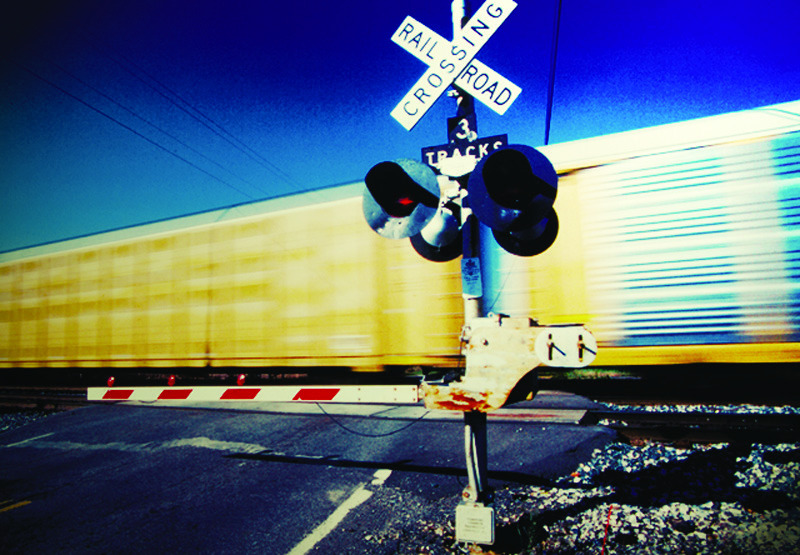
In an emergency, every minute and every second counts. What may seem like an eternity could have only actually been just five minutes.
EMS personnel responding to any emergency call knowjusthowimportanttiming iswhenthosesecondsand minutescountingcouldmean life and death. According to the National Fire Protection Association (NFPA), the standard response time total is five minutes. This is allowing for a 60 second “turnout time” and 240 second “travel time” totalling 300 seconds or five minutes, a benchmark time goal for not less than 90% of dispatched incidents.
Giventheurgencyinthese situations, a blocked railroad crossing preventing emergency vehicles from getting to where they need to be would be less than ideal. Marshall County EMS Director Cade Webb said he knows all about this exact scenario that is playing out across multiple counties in Oklahoma.
“The people that live out east of Madill really are the most disadvantaged whenever it comes to the train tracks, because they are always parked right there,” Webb stated about the unfortunate situation.
He continued to explain hisfrustrationsandwhytime is so important.
“It is so frustrating because in our line of work the American Heart Association (AHA) say that if somebody was to go down and not be breathingorhaveapulse,you have four minutes to initiate CPR before the person is not likely not going to survive,” Webb said. “Four minutes is not a very long time, especially when you think about how long it takes to call 911, talk to them, them call us, and then we have a minute, sometimes two to get off whatever we are doing to get the truck and leave.”
“We are already in a small window trying to get to somebody; so the last thing we need is to pull up to the railroads and have a four or five minute wait, sometimes 15 minutes,” Webb continued.
He spoke about a time he had to perform CPR on someonebeforewhilewaiting for the train to pass.
“I’ve done CPR before, waiting on a train coming backfromtheLittleCityArea and that should have never happened.”
Webb suggested that an overpass would help with the situation and calls on officials to do better.
“I understand BNSF was here before, and this is their town pretty much, as they are the reason we are all here. But at some point in thisrelationshipthereshould have been an overpass built.”
Webb said both sides need to find a solution.
“I will firmly and always believe that both sides could do better to get some type of resolution because lives literally depend on it,” Webb said.
Webbsaidthatwhenthere are blocked railroads, a call has to be put in through dispatch and he does not have a direct number of someone to call and speak to about the issue.
“Dispatch handles all of that for us,' Webb said. 'If we have an issue we just say ‘Hey dispatch, can you call BNSF and let them know there is a train’.”
In Oklahoma, there are penalties and exceptions in regardstorailroadcarsblocking intersections by being brought to rest in a position that blocks the insertion for morethan10minutes.Allowing for fines up to $1,000.00 to be issued for each violation by County Sheriff's Office(s), Municipalities,andtheOklahoma Highway Patrol.
Thereareexceptionstothe regulation including situations where the train is moving inacontinuousforwardor backward direction, or if the train is stopped for an emergency condition, including an accident, derailment, critical mechanical failure, track or bridge washout, storm, flood or other emergency situation.
Additional exceptions include the switching of train tracks and waiting for passing trains, air tests or stopping for a train's red train signal.
Couertesy photo