
Local dispensary owner dispels fears
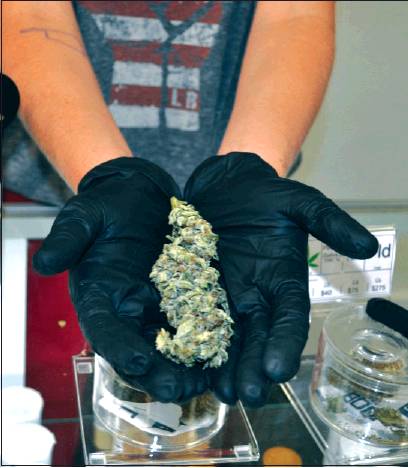
Medical marijuana advocates celebrated their first “Canniversary” this past June. The Oklahoma State Question 788, also known as the Medical Marijuana Legalization Initiative, was approved on June 26, 2018. Weston Chapman owns Texoma Hemp Corner, the sole dispensary in Marshall County to date. He opened THC in November and still believes in the benefits of his product.
“To us, it’s been a positive thing for everybody. We see how many people it’s helping get off of pharmaceuticals, like Opioids and Ambien,” said Chapman.
The vote to legalize marijuana was extremely close in Marshall County; 1537 voted no, while 1536 voted yes. That means it was a one vote difference. Even though half the county was against legalizing it, Chapman said the community has been supportive. “The ones who see family members who have been helped by marijuana, it’s opening their minds.”
The legalization for marijuana is a huge step for any state, much less a state with citizens who are vehemently against the plant. According to some like the group that fought against the passing of the bill called Oklahomans Against 788, the legalization of marijuana will only put our children in jeopardy. The group feared that children would mistakenly eat the edibles, thinking they are candy.
August Rivera, the co-chair of the group, said in a press release, “Ultimately, I think this is just a bunch of people who want to smoke pot, get high and then make a buck off of the vulnerable and poor and the marginalized.”
Chapman would fight back against that claim by comparing marijuana to alcohol. “Some people are told by doctors that a glass of wine is beneficial, but there are people out there that are alcoholics and take it too far. Like everything, use it in moderation.”
Marijuana was not always such a taboo subject. Originally, President Franklin D. Roosevelt ‘regulated’ the plant through the Marihuana Tax Act of 1937. Not only was it spelled differently from how it is today, it also banned the possession of pot by requiring the owners of the plant to obtain a tax stamp. They could not receive the stamp without providing details about the location and amount, which incremented themselves.
Even though the law was overturned by the Supreme Court and ultimately repealed by Congress in 1970, the plant landed on the newly enacted Controlled Substance Act. Back in 1937, Harry Anslinger, the commissioner of the Federal Bureau of Narcotics (the DEA’s predecessor) made the case that marijuna had become a national menace.
He also claimed people could get violent from it. This public policy kept marijuana illegal for almost 60 years. California broke protocol and became the first state to legalize marijuana in 1996. In the twenty years since, twenty-nine states have jumped on board. While all twenty-nine legalized medical marijuana, only nine of them have legalized recreational. Ironically, California was the first state to blaze the path for medical marijuana, yet, they just legalized recreational in 2016 behind Colorado, Washington, Alaska, Oregon and Washington D.C.
Not only did the Oklahoma legalization open the door for dispensaries, it also had to allow residents to get their medical marijuana cards. The online applications were available to the public on Aug. 24, 2018, and spread like wildfire. Approximately 5,000 cards per week are being issued.
Chapman said that number alone should be a testament on the benefits of marijuana. “The doctors must have faith in the health benefits of the product. We are currently the third largest state for medical marijuana usage after just a year.”
Chapman foresees the state moving up in the ranks of usage in the near future.
Obtaining a medical card is not a tedious task, but there are still protocols a potential card holder needs to follow. The patient must go to their doctor to request a recommendation for a card. Chapman said not all doctors do recommendations, but there are quite a few that do. The recommendation then has to be submitted to the state, and the patient should receive their card within a few days. Chapman said they assist people who need help submitting their forms.
Each patient has a limit on the amount they can purchase and the amount they can have at one time.
Once the patient receives the medical card, THC will help them through the next process, as well. “We check them in the system during their original visit. That way, for the following visits, they only need their card. Then, based on their needs, we’ll make recommendations.”
Chapman said that if anybody still has a bad taste in their mouth for medical marijuana, please look up all the positive benefits from it.
“For anybody having doubts, look up why it’s illegal, the benefits and watch the videos,” he said. “It will change your mind.”
“The doctors must have faith in the health benefits of the product. We are currently the third largest state for medical marijuana usage after just a year.”