
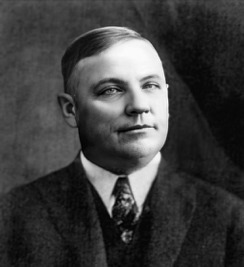
At the conclusion of our last installment, Jake Louis Hamonstoodonthethreshold of greatness. He had become one of Oklahoma’s bestknown Republican leaders, an accomplished attorney, and a skilled political organizer whose influence extended well beyond the borders of the young state. County chairmen sought his advice. National Republican figures knew his name. His friendships reached from courthouse squares in Oklahoma to the corridors of Washington. Yet despite his growing political stature, Hamon understood that influence alone was an uncertain foundation upon which to build a lasting legacy.
Politics could change almost overnight. Administrations rose and fell. Elections rewarded today’s allies and elevated tomorrow’s rivals. The favors of powerful men were valuable, but they were never permanent. Hamon believed that genuine independence required something more enduring than political success. It required wealth— wealth substantial enough to finance ambition rather than depend upon it, wealth capable of opening doors that politics alone could never unlock. During the years that followed, Jake Hamon would acquire that wealth in astonishing measure, and in doing so would transform himself from a successful lawyer into one of the most powerful businessmen in the American Southwest.
The opportunity lay in a city whose importance had been growing for more than a generation.
Its name was Ardmore. Unlike many Oklahoma communities that sprang almost overnight from a land opening or railroad stop, Ardmore possessed deeper roots. Established during the early 1880s along the route of the Gulf, Colorado and Santa Fe Railway, the town quickly becamethecommercialheart of the Chickasaw Nation. Long before Oklahoma achieved statehood, Ardmore served as the principal marketplace for a vast region stretching across southern Indian Territory and into North Texas. Cotton wagons rolled into town from every direction during harvest. Ranchers drove cattle toward its shipping pens. Merchants established substantial businesses to supply surrounding communities, while banks, hotels, newspapers, physicians, and attorneys followed commerce into what rapidly became one of the most prosperous communities in Indian Territory.
The railroad explained much of Ardmore’s early success. Before paved highways connected Oklahoma’s towns, railroads determinedwherecommerce would flourish. A community fortunate enough to lie along an important rail line possessed advantages its rivals could scarcely match. Goods that once required weekstomovebywagoncould now be transported in days. Farmers reached distant markets. Merchants stocked products from St. Louis, Kansas City, Chicago, and New Orleans. Travelers who would otherwise have passed through southern Indian Territory found themselves stopping in Ardmore’s hotels, dining in its restaurants, and conducting business in its banks. The steady arrival of trains brought not merely freight and passengers, but ideas, capital, and opportunity.
Bytheopeningyearsofthe twentieth century, Ardmore had already developed the appearance of permanence. Brick commercial buildings lined its principal streets. Churches and schools reflected civic confidence. Newspapers chronicled a growing economy that seemed to strengthen with each passing year. Unlike the rough boomtowns that dotted portions of Oklahoma Territory, Ardmore no longer wondered whether it would survive. Its citizens debated only how much larger and more prosperous the city would become.
Even so, few fully appreciated the magnitude of the transformation that was quietly approaching.
The land surrounding Ardmore had long hinted at hidden riches. Farmers occasionally encountered traces of petroleum while drilling water wells. Dark stains appeared along creek beds after heavy rains. Travelers sometimes remarked upon the unmistakable odor of crude oil rising from natural seeps. Such discoveries generated curiosity but little sustained excitement. Petroleum possessed little value unless it could be produced economically, transported efficiently, refined successfully, and soldprofitably.Atthedawnof thetwentiethcentury,eachof thoserequirementspresented formidable obstacles.
Yetthepetroleumindustry itself was changing with remarkable speed. New drilling techniques allowed operators to reach formations once considered inaccessible. Refining technology continued to improve. The nation’s growing appetite for kerosene, lubricants, and eventually gasoline encouraged exploration across regions previously dismissed as unpromising. Geologists began to look more carefully at the rock formations underlying southern Oklahoma, and a handful of experienced oil men quietly concluded that Carter County deserved closer attention.
They were not alone. Jake Hamon watched these developments with the trainedeyeofalawyerandthe instincts of an entrepreneur. His legal practice had taught him that fortunes were often determined long before a courtroom dispute arose. The decisive moment usually occurredwhencontractswere drafted, titles examined, and rights quietly acquired before others appreciated their significance. Oil, he suspected, would prove no different. Those who waited until the boom arrived would almost certainly pay too much. Those who recognized opportunity before the first great discovery stood to profit beyond imagination.
That realization distinguished Hamon from many of the speculators who would later flood into southern Oklahoma. They searched for producing wells. Hamon searched for legal control. He understood that beneath every successful drilling operation lay a complicated network of leases, mineral interests, contracts, rights-of-way, financing agreements, and title examinations. Every producing well rested upon legalfoundations,andlawyers capable of understanding those foundations possessed advantages unavailable to men who viewed petroleum merely as a matter of drilling holes in the ground.
Consequently, Hamon pursued a strategy characterized by patience rather than speculation. He quietly accumulated mineral interests while continuing to practice law. He invested in promising tracts of land before public enthusiasm drove prices beyond reason. He cultivated relationships with bankers capable of financing future opportunities while studying the developing petroleum industry with the same careful attention he had once devoted to politics. His approach reflected neither luck nor recklessness. It reflected preparation.
History often remembers thedramaticmomentwhena great oil well erupts from the earth and showers drilling equipment with black crude, but the fortunes created by such discoveries usually belonged to men who had spentyearspreparingforthat moment. Hamon intended to be one of them.
Hispatiencewasrewarded on August 4, 1913.
On that summer day, the Carter Oil Company’s Wheeler No. 1 well, drilled near the small farming community of Healdton southwestofArdmore,struck oil in commercial quantities. The discovery immediately altered the economic future of southern Oklahoma. Newspapers throughout the country carried reports of another major petroleum field. Experienced operators rushed toward Carter County. Investors sought leases with almost frantic determination. Ranches valued only weeks earlier according to the quality of their grazing land suddenly became worth many times their previous price because of what lay thousands of feet beneath the surface.
The change was almost impossible to exaggerate. Communitiesthathadknown only the measured pace of agriculture suddenly found themselves overwhelmed by an industrial revolution unfolding at extraordinary speed. Railroad sidings filled with drilling equipment. Long trains arrived carrying boilers, pipe, machinery, lumber, fuel, and thousands of laborers seeking work. Hotels overflowed. Boarding houses filled beyond capacity. Temporary tent camps appeared wherever open ground could be found. Stores struggled to keep basic merchandiseontheirshelves. Banks remained crowded from opening until closing as landowners, drillers, investors, and speculators attempted to conduct business before opportunities disappeared.
The landscape itself seemed to change by the week. Wooden derricks rose above the rolling hills until they dominated the horizon. Steam-powered drilling rigs labored day and night, their rhythmic pounding echoing across the countryside. Smoke drifted from boilers while the smell of crude petroleum mixed with dust, fresh-cut timber, coal smoke, and the constant activity of men convinced they stood in the midst of one of the greatest oil discoveries in the nation. The quiet ranch country surrounding Healdton became one of the busiest industrial districts in America almost overnight.
The sudden prosperity that swept across Carter County created the illusion that fortunes could be made by anyone fortunate enough to arrive with a drilling rig and sufficient optimism. Newspapers eagerly printed stories of farmers awakening as millionaires and obscure investors becoming wealthy almost overnight. The reality proved considerably more complicated. For every successful well, dozens failed. For every promoter who struck oil, countless others exhausted their capital drilling dry holes or purchasing leases that never produced a single profitable barrel. The Healdton Field created immense wealth, but it also consumed fortunes with astonishing speed.
Jake Hamon understood that distinction better than most.
His years as an attorney had conditioned him to look beyond the excitement surrounding any transaction and examine the legal rights that lay beneath it. Oil itself was valuable only after someone established the right to explore for it, the right to produce it, the right to transport it, and the right to profit from its sale. Every successful oil field rested upon an intricate web of leases, deeds, mineral reservations, contracts, financing agreements, and title examinations. Hamon had spent years studying precisely those kinds of documents. While many investors concentrated upon drilling equipment and geological reports, Hamon devoted equal attention to the legal framework that determined who ultimately received the profits.
That perspective shaped every important business decision he made. Rather than risking everything on a single speculative well, Hamon quietly assembled interests in numerous properties, understanding that diversification offered protection against inevitable disappointments. He acquiredmineralrightswhen they could still be purchased at reasonable prices. He investedinlandthatappeared strategically located. He developed relationships with bankers who could provide capital when opportunities arose unexpectedly. Most importantly, he recognized that successful oil production would inevitably increase the value of nearly every surroundingenterprise.Wells required banks, railroads, warehouses, insurance, hotels, merchants, attorneys, and transportation. Prosperity in one industry wouldfuelprosperityinmany others.
The strategy reflected a remarkably modern understanding of business. Hamondidnotintendmerely to participate in the oil boom. He intended to build an economic system around it.
One of his most significant holdingsbecameknownasthe Rockland lease, among the premierproducingproperties in the Healdton Field. As production increased, the property generated royalty income that contemporary observers described as extraordinary. Newspapers frequently reported the remarkable output of the Healdton wells, and the Rockland interests ranked among those contributing substantially to the field’s reputation as one of the nation’s great petroleum discoveries. While precise figures varied over time as production fluctuated, there was little disagreement about the overall result. The lease transformed Hamon’s financial position beyond anything he had previously imagined.
The importance of royalty ownership is sometimes overlooked by modern readers unfamiliar with the petroleum industry. A producing oil well generated revenue long after the excitement surrounding its discovery had faded. Every barrel brought to the surface represented income to be divided among operators, investors,andmineralowners according to the terms of their agreements. A successful lease therefore resembled far more than a winning lottery ticket. Properly managed, it became a continuing source of wealth capable of financing additional investments for years to come.
Hamon understood precisely what to do with that income.
Many men who suddenly acqui red oi l wea l t h immediately displayed it. Magnificenthomesappeared almost overnight. Expensive automobiles crowded city streets. Lavish hotels, fashionable clothing, and extravagant entertainment became symbols of success throughout the Oklahoma oil fields. Some fortunes disappearedalmostasrapidly as they had been earned, consumed by speculation, excessive borrowing, or conspicuous living.
Hamonfollowedadifferent course.
Friends and business associates later observed that he seemed almost incapable of allowing money to remain idle. Oil royalties financed the purchase of commercial buildings. Income from those buildings supported investments in banks and insurance companies. Banking interests, in turn, opened additional opportunities in real estate, transportation, and industry. Profits from one venture becamethecapitalsupporting another. Each acquisition strengthened the next until the separate pieces gradually mergedintosomethingmuch larger than a collection of unrelated investments.
Bythemiddleofthesecond decade of the twentieth century, Jake Hamon had become far more than an attorney who happened to own producing oil properties.
He had become an empire builder.
His holdings stretched across multiple industries. Oil remained the foundation, but it no longer stood alone. He acquired substantial real estate, developed banking interests, invested in insurance companies, purchased ranches in Oklahoma and Texas, and maintained an active legal practice that continued to introduce him to profitable business opportunities. The same analytical mind that had once examined statutes and court decisions now evaluated balance sheets, transportation networks, mineral acquisitions, and commercial development with equal confidence.
The transformation astonished even those who had known him for years.
Little more than a decade earlier,Hamonhadarrivedin Lawton as a young attorney possessing little beyond his education, determination, and confidence in his own abilities. His office had served ordinary citizens requiring deeds prepared, contracts drafted, criminal charges defended, or municipal questions resolved. Now businessmen traveled considerabledistancessimply to confer with him. Bank presidents sought his advice. Oil operators proposed joint ventures. Investors hoped to secure his participation in new enterprises, believing that Hamon’s willingness to invest often signaled opportunities worthy of serious attention.
His office in Ardmore became one of the informal centers of southern Oklahoma’s business community.
On any given day, visitors might encounter attorneys discussing complicated litigation, bankers negotiating financing arrangements, ranchers considering land sales, oil operators reviewing leases, politicians seeking campaignsupport,orrailroad representatives exploring future development. Conversations shifted effortlessly from law to business, from finance to politics, and from local concerns to national affairs. Hamon seemed equally comfortable in each setting. He possessed an uncommon ability to absorb information from one field and recognize opportunities in another, linking people and ideas that might otherwise never have come together.
That ability became one of his greatest assets.
Successful businessmen often accumulate wealth by recognizing opportunities beforetheircompetitors.Truly exceptional businessmen create opportunities by bringing together people whose interests naturally complement one another. Hamon excelled at precisely that skill. He introduced bankers to developers, investors to oil operators, attorneys to businessmen, and politicians to contributors.Everysuccessful introduction strengthened his own network, while every expanding relationship increased his influence throughout the Southwest.
By now, Jake Hamon occupied an unusual position in Oklahoma society. His legal reputation remained secure. His fortune continued to expand. His political influence had grown steadily throughout the Republican Party. Yet he still viewed each success as preparation for something larger.
He had begun his career by building a law practice.
He had expanded that practice into a business empire.
The next step would carry him onto an even broader stage.
The opportunities created by the Healdton oil field extended far beyond drilling wells. Producing millions of barrels of crude oil accomplished little if the petroleum could not reach refineries and national markets. Likewise, drilling operationsrequiredaconstant stream of pipe, machinery, lumber,fuel,andlabor.Every barrel of oil and every ton of equipment depended upon transportation. Existing railroads served portions of southern Oklahoma, but they had not been designed to accommodate the explosive industrial growth that accompanied the Healdton boom. Congestion became common. Delays proved costly. Businessmen increasingly recognized that whoever solved the transportation problem would help shape the future of southern Oklahoma.
Among those who reached that conclusion was one of the most famous entrepreneurs in America.
His name was John Nicholas Ringling.
To millions of Americans, the name Ringling immediately called to mind circus tents, magnificent parades, trained animals, dazzling performers, and the greatest traveling show on earth. Yet the circus represented only one chapter in John Ringling’s remarkable career. Like Jake Hamon, he possessed an instinct for recognizing opportunity wherever it appeared, and by the time their paths crossed, he had built a business empire extending far beyond the world of entertainment.
The meeting of these two men—one whose fortune had risen from Oklahoma oil and another whose wealth had grown from one of America’s greatest commercial enterprises— would become one of the most significant business partnerships in the history of southern Oklahoma.
To most Americans of the early twentieth century, John Nicholas Ringling was synonymous with the circus. His name appeared in newspapers from New York to San Francisco, emblazoned across brightly colored posters promising “The Greatest Show on Earth.” Children counted the days until the circus train arrived. Adults marveled at its elephants, acrobats, lion tamers,clowns,andglittering pageantry.Fewpublicfigures of the era enjoyed greater name recognition. Yet the public image represented only a fraction of the man. Behind the spectacle stood one of the most disciplined businessmen in America, an entrepreneurwhosefinancial instincts often rivaled those of the nation’s greatest industrialists.
Ringling’s beginnings offered little indication of the empire he would eventually create. Born in Iowa in 1866, theseventhofsevensurviving sons of German immigrants August and Marie Ringling, he spent his youth in modest circumstances.Hisfatherhad worked as a harness maker before moving the family to Baraboo, Wisconsin, where opportunities appeared somewhat brighter. Like many immigrant families of the period, the Ringlings possessed little wealth but an abundance of determination. Every member of the family contributed. Hard work was not viewed as extraordinary; it was simply expected.
Entertainment fascinated theRinglingbrothersfroman early age. During the 1870s, traveling circuses wandered across the Midwest, erecting canvas tents in small towns before disappearing over the horizon a day or two later. To young John and his brothers, these performances represented something almost magical. They also represented business. While audiences admired the performers beneath the big top, John found himself equally intrigued by the behind-the-scenes logistics. Hundreds of workers, scores of wagons, animals requiring constant care, ticket sales, advertising, transportation, scheduling, payrolls, and equipment all had to function with remarkable precision if the show hoped to earn a profit. Even as a young man, Ringling recognized that successful entertainment depended as much upon managementasperformance.
In1884,fiveofthebrothers pooled their limited savings and organized what became the Ringling Brothers Classic and Comic Concert Company. The title sounded considerably grander than the enterprise itself. Their first performances were modest affairs featuring music, juggling, comedy, and acrobatics presented beneath small tents before local audiences. They traveled from town to town by wagon, frequently enduring poor weather, mechanical breakdowns, and financial uncertainty. Someperformancesattracted respectable crowds. Others barely covered expenses. Likecountlessentrepreneurs before them, the brothers survived by persistence rather than immediate success.
Persistence eventually producedremarkableresults.
John Ringling gradually emerged as the driving force behind the growing enterprise. While his brothers remained talented performers, John’s greatest gifts lay elsewhere. He understood promotion. He appreciated the importance of investing profits back into the business rather than spending them. Most importantly, he recognized that audiences continually demanded something larger, grander,andmorespectacular than they had seen before. Every successful season financed better equipment, larger tents, additional performers, more exotic animals, and increasingly elaborate productions. The circus expanded because John Ringling refused to permit it to stand still.
His philosophy extended beyond entertainment.
Ringling believed success depended upon controlling as manyaspectsofanenterprise as possible. If transportation costs threatened profits, he sought influence over transportation. If suppliers charged excessive prices, he explored acquiring suppliers. If financing became uncertain, he cultivated banking relationships. Vertical integration had becomethehallmarkofmany of America’s great industrial fortunes during the Gilded Age, and although Ringling operatedintheentertainment business, he embraced the same principles employed by Andrew Carnegie in steel, John D. Rockefeller in oil, and James J. Hill in railroads.
The circus itself became a marveloforganization.Bythe closingyearsofthenineteenth century, Ringling Brothers transported hundreds of performers, thousands of animals, and enormous quantities of equipment across the nation. Entire trains carried the show from one city to another according to schedules so precise that delays could jeopardize performances hundreds of miles away. Loading and unloading became carefully choreographed operations. Specialized railcars transported elephants, horses, lions, tigers, and camels. Flatcars carried wagons and equipment. Sleeping cars housed performers. Dining cars fed hundreds of employees each day. Few private organizations anywhere in the world possessed greater expertise in large-scale transportation and logistics.
Transportation became John’s obsession because he understood a simple economic truth.
Nothing generated wealth unless it could reach a market.
That lesson applied equally to circus wagons, manufactured goods, agricultural products, or crude oil. Railroads represented far more than steel rails stretching across the countryside. They were the arteries through which commerce flowed. Every prosperous community depended upon them. Every growing industry required them. Every businessman who ignored transportation eventually surrendered profits to someone who controlled it.
Jake Hamon had reached remarkably similar conclusions.
Although the two men built their fortunes in vastly different industries, they shared an uncommon way of thinking. Neither viewed business as a collection of isolated enterprises. Instead, they saw networks. Oil required banks. Banks financed railroads. Railroads encouraged settlement. Settlement created towns. Towns required insurance, merchants, warehouses, attorneys, hotels, and newspapers. Success in one field naturally produced opportunities in another. The challenge lay not in recognizing individual businesses but in understanding how each strengthened the others.
Such men were destined to meet.
By the second decade of the twentieth century, John Ringling had become one of the wealthiest businessmen in America. His acquisition of Barnum & Bailey had effectively united the nation’s twogreatestcircusesbeneath a single corporate banner, the Ringling Brothers, Barnum & Bailey Circus. And it exists to this day. Yet, contrary to public perception, he devoted surprisingly little time to performers or animal acts. His attention increasingly focused upon investments.Banks,ranches, manufacturing concerns, real estate developments, hotels, railroads, and land acquisitions occupied as much of his schedule as circus performances. Friends occasionally remarked that Ringling seemed less interested in applause than in balance sheets.
He also possessed an eye for regions poised for extraordinary growth.
Southern Oklahoma captured his attention for many of the same reasons it had attracted Jake Hamon. The Healdton oil field had become one of the nation’s leadingpetroleumproducers. Ardmore was rapidly emerging as the commercial capital of the region. Yet transportation remained inadequate for the explosive expansion underway throughoutCarter,Jefferson, Love,andStephensCounties. Existing railroads had been constructed before the oil boom and now struggled to accommodate increasing freighttraffic.Delaysaffected drilling operations, livestock shipments, merchants, and manufacturers alike. To experienced businessmen, the solution seemed obvious.
Build another railroad. For most people, such an undertaking would have bordered upon fantasy. Constructing even a short rail line required enormousamountsofcapital, engineering expertise, political influence, rightsof- way , constr u c tion crews, rolling stock, and management. The financial risks could ruin even experienced investors. But John Ringling had spent decades moving one of the largest traveling enterprises in America over thousands of miles of track, while Jake Hamon possessed intimate knowledge of southern Oklahoma, substantial financial resources, extensive political relationships, and a clear understanding of the region’s future.
Separately, each man had achieved extraordinary success.
Together, they possessed the resources to reshape an entire region.
The partnership between Jake Hamon and John Ringling represented far more than the construction of another railroad. It reflected the convergence of two remarkable businessmen whose paths to success had been strikingly different but whose philosophies proved remarkably alike. Both men believed that prosperity rarely occurred by accident. Wealth followed preparation, careful planning, and the willingness to invest where others hesitated. Neither accepted the notion that fortune depended solely upon luck. Instead, both viewed opportunity as something to berecognized,cultivated,and expanded.
As southern Oklahoma’s petroleum production accelerated, weaknesses in the region’s transportation system became increasingly apparent. Existing railroads had been constructed before anyone imagined the tremendous industrial growth that the Healdton Fieldwouldgenerate.Freight traffic multiplied almost overnight. Oil producers requiredpipe,boilers,drilling equipment, fuel, machinery, and thousands of tons of construction materials. Rancherscontinuedshipping livestock. Farmers still dependeduponrailservicefor cotton and grain. Merchants required merchandise from distant wholesalers, while passengers expected reliable transportation throughout the region. The railroads serving southern Oklahoma suddenly found themselves attempting to satisfy demandstheyhadneverbeen designed to accommodate.
For businessmen such as Hamon and Ringling, the problem was obvious. Transportation did not merely support economic development; it created it. A productive oil field possessed only limited value if its petroleum could not reach refineries efficiently. Likewise, merchants hesitated to establish businesses where dependable freight service remained uncertain. Every delay increased costs. Every bottleneck discouraged investment. If southern Oklahoma hoped to realize its extraordinary potential, additionalrailcapacitywould become essential.
Their answer was bold. Together they organized what became the Oklahoma, New Mexico and Pacific Railway, a venture that contemporary newspapers soon referred to simply as the Ringling Railroad. The proposed line would extend through portions of southernOklahomathathad long remained underserved, connecting communities whose future depended upon improved transportation. Although the railroad would never fulfill every aspect of its original ambitious vision, the project itself demonstrated the confidence both men placed in the region’s future. They were investing not merely in rails and locomotives, but in the continuedgrowthofsouthern Oklahoma.
The railroad also reflected anotherofHamon’senduring strengths. Throughout his career, he possessed an uncommon ability to recognize how seemingly unrelated enterprises complemented one another. To many businessmen, a railroad represented a transportation company. To Hamon, it represented something much larger. Railroadsincreasedthevalue of surrounding land. Rising land values strengthened banks holding local mortgages. Stronger banks encouraged commercial construction. Commercial development attracted merchants, manufacturers, hotels, warehouses, attorneys, physicians, and countless other professions. Every successful enterprise reinforced the others. Prosperity became selfperpetuating.
Ringlingviewedthematter through much the same lens. His years managing America’s largest circus had taughthimlessonsextending far beyond entertainment. Eachseasonrequiredmoving hundreds of performers, thousands of animals, and countless tons of equipment across the continent with astonishing precision. Delays cost money. Efficient transportation produced profits. Over time, Ringling developed a profound appreciationforrailroads,not simply as carriers of freight and passengers, but as the indispensable foundation of modern commerce. That philosophy increasingly influenced his investments. By the second decade of the twentieth century, he devoted as much attention to banking, land development, and transportation as he did to circus performances.
The partnership between the two men extended naturally beyondtherailroad itself. Each respected the other’s judgment. Hamon’s legal training complemented Ringling’s business experience. Ringlingpossessedenormous financial resources and a national reputation. Hamon brought intimate knowledge of Oklahoma law, politics, banking, mineral rights, and economic development. Together they represented a formidable combination of capital, influence, and practical experience.
Their railroad even gave birth to a community that continues to bear Ringling’s name today. The town of Ringling emerged along the new line, a lasting reminder of the partnership between the Oklahoma lawyer and the internationally famous showman. Although generations have naturally associated the town’s name with the circus, its existence owes just as much to Jake Hamon’s vision of southern Oklahoma’s future as it does to John Ringling’s investment. The railroad becameanotherthreadwoven into the remarkable tapestry of Hamon’s expanding business empire.
By now, Jake Hamon occupied a position unlike that of almost any other attorney in Oklahoma. Law had introduced him to business. Business had produced wealth. Wealth had expanded his political influence. Politics, in turn, created opportunities unavailable to even the mostsuccessfulbusinessmen operating outside public life. Every aspect of his career strengthened the others until it became increasingly difficult to distinguish where oneendedandanotherbegan. He remained an attorney, but he was also a financier, developer, investor, political strategist, oilman, rancher, and entrepreneur. Few men in Oklahoma exercised influence across so many fields simultaneously.
His office in Ardmore reflected that remarkable diversity. On any given day, one visitor might arrive seeking legal advice concerning a complicated landtitlewhileanotherhoped to discuss financing for an oil venture. Bank presidents sought his counsel regarding commercial development. Railroadexecutivesexamined proposed routes. Ranchers negotiated purchases and leases. Politicians quietly requested support for pending legislation or future campaigns. Hamon seemed equally comfortable discussing legal precedents, mineral rights, railroad construction, banking regulations, or national politics. His office had become far more than a law practice. It functioned as one of the principal centers of business and political activity in all of Oklahoma.
Success, however, rarely remains confined within stateboundaries.AsHamon’s financial influence expanded, sotoodidhisreputationwithin Republicanpolitics.Foryears he had labored tirelessly on behalf of the party, often with little expectation of personal reward. He organized campaigns, cultivated candidates, raised money, settled disputes between competing factions, and developed friendships with Republican leaders throughout the nation. Those relationships now began yielding dividends every bit as valuable as his investments in oil and banking.
The nation itself stood at a crossroads.
The First World War had ended scarcely two years earlier. Americans welcomed peace but remained deeply divided over the country’s future. More than 116,000 American servicemen had lost their lives during the conflict. Europe struggled to rebuild shattered economies while President Woodrow Wilson devoted much of his remaining political capital to securing American participation in the League of Nations. Many citizens admired Wilson’s idealism. Others feared that membership would entangle the United States in future European conflicts, sacrificing American independence to international obligations.
Domestic conditions proved equally unsettled. Inflation drove prices sharply higher following the war. Labor strikes disrupted industries across the country. Returning veterans sought employment in an economy struggling to adjust from wartime production to peacetime commerce. Many Americans had grown weary of reform movements, wartime restrictions, and international commitments. Increasingly, voters expressed a desire for stability, economic growth, and a return to what they considered normal life.
Republicanleaderssensed an extraordinary political opportunity.
Yet selecting the proper presidential nominee proved anything but simple.
The party entered 1920 blessed with an abundance of talented candidates but burdened by competing factions. Major General Leonard Wood enjoyed widespread popularity based upon his distinguished militaryserviceandenergetic campaign. Illinois Governor Frank O. Lowden possessed animpressiveadministrative record and considerable support among Midwestern Republicans. California Senator Hiram Johnson appealed strongly to the progressive wing of the party, while numerous favorite-son candidates hoped to emerge ascompromisechoicesshould the convention become deadlocked.
Among those compromise candidates stood a relatively unassuming United States senator from Ohio named Warren Gamaliel Harding.
Few observers initially regarded Harding as the inevitable nominee. He possessed undeniable political skill, an engaging personality, and broad friendships throughout the party, but he lacked the passionate following enjoyed by several betterknown rivals. Indeed, many political observers expected the nomination to require numerous ballots before a consensus candidate emerged. Such conventions often turned less upon dramatic speeches than upon quiet conversations conducted in hotel suites, committee rooms, dining rooms,andprivategatherings where experienced political leaders searched patiently for common ground.
Jake Hamon intended to play an important role in those conversations.
By 1920, he had become far more than Oklahoma’s leadingRepublican.National party leaders recognized him as one of the most influential political organizers west of the Mississippi River. He possessed strong relationships with delegates fromnumerousstates,enjoyed the confidence of prominent members of the Republican National Committee, and had earned a reputation for practical judgment rather than ideological rigidity. When disagreements arose between competing factions, Hamon frequently found himself among those whose advice carried genuine weight.
The Republican National Convention would soon test every one of those relationships. More on that next week in Part IX.