
Remembering Hurricane Rita and the chaos that followed
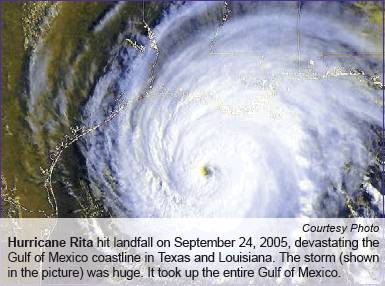
Hurricanes are considered the most violent storms on Earth and are bred in warm climates when the warm air rises, causing an area of low pressure underneath.
This is why the coastline of the Gulf of Mexico is plagued by tropical storms that could potentially morph into hurricanes every year. The Atlantic hurricane season typically starts mid to late May and carries through to the end of November. However, August through September seems to be the optimal time for the weather beasts.
On September 17, the southern regions of Texas and Louisiana were hit by Tropical Storm Imelda. The storm caused chaos and is still wreaking havoc a week later.
While South Texas and Louisiana are trying to bounce back from Imelda, remnants of a terrorizing storm brews in their thoughts.
On September 24, 2005, almost 14 years earlier, a spiraling danger spilled onto the Gulf of Mexico coastline.
Most of the world knows and remembers the disastrous affect that Hurricane Katrina had on New Orleans and surrounding areas. However, most forget the storm that came in on Katrina’s heels and caused more havoc; Hurricane Rita.
Rita was named the fourth most intense hurricane ever recorded in the Atlantic, and the ninth costliest. She was the strongest hurricane of 2005, and the most intense tropical cyclone over the Gulf.
At 180 miles-per-hour winds – that is almost triple the average speed of an automobile – the storm caused 18.5 million dollars in damage. Lieutenant Colonel Warren Madden, a meteorologist and storm chaser called it the strongest storm he has ever seen.
Due to the destruction caused by both Rita and Katrina, their names were retired off of the hurricane name list. Storm names typically recycle every six years. However, three of the storms that hit landfall in 2005 had their names retired – Rita, Katrina, and Dennis.
What made Hurricane Rita so deadly, was the fact that it was more than just the regular residents of the affected area running for their lives. Cities like Lake Charles, Louisiana and Houston, Texas had an influx of people who were misplaced from Hurricane Katrina. So, when everybody had to evacuate, there were thousands of extra people trying to leave, as well.
My family and I were part of the original residents fleeing for dryer, less dangerous land. As soon as the weather channel said, ‘mandatory evacuation,’ my family and I high-tailed it to Dallas. Well, if you consider a 340 mile trip taking 12 hours to complete high-tailing it.
There were so many people heading north, that even though the highway department opened all six lanes to go north, we were still stuck in heavy traffic.
I had family that waited a day later to evacuate, and it took them 24 hours to get to Dallas; typically, a 6 hour trip. The heavy traffic conditions claimed the majority of the fatalities from Hurricane Rita. There were 120 reported deaths, and 113 of them were from the evacuation. People were dying from heat exhaustion. A bus carrying elderly people in Texas exploded, killing 23 on board.
My family and I were lucky, we all escaped with our lives. However, I was still affected by the destructive storm. My dog of 11 years died because it was too much for him, and my childhood home was destroyed when the winds tore a hole through it.
The entire incident was surreal for me. I remember meeting a few friends in Arlington to eat lunch, and the restaurant had the Weather Channel on. I watched as the storm claimed businesses in my hometown. Places that I had frequented just days before.
The storms were devastating, and it took Lake Charles and New Orleans years to bounce back from it. Matter of fact, they are still trying to recoup from the damage.