
In the southern reaches of Indian Territory—where the Red River bends like a crooked finger and boundary linesweredrawnnotwithink but with bullet and blood— the years between 1875 and 1890 were marked not by order, but by chaos. Here, in the heartland of the Chickasaw and Choctaw Nations, American law was not yet sovereign, tribal sovereignty was fraught, and the federal government exercised only an uneven grip. Amidst this legal no-law rule, lawlessness did not creep—it thundered. Banditry, revenge killings, vigilante justice, and political assassination were not aberrations. They were the order of the day.
Beginning today, we launch a series of articles about this dark period in the history of what is now Marshall County. It is a story of broken treaties and broken trust, of marshals and murderers, whiskey and Winchester rifles, renegades and reluctant lawmen.
Between 1875 and 1890, close to ten men were murdered, killed, died or executed because of the lawlessness that existed during that time. And it all occurred between Old Harney/Woodville and RoosterCreek,inwhatisnow LakeTexomaStateParkand stretchedtothenorthernpart of current Marshall County.
The lawlessness resulted in a multi-family blood feud that was so intriguing that the stories of the feud were published in newspapers from Maine to California, Florida to Washington State, Texas to North Dakota and all points in between. Sadly, during that time, southern Indian Territory became known as a dangerous and murderous place.
By the mid-1870s, the United States government had confined the Chickasaw and Choctaw peoples to the southeastern corner of Indian Territory. Although the tribes held nominal selfgovernance under treaties, they shared criminal jurisdiction with federal authorities headquartered far away, in Fort Smith, Arkansas. In practice, this meant that no single authority had complete control over criminal enforcement.
The result was a confused and ineffective legal system. Tribal courts handled internal matters, but crimes involving non-Indians—especially whiteoutlaws—were the responsibility of the U.S. District Court. Yet the court sat some 200 miles away, and federal marshals were few. Roads were poor, and fugitives could cross tribal boundaries—ortheRedRiver into Texas—within hours. For killers and thieves, the Territory was a sanctuary.
Even Indian police officers, when appointed, often lacked sufficient support or pay. The Chickasaw Light Horsemen, for example, were expected to maintain order but had no standing army or modern infrastructure. They rode the plains with badge and sidearm, often outnumbered and outgunned.
In the spring of 1865, the South lay in ruin. Confederate flags came down, railroads splintered like bone, cities burned and sweltered in the haze of bitter defeat. Among the broken remnants of that cause stood thousands of Confederate veterans— somebloodied,somemaimed, many disillusioned—staring at a land they no longer recognized.
To these weary men, the Indian Territory just beyond the Red River beckoned like a whispered promise. Here was a place where the federal government’s grasp remained uncertain, where tribal sovereignty still had teeth,andwhereamanmight find sanctuary far from the Reconstruction tribunals sweeping through the old Confederacy. Word spread of Chickasaw and Choctaw leaders who were sympathetic, or at the very least practical men who understood that forging relationships with displaced white Southerners might strengthen tribal autonomy and bolster economic survival.
Andso,veteransarrived— on horseback, in wagons, and on foot. Some came alone; others brought their families. Some came out of desperation, while others sought land, marriage, or the dream of starting anew. What they discovered in Indian Territory was no utopia, but it was an opportunity— rough, ungoverned, yet free of federal troops and rich in potential.
AmongtheChickasawNation’s most influential voices in this era was Edmund Pickens, a statesman and eventual district judge. Before andduringtheCivilWar, PickensandotherChickasaw leaders had aligned with the Confederacy in the hope of protecting tribal lands. Afterward, men like Pickens saw strategic value in allowing ex-Confederates to settle, particularly those who married Chickasaw women or contributed to the tribal economy. These settlers brought skills, arms, and a fierce disdain for federal authority—qualities that proved both valuable and dangerous.
Veterans settled in areas such as the Pickens and Pontotoc Districts. Some served in the Chickasaw Light Horse, while others took up ranching. But others stirred unrest, deepening existing rivalries, exacerbating violence, and fostering contempt for law. Their presence injected a volatile mix into an already strained legal landscape. Federal agents viewed the Southern refugee population with suspicion, while the tribes defended their right to define their citizenry.
By the 1890s, as federal pressure increased and tribal governance eroded under the Dawes Act and Curtis Act, the fragile sanctuary began to collapse. Some of the same ex-Confederates who had found refuge in Chickasaw country now watched as their new home was absorbed into a state they had once opposed by force. Their legacy was as complicated as the land itself: a blend of community building, defiance, and blood.
Lawlessness was not only the work of outsiders. Longstanding family feuds and tribal rivalries simmered intoopenbloodshed.Between 1875 and 1889, the infamous Woodville Feud in Pickens County left a trail of corpses stretching from Oakland to Burneyville. Families were locked in a spiral of murder and revenge that not even the U.S. Court could break.
Gunmen were hired to settle disputes; witnesses were murdered before they could testify. What followed was a tangle of perjury, conflicting alibis, and marshal’s warrants that came too late.
Thesefeudswerenotpetty squabbles. They were rooted in power—control over land, cattle, whiskey, and local politics.Andtheywerefought with brutal certainty.
Despite strict tribal prohibitions on alcohol, southern Indian Territory was awash in whiskey. Bootleggers operated with near impunity, smuggling spirits up from Texas through back trails and river fords. Many of these men ran stills hidden in blackjack thickets or along the Washita River bottoms.
Federal marshals attempted periodic raids, but bootleggers had local support— or at least, local silence. Some Light Horsemen were complicit, paid off or intimidated into inaction. Drunkenness led to more crime, more shootings, more ruined families.
One such still, operated near Lebanon by a known fugitive, allegedly sold moonshine to soldiers and tribal members alike. The profits funded arms, bribes, and more violence. The government referred to it as a “scourge.” Locals called it a living.
The legal jurisdiction of Indian Territory—particularly its southern region—fell under the purview of the federal court based in Fort Smith, Arkansas, beginning in 1851. Congress, recognizing the absence of any established federal legal infrastructure within Indian Territory itself, expanded the Western District of Arkansas to include all of Indian Territory. The decision to place this authority in Fort Smith was driven by geography, transportation routes, and the presence of a functioning district court. For decades, this court served as the only federal judicial body capable of trying felonies committed in Indian Territory involving non-Natives, or where tribal courts lacked jurisdiction.
The burden placed upon the court and its officers was immense. Vast distances, poor roads, and limited resources meant federal lawmen were responsible for enforcing U.S. law across thousands of square miles of lawless terrain. It was within this jurisdictional framework that Judge Isaac Charles Parker would rise to historical prominence.
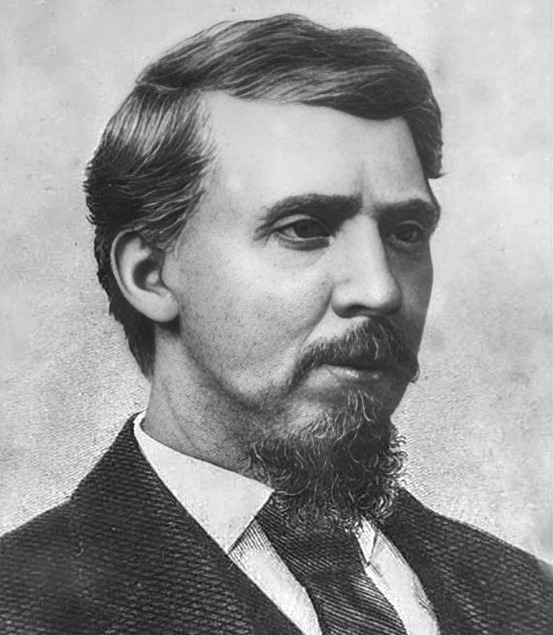
Judge Parker, often referred to as Isaac C. Parker, was known as the “Hanging Judge.” This nickname was earned during his tenure as a federal judge. He was known as the “Hanging Judge” because he sentenced 160 people to death, of whom 79 were executed. This high number, particularly during his early years on the bench, cemented his reputation. Most of these capital sentences were for crimes such as murder or rape, which—under federal lawatthetime—requiredthe death penalty upon conviction. Parkerhadnodiscretion in these cases.
Despite the moniker, Parker was not personally in favor of capital punishment and even advocated for its abolition.Hisnicknamearose more from the sheer number of executions carried out under his court’s jurisdiction than from personal zeal.
His court had jurisdiction over 74,000 square miles, including all of Indian Territory, where violent crime was rampant, and the need for federal enforcement was critical. The U.S. government placed much of the burden of law and order in Indian Territory on Parker’s shoulders—so much so that his court became a symbol of frontier justice.
Isaac Charles Parker was born on October 15, 1838, near Barnesville in Belmont County, Ohio. Raised on a smallfarm,hewastheyoungest child of Joseph and Jane Shannon Parker. Although farm work surrounded him during his youth, Parker showed little interest in an agricultural life and instead gravitated toward books and education. With encouragement from his mother, who was related to Ohio’s Governor Wilson Shannon, he pursued his studies at Breeze Hill and later enrolled at the Barnesville Classical Institute. Determined to succeed, Parker supported himself by teaching in rural schools while studying law under the mentorship of a local attorney. By the age of 21, in 1859, he passed the bar and was admitted to the practice law.
In 1860, Parker traveled west to St. Joseph, Missouri, a busy river port. There, he began working with his uncle’s law firm and quickly gained traction, handling local criminal and civil cases. Elected city attorney in 1861, Parker took office just as the Civil War broke out. Initially a Democrat, the war pushed him toward the Union cause, leading him to align with the Republican Party, where he briefly served in the Missouri militia.
Parker married Mary O’Toolein1861andsoonafter won re-election as city attorney. His political trajectory advanced rapidly. In 1864, he was elected as county prosecutor, and that same year, he cast a presidential electoral vote for Abraham Lincoln. His judicial experience deepened when he was elected judge of Missouri’s Twelfth Judicial Circuit in 1868, where he earned a reputation for fairness and efficiency.
By 1870, Parker had set his sights on national politics. Running as a Radical Republican, he won election to the U.S. House of Representatives, representing Missouri’s Seventh District. In Congress, he focused on veterans’ benefits, infrastructure, and civil rights. Notably, he advocated for women’s suffrage in U.S. territories and supported measures to improve conditions in Indian Territory, including proposals to organize it under a territorial government. Re-elected in 1872, he was regarded as a diligent and principled legislator. But by 1874, political shifts in Missouri made further reelection unlikely, and Parker turned toward the judiciary for his next role.
In 1875, Parker was nominated by President Ulysses S. Grant to serve as a federal judge for the Western District of Arkansas, a position headquarteredinFortSmith. His predecessor had resigned amid scandal, and Parker arrived determined to restore integrity to the court. His jurisdiction covered western Arkansas and all of Indian Territory—an area plagued by crime and legal ambiguity. He arrived in Fort Smith on May 4, 1875, and opened his first court session on May 10. The first term was stark: eight men convicted of murder, six executed that September.Themessagewas clear—lawhadreturned.The court's caseload was relentless, often running six days a week and stretching ten hours a day. The complexity of overseeing cases across Indian Territory, combined with limited personnel and constant violence, required unyielding stamina.
Parker not only ruled from the bench—he also became a civic leader in Fort Smith. He served on the school board, helped establish the public school system, and was a founding member of the local hospital board. His family, including his sons Charles and James, actively participated in community life.
By the late 1880s, however, change was coming. Congress gradually reduced the court’s jurisdiction, assigning portions of Indian Territory to new courts in Texas and Kansas. In 1889, the U.S. Supreme Court gained the authority to review capital convictions from his court, leading to many reversals and public disputes between Parker and the higher courts.
Despite opportunities for reassignment, Parker remained in Fort Smith. He declined less demanding posts and continued working even as his health deteriorated from Bright’s disease. His frustration grew as federal reforms chipped away at his court’s reach. In 1895, an escape attempt by outlaw Cherokee Bill led to a tragic shooting, and Parker’s criticisms of federal oversight drew national attention.
By 1896, the final vestiges of his authority were removed, and Parker, too ill to preside over the court, died on November 17, 1896. His death marked the end of an era in frontier justice.
Several United States MarshalsservedunderJudge Parker. Most were assigned to patrol Indian Territory, serving warrants and investigating crimes.Amongthem, several were well-known and highly regarded. Men like Bass Reeves, Heck Thomas, Bill Tilghman and Chris Madsen. (More on these men in Part II) The Chickasaw Nation did not sit idly by. Light Horse companies patrolled the territory, enforcing tribal law. Councils passed codes regulating alcohol, theft, and trespass. But enforcement remained uneven.
Some tribal leaders, such as Governor B. F. Overton, sought stricter alignment with federal marshals. Others resisted, fearing it would erode sovereignty. The conflict between internal governance and external authority bred confusion and allowed outlaws to flourish.
Local justice sometimes meant summary execution. In one 1883 case near Aylesworth, a suspected murderer was taken from his cabin and shot before sunup. No arrest followed.
Race also played a dark role in the lawlessness of the Territory. Chickasaws and Choctaws often found themselves at odds not only with white outlaws, but with federal authorities who treated tribal legal institutions as secondary or primitive.
Black freedmen, granted citizenship under Reconstruction treaties, were frequently excluded from tribal protection, even as they were denied federal refuge. Many settled in freedmen towns like Tatums, where they created self-policing communities but faced constant threats from both Indian and white factions.
The patchwork of race, law, and identity made justice an uncertain prospect for anyone not aligned with the dominant families.
By the late 1880s, the tide began to shift. The arrival of the railroad brought U.S. Army detachments, postal agents, and telegraph lines. Communication improved, and so did federal response times.
Simultaneously, pressure from Washington led to increased efforts to professionalize themarshalservice. Witness protection measures improved. Tribal leaders, especially younger reformists, began working more closely with federal agents.
As1890approached,Oklahoma Territory was formally established to the west. Indian Territory remained, but the writing was on the wall. Federal control expanded. Tribalautonomydiminished.
The wild freedom that had defined the southern frontier gave way to courts, schools, and surveyors. Cattle trails became townships. The last of the old outlaws either died or faded into obscurity.
But the legacy of that era—thefeuds,thehangings, the lawmen on lathered horses chasing ghosts through blackjackwoods—leftamark still felt in local folklore and family memory.
Between 1875 and 1890, southern Indian Territory lived on the knife’s edge. In the absence of reliable law, violence filled the void. What emerged was a society that policed itself when it could, avenged itself when it must, and endured what it could not change.
It was a world forged in contradiction: Indian nations struggled for sovereignty, outlaws escaped justice, and lawmen preached order with pistol and prayer. This was no peaceful borderland. It was the last true frontier, where the law was a matter of distance, will, and survival.
Part II, Next Week.