
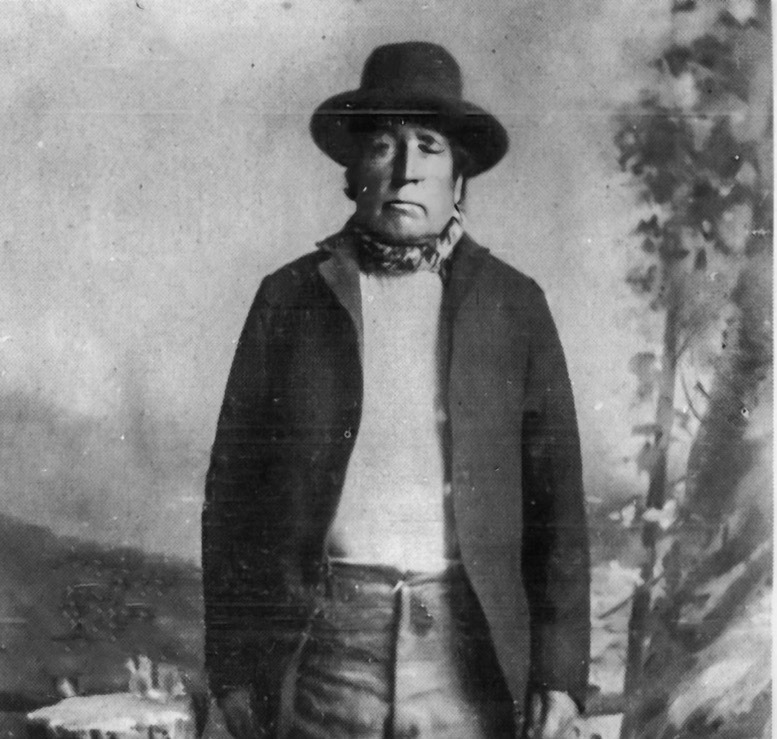
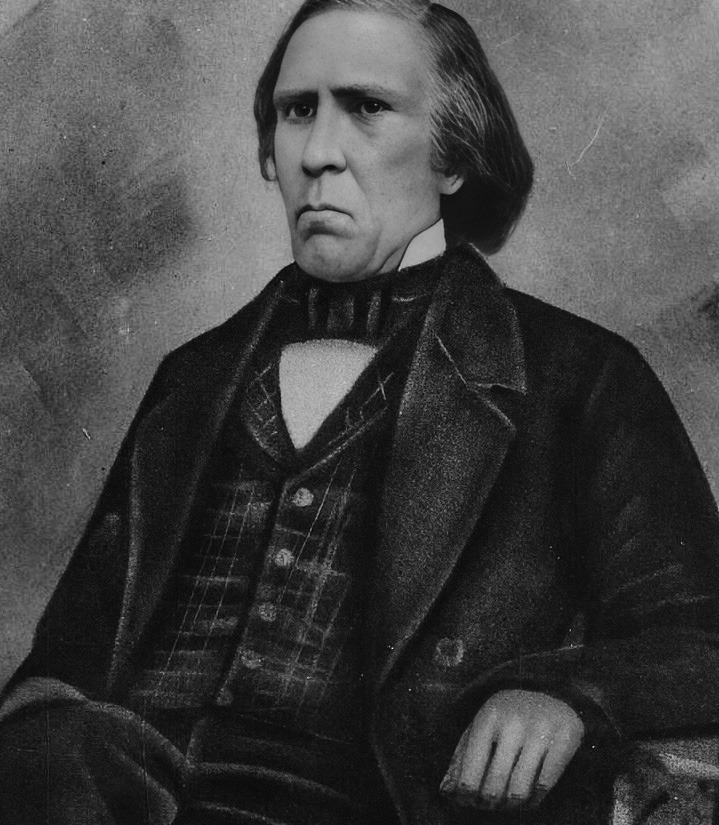
Few places hold the political and cultural significance of Pickens County in the annals of the Chickasaw Nation's post—removal history. This sprawling administrative district once served as the governmental and legal center of Chickasaw affairs in Indian Territory. Named in honor of Edmund Pickens, the first popularly elected chief of the Chickasaw Nation in Indian Territory, the county bore not only his name but also his vision of sovereignty, structure, and resilience.
Following their forced removal from Mississippi in the 1830s, the Chickasaw people initially settled as a district within the Choctaw Nation, per the terms of the Treaty of Doaksville (1837). Dissatisfaction with this arrangement—driven by cultural differences and inequitableadministration— led Chickasaw leaders like EdmundPickensandHolmes Colbert to negotiate greater autonomy.
Their efforts bore fruit with the 1855 Treaty of Separation, signed in Washington, D.C., which formally divided the Chickasaw and ChoctawNationsandallowed the Chickasaws to organize a distinct constitutional government. This led directly to the Chickasaw Constitution of 1856, drafted at Tishomingo, which divided the new nation into four administrative counties:PickensCounty (largest and most populous), Panola County, Pontotoc County and Tishomingo County.
Each county had its own county judge, sheriff, and ranger, and functioned semiautonomously within the larger framework of national governance.
Pickens County, by far the largest, covered a vast swath of southern Indian Territory— encompassing lands that today form Marshall, Love, Carter, Jefferson, Stephens, and Murray Counties in Oklahoma. Bounded on the south by the Red River, and extending northward into the Washita River basin, its terrain included prairies, wooded hills, and waterways crucial to both agriculture and ranching.
Oakland was the county seat of Pickens County. Oakland quickly became the judicial and administrative hub of the Chickasaw Nation, housing the county court, jails, and marshals’ offices. Court sessions were held regularly to enforce Chickasaw law and manage matters such as land disputes, criminal proceedings, and taxation.
Under the Chickasaw constitutional framework, each county had considerable responsibility. County judges oversaw local legal matters, and Chickasaw marshals were appointed to carry out law enforcement duties, including serving warrants, arrestingoffenders,andmanaging prisoners. The county ranger was tasked with handling stray livestock—a role of particular importance in a largely agrarian society.
ThePickensCountyCourt inOaklandbecamerenowned as a center of legal precedent and civic order. Its judges were often educated men, fluent in English and Chickasaw, who balanced tribal tradition with Western legal systems. The county sheriff collected taxes, conducted censuses, and maintained public order. For decades, Pickens County exemplified how a Native government could function effectively under its own constitutional order.
Pickens County was also the economic engine of the Chickasaw Nation. Ranching flourished, with prominent Chickasaw families like the Pickens, Bounds, and Willises running cattle across wide tracts of prairie. Branding days became social gatherings as much as economic ones, drawing entire communities together.
SmalltownslikeOakland, Woodville, and Provence grew around post offices, blacksmith shops, and general stores. Churches and schools—some funded by the Chickasaw government and others operated by missionaries— played key roles in community life. The Liberty School, near the Pickens family ranch, became a focal point for education and social gatherings.
Despite its significance, Pickens County’s existence as a governmental unit was destined to end. The Curtis Act of 1898 stripped Native nations of most of their legal authority, dismantling tribal courts and abolishing communal land ownership. With Oklahoma statehood in 1907, Pickens County was dissolved and its territory partitioned into several Oklahoma counties.
Oakland, once the seat of Chickasaw justice, faded into obscurity as Madill—named after George Alexander Madill, a railroad attorney— grew with the arrival of the St.Louis–SanFranciscoRailway. Today, little remains of Pickens County’s governmental infrastructure, but its historical footprint is vast.
The legacy of Pickens County endures in Chickasaw memory and legal tradition. It was the crucible in which self-rule, justice, and tribal identity were forged after the trauma of removal. Its very name, drawn from Edmund Pickens—a man who helped write the Chickasaw Constitution and defend the Nation’s legal rights—stands as a testament to sovereignty achieved through law and vision.
Historical markers, preserved court documents, and the descendants of those who governed and lived there continue to honor its place in history. In every courtroom session held in Oakland, every brand fired in the spring roundup, and every tribal resolution passed in its name, Pickens County was more than a jurisdiction—it embodied Chickasaw selfdetermination.
The history of the Chickasaw Nation is a resilient saga of endurance, sovereignty, and adaptation. Known as fierce warriors and skilled diplomats, the Chickasaw people originally inhabited the southeastern United States, primarily in presentday Mississippi, Alabama, and Tennessee. Their early encounters with European explorers in the 16th century— most notably Hernando de Soto—were marked by tension, but the Chickasaws remained a powerful and independent force in the region for centuries.
However, with the rise of American expansionism and policies like the Indian Removal Act of 1830, the Chickasaws were forced to confront a painful transition. The Treaty of Pontotoc Creek in 1832 began the legal dismantling of their homeland, compelling the Chickasaws to cede their lands in exchange for territory in the West. Uniquely, the Chickasaws refused to be assigned new land by the U.S. government and instead negotiated to purchase territory fromtheChoctawNation in Indian Territory—a move that preserved a measure of sovereignty.
The Chickasawsmigrated westward between 1837 and 1851. The removal was brutal, resulting in death and displacement, but the tribe persevered. Once resettled in Indian Territory (modern Oklahoma), the Chickasaws were initially placed under Choctaw governance, leading to tension and political friction. This culminated in the Treaty of 1855, which officially separatedtheChickasaw and Choctaw Nations and allowed the Chickasaws to form an independent government.
In 1856, the Chickasaw Nation adopted its own constitution and created four counties for administrative purposes: Panola, Pontotoc, Tishomingo, and Pickens. Each county served as a hub for local governance, justice, and civic affairs. Of these, Pickens County was the largest and most influential, stretching across southern Indian Territory from the Red River to the Washita. It encompassed present-day towns like Ardmore, Madill, Marietta, Duncan, and Sulphur. The county seat, Oakland, became a center of political and legal activity, reflecting the tribal nation’s attempt to build lasting civic institutions.
The Civil War added further complexitytoChickasaw history. In 1861, the Chickasaw Nation allied with the Confederacy, largely due to broken U.S. treaties, cultural ties to the South, and the desire to protect tribal autonomy. After the war, the 1866 Treaty with the United States imposed harsh terms: emancipation of slaves, the offer of citizenship to Freedmen, and additional land cessions. These postwar adjustments would forever alter thedemographicandpolitical makeup of the Nation.
Over time, the federal government continued to erode Chickasaw self-rule. The Curtis Act of 1898 effectively dismantled tribal courts and legislatures, and the Dawes Act forced the allotment of communal lands. By the time Oklahoma achieved statehood in1907,PickensCounty and the Chickasaw Nation’s other political subdivisions were dissolved and replaced with U.S. county systems. Former Chickasaw lands were carved into new counties like Marshall, Carter, Love, and Stephens.
Despite these setbacks, the Chickasaw Nation endured. In the 20th century, leaders pushed for cultural revitalization and legal recognition. Treaties once used to suppress tribal rights have since become the foundation for renewed sovereignty. Today, the Chickasaw Nation is a vibrant and self-governing entity, with a government based in Ada, Oklahoma, and services spanning health care, education, and commerce.
ThestoryofPickensCounty— named for statesman EdmundPickens,whohelped draft the 1856 constitution— remains a powerful symbol of Chickasaw self-determination. Though the county no longer exists on maps, its memory endures as a testament to the tribe’s quest for autonomy, law, and dignity in the face of overwhelming odds. But who was Edmund Pickens?
In the shadow of thunderclouds rolling across Indian Territory, where the earth bled red clay and the songs of the Chickasaw rose in defiance to the winds of change, one of the names that stands carved into the memory of a nation is Edmund Pickens. KnownalsobyhisChickasaw name, Ok-chan-tubby, which translates to 'boiling water,' Pickens’s life story mirrors the boiling cauldron of tribal upheaval, U.S. expansion, removal, civil war, and the birth ofaconstitutionalChickasaw republic.
From his birth in 1789 to his death in 1868, Edmund Pickens shaped the destiny of the Chickasaw people with foresight, courage, and indomitable resolve. His namewouldbecomeabyword for leadership—etched into treaties, sewn into military banners, and carried in the title of Pickens County, the largest of the Chickasaw Nation’s political divisions. This article offers a complete chronicle of his life, his legacy, and the enduring impact of a man who stood astride two worlds, refusing to be swallowed by either.
Edmund Pickens was born in 1789 in Natchez, in what is now Adams County, Mississippi. His father, John Pickens, a white man of Scotch descent, had earned the nickname 'The Tory' for siding with the British during the American Revolution. His mother, Mary Catherine 'Katy' Adams, was Chickasaw—a woman of tribal nobility, strong will, and enduring faith. John Pickens died the same year Edmund was born.
Widowed and with child, Mary Adams returned to Chickasaw lands, seeking protection and tradition among her people. There she married Bernard McLaughlin, a Scotsman, and raised Edmund near the Monroe Presbyterian Mission in Pontotoc, Mississippi. There, young Edmund imbibed both Chickasaw cultural teachings and Christian missionary education. This dual heritage—tribal and Western— prepared him to walk a singular path of statesmanship, one foot in each world.
In 1826, Edmund married a Chickasaw woman named Euth-li-ke, also called Liney Burris. The couple raised a large family, including Johnson, David, Rachel, and Mary. In 1830, they were baptized into the Monroe Mission. Liney was a woman of quiet strength; oral tradition holds that she carried her infant daughter on horseback during the harrowing removal westward. Their family straddled the shifting line between tribal customs and Christian conversion—a motif that would reappear throughout Pickens’s political journey.
The family made their home near Holly Springs in whatwouldbecomeMarshall County, Mississippi. But peace was fleeting. White encroachment and U.S. policy under Andrew Jackson brought the Indian Removal Act of 1830, and with it, the endofaChickasawhomeland in the Southeast.
Pickens played a critical role in the negotiations leading to the Treaty of Pontotoc Creek in 1832. While the U.S. government sought to extinguish Chickasaw land claims and force relocation, Pickens championed a unique provision: that the Chickasaw, unlike other tribes, would purchase their own lands in Indian Territory rather than be assigned them. This maneuver allowed the Chickasaws to retain sovereignty, dignity, and legal standing as landowners rather than wards.
In 1837, the Pickens family was among those listed on the historic muster roll, preparing for removal. They sold their Mississippi holdings— reportedly for $20,000—and began the journey westward. They traveled with ox carts, livestock, and tribal memories, arriving on the southern frontier of Indian Territory near present-day Love County, Oklahoma. There, Edmund built a home on a high bluff above the Red River, a place now known as Graveyard Bluff and submerged in part beneath Lake Texoma. He would be buried there in 1868.
Once resettled, Pickens quicklybecameacornerstone of tribal leadership. In 1841, he was elected the first Chief of the Chickasaw District within the Choctaw Nation, as the Chickasaws were then governed under a joint treatyarrangement.By1845, he was named the second Chief Financial Official and Treasurer of the Chickasaw people. In 1846, he led a delegation to Washington, D.C., to represent Chickasaw interests. One year later, in 1847, he was elected Tribal Captain.
After Chickasaw Chief Ishtehotopa died without an heir in 1847, the Chickasaws broke with hereditary tradition and elected Edmund Pickens as the first popularly chosen chief of their people. He held that post until 1856, navigating the complex transition fromdependencyunder Choctaw administration to full tribal independence.
Pickens was a principal architect of the Treaty of 1855, which formally separated the Chickasaw Nation from the Choctaws. He then helpedleadtheconstitutional convention in Tishomingo in 1856,resultingintheChickasaw Constitution. This document created a tri-branch government—executive, legislative, andjudicial—replacing hereditary rule with an elected governor.
With Cyrus Harris elected as the first Chickasaw Governor under the new constitution, Pickens stepped aside gracefully and took a role in theChickasawSenate,where he served from 1857 to 1861.
His governance was pragmatic yet visionary. He emphasized the importance of education, self-governance, and a judicial system that could function in both tribal and American legal environments. His constitution wouldserveasthefoundation forChickasawsovereigntyfor generations.
In recognition of his service, the Chickasaw Legislature named one of its four new counties after him: Pickens County. It was the largest, spanning from the RedRivernorthwardthrough present-day Marshall, Love, Carter, Stephens, and Jefferson counties. Oakland, near modern-day Madill, became its county seat.
Oakland was a town of stately purpose, home to the courthouse, legislative chambers, ranching operations, and schools. Tribal marshals operated from its center, enforcing Chickasaw law and customs. Pickens County became a proving ground for tribal self-rule and regional development.
Edmund Pickens’ family was also involved in one of the last known battles between the Chickasaws and the Comanches. It is believed to have occurred around 1855, near the present-day community of McMillan in Marshall County. Although military authorities did not formally record this clash, it has been preserved through oral history and local family accounts, particularly among descendants of Edmund Pickens.
According to tradition, a Comanche raiding party struck the region, likely targeting livestock or attempting toassertdominance over traditional hunting grounds that were increasingly contestedasChickasaw settlement expanded westward following removal from Mississippi. In response, a Chickasaw posse, including David Pickens, son of Edmund Pickens, gave pursuit.
During the skirmish, David Pickens was reportedly struck by a poisoned arrow— acommonweaponusedbythe Comanche. Despite efforts to save him, he died from the wound, marking not only a personal tragedy for the Edmund Pickens family but a symbolic end to the era of intertribal frontier warfare in southern Indian Territory.
This encounter, though not documented by Fort Washita or other official channels, stands in the oral memory of the Chickasaw Nation as one of the last major armed conflicts between the Chickasaws and Plains tribes such as the Comanches. It occurred at a time when the Chickasaws were solidifying their governmental structures and transitioning fromtraditionaldefensive warfare to more formalized civil governance under their newly established 1856 constitution.
As settlement increased and the U.S. Army eventually dominated Plains tribes militarily, such battles became increasingly rare. This 1855skirmishnearMcMillan thus represents the closing chapter of tribal border defense and localized militia action—a final moment of bloodshed before the long shadow of the Civil War and federal assimilation policies overtook the old frontier.
Then, in 1861, the American Civil War thrust the Chickasaws into a storm not of their making. Federal troops abandoned Indian Territory, and Confederate envoys—chief among them Albert Pike—courted tribal nations with promises of protection and respect. At the dawning of the Civil War, the Chickasaw Nation allied with the Confederacy, signing a Treaty of Friendship and Alliance.
Pickens, though elderly, was still a commanding figure. He served as a captain in the Chickasaw/Choctaw Mounted Rifles, also called the Pickens Company, part of the 1st Regiment of Mounted Rifles. Chickasaw and Choctaw units fought in key battles such as Newtonia and Poison Spring, enduring prejudice and scarcity in Confederate ranksbutremaining loyal to their oath.
The war was brutal and promises of Confederate protection often rang hollow. Still, Pickens remained devoted, believing it the best chance to protect Chickasaw sovereignty.
When the Confederacy fell in1865,theChickasawswere summoned to Washington. The 1866 treaty imposed hard terms: emancipation of slaves, the offer of citizenship to Freedmen, and land cessions. Pickens signed the treaty, though he did so with sorrow. He also wrote letters seeking amnesty for Confederate soldiers and sought to stabilize his nation in the face of federal mandates.
The Freedmen issue caused deep divisions. Some Chickasaw families—including thePickensline—resisted the extension of tribal citizenship to former slaves, despite federal pressure. Meanwhile, traditional authority waned, andtheU.S.encroachedupon tribal sovereignty through theDawesActandCurtisAct.
Edmund Pickens died in 1868, likely of illness contracted during the war. His body was buried on the bluff where he made his home. That bluff—now an island in Lake Texoma—holds the family cemetery and a historical marker reading: 'Edmund Pickens (Okchan- tubby). Site of home and grave one mile southeast on Graveyard Bluff. Born in 1789, migrated with the ChickasawsfromMississippi in 1837. First elected Chickasaw ChiefinIndianTerritory. Pickens County is named for him. As a Chickasaw Commissioner signed treaties of 1852, 1855, 1866. On July 12, 1861, signed a Treaty of Friendship and Alliance betweenChoctaw/Chickasaw NationsandtheConfederacy. Died in 1868.'
With Edmund’s death in 1868, his son I. Hunter Pickens assumed family leadership. Known for his unshakable work ethic and loyalty to Chickasaw land, Hunter married twice—first toLonePerschica,andthento Annie Ned, a woman of Trail of Tears descent.
Hunter and Annie had 14 children and established a vast ranching empire between Madill and McMillan. They grazed cattle on spring pastures and drove them west for winter. Branding days were cultural gatherings, full of fire, dust, and fellowship. They sold livestock to men like Holmes Willis, JimBounds,andBuckSmith. Hunter died in 1912 and was buried on the homestead near Liberty School. His granddaughter, Mrs. Newt Orr, later organized annual family reunions, with more than200descendantsattending at times.
In 1992, the Chickasaw Nationposthumouslyinducted Edmund Pickens into the Chickasaw Hall of Fame. His great-great-granddaughter, Juanita Keel Tate, published his biography in 2008 at age 98. Tate, also a descendant of Governor Cyrus Harris, was herself inducted into the Hall of Fame and passed away in 2012 at 101 years old.
Edmund Pickens remains a pillar of Chickasaw memory— celebrated in schools, honored in history, and revered by descendants. His vision for a constitutional Chickasaw government lives on in the tribal courts, legislature, and executive offices that serve the Chickasaw Nation today.
To call Edmund Pickens a chief or captain is too narrow. He was a nation-builder, treaty-writer, rancher, senator, and tribal philosopher. His legacy courses through every legislative act, every familyreunion,everyChickasaw child who learns the value of self-rule. He stood in the gap between annihilation and autonomy, and he held the line with vision and strength.
And though Graveyard Bluff is now hard to reach— its soil swallowed by a government dam—its spirit remains accessible to those whoremember.There,where red earth meets river wind, the legacy of Ok-chan-tubby still boils like water stirred by fire—eternal, fierce, and unyielding.
Edmund Pickens did not merely witness the shaping of Chickasaw destiny—he forged it.