
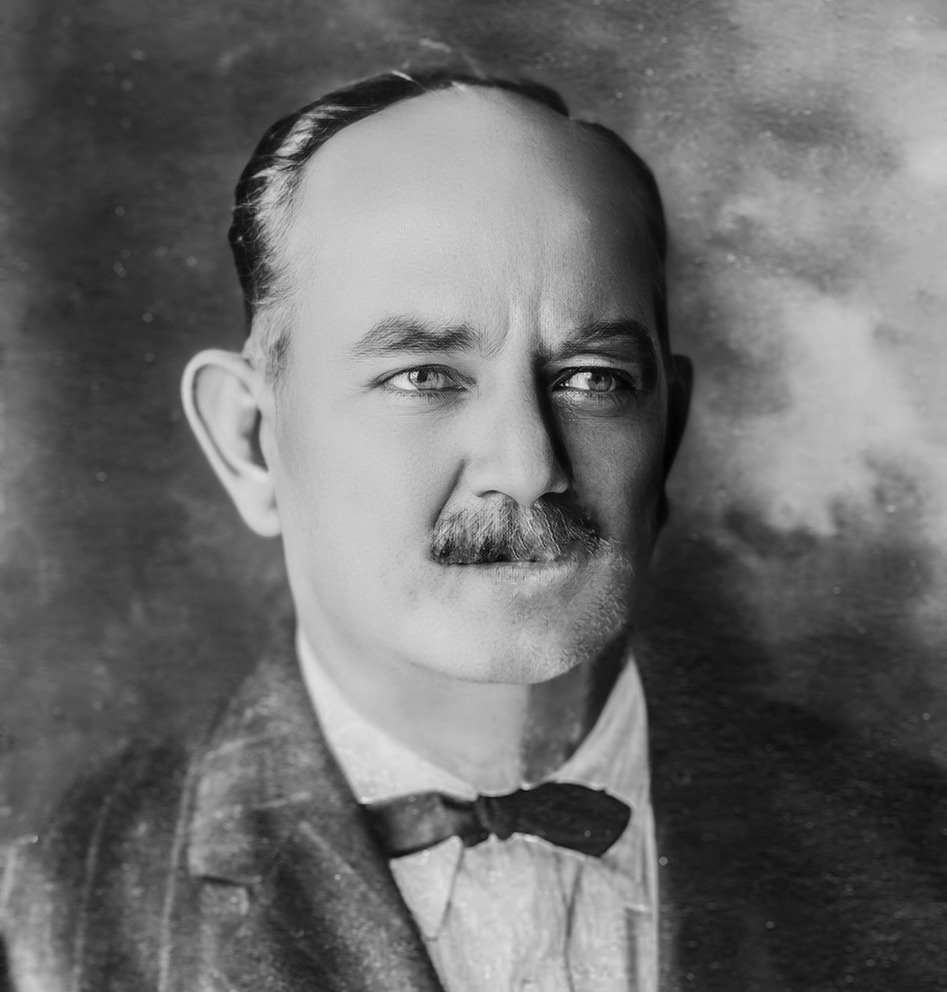
While the dispute between Madill and Kingston got ugly and caused great animosity and strife between the citizens of each town, there was an event that, in hindsight, was humorous and quite devious. It involved a group of Madill supporters disrupting a “speaking” in Cumberland, where a spokesman for Madill was to squareoffagainstaspokesman for Kingston. For those born in the last twenty-five to thirty years, it would be good first to describe a “speaking.”
In the early days of the United States, one of the defining features of early American elections was their decentralized nature. Unlike today, where candidates use nationwide media campaigns on television, radio and the internet, early politicians had torelyonpersonalappearances and word-of-mouth to reach voters. Political “speakings” allowed candidates to travel across a county, district, state, or region to interact with voters directly. Local political organizations or community leaders often organized these events, and they played an essential role in helping lesser-known candidates build recognition and support.
“Speakings” were particularly prominent in the 19th and early 20th centuries. These events were pivotal in developing political discourse in the United States, especially before the advent of modern media, as they served as a direct communication link between candidates and the public. Although “speakings” have largely fallen out of use, the concept endures in various forms,suchascampaignrallies and town hall meetings.
In addition, speakings were typically social events, drawing large crowds who might otherwise have little opportunity to engage with political leaders. These gatherings often included more extensive community activities like picnics, fairs, or publicholidays.Thismixtureof social and political life helped integrate politics into the daily lives of ordinary citizens.
One of American history’s most notable examples of political “speakings” is the debatesbetweenAbrahamLincoln and Stephen A. Douglas in 1858. Though these debates were more formal than typical speakings, they embodied the same principles: two political figures engaging directly with the public, discussing issues of profound importance—in this case, slavery and states’ rights. These debates, essentially extended “speakings,” were pivotal in shaping the political landscape of the time and are still remembered as one of the great moments in American political history.
Political speeches were typically structured around critical issues of concern to the local population. Since politicians traveled from town to town, they often tailored their speeches to each community's specific needs and concerns. For example, a politician speaking in an agricultural town might focus on farming policies, tariffs, and trade. At the same time, in industrial areas, the conversation might shift to labor rights, working conditions, and urban infrastructure.
Speakers were expected to present their ideas clearly and persuasively and to entertain the crowd. In an era of limited public entertainment, political speaking often attracted large audiences who came as much for the oratory and excitement as for the political content. This created an environment where candidates needed to be knowledgeable and charismatic, engagingthecrowdwith humor,anecdotes,andpassion.
A key element of speaking events was their interactive nature. It was common for audience members to ask questions, heckle, or challenge the speaker, forcing them to think on their feet. This direct interaction allowed voters to test a candidate’s knowledge and character, making speaking events a vital part of the political vetting.
In many cases, local political leaders or community members would also speak at these events, offering endorsements or framing the issues in ways that resonated with the local audience. These introductions helped build a sense of connection between the community and the candidate, as local leaders acted as intermediaries, vouching for the politician’s integrity and qualifications.
By the mid-20th century, the role of political “speakings” began to decline as new forms of communication emerged. Radio and later television allowed candidates to reach larger audiences without constant travel. As media technologies advanced, the need for politicians to deliver speeches in every small town diminished. Instead, carefully crafted media campaigns became the dominant form of political communication. And, of course, social media has had an even more significant impact on political campaigns. Mostcampaignsnowrelyheavily on X (Twitter), Facebook, Instagram and TikTok.
When I ran for office in the 1990s, I attended “speakings” at every community in Marshall County. Every candidate would either appear in person or send a representative to speak on his or her behalf. Theseeventsoftenincludedpie auctions or other fundraisers for the local community center or volunteer fire department. They were great fun and an excellent way to meet the local citizens and learn about their needs and concerns.
In the late spring and summer of 1908, “speakings” were conducted around Marshall County to get the word out about the county seat election. Everycommunityhadaspeaking, and Madill and Kingston sent representatives to each speaking to stump in support of their town. In some cases, the Frisco Railroad would run special trains from Kingston and Madill to the designated townssothatmorepeoplecould attend. When one speaking was held in Aylesworth, the special train carried almost two hundred Madill residents to Aylesworth to represent the town. The same occurred when a speaking was held in Woodville, Cumberland, and other parts of the county. The events were heavily attended, and some lasted for several hours.
The main speaker supporting Kingston was a lawyer named Elbridge Seawell (E.S.) Hurt, also known as “Judge Hurt.” Judge Hurt was born in Sherman, Texas, on February 12, 1862. His parents were Judge James Mann Hurt, Jr., and Matilda (Mattie) Douglass Hurt, both of Tennessee. E.S. was named after Matilda's brother, Elbridge Gary Douglass and her mother Lucy Seawell.
Hunt’s father, James Mann Hurt, Jr., was born in Carroll County, Tennessee, on Dec. 15, 1830. He received a common school education and studied law for three years in a private office. After that, he entered Cumberland University and graduatedfromthelawdepartment inFebruary1857.Hewas licensed to practice law in 1858, and soon afterward, he moved to Texas, settling at Sherman.
Heservedasacaptaininthe Confederate Army during the Civil War. He was a member of the Texas Constitutional Convention of 1866 and, in the same year, was appointed district attorney by Governor Throckmorton. However, he resigned because he would not take the oath of office that was required of such officials. In 1870, he was again appointed district attorney by E. J. Davis but was summarily removed so that another man more suitable to the administration than in power might be appointed. He then moved to Dallas in 1876 In 1880, he was elected one of the justices of the Texas Court of Criminal Appeals and was continuously re-elected until 1896. He eventually was named Chief Justice of the Texas Court of Criminal Appeals. During his long service on the bench, he made many notable decisions, some of which are still precedent in Texas criminal jurisprudence. He was also censured for many of his decisions but contended that the law and not the judge was to blame. He had vainly asked the legislature to provide laws for justice and not for technicalities, but as long as the law was as it was, he could do nothing except follow it in the letter and the spirit.
After he retired from the bench, he resumed a part-time law practice but did not appear often in the courtroom because of failing health. For several years, his health worsened to the point that he became blind and seldom conscious before he died in 1903.
When his son, Elbridge Seawell Hurt, was seventeen, hemovedtoDallas,Tex.,where heattendedpreparatoryschool and later attended the University of Texas in Austin. He graduated from the University of Texas Law School in 1883 and began his law career in Elgin, Texas, in 1885.
In 1884, Hurt married Rosalie Ireland, the daughter of the then-Texas Governor, John Ireland. Being the son of the Chief Justice on the Texas Court of Criminal Appeals and the son-in-law of the Governor of Texas gave Hurt many opportunities.
After the birth of three children, Rosalie died in September 1895. After Rosalie’s death, Hurt moved with his young children to Henrietta, Tex., where he became associated with the law firm of Stine, Chesnut and Hurt. While a member of that firm, he was elected Clay County Judge, a position he held for one term.
In 1898, Hurt married Laura Eugenia Burris of Clay County. Together, they had sevenchildren.Afterfouryears as county judge, Hurt stepped down and moved his family to Madill, where he built up an extensive law practice in the town’s early days. He was associated with George E. Rider, a lawman, for many years in Madill.
After about four years in Madill, the Hurts moved to Cumberland, where Hurt became Mayor. After about two years in Cumberland, Hurt moved to Ravia in 1905, where he opened a law office and served as mayor. During this time, he began a long career as a public orator. He was a member of the Socialist Party and began speaking throughout Indian Territory in support of the party.
The Socialist Party played a significant role in Indian Territory and early-day Oklahoma. At that time, Oklahoma had one of the strongest Socialist movements in the United States, mainly due to the region's unique economic and social conditions.
The Socialist Party in Oklahoma gained much of its strength from the agrarian population, impoverished farmers and sharecroppers who felt exploited by wealthy landowners, banks, and railroad monopolies. These farmers were burdened by debt and facing economic hardship, leading them to embrace the Socialist Party’s platform of financial reform,whichincluded calls for public ownership of critical industries, fair wages, and protection for laborers.
During the 1910s, Oklahoma became a stronghold for the Socialist Party. It had more Socialist members and elected officials than most other states. In 1914, the Socialist Party won 22 percent of the vote in the Oklahoma gubernatorial election, and many local officials, including mayors, were Socialists. The party’s official newspaper, The Oklahoma Leader, had a widespread readership.
The Socialist Party in Oklahoma focused on organizing and educating farmers and workers about socialist principles. This included creating reading circles, study groups, and “encampments,” where people could gather to learn about socialism, political theory, and how to organize politically. These efforts helped foster a sense of solidarity and collective action among the rural and working-class populations.
The Socialist Party was so popular in rural Oklahoma during this time that the party's “encampments” drew thousands of attendees. One such encampment occurred at Sulphur in August of 1912. On the final day of the three-day encampment, 15,000 people attended to hear speakers, including Hurt.
One of the most notable events associated with the Socialist movementinOklahoma was the Green Corn Rebellion in 1917. This was an armed uprising by poor farmers, many of whom were Socialist sympathizers, against the draft for World War I. The rebellion primarily responded toeconomichardshipandopposition to the war, which many socialists viewed as a conflict benefiting the wealthy elite at the expense of the working class. Authorities quickly suppressed the rebellion, and its failure significantly weakened the Socialist movement in the state.
The decline of the Socialist Party in Oklahoma began around World War I. The nationalistic fervor during the war, combined with the crackdown on leftist movements and the Red Scare, contributed to the party’s collapse. Many Socialist leaders were arrested or discredited, and the party’s influence waned significantly by the 1920s. Although the Socialist Party never fully recovered in Oklahoma, its early influence impacted the state’s politics. It contributed to the broader Progressive and Populist movements, which pushed for reforms that benefited farmers, workers, and the rural poor. Hurt was an active member and promoter of the Socialist Party for many years until the party’s downfall in the mid-1920s. At that time, Hurt became a registered Democrat.
From 1911 to 1912, Madill hosted a socialist newspaper published under the banner, the “Socialist Herald.” During its operation, the Socialist Herald covered topics pertinent to the socialist movement, labor rights, and local issues affecting the working class in Oklahoma.
By 1908, Hurt and his family lived in Durant, where he again practiced law and traveled throughout Oklahoma, speaking on behalf of the Socialist Party. As a speaker, Hurt was in massive demand by various socialist groups throughoutOklahoma.Hewas so popular that the Sayer Sun newspaper once said, “Those who have heard Hurt will scream with delight on hearing he is to speak.” Another newspaper reported this about Hunt; “Judge E. S. Hurt of Madill. Everybody knows him. His law practice will only allow him to make a few special dates and you better hurry if you want him. Judge Hurt needs no introduction to the Socialists of the Southwest.” In fact, Hurt was so popular that people went out of their way to hear him speak, even though he was known to talk for up to two hours at each appearance.
In 1908, Hurt became involved in the county seat fight in Marshall County. It is claimed that the supporters of both Madill and Kingston approached Hurt to rally the members of the Marshall County Socialist Party to support their respective towns.
BothgroupsknewthatHurt was a popular speaker and believed he could help them secure the county seat. The Kingston Messenger reported in June 1908 that “the Madill Campaign Committee held a private consultation and tried to hire him (Hurt) by an offer of more than $200.00 to get the Socialists to vote for Madill for county seat, but Judge Hurt informed them that he and the Socialists are not for sale.”
In response, the Marshall County Democrat stated, 'The Madill Campaign Committee never held any private consultation with this man. Neither did they offer him one cent to get the Socialists to vote for Madill for the county seat. He was in Madill and it was intimated that his services could be had; but as Madill was not dealing in hot air the proposition was not considered.”
While there is a dispute about whether Madill tried to hire Hunt, it is without dispute that Kingston did hire him, and he began campaigning for the town. When word got out that Hurt was working for Kingston,theMarshallCounty Democrat stated, “Judge Hurt, one of Kingston's imported spellbinders, has been frank enough to tell that he gets $200 for the 'spells' he has had. But our curiosity will gnaw like an imprisoned rat, until their imported editor tells the sum total he gets for his warped and envenomed lucubrations.”
After Kingston hired Hurt, “speakings' began throughout the county. It was reported in theDemocratthat:“Thecounty seat contest has reached the boiling point, and speakers for both towns have been spellbinding all over the county during the past week.”
In the final week before the election, speeches were given on Saturday night at Grantham, Monday night at Linn, Tuesday night at Cumberland and Wednesday night at Aylesworth. Each location was crowded, and demonstrations broke out during the speeches at some locations.
The Democrat went on to state, “Speakers for Madill were Nichols, Kennamer, Draper and Wright; for Kingston, Thurman and Hurt. On Monday night at Linn, Hardy and Kennamer spoke for Madill, and Hurt and Thurman spoke for Kingston. On Tuesday night at Cumberland, Kennamer spoke for Madill, and Hurt spoke for Kingston. On Wednesday night at Aylesworth, Hurt and Cox spoke for Kingston, and Kennamer and Hardy spoke for Madill.”
By far, the largest crowd attended the Aylesworth meeting. A subscription list was circulated in Madill, and enough money was raised to get a special train to carry the people to Aylesworth. It was estimated that about 175 people took advantage of the excursion to visit Aylesworth.
One thing, though, was clear: Judge E.S. Hurt effectively drew supporters for Kingston.Hurt’ssuccessbegan to cause concern among some of Madill's supporters, and because of this, the campaign's most dirty but humorous event occurred.
In late June, Judge Hurt was scheduled to speak again at Cumberland. It was learned that he would ride the train from Durant to Madill, then over to Cumberland. To disrupt the speaking and to get Hurt off the platform, a group of Madill supporters paid a man from Madill to ride the train with Hurt and attempt to get him drunk. It was wellknown that Hurt enjoyed consuming whiskey, so the Madill manwasprovidedsomebootleg whiskey to share with Hurt.
However, the whiskey the man gave Hurt was a concoction popularly known as “tarantula juice.” IntheAmerican Old West, “Tarantula Juice” was a colloquial term for a potent andoftenadulteratedform of whiskey. This concoction typically consisted of raw alcohol, burnt sugar, water, chewing tobacco and sometimes, strychnine. Strychnine was a bitter-tasting poison primarily used as a pesticide, but it was occasionally added to whiskey as a stimulant, giving it an extra “kick.” Other dangerous substances, such as kerosene or turpentine, would also be mixed into these adulterated whiskeys to enhance their potency or stretch the supply.
The inclusion of such additives made drinking “Tarantula Juice” extremely risky, contributing to its infamous reputation for causing convulsions, hallucinations, and severe side effects, sometimes leading to death. This was part of why it earned the colorful name “Tarantula Juice,” referring to its dangerous effects. The name “Tarantula Juice” originated from the muscle spasms and skin-crawling sensations experienced by drinkers,sideeffectsthatmade it feel as though tarantulas were crawling across their skin. These symptoms were sometimes so intense that saloons would serve the drink in twotumblers,advisingpatrons to wait to consume the second until the spasms began.
This whiskey was also known by other colorful names such as “Cactus Juice,” “Snake Bite,” “Gun Oil,” “Firewater,” “Tanglefoot,” “Dynamite,” “Forty-Rod,” “Red Eye,” “Coffin Varnish,” “Taos Lightning,” and simply “Bug Juice.”
Strychnine affects the central nervous system by interfering with neurotransmitters, particularly glycine, which inhibits nerve transmission in the spinal cord. When strychnine blocks this action, it leads to uncontrollable muscle contractions and convulsions. When death occurs, it is from asphyxiation due to paralysis of the respiratory muscles or exhaustion following prolonged convulsions.
y g y y Strychnine poisoning is characterized by the rapid onset of severe symptoms, often within 15-30 minutes of ingestion. These symptoms include Muscle stiffness and spasms, Hyperreflexia (exaggerated reflex responses), Convulsions, Difficulty breathing, Opisthotonos (aconditionwherethe bodyarchesseverelybackward due to muscle spasms), Cyanosis (bluish discoloration of the skin due to lack of oxygen) and in larger doses, respiratory failure or cardiac arrest, leading todeathwithoutimmediate medical intervention.
The plan worked. The man rode the train with Hurt and got him to drink some tarantula juice. The following was reported about the incident. “The distinguished speaker and lawyer of Durant, whom the Kingston 'farmers' had employed to present their case to the Cumberland picnic, got tarantulas in his boots and was unable to show up. We would suggest that you send someone along to keep him straight or not give him quite so much 'expense money.'
The report went on to state that “The 'tarantula juice' above mentioned, which was 'Madill dope' prepared for the purpose, was given Judge Hurt on the train from Madill to Aylesworth by a Madill man, who went to Woodville not long since, got drunk and had to pay a fine, and begged his friends not to let it get out on him till after the election.”
So, following his consumption of the tarantula juice, Hurt was so disabled that he began to suffer from convulsions, muscle stiffness and spasms to the point that he could not walk or stand, and he was unable to speak. So, no one was present to speak on behalf of Kingston at the second Cumberland speaking, and Hurt and Kingston suffered not only from the tarantula juice but also from the ridicule that followed.
Butwhatwasmoreinteresting was that the people of Madill did not deny the event. The editor of the Marshall County Democrat stated the following: “Suppose the 'tarantula juice' was given to the Judge by a Madill man? Is Hurt not of age? Is it not a known fact that he gets in that condition every time he can get any 'tarantula juice' of which you speak.”
Despite the scandal surrounding the tarantula juice event, Judge Hurt returned to Madill shortly after the county seat election and reopened his law office. He remained in Madill for the remainder of his life. In the ensuing years, Hurt ran for State Representative for Marshall County as a Socialist. Interestingly, he appeared to have won the race, but following the election, a judge threw out over 200 ballots, changing the outcome, and Hurt was defeated. He was later elected county attorney of Marshall County in 1928 and served in that position until his death in 1932.
Elbridge Seawell Hurt was a prominent figure in early Oklahoma known for his contributions to law and civic life. He was committed to upholding the law and maintaining order in a state still transitioning from its frontier past. His legal expertise and leadership were highly valued during Oklahoma's rapid growth and change. Hurt’s contribution to Oklahoma’s legal landscape was significant. At a time when the state was still organizing its legal and governmental institutions, figures like Hurt were essential in establishing order and providing guidance.
While his name may not be as widely remembered as that of some political figures of the time, Hurt’s work laid essential foundations for the legal system in Oklahoma. His career exemplified the role of attorneys in shaping the state government during its formative years. His life story is a testament to the role of legal professionals in building the infrastructure of early Oklahoma and shaping the state’s judicial system. And Hurt was a Marshall Countian. Hopefully his name will long be remembered for his contributions to the county and the state.