
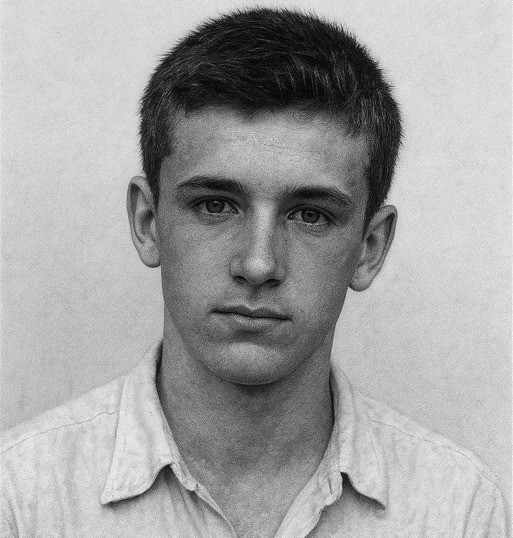
Born on April 26, 1858, in Pickens County, Chickasaw Nation, Indian Territory, John Duke McLaughlin entered the world wrapped in privilege and legacy. He was the product of two powerful bloodlines—one tribal, the other political—and his very name carried the weight of a dynasty.
McLaughlin’s maternal family, the Burneys, stood as a cornerstone of Chickasaw leadership. His mother, Amanda Burney McLaughlin, was the daughter of Judge David Calhoun Burney, a venerable Chickasaw elder who held significant influence in the tribal government. Judge Burney’s progenybecamefoundational figuresinshapingChickasaw governance, education, and diplomacy. The landscape of modern-day Oklahoma still whispers his name: the town of Burney and the onceprominent Burney Academy in Marshall County are both enduring reminders of this towering lineage.
Among McLaughlin’s many uncles, four stood out for their prominence and influence: Governor Benjamin Crooks Burney was a steadfast pillar of Chickasaw statesmanship. Born in 1846 and reared in Indian Territory, Burney served in the Chickasaw Battalion of the Confederate Army during the Civil War. A devout Presbyterian, he carried forward a vision of reform and self-determination. Burney served as National Treasurer oftheChickasawNationfrom 1876to1878andasGovernor from 1878 to 1880. His term was defined by institutional building, religious reform, and resistance to federal encroachment. He was deeply respected, and his association offered both shield and sword to those within his family circle.
Governor Benjamin Franklin Overton, another maternal uncle, was a Progressive force in Chickasaw politics. Born in 1836, orphaned at a young age, and raised by the Burneys, Overton was educated at the elite Chickasaw Male Academy and quickly rose to political prominence. As the first leader of the Progressive Party, he called for modernization, judicial reform, and expanded infrastructure. He servedasGovernorfrom1874 to 1878, leaving a legacy of letters and lobbying efforts that reached to Washington, D.C. Though Overton had died before McLaughlin’s arrest, his name lingered in the courtrooms of Indian Territory like incense in a chapel—still respected, still potent.
JamesJacksonMcAlester, perhaps the most nationally recognized of McLaughlin’s uncles, was a man whose life had been forged in the heat of Confederate service and the furnace of American enterprise. Born in Arkansas in 1842 and later marrying into the Chickasaw Nation, McAlester struck coal and political gold. He founded the McAlester Coal Mining Company and the city that bears his name. He held titles ranging from U.S. Marshal to Lieutenant Governor of Oklahoma and Secretary of State. His shadow was cast across the entirety of Indian Territory, and when his kin faced the gallows, it was a shadow large enough to eclipse the noose. And one more uncle would enter the picture.
Yet for all this prestige, John McLaughlin chose a path far darker than his pedigree foretold. Though described on paper as a farmer and landowner, he had a reputation in the Chickasaw Nation as a man of temper and violence. His name cropped up repeatedly in the ledgers of the U.S. District Court at Fort Smith, where Judge Isaac Parker presided over the lawless corners of Indian Territory. Among the most serious of these charges was his alleged involvement inthemurderofamannamed Thomas Remley.
In the waning days of the frontier, where law came on horseback and justice rode in a revolver’s chamber, the murder of Thomas Remley in May of 1876 sparked immediate outrage. The killing occurred in the Chickasaw Nation near a small settlement on the banks of the Red River, called Harney. Before long, the weight of federal law was brought down in the Western District of Arkansas, where U.S. Judge Isaac Parker,the“HangingJudge,” ruled with a heavy gavel.
Harney was the second town established in what we now know as Marshall County. The town was officially established on November 8, 1881. Harney was initially located on the Red River about a mile and a half west of what is now known as “Old Woodville.” It was named after a full-blood Chickasaw woman, named Sison Harney.
Sison was the daughter of Luppahubby and Ah-Co-Na-He. Her father, Luppahubby wasalsoknownbythenames, La-Pa-Hubby, and Lupphubbia. Sison’s parents came to Indian Territory from the Mississippi homelands of the Chickasawpeople,duringthe Indian removal, also known as The Trail of Tears.
In the 1830s Luppahubby and Ah-Co-Na-He settled in the Brownsville area of what is now Marshall County. Most of the Brownsville area is now buried beneath the waves of Lake Texoma. There they welcomed their daughter Sison in approximately 1840, and their son, Chikiee,whowentbyLoman, around 1850. Determining actual dates of birth for Sison and Chikiee is impossible as records have differing dates and ages for both. At some point, the family adopted the surname of Brown. Ah-Co-Na-He died before 1895. Luppahubby died on March 17, 1901.
Not much is known about the early life of Sison, but eventually, she married a part-Chickasaw gentleman namedWesleyHarney. Wesley was not full blood Chickasaw, but he was a tribal citizen. They made their home along the Red River near where Sison was born.
Eventually, Wesley was appointed to the Supreme Court of the Chickasaw Nation, and he also served as a Legislator for the tribe. He was a very well respected and influential man who served his tribe with honor and distinction. Sadly, Sison and Wesley never had any children of their own.
After a few years, a community formed near where Sison and Wesley had their farm, and in honor of the long-timeresidentsSisonand her husband, the community adopted the name Harney. On July 9, 1888, the town of Harney was renamed Woodville, Indian Territory.
On January 1, 1849, Laban Lipscomb (L.L.) Wood was born in Halifax, Virginia. He was the second son of MatthewG.WoodandLavina Henrietta Word. L. L. had 3 brothers and one sister. When L. L. was about six years old, his father died. Thereafter, his mother remarried amannamedWesley Sheltoninabout1856-57,and the family moved to Winston, North Carolina.
His older brother, Warwick Whitfield Wood joined the Army of the Confederate States and fought in the Civil War. He was eventually promoted to the rank of Major. After the Civil War, L.L. served in the United States Army. He served between 1867-1870. L.L. ended his military career with the rank of Colonel. At some point, he was wounded and lost his arm.
Around 1870, L.L. Wood moved from North Carolina to Preston Bend, Texas. The town was formally named Preston, but because it was at the bend of the Red River, near the mouth of the Washita River, the area was better known as “Preston Bend.”
During the “Great Removal” of 1830, the Choctaw Nation signed the Treaty of Dancing Rabbit with the United States government on September 27, 1830. This treaty was the first removal treaty which was carried into effect under the Indian RemovalAct. Pursuanttothe treaty, the Choctaw Nation ceded about 11 million acres of their homeland in what is now Mississippi in exchange for about 15 million acres in the Indian territory, now the state of Oklahoma. Then, pursuant to the Treaty of Doaksville in 1837, the Chickasaw Nation was granted the rights to lease the western half of the Choctaw Nation. In 1856, the Chickasaw and Choctaw Nations separated, and the western half of the Choctaw Nation was granted to the Chickasaw Nation as their permanent homeland and reservation.
These treaties and federal law barred all non-Indians from living in or working in Indian Territory except for federal employees and individualswhoweregranted work permits by the Indian Governments. Federal treaties had long designated this corner of Indian Territory as the permanent homeland of the Chickasaws, and yet, as the Union mended after the Civil War, the influx of outsiders—driven by opportunity, land hunger, and frontier idealism—began to challenge the legal and cultural sanctity of the region.
White men who entered the territory illegally were called intruders. By the 1870s, another name took hold: Boomers. The term, popularized by Kansas City Times editor Dr. Morrison Munford, had become a tribal pejorative, used to describe those who disregarded treaties and boundaries in pursuit of unassigned lands. The Boomer Movement symbolized renewal and prosperity tothewhiteswhodroveit,but to the Chickasaws and other Native nations, it was a new face on an old nightmare— dispossession, cultural erosion, and the looming threat of yet another removal.
In an effort to protect their lands without stalling economic progress, the Chickasaw Nation enacted a “permit law.” This allowed tribal citizens to legally employ white laborers on their ranches and farms—but only after paying $25 per white employee into the U.S. Treasury, a sum held in trust for the tribe. It was under this policy, in 1871, that a young North Carolinian named Laban Lipscomb Wood crossed the Red River and entered Indian Territory.
Wood—known in time as L.L.—had already lived through the crucibles of war and hardship. Born in Halifax, Virginia, and orphaned of his father by age six, he had grown up in Winston, North Carolina under the guidance of a new stepfather. One brother, Warwick Wood, had served honorably in the Confederate ranks, while L.L. later joined the United States Army, rising to the rank of Colonel. A wartime injury cost him his arm, and by the 1870s, he was ready to forgeanewlifeonthewestern edgeoftheAmericanfrontier.
He settled near the junction of the Washita and Red Rivers—an area now submerged beneath Lake Texoma—on land owned by William R. and Betty Tyson Watkins, prominent Chickasaw landholders and permit issuers. Betty Watkins, a direct descendant of Thomas and Sally Love, and her husband operated a large ranch, ferry, and multiple farms across the Nation. It was here that L.L. met Frances Ellen Burney, daughter of Judge David Burney and Emily Love, and niece to Benjamin Franklin Overton, who in 1874 became Governor of the Chickasaw Nation.
Wood and Ellen married, and though their time together was brief, their union bore one daughter, Mary Margaret, and bound L.L. by blood to some of the most influential families in the Chickasaw Nation—including the Love, Burney, and Overton dynasties. Importantly, Ellen Burney was the sister of McLaughlin’s mother, making Judge L.L. Wood the uncle by marriage of John Duke McLaughlin.
That connection, along with the others, would one day carry heavy political weight.
Appointed probate judge of Pickens County in 1876 by his brother-in-law Governor Overton, Wood became a towering figure in Chickasaw jurisprudence. As a tribal auditor and advisor, he worked closely with men like Sam Love, Tom Johnson, and B.F. Kemp. He was no mereplaceholder—Woodwas central to enforcing tribal law in a time of rising conflict between sovereignty and settler expansion.
His commitment to tribal sovereignty was tested by violence. In 1877, as he and Governor Overton traveled near Colbert’s Ferry, a white squatter named Meeks unleashed a dog on Wood and later opened fire on the men with a shotgun. The governor’s shirt was shreddedbybuckshot.Meeks fled into Texas. “It was such white men as Meeks that he was trying to rid from the Chickasaw Nation,” Governor Overton later said.
Wood’s leadership extended beyond the Nation’s borders. In November 1877, he was part of a Chickasaw envoy to Washington, D.C., demanding an accounting from Secretary of the Interior Carl Schurz over federal mismanagement of tribal finances. The St. Louis Globe Democratnotedhispresence, emphasizing that one of the delegation members was a “Judge”—a mark of distinction that followed Wood for the rest of his days.
In 1878, he traded his Courtney Flats claim for a fertile swath of land west of the Washita, near presentday Old Woodville. There he oversaw wood mills, a cotton gin, and 1,600 acres under cultivation. At one point, he even owned the Denison Democrat newspaper. He was a man of ambition, influence, and resolve—yet his end came not by the vote of a legislature or the whim of politics, but by gunfire at his own dinner table.
On October 2, 1882, while hosting a supper for his wood mill workers, Wood rebuked an employee, Mr. Slaughter, for foul language. The man stormed away and returned moments later with a pistol. He shot Wood twice—once in the shoulder, once in the chest. As he bled on the floor, Wood drew his own revolver, braced it against the stump of his lost arm, and fired two roundsintoSlaughter’sabdomen, killing him instantly. The judge succumbed to his woundswithinhours. Hewas just 33 years old.
In 1888, the town of Harney was renamed Woodville in his honor. The crimes involving McLaughlin and the murder of Henry Martin occurred in and around this town, now bearing the name ofamanwhohadonceworked the very soil, enforced the very laws, and shared familial bonds with the accused.
That familial bond is no small footnote. L.L. Wood was more than a public figure. He was a man tied to McLaughlin by blood and marriage—his wife Ellen being McLaughlin’s maternal aunt. In a region where kinship and loyalty could bend the arm of justice, Wood’s shadow loomed large. Wood’s political influence was at its zenith when McLaughlin was charged and tried for the murder of Thomas Remley.
In every inch of the land where Remley’s body fell and McLaughlin’s trial would later unfold, Judge Wood’s influence lingered. He was the namesake of the town, the enforcer of the law, and kin to a man who, by many accounts, had outrun the reach of justice once before.
On Sunday evening, May 28, 1876, Thomas Remley— a white man in his early twenties—departed from a church service at Harney (Later renamed Woodville) in the Chickasaw Nation with a group of friends and acquaintances. Among them were John McLaughlin, George and Robert Watkins, Almarine Watkins, Charles Colbert, Alexander Juzan, and Bud Evans. The trail ride, meant to be uneventful, ended in bloodshed instead.
Multiple witnesses recalled the sound of gunfire— at least half a dozen shots. Remley was struck in the chest and side, dying almost instantly.Hisbody,recovered shortly after, was unarmed. Yet tales swirled through the Indian Territory that Remley had drawn first, that he had reached for a weapon, that a feud had boiled over under a twilight sky.
The federal grand jury convened in November 1876 and swiftly returned an indictment for murder against John McLaughlin and Almarine Watkins. The language was exacting—both men were accused of killing Remley “with pistols, maliciously, willfully, and of malice aforethought.”
The prosecution was led by William H.H. Clayton, the U.S. District Attorney who would later gain renown for his tireless pursuit of justice in the Territory. The indictment wassigned“ATrueBill” by Garal Conyers, Foreman of the Grand Jury, and filed by Clerk Stephen Wheeler.
The government’s witness list was extensive: Dr. A. Remley, Mrs. Wilson, Lucella Wilson, George H. Macklin, Alice Juzan, John Merriman, GeorgeMartin,FrancisBeck, Charles Colbert, T. J. Luck, and A. J. Hillis. Testimony painted two competing pictures.
Eastman Harney testified thatRemleyandMcLaughlin had both taken supper at his home that night, along with others. Later, Harney heard gunshots and found Remley dead on the road. He noted that McLaughlin disappeared afterward, gone without explanation for weeks.
Others testified to seeing Remley draw first. Wesley said he heard Remley shout, “If you want to settle it that way, let yourself in!” and saw McLaughlin fire in return. Almarine Watkins, himself originally indicted, claimed that Remley galloped past him with a pistol drawn before being shot. He testified that McLaughlin acted in defense.
Witnesses repeatedly described Remley as quarrelsome and hot-tempered, known for carrying weapons at all times—even while eating. Harney and Burney testified that Remley always wore a pistol and sometimes a derringer. They described McLaughlin, by contrast, as mild,respectful, andyoung— just nineteen, barely over 120 pounds.
Morecrucially,thedefense pointed out inconsistencies in the prosecution’s case. Thomas Remley’s own father had given contradictory accounts. The defense argued this was not a premeditated ambush, but a fight gone wrong—onethatMcLaughlin neither started nor sought.
By August 9, 1877, after months of legal wrangling, McLaughlin stood again before Judge Parker in his jury trial for the murder of Remley. After all the testimony was presented, the jury returned a verdict of not guilty.
Thecourtroommurmured. The outcome reflected more than just the jury’s interpretation of law—it mirrored the turbulent state of justice in Indian Territory. Where facts blurred and witnesses conflicted, reputation often carried more weight than evidence.
ThomasRemleywasdead. John McLaughlin was free. Yet the shadow of the killing wouldfollowhim.Thoughthe court had spoken, the Territory had not forgotten. And as McLaughlin walked out of Fort Smith a free man, he did so knowing that bullets had settled what justice could not.
ThetrialofJohnMcLaughlin for the murder of Thomas Remley stands as a stark window into a world where the gavel echoed long after thegunshotfaded,andwhere power, heritage, and perception often spoke louder than law.
Yet the story did not end in the sweltering courtroom of 1877. Another body would fall, years later, under similar twilight skies, on another lonely road winding through the Chickasaw Nation. Similarwitnesseswould also appear, including John Merriman and Alex Juzan. Another uncanny connection wasthatanotherwitnesswho testified against McLaughlin in the Remley murder trial was Eastman Harney, Lucy Juzan Watkins’s first husband. Once again, John McLaughlin’snamewouldbe spoken in the same breath as murder.
It was July 6, 1884, nearly eight years after the Remley verdict, when the blood of another white man—Henry Martin—soaked into Indian Territory’s dry summer dust. And once again, McLaughlin was there. Once again, he vanished in the aftermath. And once again, the federal government called his name.
ThedeathofHenryMartin bore an eerie resemblance to the killing of Remley, as if McLaughlin’s past had returned to write its next chapter in blood. As with Remley, Martin’s slaying occurred along a road at evening’s close. As with Remley, the fatal encounter followed a day of gathering—though this time it was not a church service, but a day spent on the banksoftheRedRiver,drinking, and feuding beneath the weight of old resentments.
Martin, too, had been armed, or so it was claimed. But in death, like Remley, he held no weapon. His body was riddled with gunshot wounds. Testimony in the trial would later suggest that McLaughlin and his close associate, James“Jim”Wasson, had ridden out ahead of the group in the hours leading up to the shooting. Witnesses said that McLaughlin and Wasson confronted Martin as tensions, fueled by drink and distrust, erupted into violence.
In the Wasson trial, John Merriman, a farmer whose quiet life had been upended by violence, testified that he and Martin rode together from Woodville the day of the murder. After parting ways, Merriman saw two riders approach, Wasson and McLaughlin. Minutes later, gunshots erupted from the nearby woods. Then came the chilling image: Martin’s horse returning alone, and his lifeless body found facedown in the brush, his pistol untouched. Under cross-examination, Merriman admitted that Wasson and McLaughlin had seemed friendlyearlierthatday—but he did not waver in his belief that the evening’s violence pointed to them.
Next,ClaraMerriman,his wife, echoed his words. She heard the shots, saw Martin’s horse return without its rider, and confirmed the rapid change from ordinary domestic calm to a thunderclap of dread. She testified not to motive or malice but to reality—what was heard, what was seen, what was feared.
Then came Elizabeth Brooks, the landlady and friendofthedeceased.Martin hadspentthedayhelpingher move. He had shown no sign of conflict. That evening, she joined others in recovering his body. Her voice cracked as she recalled laying him across a saddle for the last ride home. Martin, she insisted, had no enemies—he left her house alive and came back in silence.
Stephen Bussell, the stepson of Brooks, recalled sharing a dram of whiskey with WassonandMcLaughlinnear the fence where their horses were tied. They laughed. Asked about Martin. Asked about Alex Juzan. Then rode off—only for shots to follow soon after. Bussell watched Martin’s pony return, alone and bloodied. The sequence of events was etched in his memory like scars.
Joseph Edwards, sick and bedridden in the house that day, remembered the accused stopping in briefly, then departing. Moments later, gunfire. He counted six shots—too many for one man to have fired so quickly. He helped carry the lantern when Martin’s body was found.
Jack and Jesse Birdsong, neighbors, testified to the gunfire heard from their farms. They knew Martin. They saw him ride by. Minutes later: shots, smoke, silence. Jesse said he heard six shots, then one final shot, a minute or two later—like a closing statement. They had not seen Wasson or McLaughlin that day but saw them again months later, after they had fled and returned.
The testimony of these first witnesses drew a clear picture: Martin had been ambushed on a country road just after sunset. His death had been swift and merciless. He was unarmed. The accused had been seen nearby. Gunshots had followed. His horse returned alone.
But it was Alex Juzan’s testimony that darkened the courtroom with the shadow of confession. Juzan testified that McLaughlin himself admitted to the killing. “We gotintotrouble,”McLaughlin had said, weeping, when they met in the lane near Juzan’s home. “We killed Henry Martin.” When pressed if Martin might be alive, Wasson cut in coldly: “Yes, I know he is dead—I went back and shot him in the head.” Juzan, gripped by a mixture of fear and pity, lent them horses to flee.
He recalled Wasson saying it would take ten men to arrest them—an echo of bravado in the wake of murder. That boast would vanish in the years of hiding that followed.
George Reeves, a quiet neighbor and close observer, testified to Wasson’s movements after the murder. He confirmed seeing Wasson in the area shortly after the shootingbutnotedhissudden disappearance.Formonths— nearly a year—Wasson and McLaughlin were gone. When they returned, they kept to themselves. The silence around them was telling.
DeputyU.S.MarshalJohn G. Farr, the final government witness, connected the threads. He testified to the pursuit, arrest, and movement of the accused—first Wasson, then McLaughlin. He explained how information gathered from the territory and citizen reports led to their eventual arrests. Farr also confirmed the testimony ofthosewhohadseenthemen intheaftermath,livingunder aliases or lying low in Texas and the Choctaw Nation.
But the most damning revelation came from newspaper records now entered into evidence. The Denison Daily Herald, dated September 4, 1885, reported that John McLaughlin had been arrested “full of whisky” after a shootout in the Texas town nearthePostOffice.Areward of $1,000 had been issued for his arrest, naming him a “desperado” and suspect in the murders of both Henry Martin. The Dallas Herald laterreportedthatMcLaughlin had been transferred from the Sherman jail to the federal jail in Dallas—where authorities feared he might attempt escape. Finally, the Fort Smith Daily Tribune, October 9, 1885: “McLaughlin will be convicted, and he and Wasson will be hanged together.”
Yet it was not just the testimony that damned the accused—it was the story beneath it. The patterns that began to surface. The striking similarities between the murder of Henry Martin in 1881 and the earlier killing of ThomasRemleyin1876—another road, another twilight, another shooting from the shadows.
Both killings occurred at sundown on lonely stretches of road.
In both, McLaughlin vanished afterward, only to resurface months later.
In both, no robbery was committed—only death.
In both, the victims were unarmed and ambushed.
In both, witnesses testified to seeing McLaughlin with the victim earlier in the day.
In both, McLaughlin ultimately stood trial—and in both, the jury wrestled with contradictions and circumstantial uncertainty.
In the Remley trial, a key turncamefromRemley’sown father, who shockingly testified that he believed his son mayhavedrawnfirst,casting doubt on what had seemed a cold-blooded murder. The jury, stunned by this paternal contradiction, returned a verdict of acquittal.
But in the Wasson trial, the voices rang louder, steadier. No one—no family, no friend—suggested Martin was the aggressor. The holes in Martin’s back and the bullet through his jaw told another story. No one could explain away the ghost of a pony galloping home alone, blood on the saddle, the pistol still in its holster.
And in this trial, the prosecution had more than suspicion. They had a confession. They had Alex Juzan.
TheghostofThomasRemley haunted this courtroom. His murder—the first violent death tied to John McLaughlin— remained unsolved, buried under a verdict of doubt and family shame. But now, nearly a decade later, the second killing might achieve what the first did not: conviction.
And the gallows, long patient, would finally answer the echoes that had followed McLaughlin and Wasson down every road they traveled.
In 1876, it had been Benjamin Burney, Overton, Wood andMcAlester—theirnames ringing through courtrooms like bells of protection. In 1884, although Governor Overton and L.L. Wood had passed their names, the McAlester and Burney names still carried weight. And though the law grew stronger in the Territory, had it grown strong enough to bind McLaughlin?
His life, shaped by privilege and blood, seemed wrapped in a kind of judicial armor—one forged not by innocence, but by influence.
And yet, two men were dead.Twomen,gunneddown in the backcountry of the ChickasawNation.Twofamilies left to bury their sons. Two juries asked to weigh truth against testimony, and justice against power.
Would John McLaughlin survive both?