
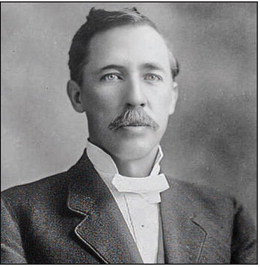
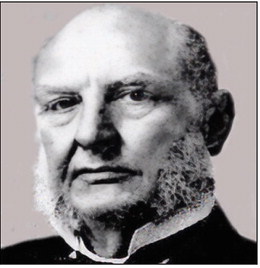
On April 14, 1914, the Oklahoma Supreme Court heard the appeal of Kingston supporters in the nine-year rivalry between Kingston and Madill. That rivalry began during the county seat fight for Overton County, following the Constitutional Convention and the county seat campaign during the 1905 attempts to create the State of Sequoyah.
The fight to create the State of Sequoyah began in earnest when supporters of the Indian state convened a Constitutional Convention on August 21. That Convention continued until September 8, 1905. During that convention, Delegates drafted a constitution for the proposed State, which aimed to create a separate state for the Native American tribes in Indian Territory. As part of that constitution, an area we now know as Marshall County was named Overton County. The Constitution of the State of Sequoyah then provided for each county seat to be challenged via election, just as the soonto- follow State of Oklahoma Constitution.
The Sequoyah Constitution named Madill as the county seat of the State of Sequoyah. Still, shortly after that designation, a group of Kingston citizens circulated a petition to change the county seat from Madill to Kingston. The county commissioners of Overton County accepted the petition, and an election was held on November 7, 1905. The citizens of Overton County voted to retain Madill as the county seat of Overton County, and thus the rivalry began.
Although the constitution of the State of Sequoyah was completed and the people of Indian Territory widely supported the proposal in a subsequent referendum, the effort ultimately failed. The U.S.Congressdidnotsupport the creation of Sequoyah; instead, it favored the combination of Indian Territory and Oklahoma Territory into the single state of Oklahoma, which achieved statehood on November 16, 1907. The Oklahoma Constitution thus created what we now know today as Marshall County.
For the next nine years, the two towns waged an ugly and, at times, violent battle for the designation as the Marshall County seat and then whether taxes should be raised to build a courthouse. Madill won the county seat election but then lost four subsequent elections to build a courthouse. Finally, on September 9, 1914, the supporters of the bond issue for constructing a courthouse prevailed. It was the fifth bond issue election.
Following that election, allegations of fraud and election improprieties took the case to the Oklahoma Supreme Court. On April 14, 1914, the court heard the appeal from Kingston supporters, and then on April 28, 1914, the Court issued a written opinion announcing its decision. Associate Justice Stillwell Heady Russell drafted the court's opinion, upholding the election and denying the challenge from several men from Kingston.
Following the court's decision upholding the election, the Kingston Messenger continued making allegations of impropriety in the election and then in the court’s handling of the appeal. In an article in the April 25, 1914 edition of the Messenger, the editor stated: “We presume the same feeling of elation felt by the horse thief, the bank robber or the burglar who makes a successful getaway with their spoils, is felt by thieves in other things even though it be a county seat or a court house bond steal, but it will be many moons before the people who are the victims of such depredations can be induced to kiss the hand that smites them. There will be a time of reckoning” Then, on May 16, 1914, the Messenger issued an editorial completely assailing the entire process. That article stated: “As an attempt to throw dust in the eyes of the people of the county, the publication of the decision in full of the Supreme Court in the courthouse bond election case is but another slick scheme of deception, but it does not clear the skirts of the schemers who hide behind the decision. The people of Marshall County know that theyhavebeen'buncoed,'not only on this but on numerous other occasions.”
(For those unfamiliar with the term “buncoed,” it is an informal slang word that means to deceive, swindle, or trick someone, often in a financial context. It derives from the word “bunco,” which refers to a confidence game or scam designed to cheat someone, typically by gaining their trust and then defrauding them.”
The article continued, “The decision was nothing more than could have been expected under the circumstances and was no doubt an honest interpretation of the law so far as the court was concerned.
They had no opportunity to enter into an investigation of the rottenness in the affair. They had no call to inquire into the fact that it was a subterfuge taken advantage of by conscienceless schemers to carry their point. The people who were forced into the necessity of taking the initiative in getting the matter before the higher court were not guilty of any attempt or disposition to deprive a single voter of his rights.
They were only trying to hold the gang to their own proposition to the law as it was laid down and under which the election was held.”
“As a matter of (self-serving, benefiting themselves) having full control of the electoral machinery, drew the line property taxpayer and non-property taxpayer when they directed that separate election returns be made. Evidentially, there was a three-fold purpose in this one to lay a plan on which to base an election of illegality in the event the election was lost to them, to horn off a large percentage of the voters in the country districts, and to create a reserve vote should they need it.”
“In Kingston, the instructions of the board were ignored as they were regarded as illegal, and all voters legally qualified, allowed to vote. At Madill, it was enforced and the line drawn, and the non-property taxpayer would have been left out in the cold had his vote not been needed to perpetuate their acts. Those crocodile tears--that hypocritical love for the ‘dear people’ — will have no soothing effect on the public mind.”
“But we do not desire to discuss the matter further. Our position is well understood. Wehavenoapologiesto make, no excuses to offer. We are uncompromisingly opposed to dishonesty and corruption, public or private. We onlywishitwereinourpower to make known the guilty parties to this enormous transaction, but they have successfully covered up their tracks and are ghoulishly exulting over their debauchery of the elective franchise through their mouthpiece, the News-Democrat. But time will bring its revelation. 'Murder will out.' In the mean let the honest body of the people keep on the alert.”
Theangerofthoseopposed to the bond issue was based on the judge who penned the opinion of the Court, Associate Justice Stillwell Heady Russell, who was appointed to the Supreme Court on March 11, 1914, and took office on March 16th, less than one month before the bond issue appeal was heard.
Stillwell Heady Russell was born in Brazoria County, Texas, on February 14, 1846. His lineage was steeped in public service, as his father, William Jarvis Russell, and mother, Eleanor Heady Russell, instilled in him a strong sense of duty and resilience. Named after his maternal grandfather, Stillwell Heady, a prominent Kentuckian legislator, Russell grew up amidst the tumultuous backdrop of pre-Civil War Texas. His education at the Texas Military Institute prepared him for a life of discipline. At the same time, his early work as a farmer cultivated his connection to the land and people of Texas.
In 1863, at the age of 17, Russell joined the Confederate Army as a private in the 25th Regiment of the Texas Cavalry. However, his brief service began a lifelong commitment to public life. The war experiences exposed him to the complexities of leadership and the challenges of rebuilding a fractured society.
After the Civil War, Russell sought to rebuild his life in a rapidly changing Texas. He worked as a clerk in a dry goods store in Brazoria, all while studying law under the mentorship of the respected legal firm Lathrop and Mc-Cormick. In 1869, Russell was admitted to the Texas Bar, signaling the start of a remarkable career in law and politics. At that time, Russell was a registered Republican.
Russell’s legal acumen quickly earned him recognition. By 1870, he was appointed City Attorney for Galveston and Houston, showcasing his ability to navigate complex legal landscapes. Governor Edmund Davis later appointed him as District Attorney for Harrison and Rusk Counties, a position he held until 1872. During this time, Russell gained a reputation as a staunch advocate for justice, unafraid to take on challenging cases.
In 1872, Russell’s political aspirations became more prominent when he was elected Sheriff of Harrison County. His tenure, which lasted until 1876, was marked by efforts to professionalize law enforcement and combat the growing threats of post-war banditry. His contributions to the 1875 Texas State Constitutional Convention further solidified his standing as a dedicated public servant. Russell served on the Legislative Department and Revenue andTaxationcommitteesand shaped the state’s legal and fiscal policies.
While Texas became a state in 1845, a constitutional convention was convened in 1875 to draft a new state constitution in response to widespread dissatisfaction with the Reconstruction-era Constitution of 1869, which was perceived as centralized, restrictive, and imposed under federal influence. The 1875 convention aimed to address grievances from Texans, particularly Democrats and former Confederates, who sought to reduce the power of the state government and restore local control.
In 1876, Russell’s growing influence led him to run for the U.S. House of Representatives from Texas’ 2nd Congressional District. Despite endorsements from severalnewspapers,helostto incumbent Democrat David Culberson. However, this defeat did not deter him.
In 1878, President Rutherford B. Hayes appointed Russell as U.S. Marshal for the Western District of Texas, a prestigious role with substantial responsibilities. This position allowed him to significantly influence law enforcement operations in a sprawling and often lawless territory.
However, the power of his office soon became a doubleedged sword. By the early 1880s, Russell faced mounting allegations of financial improprieties. Investigators discovered extensive evidence that he had engaged in fraudulent practices, ranging from falsified expense reports to misappropriating government funds. These activities would become the foundation of one of the most sensational corruption cases of the era.
Russell was accused of systematically misappropriating public funds, using government money for personal debts and other non-official expenses. Evidence revealed that he deposited federal funds into private accounts, bypassing mandated government depositories. One particularly glaring misuse involved a $13,610 tax debt owed to the state of Texas, which he allegedly settled using public funds earmarked for his office.
Investigators estimated that nearly $40,000 of government money—an enormous sum for the time—was either missing or unaccounted for in his ledgers.
A significant portion of the case against Russell involved falsified expense accounts. He submitted claims for inflated costs related to prisoner transport, travel expenses, and operational activities. For example, he charged $1,161.40 for train tickets to transport prisoners but spent only $270 under a special contract.
He fabricated costs for nonexistent guards and inflated meal expenses, adding substantial sums to his expense reports. And, deputies were coerced into signing blank affidavits, whichRusselllaterfilledwith fraudulent details to validate his claims.
Investigators found Russell’s treatment of his deputies to be unethical and exploitative. Deputies were often required to pay operational expenses out of pocket and then submit inflated reimbursement claims. Russell kept 40% of these inflated sums, leaving them underpaid and in debt.
To ensure compliance, Russell used intimidation and manipulation. Deputies who resisted, such as W.E. Smith was forced to resign under duress. Others, like Jake Wolff, were coerced into signing fraudulent documents or bribed to leave the state during investigations to avoid testifying.
Russell’smismanagement extended to the prisoners under his custody. Reports surfaced of prisoners being kept insubstandardjailconditions for extended periods due to delays in transportation. One prisoner reportedly died of pneumonia after weeks of exposure in inadequate facilities.
Additionally, Russell manipulated the legal process to protecthimself.Witnesstampering became a hallmark of his defense strategy, as evidenced by his payment to Jake Wolff to avoid testifying against him.
As investigations closed in, Russell allegedly destroyed or concealed critical office records, including financial ledgers and blotters. With the help of his brother, he removed these documents from official custody, leaving investigators without key evidence to build a complete case.
It was also alleged that Russell retained proceeds from court-ordered sales of seized property, such as livestock, which were meant to be deposited with the court. One such incident involved $1,365.05 from the sale of sheep and goats. The rightful owner of the property neverreceivedcompensation, further tarnishing Russell’s reputation.
In 1882, Russell was formally charged with multiple counts of fraud and corruption. The trial captured national attention, with the Department of Justice emphasizing the need to hold public officials accountable. While Russell was acquitted on some charges due to a lack of evidence and witness tampering, he was convicted on others, including submitting falsified expense accounts.
He was sentenced to two years at the Illinois State Penitentiary in Chester, Illinois. Thoughhemaintained a degree of dignity during his incarceration, the conviction marked a dramatic fall from grace for the once-respected official.
In addition to the United States Department of Justice investigation, the United States House of Representatives conducted an extensive congressional investigation of Russell and the allegations leveled against him between 1883 and 1884. That investigation was a significant portion of a more extensive investigation of corruption allegations in Texas. The investigative report, issued in 1884, was published in a forty-volume compilation covering over 990 pages.
Russell served 21 months in prison before being pardoned by President Chester A. Arthur one day before his prison sentence ended. Upon his release, Russell began a quiet tour of Texas. What his mission regarded was not ever positively developed. Still, it was generally surmised that he was collecting facts as evidence to be used against prominent republican officials in Texas, whom he accused of having persecuted him and secured an unjust conviction for personal reasons.
After his “retribution” tour, Russell resumed a legal practice in Denison, Texas, demonstrating resilience and a determination to rebuild his reputation. By 1899, he relocated to Ardmore in the Oklahoma Territory, establishing a successful law firm with Edgar Wilhelm. His decision to switch political allegiance to the Democratic Party marked a strategic move to align with the shifting political landscape.
Oklahoma’s path to statehood in 1907 provided new opportunities for Russell. His legal expertise and renewed commitment to public service earned him election as a district court judge for Oklahoma’s 8th District. His re-election in 1910, defeating Republican James Humphrey, reflected the trust he had regained among his constituents.
While in Ardmore, Russell became close friends with another attorney, Lee Cruce. Cruce was a partner in the law firm of Cruce and Cruce. The firm consisted of Lee Cruce and his brother, William Isaac Cruce. Lee Cruce, the second governor of Oklahoma (1911–1915), was a man of contradictions.
Cruce was a staunch reformer and a staunch defender of order in the fledgling state of Oklahoma. His tenure as governor was marked by bold policies, relentless reform efforts, and a fierce battle against corruption. Yet, it was also fraught with controversy, ashisuncompromising stance on the death penalty, fiscal prudence, and moral integrity alienated allies and drew the ire of political foes.
Born on July 8, 1863, in Marion,Kentucky,LeeCruce grew up in the shadow of the Civil War. His family instilled in him the value of hard work and a strong sense of morality. After earning his law degree from Vanderbilt University, Cruce moved westward, seeking opportunity in the bustling territories that would later become the state of Oklahoma.
Cruce settled in Ardmore and became a banker and then a lawyer. He quickly became a prominent figure in the community, admired for his sharp intellect and unflinching integrity. His involvement in civic affairs andDemocraticPartypolitics eventually led to his nomination for governor in 1910, when he succeeded Charles N. Haskell, Oklahoma’s first governor.
Cruce took office at a pivotal time in Oklahoma’s history. Statehood was still new, and the young state faced numerous challenges, from political corruption to economic instability. As a reformist Democrat, Cruce vowed to bring order, transparency, and efficiency to the state government. His administration pursued several key priorities: Cruce inherited a state budget plagued by inefficiencies and waste. Determined to cut costs, he implemented stringent fiscal policies, eliminating unnecessary government positions and slashing public expenditures. However, he balanced this austerity with an ambitious infrastructure program. Roads, bridges, and public buildings—symbols of a modern,unifiedOklahoma— were constructed under his watch.
Cruce was a strong proponent of education, believing it to be the cornerstone of progress. His administration increased funding for public schools and expanded the state’s higher education system.Hewasinstrumental in laying the groundwork for Oklahoma’s universities, ensuring access to education for future generations.
Perhaps Cruce’s most enduring legacy was his commitment to law and order. He was a fierce opponent of lynching and mob violence, a stance that set him apart in an era when such acts were often tolerated. When local authorities failed to act, he deployed the National Guard to maintain peace, making it clear that he would not tolerate vigilantism.
One of the most controversial aspects of Cruce’s tenure was his unwavering opposition to capital punishment. While not an abolitionist, Cruce commuted all death sentences during his time in office, earning him praise and condemnation. He believed the justice system was fallible andthattheultimatepenalty was irreversible and prone to misuse.
Cruce’s stance made him a target for criticism. Newspapers accused him of being soft on crime, and political opponents used his commutations as evidence of weak leadership. Yet he remained steadfast, arguing that the state had a moral obligation to ensure justice, not perpetuate revenge.
Corruption was a pervasive problem in Oklahoma politics during the early 20th century. Cruce’s administration was marked by high-profile clashes with entrenched interests, particularly within the state legislature and local governments. He launched investigations into bribery, election fraud, and misuse of public funds, often at significant personal and political cost. Cruce’s position on misuse of public funds and bribery stood in stark contrast to his appointment of Russell to the state Supreme Court since Russell had been convicted and imprisoned due to his conviction of misuse of public funds. Even though Russell was eventually pardoned for his crimes, the appearance of a governor fighting public corruptionandmisuseofpublic funds seemed hypocritical upon his appointment to the supreme court of a man convicted of the misuse of public funds, embezzlement and corruption.
After leaving the governor’s mansion, Cruce returned to Ardmore, where he resumed his banking and law career and rejoined his brother William in the firm of Cruce and Cruce. He passed away on January 16, 1933, leaving a complex legacy of reform, resilience, and moral conviction.
In reporting on Cruce’s appointment of Russell to the Supreme Court, the Hugo Democrat newspaper reported, 'The appointment is purely a personal one, Judge Russell perhaps being a closer friend to the governor than any other man in Oklahoma. The friendship is of years duration and has never been broken by any political or personal jar.” Additionally, numerous news articles across the state reported on numerous legal cases where Russell was co-counsel with Cruce and his brother, William. While Russell and Cruce were never “formal” law partners, they worked together on dozens of cases across Oklahoma representing the same client on cases. It was clear that the two men were the closest of friends.
Their relationship and informal partnership led to claims of impropriety. Under ethics standards and rules, Russell should have recused himself from the Marshall County courthouse case because William Isaac Cruce, the governor’s brother, represented the county commissioners. There was an apparent conflict of interest, or at least the appearance of a conflict of interest. These sorts of issues erode public confidence in the courts and lead to claims of fraud and undue influence.
Oddly, within a few years of statehood, the Oklahoma Supreme Court was plagued with corruption claims, including during Russell’s short time on the bench. The Court endured scandal in the early 20th century, during the state's rapid development, when its burgeoning economy and legal institutions were still finding their footing. The scandal involved allegations of judicial corruption, abuse of power, and political manipulation.
By the 1910s and 1920s, misconduct allegations within the judiciary began to surface, particularly involving justices who wielded immense power in shaping the state’s legal landscape. The scandal came to light in the early 1920s, when accusations of bribery and favoritism involving certain members of the Oklahoma Supreme Court reached the public. At the heart of the controversy were claims that justices had accepted bribes from oil barons, land speculators, andother powerful interests in exchange for favorable rulings.
Key allegations included bribery, wherein Justices were accused of accepting cash payments, gifts, and other incentives to influence their rulings. The allegations also included case rigging, wherein it was alleged that decisions were sometimes preordained in favor of the highest bidder, undermining the principles of impartiality and fairness. Then, there were allegations of political collusion. The scandal extended beyond the judiciary, implicating politicians who used their connections to the court to secure outcomes beneficial to their allies. These claims were also made by those supporting Kingston in the courthouse dispute.
When reporting on Russell’s opinion, the Kingston Messenger stated, “We wondered if there wasn't a bug under the chip when we read the lengthy eulogy of Judge Stillwell Russell in the News-Democrat last week. It has developed in the decision rendered in the courthouse bond case. 'You tickle me, and I'll tickle you.'
In a strange twist of fate, the Messenger’s derisive references to Russell’s court opinion as a “eulogy” in the article on May 2, 1914, seemed prophetic when Russell fell ill during a meeting of the Oklahoma Bar Association and passed away just two weeks later on May 16, 1914. His death was attributed to a “weak heart and acute indigestion.” Today, we would say he suffered a massive heart attack.
From that point forward, those opposed to the bond issue rightly or wrongly concluded that Lee Cruce appointed his close friend to theSupremeCourt,arranged for him to write the opinion, and persuaded him to deny the protest appeal because hislawfirmwasrepresenting the Marshall County commissioners. Situations such as this undermine public trust in the law and the court system.
Were corruption and political influence used to deny the people of Kingston their voting rights? The truth of that question is now lost to history—however, situations like this feed allegations of corruption and conspiracy theories of unethical political influence and fraud. And in the end, the outcome of the case only fanned the flames of the rivalry between Madill and Kingston. A rivalry that continues to this day, 111 years later.