
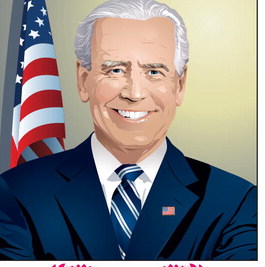
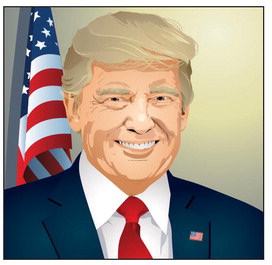
Outgoing President Joe Biden used his presidential power for one final act. He preemptively pardoned Dr. Anthony Fauci, retired General Mark Milley and members of the House committee that investigated the siege on the Capitol on January 6, 2021. He issued the pardons in attempt to guard against acts of “revenge” by the new Trump administration.
Biden said on Monday that his decision derived from a warning issued by President elect Donald Trump about having an enemies list filled with names of those who crossed him politically or sought to hold Trump accountable for the attempt to overturn his 2020 election loss. Biden said the pardons are in no way an act saying the politicians are guilty, he just wants to protect them.
“The issuance of these pardons should not be mistaken as an acknowledgment that any individual engaged in any wrongdoing, nor should acceptance be misconstrued as an admission of guilt for any offense,” Biden said in a statement. “Our nation owes these public servants a debt of gratitude for their tireless commitment to our country.”
Talks of the pardons were the subject of heated debate for months among the higher ups in the White House. Even though it’s customary for a president to grant clemency at the end of her term, it is highly unusual to grant them to individuals who haven’t been convicted yet. Typically, they are offered to Americans who have already been convicted.
Trump noted his disdain for Biden’s decision after his own inauguration. He said that Biden pardoned people who were “very very guilty of very bad crimes.” He even referred to them as “political thugs.”
The act of the preemptive pardons could set a dangerous precedent. Biden used his power in the broadest most untested way by pardoning individuals who haven’t even been investigated yet. This could potentially open the door for future presidents to have an even more expansive use of pardons. There is worry that future presidents could use the “blanket pardon” to encourage allies to do illegal things that they wouldn’t normally do for fear of being convicted.
It is unclear whether the individuals who were pardoned by Biden would need to apply for the clemency, or if they are automatically granted it if found guilty.
The blanket pardons for Fauci and Milley cover the period extending back to January 1, 2014. Biden said he issued the pardons to save their reputations.
“These are exceptional circumstances, and I cannot in good conscience do nothing,” Biden said. “Even when individuals have done nothing wrong — and in fact have done the right thing — and will ultimately be exonerated, the mere fact of being investigated or prosecuted can irreparably damage reputations and finances.”
Fauci was the director of the National Institute of Allergy and Infectious Diseases at the National Institutes of Health for approximately 40 years and served as Biden’s Chief Medical Adviser. He got on Trump’s bad side when he questioned Trump’s public health notions during COVID-19.
Fauci said that he is innocent of any wrong doing.
“Despite the accomplishments that my colleagues and I achieved over my long career of public service, I have been the subject of politically motivated threats of investigation and prosecution,” Fauci said in a statement. “There is absolutely no basis for these threats. Let me be perfectly clear: I have committed no crime.”
Milley, a former chairman of the Joint Chiefs of Staff, detailed Trump’s conduct leading up to the January 6 insurrection and said he is thankful for a pardon.
“I do not wish to spend whatever remaining time the Lord grants me fighting those who unjustly might seek retribution for perceived slights,” he said in a statement. “I do not want to put my family, my friends, and those with whom I served through the resulting distraction, expense, and anxiety.”
Biden also issued pardons to members and staff of the committee that investigated the insurrection. He also pardoned the U.S. Capitol and D.C. Metropolitan police officers who testified against Trump.
In stark contrast to Biden, Trump used his first day in office to issue some executive orders, pardons and commutations. In a similar unprecedented move like Biden, Trump pardoned more than 1,000 people who were charged in the January 6, 2021, attack on the US Capitol. He also commuted the sentences of leaders of the Proud Boys and Oath Keepers.
Trump referred to the convicted and charged defendants “hostages”, and gave them all a full pardon. The commutations extend to the 14 individuals from the Oath Keepers and Proud Boys who were convicted or charged with seditious conspiracy.
These pardons grant full clemency to hundreds of individuals convicted of felony crimes like assaulting police officers and destroying property during the transfer of power when Biden took office.
Some convicted felons have already been released from prison. Andrew and Matthew Valentin both pleaded guilty in September to assaulting police and were each sentenced to two-and-a-half years in prison. According to Paul Ingrassia, a Trump White House liaison to the Justice Department, said they were both released from the DC Central Detention Facility Monday night.
Out of the prosecutions, in which over 1,580 people were charged, 55% of them are misdemeanors like disorderly conduct or trespassing. A vast majority of the individuals who were convicted of the misdemeanors served small jail sentences or received probation.