
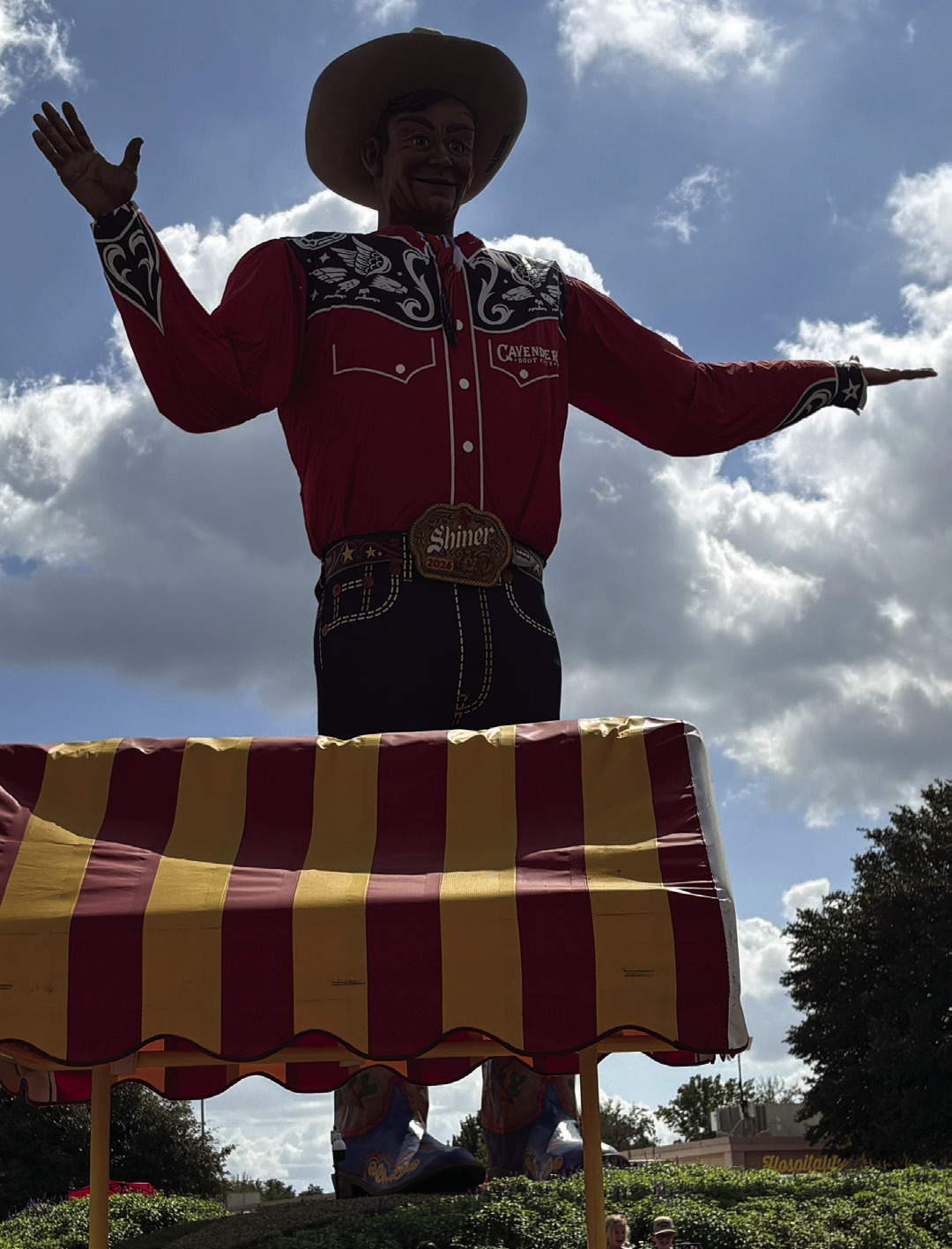
For southern Oklahoma residents who live closer to Dallas than Oklahoma City, the Texas State Fair can be a tempting trip across the Red River. One can almost smell the corn dogs cooking before they arrive.
For many Oklahomans, the Red River Rivalry is the biggest draw. The matchup brings its share of cheers and heartache for fans on both sides, and to an avid OU fan, the Cotton Bowl can feel almost like home.
However, football is not the only reason to cross the state line. Beyond the rivalry, the fair offers food, history and attractions worth exploring.
The fair’s history dates to Jan. 30, 1886, when it was chartered. Once inside, it is hard to pass up one of those huge corn dogs—provided parking has left a little change in the pocket. The Texas State Fair website reports that more than 2.2 million people attended in 2025 during its “24 days of fun.”
A greeting to and from Big Tex, a Fletchers regular CornyDog,andaStrawberry Funnel Cake starts the visit. Nearby, a giant animated University of Oklahoma football player stands a few yards from a University of Texas football player awaiting a picture with a fan and sometimes rival. Together, these icons offer a larger-than-life welcome with a familiar rivalry twist.
Someinterestingfactsand historical buildings on the fair grounds - January of 1886 an 80 acre tract of cotton fields is selected for the Dallas Texas State Fair grounds.
- Quanah Parker (A Comanche Chief and leader) visitedtheFairandaddressed fairgoers in 1886, according to Fairparkdallas.com -The Hall of State building was erected in 1936 and the architecture is Art Deco and. Etched on the exterior frieze is 59 Texas Historical figures.
- Fair Park in Dallas is a National Historic Landmark and is one of the largest remaining collections in the United States of exposition – style buildings.
- Fair Park’s history site lists a 1929 milestone: “University of Texas and Oklahomaplayaneutral-site football game.” (The Cotton Bowl) The first meeting occurred in 1900.
- The Cotton bowl stadium was built on the site of earlier Fair Park Stadium in 1930. It was renamed in 1936 from Fair Park Stadium to Cotton Bowl Stadium. The stadium hosted community events and football games. Some majortenantsincluded:SMU Mustangs, Dallas Texans, Dallas Cowboys, and Red River Rivalry annual Texas vs. Oklahoma game every year since 1932.
- The Texas Centennial Exposition of 1936 welcomed President Franklin D. Roosevelt to fair park where he gave a 30 minute speech in the Cotton Bowl to a crowd of 50,000.
- Fletchers Corny Dogs were invented at the Texas StateFairin1942bybrothers Neil & Carl fletcher. Over half a million corny dogs are sold at the fair annually and a whopping 1500 gallons of mustard and 800 gallons of ketchup are dolloped on them.
-2026 Food winners, Best Taste – Savory- Burger Chop Tator Tacos. Sweet-Fletchers Chocolate Corny Dog. Sipper- Tropical Coco Fresca. Most Creative- Berry Me in Matcha.
- There are typically 200 – 225 independent food vendors.
- Over 2 million people enter the fair gates.
- The University of Texas and The University of Oklahoma are both guests at the Cotton bowl -2026 Champion Big Boar weighed in at 1000 pounds sporting the name “Boris”.
A trip to the first State Fair Of Texas in 1886 would have looked far different from one today. With no national highway system in place, travelers from Indian Territorymighthavereached Dallas by horse- or ox-drawn wagon along an established trail, or by train.
Routes included the Shawnee Trail, also known as the Texas Trail, which carried longhorn cattle before carrying fair-bound travelers. Some 140 years later, the journey is a different experience: a 100mile trip that might once have taken about two and a half days by horse now takes about two and a half hours along the old Texas Road.
For an Oklahoman heading south across the Red River, the trip is well worth the time. “The Most Texas Place on Earth” offers a big howdy and a welcome that can make even a rival feel at home.