
Historyhasacurioushabit of remembering public men for the moment of their greatest triumph while quietly forgetting that, even at the height of success, another story is unfolding beyond public view.
Only a few months earlier, Jake Louis Hamon appeared to stand at the very summit of American life. The young attorney who had left Kansas with little more than a law degree and enormous ambition had built an empire stretching across southern Oklahoma. Oil had made himwealthybeyondanything he could have imagined as a young lawyer in Lawton. Railroads, banks, real estate, and business investments had boosted that fortune. Politics had given him influence that reached from the courthouse squares of Oklahoma to the halls of Congress and, ultimately, to the White House itself.
The Republican National Convention of 1920 had elevated Hamon to even greater prominence. Warren G. Harding, the United States Senator from Ohio whose candidacy Hamon had championed from the beginning, was now President- elect of the United States. Newspapers openly discussed Hamon’s influence within the incoming administration. Some predicted he would receive a Cabinet appointment. Others believed he would possess greater power without one. Friends congratulated him. Political allies celebrated him. Even his enemies acknowledged thatJakeHamonhadbecome one of the most powerful men in the American Southwest.
Looking backward, it is tempting to believe that everything in Hamon’s life had occurred exactly as he intended. It had not.
Success often conceals problems that failure cannot hide. The public saw the millionaire, the railroad builder, the political strategist, and the trusted adviser to a President-elect. Few understood that the private foundations upon which that remarkable career rested had become dangerously unstable. While Jake Hamon stood closer than ever to the center of American political power, the personal relationships that had sustained—and complicated— his life for years were moving steadily toward an unavoidable collision.
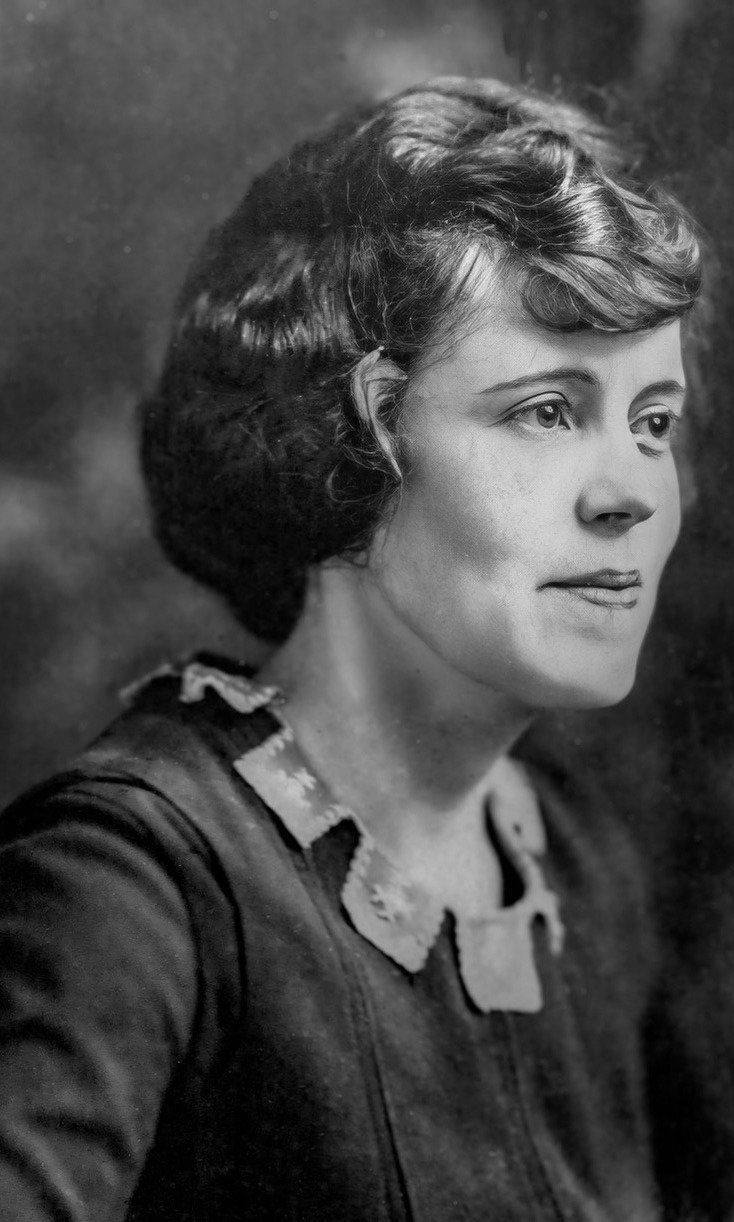
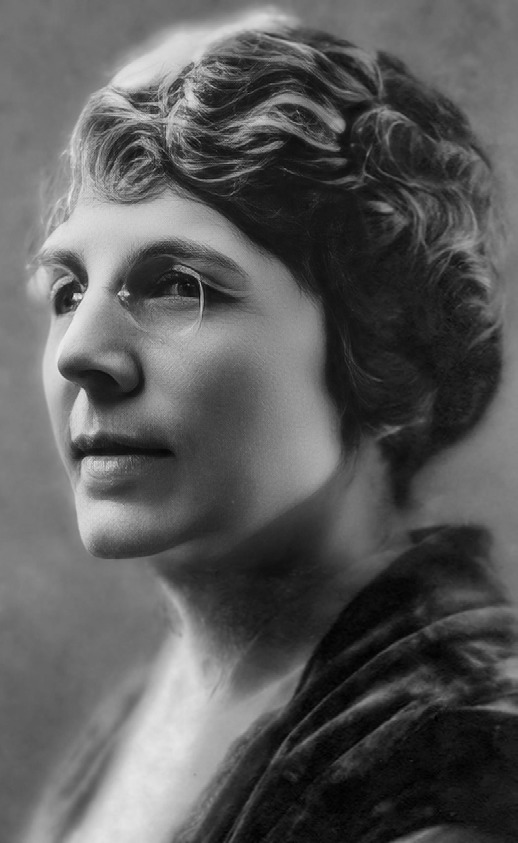
Every great public life has a private chapter, and Jake Hamon’s was no exception. Three women occupied that private world. One had believed in him before anyone else did. One believed in him perhaps more than she should have. And one watchedfromWashingtonas her husband’s closest political ally approached the greatest opportunity—and the greatest danger—of his life.
TheirnameswereGeorgia Hamon, Clara Smith, and Florence Harding.
Each loved a man whose ambition would ultimately carry him farther than any of them could have imagined, and each would also pay a price for that ambition.
Georgia Hamon
Long before Jake Hamon becamethe“RepublicanBoss of Oklahoma,” before oil transformed Carter County, before John Ringling entered his life, before presidential conventions and national politics, there was Georgia Perkins.
History has been kind to Jake Hamon’s accomplishments. It has been far less generous to the woman who stood beside him while those accomplishments were still only dreams.
Georgia Perkins was born and raised in Sedan, Kansas, in an America still healing from the Civil War. Like thousands of young women growing up across the Midwest during the closing decades of the nineteenth century, she entered one of the few professions then considered appropriate for educatedwomen.Shebecame a schoolteacher.
Teachingdemandedqualities that rarely attracted newspaper headlines but often determined the course of a life. It required discipline, patience, organization, and the quiet ability to impose order upon chaos.
Those same qualities would later become indispensable in another role— wife to a man whose ambitions seemed to grow larger with each passing year.
When Georgia married Jake Hamon in 1898, she married neither wealth nor influence. Instead, she married possibility.
Jake had just graduated fromtheUniversityofKansas School of Law. He possessed confidence in abundance, but confidence paid few bills. Like countless young lawyers beginning practice, he owned little beyond his education,hisdetermination, and his willingness to work harder than the next man. The future that later generations would associate with the Hamon name remained entirely unwritten.
Their first years together bore little resemblance to the life they would eventually know. They rented modest homes. Money was often uncertain.Everyprofessional decision involved risk. Every move represented another gamble on Jake’s belief that greater opportunities always lay just beyond the horizon.
When Oklahoma called, Georgia never hesitated. She followed her husband into a territory where certainty was scarce. The streets of Lawton were still being surveyed. Businesses occupied hastily built wooden buildings. Dust settled over everything in dry weather,andmudswallowed wagonsafterheavyrains.Hotels overflowedwithnewcomers. Lumber arrived almost asquicklyascarpenterscould use it. Every family arriving in the new town believed it had reached the beginning of something extraordinary.
Few knew whether that belief would prove true. Despite that uncertainty, Georgia began building a home for herself and Jake.
She belonged to that remarkable generation of women who rarely appeared in official histories but without whom Oklahoma could neverhavebeensettled.They unpacked furniture while streets remained unnamed. They raised children while husbands traveled hundreds of miles on legal or political business. They organized churches before permanent sanctuaries existed. They created schools before communities could afford them. They transformed collections of rough buildings into towns worthy of the name.
While Jake was building a public career, Georgia was quietly building the private life that made Jake’s career possible. She entertained visitors,managedhouseholds through years of uncertainty, and accepted long absences while her husband attended political conventions, negotiated business transactions, and gradually extended his influence across Oklahoma and into Washington.
She asked for little recognition, and history gave her even less.
Georgia Hamon never sought public attention. She did not campaign for office, negotiate oil leases, organize political conventions, or sit across polished conference tables from bankers and railroad executives. Yet for more than twenty years, she held the one position no one else could.
She was Jake Hamon’s home.
As his career expanded, so did the demands on his time. The law required long hours. Politics required endless travel. Business opportunities seemed to multiply almost monthly. One week might find him in Lawton organizing local Republicans. The next might carry him to OklahomaCity,KansasCity, Chicago, or Washington. The rise of the oil industry only accelerated that pace. Oil wellsdidnotwait.Leaseshad to be negotiated before competitors acted. Investors expected immediate decisions. Railroad projects required constant oversight. Political leaders expected Jake Hamon to appear whenever the Republican Party needed organization or money.
The farther Jake’s world expanded, the more Georgia’s contracted around the responsibilities waiting at home.
Such arrangements were hardly unusual during the opening decades of the twentieth century. American society expected successful businessmen to devote themselves almost entirely to their professions. Their wives managed households, supervised servants if prosperity permitted, raised children, entertained guests, maintained social obligations, and created the stability from which their husbands operated. Newspapers celebrated the accomplishments of men. The labor that made those accomplishments possible generally remained invisible.
Georgia fulfilled that role with remarkable grace.
Those who knew Georgia described her as intelligent, loyal, composed, and remarkably self-possessed. As Jake’s prominence increased, she moved comfortably into the social world surrounding his success. She hosted dinners, received political and business visitors, fulfilled the obligations expected of the wife of a prominent man, and represented the family with dignity. Yet she appears to have had little appetite for attention of her own. Georgia was content to allow Jake to occupy the public stage while she remained beyond the glare of it.
There is something deeply admirable about such lives. Historyoftencelebratesthose who stand before crowds. It pays far less attention to thosewhomakeitpossiblefor someone else to stand there.
By the second decade of the twentieth century, the Hamons had entered a world almost unimaginable to the young couple who had left Kansas only a few years earlier. They owned beautiful homes. Their social calendar reflected Jake’s prominence in business and politics. Influential visitors passed through their doors. United States Senators, governors, judges, bankers, oilmen, newspaper publishers, and national Republican leaders counted Jake Hamon among their acquaintances. Financial uncertainty, once a constant companion, had disappeared.
Outwardly, the Hamons represented one of Oklahoma’s great success stories. Inwardly, however, the marriage had begun to change.
Power and wealth do not necessarily destroy character, but they can magnify qualities already present and create opportunities ordinary life never offers. Jake Hamon possessedenormouspersonal charm. Friends invariably commenteduponhiswarmth, his generosity, his ability to remember names, and the genuine interest he appeared to take in everyone he met. Those same qualities that made him a gifted politician also made him attractive to others.
By then, there was a Jake Hamon known to the public: the millionaire oilman whose fortune had grown from the Healdton field, the railroad builder whose ambitions stretched across southern Oklahoma, the Republican strategist whose counsel was sought by powerful men, the trusted political ally of Warren Harding, and the respected husband of Georgia Hamon. But behind that carefully constructed public life existed another Hamon known only to family members, intimate friends, business associates, and political insiders. Georgia almost certainly understood far more about that second life than she ever acknowledged publicly, and by the end of the 1910stheseparationbetween the two had become increasingly difficult to maintain.
Like many prominent wives of her generation, Georgia occupied a difficult position. Divorce was legally possible, but socially costly. For the wife of a nationally ambitious political figure, it could become far more than a private rupture. It could destroy a husband’s career, damageafamily’sreputation, affect children, complicate enormous property interests, and provide ammunition to political enemies. Wealth complicated matters. Public standing complicated them still further. Women of Georgia’s generation often endured circumstances later generations might find difficult to understand, not becausetheylackedstrength, but because the alternatives available to them were painfully limited.
There is no way to know every private conversation that occurred within the Hamon household. History rarely preserves such moments. Letters disappear, memories fade, and pride discourages confession. Yet the surviving record leaves little doubt that for years Jake Hamon maintained another relationship alongside his marriage to Georgia.
The woman at its center was not a passing acquaintance. She would become his employee, confidante, traveling companion, lover, and eventually one of the most famous defendants in America.
Her name was Clara Belle Smith.
Clara Belle Smith
Clara entered history very differentlyfromJakeHamon. Hisrisehadbeendocumented for years in election returns, business announcements, political reporting, legal proceedings, and newspaper profiles. Clara lived almost entirely outside the public record until events suddenly made every newspaper in America interested in her past. Consequently, we know considerably less about her childhood than we do about Hamon’s, and much of what was later written about those early years came only after reporters began searching for an explanation of the woman at the center of the scandal.
Few women in Oklahoma history have been remembered so completely for a single event while so much of the rest of their lives has been forgotten. Today, Clara Smith is remembered almost exclusively as the woman who shot Jake Hamon. Yet before she became the central figure in one of the most sensational murder trials of the twentieth century, she had lived a life that reflected the opportunities, hardships, and rapid changes of early Oklahoma. Understanding that life helps explain not only Clara herself, but also why Jake Hamon became so captivated by her.
Clara Belle Smith was born in the early 1890s and spent much of her youth in Lawton, one of Oklahoma Territory’s newest boomtowns. Her father operated a billiard hall there, placing the family among the town’s working class rather than its growing circle of lawyers, bankers, merchants, and landowners. Lawton itself was barely more than a few years old. Like the city around her, Clara grew up in an environment where nearly everyone was trying to build a future from scratch. Opportunity existed, but it often depended upon ambition, determination, and a willingness to seize unexpected chances.
The surviving record reveals little about Clara’s formal education during those years, but it is clear that she possessed unusual intelligence. As a teenager, she worked as a sales clerk in a Lawton mercantile store, a commonoccupationforyoung women seeking financial independence before marriage. The work demanded long hours, pleasant manners, carefulbookkeeping,andconstant interaction with customers. It also placed Clara in contact with many of the businessmen, lawyers, and politicians who frequented the growing city.
It was there that Jake Hamon first noticed her.
Around 1911 or 1912, Hamon was approaching forty years of age. Clara was still in her teens. Contemporary accounts consistently describe her as unusually attractive, with dark hair, expressive eyes, and an appearance that naturally drew attention. Yet those who knew both Hamon and Clara later suggested that beauty alone does not explain their relationship. Hamon encountered attractive women throughout his political and business career. Clara offered something more. She possessed poise, intelligence, self-confidence, and an ability to converse comfortably with people from every walk of life. Even those who later criticized her seldom questioned her intelligence.
Whatever began as an employer’s interest soon developed into something much deeper.
HamonpersuadedClarato leavethemercantilebusiness and come to work for him. It was a decision that altered the course of her life. Recognizing her ability, he paid for her to attend business school, where she developed exceptional skills in bookkeeping, correspondence, and office management.Someaccounts indicate that he later sent her to a finishing school as well, hoping to prepare her for the increasingly sophisticated social circles in which he moved. Whether motivated by affection, ambition, or both, Hamon invested heavily in Clara’s education at a time when relatively few young women enjoyed such opportunities.
What followed was a remarkable transformation in Clara’s life. Only a short time earlier, she had been a teenagesalesclerkbehindthe counter of a Lawton mercantile. Under Hamon’s influence, she received business training, learned the habits and language of commerce, and entered social circles that otherwise would have been almost inaccessible to a young woman of her background. She became accustomed to railroad travel, expensive hotels, automobiles, political gatherings, and the company of men whose names appeared regularly in newspapers. Jake did not merely give Clara employment. He opened an entirely different world to her, and in time she learned to move through it with considerable confidence.
Hamon’s investment proved worthwhile. Clara quickly developed into far more than a secretary. She became his confidential assistant, business manager, and trusted adviser. She handled correspondence, maintained records, organized appointments, and participated in many of his business affairs. Years later, Clara herself claimed that Jake Hamon “never made a deal nor hired a man without consulting me,” and several of Hamon’s business associates acknowledged that her influence within his organization was substantial. Whether that statement reflected complete reality or some understandable exaggeration after Hamon’s death, there is little doubt that she became an indispensable part of his business empire.
As Hamon’s fortunes improved, so did Clara’s circumstances. She traveled with him throughout Oklahoma and beyond. She became accustomed to fine hotels, expensive clothing, automobiles, and the company of bankers, oilmen, politicians, and nationally known businessmen. The young store clerk from Lawton gradually learned tonavigate circles that few women of her background ever entered. Newspaper reporters later portrayed her as a glamorous socialite, but that image overlooked the fact that she had also become an extraordinarily capable businesswoman whose organizational skills contributed materially to Hamon’s expanding enterprises.
By1920,Clarahadbecome inseparable from Hamon’s daily life. She managed correspondence, accompaniedhim on business trips, assisted with financial matters, and occupied a position of trust enjoyed by very few people. The personal relationship hadbecomeinseparablefrom the professional one.
That personal relationship, however, became increasingly complicated.
Jake Hamon was still married to Georgia and had children. As he occupied an increasingly prominent place in Oklahoma politics, maintaining a second life became more difficult with every passing year.
As Jake’s public importance grew, the arrangement posed a practical problem that money alone could not resolve. A married businessman traveling repeatedly with a young, unmarried woman invited questions. Hotels kept registers. Business associates made introductions. Political gatherings placed people under constant observation. The appearance of impropriety mattered almost as much as the underlying relationship, particularly for a man whose ambitions were becoming increasingly political.
The solution reportedly devised by Hamon was extraordinary.
Claramarriedhisnephew, Frank Louis Hamon.
Contemporary and later accounts have stated that Jake paid Frank approximately $10,000 in connection with the arrangement, an enormous sum for the period. Whatever the precise financial understanding, the practical purpose of the marriage appears unmistakable. Clara Smith became Clara Hamon.
The surname provided camouflage. When Jake and Clara traveled, they could both appear in hotel registers under the Hamon name. Introductions became easier. Casual acquaintances might assume some legitimate family relationship rather than immediately question why a married Oklahoma businessman was accompanied so frequently by a young, unmarried woman. Frank soon went his own way while Clara remained closely attached to Jake’s business and personal life. If the marriage was intended to silence curiosity, it did so imperfectly. Those closest to Jake knew the truth, and many people in Ardmore eventually did as well, but the arrangement enjoyed by very few people. The personal relationship hadbecomeinseparablefrom the professional one.
That personal relationship, however, became increasingly complicated.
Jake Hamon was still married to Georgia and had children. As he occupied an increasingly prominent place in Oklahoma politics, maintaining a second life became more difficult with every passing year.
As Jake’s public importance grew, the arrangement posed a practical problem that money alone could not resolve. A married businessman traveling repeatedly with a young, unmarried woman invited questions. Hotels kept registers. Business associates made introductions. Political gatherings placed people under constant observation. The appearance of impropriety mattered almost as much as the underlying relationship, particularly for a man whose ambitions were becoming increasingly political.
The solution reportedly devised by Hamon was extraordinary.
Claramarriedhisnephew, Frank Louis Hamon.
Contemporary and later accounts have stated that Jake paid Frank approximately $10,000 in connection with the arrangement, an enormous sum for the period. Whatever the precise financial understanding, the practical purpose of the marriage appears unmistakable. Clara Smith became Clara Hamon.
The surname provided camouflage. When Jake and Clara traveled, they could both appear in hotel registers under the Hamon name. Introductions became easier. Casual acquaintances might assume some legitimate family relationship rather than immediately question why a married Oklahoma businessman was accompanied so frequently by a young, unmarried woman. Frank soon went his own way while Clara remained closely attached to Jake’s business and personal life. If the marriage was intended to silence curiosity, it did so imperfectly. Those closest to Jake knew the truth, and many people in Ardmore eventually did as well, but the arrangement provided enough outward respectability to help sustain a relationship that otherwise would have been much more difficult to explain.
The consequences for Georgia Hamon were profound.
Unable to prevent the relationship and unwilling to grant Jake a divorce, she eventually left Oklahoma withthecouple’schildrenand established a home in Chicago. Publicly, the Hamons remainedmarried.Privately, Jake and Clara continued living and working together, eventually occupying adjoining rooms in Ardmore’s Randol Hotel while conducting both business and, increasingly openly, their personal relationship.
By the closing years of the second decade of the twentieth century, Clara Smith was no longer merely Jake Hamon’s employee. She had become his closest confidante, his business partner in all but name, and the constant companion of one of the most powerful men in Oklahoma. That relationship would eventually bring her wealth, notoriety, and national fame. It would also place her at the center of a tragedy from which none of the people involved would ever escape.
That reality presented enormous difficulties because Jake Hamon was not merely married. He was one of the most prominent public figures in Oklahoma. Every political campaign depended, to some degree, upon public confidence. Every business venture rested upon reputation. Every national appointment required scrutiny. The farther Jake climbed politically, themoredangerousany public scandal became.
For years, however, Hamon somehow managed to maintain two entirely different worlds. One belonged to Georgia and the public marriage that had accompanied him from Kansas through territorial Oklahoma and into wealth and prominence. The other belonged to Clara and the private relationship woven deeply into his business and personal life. Remarkably, those worlds continued to exist simultaneously.
The arrangement seems almost unbelievable today, yet it reflected an uncomfortable reality of the era. Hamon’s situation was hardly unique in American public life. Political history is filled with prominent men whose private conduct differed sharply from the respectable image presented to voters. Human nature had not changed; journalism had. During Hamon’s era, newspaper editors often regarded adultery and other private indiscretions as matters outside legitimate public reportingunlesstheybecame impossible to ignore or directly affected public duties. Reporters sometimes knew considerably more than their newspapers printed. Communities whispered, political allies remained silent, and opponents often hesitated to cross boundaries; prevailing custom still regarded such matters as private. Respectability depended not only upon conduct, but upon discretion.
That understanding allowed powerful men to maintain secrets that would be nearly impossible to contain in the modern media environment. Jake Hamon understood those rules and benefited from them for years. His relationship with Clarawasnottrulyunknown. It was simply not yet national news.
That situation changed dramatically in November 1920.
Until Warren Harding’s election, Jake Hamon could largely separate his public ambitions from his private life. He was wealthy enough to withstand gossip, powerful enough to discourage curiosity, and important enough that political allies preferred silence over scandal.
Harding’s election transformed what had been a private moral dilemma into a national political liability. Until November 1920, Jake Hamonhadlargelycontrolled the boundaries between his public and private lives. Once Warren Harding became President-elect, those boundaries began disappearing. Reporters from the nation’s largest newspapers descended upon Washington looking for the men who would shape the new administration. Every prominent political adviser became a subject of curiosity. Every prospective Cabinet officer attracted scrutiny. Every close friend of the President-elect suddenly became newsworthy.
The very relationship Jake Hamon had managed for years now threatened everything he had spent two decades building. For Georgia, it threatened humiliation. For Clara, it threatened abandonment. For Jake, it threatened a political future that had never seemed brighter.
No business negotiation could solve that problem. No political alliance could vote it away. No oil fortune could purchase an easy answer. Threelivesthathadmanaged to exist in uneasy balance for years were beginning to pull against one another with increasing force.
Looking backward across more than a century, it is tempting to search for the precise moment when Jake Hamon’s carefully balanced world began to unravel. There was no single moment. Great tragedies seldom begin with the act by which history remembersthem.Theydevelop slowly through decisions that seem manageable when they are made—a promise offered, another postponed, an expectation encouraged, a compromise accepted as temporary and then allowed to become permanent. By the autumn of 1920, Hamon had spent years balancing obligations that could no longer be reconciled. He owed loyalty to Georgia, affection and years of promises to Clara, responsibility to his children, obligations to his business partners, and political allegiance to a President-elect whose administration might carry him to the greatest heights of his life.
Eventually, something had to yield.
Florence Harding
While Jake Hamon’s private world was becoming increasingly difficult to manage, another remarkable woman was preparing for a journeythatwouldsooncarry hertoWashingtonasthewife of the next President of the United States.
Her name was Florence Mabel Kling Harding.
History has often remembered Warren G. Harding as oneofAmerica’smostpersonable politicians. Tall, handsome, blessed with a rich speaking voice and an easy smile, Harding possessed an almost effortless ability to make people feel comfortable. Friends described him as warm, generous, and remarkably free of personal bitterness. Even many of his political opponents admitted they liked him.
Florence Harding was different, but in ways that often complemented her husband. Where Warren charmed, Florence organized. Where Warren preferred harmony, Florence demanded results. Where Warren often trusted instinct, Florence trusted discipline.
ThosewhoknewtheHardings frequently remarked that they complemented one another almost perfectly. Each possessed qualities the otherlacked.IfWarrenHarding was the public face of the partnership, Florence was frequently its manager. She was intelligent, determined, practical, and utterly fearless. Long before she became First Lady, friends and political associates understood that Florence Harding was a formidable figure in her own right.
She had earned that reputation honestly.
Born Florence Mabel Kling in Marion, Ohio, in 1860, shewasthedaughter of Amos Kling, one of the city’s most successful businessmen. Amos Kling possessed a reputation for toughness in business and little patience for weakness. His daughter inherited much of his determination. Those who underestimated Florence usually did so only once.
Her early life, however, was far from easy.
Before marrying Warren Harding, Florence had already lived through disappointment, hardship, and the social burdens often carried by divorced women during the late nineteenth century. Her first marriage failed, leaving her with a young son, Marshall Eugene DeWolfe. At a time when divorced women often found themselves socially and financially isolated, Florence supported herself by teaching piano. She understood responsibility not as an abstract virtue, but as a daily necessity.
Those experiences shaped the woman she became.
When she married Warren Harding in 1891, she recognized his gifts almost immediately. He possessed uncommon warmth, political instincts, and a personality that attracted friends wherever he went. Yet he also possessed qualities that could easily derail a less disciplined life. Harding disliked confrontation. He preferred compromise over conflict. He often devoted more attention to people than to details.
Florence supplied the details.
The Marion Star, Harding’s struggling newspaper, became one of the earliest beneficiaries of her practical abilities. She supervised finances, managed circulation, oversaw employees, and insisted upon efficiency in virtually every aspect of the business. Warren remained the editor and public face of thenewspaper,butmanyhistorians have concluded that Florence played a central role in transforming it from a modest local publication into a financially successful enterprise.
Shewas,inmanyrespects, her husband’s indispensable partner.
As Warren Harding’s political careeradvanced—from state senator to lieutenant governor, from lieutenant governor to United States senator—Florence advanced with him. She became an accomplished political observer in her own right, developing an instinctive understanding of personalities, alliances, and public opinion. Campaign workers quickly learned that earning Florence Harding’s respect was almost as important as earning Warren Harding’s.
She was fiercely protective of her husband and equally protective of his ambitions.
By 1920, after years spent moving steadily upward through Ohio politics and then the United States Senate, Florence found herself standing upon the threshold of history. Her husband had securedtheRepublicannomination for President, and the campaign that followed promised to transform both of their lives forever.
Yet Florence approached that future with her eyes wide open. She knew Warren Harding better than anyone else. She knew his strengths, and she also knew his weaknesses.
Harding’s relationships with other women are no longer merely matters of rumor. His long affair with Carrie Phillips is well documented, and DNA testing conducted among descendants nearly a century later confirmed that Harding fathered Nan Britton’s daughter, Elizabeth Ann. Florence almost certainly knewenoughabouther husband’s private conduct to understand that political success and marital fidelity did not always travel together.
Like Georgia Hamon, she belonged to a generation of women who often endured private disappointments while preserving public dignity. Neither ignorance nor naïveté explains Florence Harding’s conduct. Rather, she appears to have made a conscious decision that protecting her husband’s career— and perhaps preserving her marriage—required a degree of patience and restraint difficult for modern observers to appreciate.
That quiet strength helps explain one of the most remarkable aspects of Florence Harding’s character. She rarely permitted personal pain to interfere with public duty.
As Warren Harding campaigned across the country during the autumn of 1920, Florence became one of his closest advisers. She observed people carefully, remembered conversations, and developed opinions that her husband valued. Those who dismissed her as merely a political spouse failed to appreciate the influence she exercised behind closed doors.Cabinetappointments, political alliances, campaign strategy, and personal relationships all passed, in one way or another, through the orbit of Florence Harding.
It was within that orbit thatJakeHamonhadbecome increasingly important.
For years, Jake Hamon had been one of Warren Harding’s most loyal political supporters outside Ohio. He worked tirelessly for Harding’s nomination, rallied delegates to his cause, and emerged from the 1920 Republican National Convention with a reputation as one of the principal architects of Harding’s remarkable victory. Their relationship extended well beyond ordinary political alliance. The two men genuinely liked one another, trusted one another, and shared similar political instincts. As Harding’s influence grew, so did Hamon’s, and their friendship became one of the most important political relationships in the Republican Party.
Naturally, Florence Harding came to know Jake Hamon well. She also came to know Georgia.
The Hamons were far more than casual political acquaintances encountered at an occasional convention. They belonged to the closeknit circle of Republican leaders whose friendships had been forged over years of campaigns, conventions, train rides, dinners, hotel meetings, and countless private conversations. Politics in the early twentieth century was intensely personal. Wives knew one another. Families entertained together. Political alliances frequently became lasting friendships.
That closeness would soon make Jake Hamon’s private life far more significant than anyone could have imagined.
As long as Hamon remained simply one of Oklahoma’s leading businessmen and political figures, the secrets of his personal life remained largely his own. But Warren Harding’s election changed everything. If Hamon entered the new administration—as many confidently expected he would—hisconductwouldno longerbejudgedonlyinOklahoma. It would be scrutinized in Washington. His private life would become a matter of national interest, and the carefully maintained separation between his public and private worlds would become almost impossible to sustain.
By the closing weeks of 1920, every major player in this remarkable story had taken his or her place.
Jake Hamon stood at the pinnacle of wealth, influence, and political power. His friendship with Presidentelect Warren G. Harding placed him closer to the center of national politics than any Oklahoman had ever been. Newspapers openly speculated about the role he might play in the new administration. Business associates admired his success. Political leaders sought his counsel. To all appearances, his extraordinary rise from a young Kansas lawyer to one of the most powerful men in the Southwest was complete.
Yet behind that remarkable public success lay a far morecomplicatedprivatelife.
GeorgiaHamonremained the faithful wife who had followed him from Kansas to Oklahoma Territory and stood beside him through every triumph and every hardship. Florence Harding prepared to become First Lady of the United States while, hundreds of miles away in Ardmore, one of her husband’s closest political allies stood on the brink of personal disaster. And in Ardmore, Clara Smith occupied a place in Jake Hamon’s life that could no longer remain hidden.
For years, those three worlds had somehow managed to coexist. They could not continue that way much longer.
Political success has a way of shining light into places that once remained comfortably in shadow. Warren Harding’s election elevated Jake Hamon from one of Oklahoma’s most influential men to a figure of genuine national importance. The higher he climbed, the less room remained for carefully guarded secrets, private understandings, and quiet compromises. The life he had spent more than twenty years building was approaching the moment when every personal decision carried consequences beyond his ability to control.
History rarely destroys great men without warning. More often, the forces that bring them down have been gathering quietly for years, unnoticed until the moment when everything finally gives way.
Jake Hamon’s empire had never appeared stronger.
In reality, it had never been more vulnerable.
Across the country, attention remained fixed upon Warren Harding and the administration that would take office the following March. Hamon appeared poised to enjoy the greatest political triumph of his life. Yet while Washington looked toward the future, an entirely different drama was approaching its end in Ardmore. The private arrangement that had survived for years could no longer coexist easily with thepublicfutureHamonnow expected to claim.
Within days, Jake and Clara would find themselves alone together in the Randol Hotel. What happened there has been argued about for more than a century and would eventually be argued before a Carter County jury. The encounter lasted only moments. Its consequences would destroy a political future, expose secrets carefully guarded for years, send Clara Smith fleeing across the country, and leave one of the most powerful men in Oklahoma mortally wounded.
Atthatmoment,theHamon story would cease to be merely a story of oil, politics, marriage, and ambition.
It would become a murder case.
And waiting not far away was Charles Arthur Coakley.
Next week, in Part XI of The Lion of the Courtroom: The story moves to the final days of Jake Hamon’s life. We will follow the growing pressure surrounding his relationship with Clara Smith after Harding’s election, the events that brought them togetheratArdmore’sRandol Hotel on November 21, 1920, andthegunshotthatchanged everything. Before the week is over, Hamon will be dead, Clara will be a fugitive, national newspapers will descenduponOklahoma,and the case that would define Charles Arthur Coakley’s career will have begun.