
When we left Jake Hamon at the close of last week’s installment, he stood at the summit of a remarkable career.
The young Kansas attorney who had crossed into Oklahoma Territory with little more than a law degree, an ambitious spirit, and a willingness to embrace uncertainty had become one of the wealthiest men in the Southwest. His investments stretched across oil fields, banks, railroads, ranches, real estate, and commercial enterprises. His friendships extended from courthouse squares in southern Oklahoma to the highest levels of national politics. Few men had risen so far in so short a time.
YetJakeHamon’sgreatest achievement had never been measured solely in dollars.
Wealth alone could purchase land, oil leases, railroads, or banks. It could build impressive homes and finance ambitious business ventures.Butthereremained one commodity that money alone could never guarantee.
Political influence. By 1920, Jake Hamon possessed it in extraordinary measure.
He held no statewide office. He had never served in Congress. He was not governor, senator, or cabinet secretary. Yet when Republican leaders gathered to determine the future direction of their party, Jake Hamon received an invitation to the table. His counsel was sought not because of the office he held, but because of the organization he had patiently assembled over two decades of political work. He knewcountychairmenacross Oklahoma. He knew state party leaders throughout the Southwest. He knew businessmen capable of financing campaigns, newspaper publishers capable of shaping public opinion, and national party officials whose decisions affected federal appointments throughout the country.
Perhaps more importantly, they knew him.
Influence of that kind cannot be purchased overnight. It develops slowly, almost imperceptibly, over years of keeping one’s word, honoring political obligations, remembering favors, introducing strangers who later become allies, and demonstrating that loyalty offered today will be remembered years later. Hamon possessed an uncommon gift for cultivating such relationships. He remembered names. He remembered families. He remembered conversations from years earlier in railroad depots, hotel lobbies, convention halls, and courthouse corridors. Men who met Jake Hamon once often found he rememberedthemwhenthey met again.
Those relationships would soon be tested on the largest political stage in America.
The presidential election of 1920 did not occur during ordinary times. The United States emerged from the First World War victorious but exhausted. More than four million Americans had worn the nation’s uniform. Over 116,000 never returned home.Thousandsmorecame home carrying wounds that would remain with them for the rest of their lives. Nearly every community in America had sacrificed sons, brothers, fathers, neighbors, or friends to a conflict fought thousands of miles away.
Peace, however, did not bring immediate prosperity.
Almost before the nation could celebrate victory, another catastrophe swept across the country. The influenza pandemic of 1918 and 1919 claimed hundreds of thousands of American lives, making it one of the nation’s deadliest public health disasters. Entire communities closed schools, churches, theaters, and businesses. Families lost multiple members within days. Hospitals overflowed, and physicians struggled to keep pace with the relentless spread of disease. By the time the pandemic subsided, scarcely a family in America had escaped untouched.
Economic uncertainty followed close behind.
Thewartimeeconomyhad begun shifting back to civilian production, triggering inflation, unemployment, and widespread labor unrest. Major strikes disrupted industries nationwide. Coal miners walked off the job. Steelworkers shut down mills. Railroad employees threatened transportation networks. Rising prices strained household budgets, while returning veterans searched for jobs in an economy still struggling to find its footing.
Political tensions increased as well.
The Bolshevik Revolution in Russia and a series of anarchist bombings in the United States fueled what historians now call the First Red Scare. Public officials warned of communist infiltration, and newspaperscarriedalarming stories about revolutionary plots, labor radicalism, and political violence. Attorney General A. Mitchell Palmer ordered sweeping raids that led to the arrest of thousands of suspected radicals. Whether justified or exaggerated, the atmosphere produced widespread anxiety. Many Americans feared that the instability they observed in Europe might spread across the Atlantic.
At the center of all this turmoil stood President Woodrow Wilson.
Wilson had guided the nation through the Great War and championed the creation of the League of Nations, believing that international cooperation might prevent future global conflict. Yet his vision divided Congress and the country. Many Americans admired his idealism, while others believed the League would unnecessarily entangle the United States in future foreign disputes. As Wilson traveled the nation to build public support for the treaty, his health collapsed. In October 1919, he suffered a devastating stroke that left him largely incapacitated for the remainder of his presidency. Although the full extent ofhisconditionremained concealed from the public, the government increasingly functioned through a small circle of advisers and, most notably, First Lady Edith Wilson, who controlled access to the President during much of his recovery.
By 1920, the country had grown weary of war, disease, inflation, political conflict, and uncertainty. Americans were not looking for another crusade. They were seeking relief. They wanted a stable government, renewed prosperity, and a return to ordinary life. Against that backdrop,Republicanleaders prepared to gather in Chicago in the summer of 1920 to nominate their candidate for President of the United States.
Few political conventions in American history have carried greater consequence.
For Republicans, victory seemedentirelywithinreach. Democrats were divided and burdened by an unpopular administration nearing its end. Yet opportunity alone guaranteed nothing. The party still needed a nominee capable of uniting competing factions, appealing to returning veterans, reassuring businessmen concerned about the economy, and satisfying progressive reformers without alienating traditional conservatives.
Finding such a man would prove far more difficult than anyone anticipated.
And standing in the middle of that search would be Jake Louis Hamon.
The Republican National Convention opened in Chicago onJune8,1920,beneath the vast roof of the Chicago Coliseum. It was one of the nation's largest political gatherings. More than a thousand delegates crowded the convention floor beneath a forest of state standards and banners. Alternates, party officials, reporters, lobbyists, campaign managers, and spectators filled every available seat in the galleries. Brass bands played patriotic marches between speeches. Vendors moved through the crowds, selling newspapers carrying the latest convention rumors. Telegraph operators worked almost continuously as dispatches flowedtonewspapers across the country, allowing Americans to follow each ballot almost as quickly as the delegates themselves.
The convention floor presented only part of the story.
The real contest unfolded across Chicago’s hotels, restaurants, railroad stations, and private meeting rooms. Delegates hurried from one headquarters to another, comparing vote counts, exchanging rumors,andsearching for signs that a candidate might finally emerge from a crowded field. Hotel lobbies became political marketplaces where conversations begun over breakfast continued long past midnight. Cigarette smoke drifted through crowded suites as campaign managers studied delegate lists, counted potential supporters, and debated strategy. Every handshake carried meaning. Every introduction held possibility. Every private conversation might determine the course of the next ballot.
Unlike modern presidential nominating contests, conventions during the early twentieth century frequently determined the nominee rather than merely ratifying the results of primary elections. Presidential primaries existed in only a handful of states and often carried little binding authority. Most delegates arrived pledged not to voters but to state party organizations, governors, senators, county chairmen, and political leaders. Their instructions could change as the convention progressed. A candidate who entered the convention leading on the first ballot might lose support after several unsuccessful votes, while a compromise candidate could suddenly emergeasdelegatessearched for someone capable of uniting the party.
For that reason, conventions rewarded men skilled in persuasion rather than publicity.
The successful political leader was not necessarily the man who delivered the most eloquent speech from the podium. More often, he was the man quietly moving fromdelegationtodelegation, building confidence, resolving disputes, and convincing skeptical delegates that tomorrow’s victory required today’s compromise. Political friendships, developed over many years, often proved morevaluablethancampaign speeches delivered in a single week.
Jake Hamon understood that world perfectly.
By 1920, few Republicans west of the Mississippi had broader personal ties within the party than Hamon. Nearly twenty years of political work had introduced him to county chairmen, state committeemen, governors, senators,newspaperpublishers, businessmen, attorneys, and campaign managers across the country. His years of traveling to conventions, fundraising dinners, political conferences, and committee meetings had built a network of friendships that extended far beyond Oklahoma. Men who scarcely knew one another often found that both counted Jake Hamon among their acquaintances. That reputation preceded him to Chicago.
When Hamon entered the convention headquarters, he was not merely another delegate from Oklahoma. He arrived as one of the recognized leaders of the Republican organization in the Southwest. Reporters sought his opinions. Delegates from neighboring states stopped to consult him. National party officialsgreetedhimbyname. His influence rested neither on wealth alone nor on any elected office. It rested on confidence earned over years of political work. Friends trusted his judgment. Allies believed he could accurately gauge the convention’s mood. Even rivals understood that Hamon’s support carried weight.
Severaldistinguishedcandidates entered the convention believing the nomination was within reach.
Major General Leonard Wood,thecelebratedmilitary commander whose exploits in Cuba had made him a national hero, arrived with substantial public support and an impressive campaign organization. Illinois Governor Frank Orren Lowden enjoyed the backing of influential party leaders across the Midwest and was widely regarded as one of the strongest administratorsinRepublican politics.SenatorHiramJohnson of California represented the party's progressive wing and commanded intense loyalty among reform-minded delegates. Other respected figures, including Ohio Governor James Cox and various favorite sons, hoped that a prolonged deadlock might eventually turn the convention in their favor.
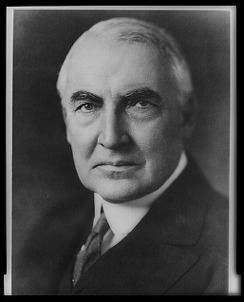
Conspicuously absent from most lists of likely nominees was a soft-spoken United States Senator from Ohio named Warren Gamaliel Harding.
Harding possessed qualities that many political observers considered weaknesses. He inspired admiration rather than excitement. Herarelyattackedopponents personally. His speeches emphasized reconciliation over confrontation. He earned friends more easily than headlines. Newspaper correspondents often described him as agreeable, courteous, and dignified, but few regarded him as the commanding figure likely to secure a presidential nomination on the first ballot. Even some of Harding’s own supporters privately acknowledged that stronger candidates appeared to be ahead of him.
Jake Hamon saw something others failed to recognize. He believed Harding’s greatest strength lay precisely where critics believed him weakest. America had grown weary of conflict.
The nation had endured war abroad and bitter political division at home. Families had buried sons lost in France.Businessesstruggled with inflation and labor unrest. Farmers worried about falling prices. Veterans searched for work. Congress battled endlessly over the League of Nations, and confidence in government steadily declined. Hamon believed the Republican Party did not need another fiery crusader. It needed a man whose calm demeanor reassured a restless country. Harding possessed that quality in abundance.
He was personally likable, difficult to dislike, and almost impossible to portray as extreme. He maintained cordial relationships with both conservative and progressive Republicans. He avoided unnecessary quarrels and listened carefully before speaking. Years spent publishing a newspaper and serving in public office had taught him that persuasion often accomplished more than confrontation. Those characteristics, unremarkable in ordinary times, suddenly seemed remarkably attractive in a nation longing for stability.
Jake Hamon became convinced that Harding was not merelyanacceptablecompromise. He believed Harding was the one Republican capable of uniting the party and winning the presidency. It was a conclusion that would place Hamon squarely at the center of one of the most dramatic political conventions in American history. For all of Jake Hamon’s political skill, he did not act alone.
Every successful political movement has its organizers, strategists, and trusted advisers. While Hamon had become the dominant Republican leader in Oklahoma and one of the party’s most influential figures across the Southwest, another man had spent nearly twenty years quietly building a remarkably similar political organization, hundreds of miles away in Ohio. His name was Harry Micajah Daugherty.
History has not always been kind to Daugherty. His later service as Attorney General under President Harding would be overshadowed by the scandals that plagued parts of the Harding administration, even though Daugherty himself wasneverconvictedofwrongdoing. As a result, many modern accounts overlook what contemporaries readily acknowledged—that Harry Daugherty possessed one of the finest political minds of his generation.
LongbeforeWarrenHarding ever became a serious presidential prospect, Daugherty believed he could one day occupy the White House. That belief bordered on fantasy. Harding himself often seemed less convinced than Daugherty.
Born in rural Ohio in 1860, Daugherty came from circumstances not unlike those of Jake Hamon. He studied law, entered politics while still a young man, served in the Ohio General Assembly, and gradually became one of the Republican Party’s most respected political organizers. Unlike many politicians, however, Daugherty displayed little interest in becoming a public celebrity himself. He preferred operating behind the scenes, building organizations, reconciling rival factions, counting delegates, and identifying opportunities long before others recognized them. It was workthatdemandedpatience rather than applause.
The similarities between Daugherty and Hamon were striking. Neither man achieved his greatest influence through elective office. Neitherbecameagovernoror aUnitedStatessenator.Both understood that enduring politicalpoweroftenbelonged not to the individual speaking from the platform, but to the organizer who quietly decided who would stand on that platform in the first place. They cultivated friendships rather than headlines. They remembered favors rather than insults. Both recognized that successful politics resembled chess far more than checkers, requiring careful planning several moves in advance. It was almost inevitable that the two men would become friends.
Republican politics during the opening decades of the twentieth century remained a surprisingly small world. National conventions, committee meetings, campaign strategy sessions, and party conferences repeatedly brought influential organizers together. Hamon and Daughertymetthroughthose circles, gradually developing both professional respect and genuine friendship. Each recognized qualities in the other that many outsiders failed to appreciate. Both possessed extraordinary memories, remarkable organizational ability, and almost instinctive understanding of human nature. Neither needed lengthy explanations to appreciate how political coalitions were assembled.
Together, they formed an important part of the network surrounding Warren G. Harding. Harding himself presented an interesting contrast to the men promoting his career. He lacked Hamon’s relentless ambition and Daugherty’s strategic instincts. Indeed, one of Harding’s greatest political strengths may have been that he genuinely appeared comfortable letting trusted advisers manage the organizational side of politics while he focused on the public responsibilities of campaigning and governing.
Born in 1865 near Corsica, Ohio, Warren Gamaliel Harding grew up in a modest rural community where his father practiced medicine and ran a small newspaper. Journalism drew the young Harding early in life. After attending Ohio Central College, he entered the newspaper business and eventually purchased the struggling Marion Star in Marion, Ohio. Under Harding’s ownership, the newspaper prospered, and its editor became one of the best-known figures in central Ohio. Publishing a newspaper proved unexpectedly valuable preparation for politics.
Every edition required Harding to evaluate competing viewpoints, communicate with business leaders, track legislative developments, and stay informed about public affairs. Local merchants knew him. Farmers knew him. Lawyers knew him. Political leaders increasingly sought his opinions. Unlike many editors who built reputations through fierce partisanship, Harding generally preferred moderation. He criticized without becoming vindictive. He disagreed without becoming disagreeable. Those habits earned him something that cannot easily be manufactured in politics. People liked him.
Even political opponents often acknowledged that Harding had unusual personal warmth. He remembered names and greeted acquaintances sincerely. Visitors often left believing that Harding had taken a genuine interest in their concerns. His deep, resonant voice made him an effective public speaker, but friends often remarked that his greatest gift emerged not before crowds but across a dinner table or in a private conversation. He made people feel comfortable.
Those qualities carried Harding steadily upward through Ohio politics. He servedintheOhioSenateand then as lieutenant governor before winning election to the United States Senate in 1914. Although respected within Republican circles, he never emerged as one of the Senate’s dominant personalities. He was regarded as thoughtful, courteous, and dependable rather than spectacular. Few observers expected him to someday occupy the White House. Harry Daugherty disagreed.
Years before the convention convened in Chicago, Daughertyhadquietlybegun telling political associates that Harding possessed precisely the temperament America would someday need. His prediction often drew polite smiles. Harding remained well liked, but he lacked the commanding public profile of General Leonard Wood, the executive reputationofGovernorFrank Lowden, or the passionate following of Senator Hiram Johnson. Daugherty, however, remained convinced that conventions often rewarded compromise over celebrity.
Jake Hamon reached much the same conclusion. He believed Harding’s greatest strength was not that he inspired overwhelming enthusiasm among one faction of the Republican Party, but that almost no one strongly opposedhim.Thatdistinction would soon become critically important.
As delegates gathered beneath the Chicago Coliseum's immense roof, every major candidate entered the convention convinced victory was still possible. Yet beneath the public optimism lay a mathematical reality. None appeared capable of securing a majority on the opening ballot. Experienced political managers immediately recognized what that meant. The convention was likely to become a test not of popularity but of endurance. Incontestsofendurance,men like Harry Daugherty and Jake Hamon often proved every bit as important as the candidates themselves. The opening day of the convention did little to clarify the outcome.
General Leonard Wood entered Chicago with the largest bloc of committed delegates and the prestige of his distinguished military career. To many Americans, Wood seemed the natural choice. He had served as military governor of Cuba, commanded the famous Rough Riders after Theodore Roosevelt, and become Chief of Staff of the United States Army. His campaign had spent enormous sums and appeared exceptionally well organized. Supporters confidently predicted that once balloting began, enough undecided delegates would join his column to secure the nomination.
Governor Frank O. Lowden of Illinois had an equally determined organization. Lowden enjoyed the support of influential MidwesternRepublicansand was widely respected for his administration of Illinois. His supporters argued that he combined executive ability with broad appeal among business interests, making him the strongest candidate for the general election.
Senator Hiram Johnson of California represented yet another powerful faction within the party. Johnson had built a national reputation as one of the leading progressive Republicans of his generation. His followers admired his independence, his attacks on political corruption, and his willingness to challenge entrenched interests. Though unlikely to secure a majority himself, Johnsoncommandedenough delegates to prevent any rival from reaching one.
Several favorite-son candidates rounded out the field, each hoping that prolonged deadlock might eventually placehisownnamebeforethe convention as an acceptable compromise.
Conspicuously absent from nearly every newspaper prediction was Warren G. Harding. Few political observers believed the Ohio senator could win on the opening ballot, and even fewerimaginedhewouldultimately become the nominee. Harding’s candidacy occupied what seasoned political professionals often called the “second-choice position.” He inspired respect without commanding overwhelming enthusiasm.Delegatesrarely described him as their first choice, yet remarkably few regarded him with hostility. At first glance, such lukewarm support appeared to be a weakness. Jake Hamon believed it was Harding’s greatest advantage.
Experience had taught Hamon that political conventions often unfolded very differently than newspaper editors predicted beforehand. A candidate capable of attracting intense loyalty from one faction frequently generated equally intense opposition from another. Ballot after ballot would expose those divisions. Delegates reluctant to abandon their favorite candidate during the early voting often became increasingly willing to compromise as exhaustion, frustration, and political reality gradually replaced optimism.
The candidate most likely to emerge victorious was not necessarily the man who entered the convention with the greatest number of delegates. Often, it was the man acceptable to nearly everyone once the leading candidates had exhausted one another. Harding fit that description perfectly.
Hamon spent the opening days of the convention doing precisely what he had done throughout his political career. He talked. He listened. He observed. Rather than delivering dramatic speeches to cheering crowds, he moved quietly among delegates, state chairmen, campaign managers,andpartyofficials. He renewed friendships cultivated over many years. He compared delegate counts with trusted associates. He measured not only how delegates intended to vote on the first ballot but also how they might vote on the fifth, sixth, or seventh.
Thatdistinctionseparated experienced political organizers from casual observers. First-ballot commitments mattered. Second-ballot possibilities mattered even more.
The first ballot confirmed what nearly everyone expected. General Wood led the field, with Governor Lowden close behind. Johnson retained his substantial progressive support, while Harding trailed well behind the leaders. No candidate came anywhere near the majority required for nomination.
The second ballot changed little. Neither did the third. Or the fourth.
With each unsuccessful vote, delegates grew increasingly aware that the convention had entered dangerous territory. Every campaign publicly insisted that victory remained only one ballot away. Privately, experienced political managers knew otherwise. Their candidates appeared unable to expand beyond their loyal supporters. The convention had become deadlocked.
As voting continued inside the Coliseum, another convention unfolded beyond its walls. Chicago's grand hotels became the true centers of political activity. Delegates drifted through crowded corridors, carrying handwritten vote tallies. Telephones rang almost continuously as campaign managers consulted governors, senators, and state chairmen across the country. Hotel suites transformed into temporary headquarters, with maps, delegate lists, and political calculations covering every available table. Men who had spent years opposing one another now quietly explored possible alliances. Others searcheddesperatelyforcompromise candidates capable of breaking the impasse.
Jake Hamon seemed to be everywhere.
One hour found him speaking with delegates from neighboring western states. Another found him meeting privately with national party leaders. Throughout the day, he moved easily among groups that might never have spoken directly to one another without his introduction. His remarkable memory for names and personal histories proved invaluable. He understood not only where delegates stood politically but also often knew whohadsponsoredtheircampaigns, who financed their organizations, and which friendships or rivalries influenced their decisions. Years spent building relationships now produced their greatest dividend.
Political influence is difficult to measure precisely because much of it occurs beyond public view. Newspapers recorded speeches delivered from the convention platform. They rarely witnessed the quiet conversations held afterward in hotel rooms, dining rooms, or private parlors, where mindswereactuallychanged. Hamon’s greatest work took place in those settings. He reassured uncertain delegates and encouraged compromise without demanding surrender. Above all, he continued advancingtheargumentthat Warren Harding was the one Republicancapableofuniting every faction of the party.
Meanwhile,HarryDaugherty worked with equal determination. If Hamon was Harding’s most influential advocate in the Southwest, Daugherty served as his principal strategist nationally. Calm when others grew anxious, Daugherty resisted pressure to abandon Harding’s candidacy. He believed time favored compromise. Each ballot that failed weakened the leading contenders while strengthening a candidate who had made few enemies. Friends later recalled Daugherty quietly insisting that if the convention remained deadlocked long enough, delegates would inevitably begin searching for precisely the kind of man Warren Harding had always been.
By the eighth ballot, exhaustion had begun replacing enthusiasm. Delegates who only two days earlier refused even to discuss compromise now whispered openly about alternatives. Campaignmanagersrecalculated constantly. Newspaper correspondents sensed that history was approaching. Yet no one could say with certainty where the convention would ultimately turn.
Then, during the long evening hours, events unfolded that would become one of the most famous—and controversial—episodes in American political history. Later generations would remember it simply as the “smoke-filled room.”
Whether the phrase accurately described what happened has remained the subject of debate for more than a century. What is beyond dispute is that several influential Republican leaders met privately at Chicago’s Blackstone Hotel to discuss how the deadlock might finally be resolved. Cigarsundoubtedlyproduced plenty of smoke. Whether those conversations actually determined the nomination is another matter entirely.
Contemporary evidence suggests that the famous phrase has often been exaggerated. Harding was not secretlycrownedbyahandful of conspirators. Delegates still had to vote, and the convention itself retained the constitutional authority to nominate the candidate. Nevertheless, those private discussions reflected an undeniable political reality. By that stage of the convention, influential party leaders recognizedthatneitherWood nor Lowden could secure a majority. Attention increasingly turned to candidates who might unite rather than divide the convention.
One name surfaced repeatedly. Warren G. Harding.
Among the men urging delegates to give serious consideration to the Ohio senator was Jake Louis Hamon of Oklahoma. By the time delegates gathered for the ninth ballot, the atmosphere inside the Chicago Coliseum had changed noticeably.
The confidence that had marked the opening days of the convention had largely disappeared. Delegates who had arrived wearing campaign buttons for Leonard Wood, Frank Lowden, or Hiram Johnson now spent as much time studying one another as listening to speeches from the platform. Every ballot revealed the same stubborn reality. The leading candidates remained exactly that—leaders—butnonehad a path to the nomination. Every gain by one candidate came only at the expense of another, leaving the convention locked in a political stalemate.
Experienced delegates recognized what was happening. Presidential nominations areoftenwontwice.The first contest determines who cannot win. Only then does the second contest determine who can. By the morning of June 12, that second contest had begun.
Throughout the Blackstone Hotel, the Congress Hotel, and other convention headquarters, conversations increasingly centered not on the men leading the balloting butonthemancapableofending the deadlock. Delegates who had fiercely defended their favorite candidates only hours earlier now spoke more pragmatically. Victory no longer depended on finding the strongest candidate. It depended on finding the one candidate acceptable to nearly everyone.
That distinction favored Warren Harding. Harding had accumulated something no other major candidate possessed. He had accumulated almost no enemies.
General Wood inspired fierce loyalty, but also drew equally determined opposition from delegates who questioned both his campaign finances and his close association with Theodore Roosevelt’s progressive wing. Governor Lowden remained highly respected, yet allegations of excessive campaign expenditures caused many delegates to hesitate. Senator Johnson continued to command intense devotion among progressive Republicans while alarming conservatives who fearedhisreform agenda.
Each leading candidate had enthusiastic supporters. Each also had determined opponents. Harding occupied an entirely different position. Few delegates entered Chicago intending to nominate him. Increasingly, however, many concluded they could comfortably vote for him. That was precisely the political landscapeJakeHamon had anticipated from the beginning.
Formonths,hehadquietly argued that the Republican Party needed a nominee capable of healing divisions rather than deepening them. He believed America had grown weary of conflict. The nation sought reassurance, stability, and competent leadership rather than ideological warfare. Harding embodied moderation in an age exhausted by extremes.
Now Hamon’s prediction appeared remarkably prescient.
As delegate after delegate abandoned hope that his original favorite could prevail, Harding’ssupportbegan to expand almost organically. Men who could agree on little else increasingly found they could agree on Warren Harding. Throughout those critical hours, Jake Hamon remained deeply involved in the negotiations.
Contemporary newspaper accounts consistently describe him moving among delegations, consulting with party leaders, and encouraging delegatestoviewHarding asthelogicalcompromise.He was not issuing commands, nor did he have the authority to dictate another state’s vote. American political conventions haveneveroperated that way. Influence is seldom exercised through orders. It is exercised through persuasion, credibility, and trust.
Hamon possessed all three.
Years spent cultivating friendships across Republican circles now yielded extraordinary dividends. Delegates who respected his judgment sought his counsel. State leaders who trusted his political instincts askedwhetherHardingcould truly unite the party. Hamon answered with the quiet confidence that had become his trademark. Yes. He could.
The decisive moment arrived on the tenth ballot.
As state after state announced its vote, Harding’s total climbed steadily. Delegates who only days earlier had dismissed his candidacy now shifted to his column. Once begun, momentum proved irresistible. Cheers eruptedrepeatedlyacrossthe convention floor as additional delegations abandoned former loyalties and joined the growing Harding movement.
The outcome became unmistakable. Warren Gamaliel Harding secured the Republican nomination for President of the United States.Theconventionerupted in celebration.
Bandsimmediatelystruck up patriotic music. Delegates climbed onto chairs, waving state standards high above their heads. Hats filled the air. Thousands of spectators joined in a prolonged applause that echoed beneath the Coliseum's enormous roof. Reporters raced to telegraph stations to transmit thenewsbeforerivalnewspapers could beat them to print. Across America, afternoon and evening editions quickly interruptednormalprogramming with banner headlines announcing the Republican nominee.
Amid the excitement, one fact attracted increasing attention. Jake Hamon had stood with Harding from the beginning.
Within hours, newspaper correspondents and political observers began discussing the remarkable role the Oklahoma oilman played. Accounts across the country consistently described Hamon as one of Harding’s earliest, strongest, and most effective supporters outside Ohio. Some writers went further, portraying him as one of the principal architects of Harding’s nomination.
In the days that followed, political legend began growing almost as rapidly as the victory itself.
People started repeating a phrase that would follow Jake Hamon for the remainder of his life. “Jake Hamon made Warren Harding President.”
Like many famous political sayings, the statement contained both truth and exaggeration. No single delegate has ever nominated a President of the United States.
Harding’s victory came after days of negotiations, shifting circumstances and alliances, and careful political calculation, culminating in hundreds of delegates casting individual votes. Harry Daugherty’s organizational genius, Harding’s personal appeal, the collapse of rival candidacies, and delegates’ willingness to compromise all contributed significantly to the final result.
Yet dismissing Hamon’s contribution would ignore the historical record.
Contemporary accounts leave little doubt that Jake Hamon ranked among Harding’s most influential advocates outside Ohio. His friendships, organizational skills, and political credibility helped create an atmosphere in which delegates increasingly viewed Harding not merely as an acceptable compromise but as the strongest remaining candidate. His influence did not determine the convention by itself, but it unquestionablyhelpedshape its outcome.
Perhaps the strongest evidence ofHamon’simportance came not from newspaper headlines but from Warren Harding himself. Harding never forgot those who had stood beside him when his nomination seemed unlikely. Neither did Harry Daugherty.
As the campaign moved toward the general election, both men increasingly looked to Jake Hamon not only as a loyal supporter from Oklahoma but also as one of the Republican Party’s indispensable national leaders. When Harding defeated Governor James M. Cox that November in one of the most decisive presidential elections in American history, Hamon’s political standing rose even higher.
For a brief moment, it appeared there was no limit to what the Oklahoma oilman might achieve.
His name circulated openly as a candidate for a cabinet appointment. Newspapers speculated that he might become Secretary of the Interior, one of the most powerful positions in the federal government, overseeing millions of acres of public lands, mineral resources, Indian affairs, and western development. Others believed he would become the undisputed patronage chief for the Southwest, the man whose recommendations would shape federal appointments across Oklahoma and neighboring states.
He had reached the summit.
Theyounglawyerwhohad arrived in Oklahoma Territory with little more than ambition now stood within easy reach of the Cabinet of the President of the United States.
From the outside, Jake Hamon’slifeappearedalmost perfect. But that appearance was an illusion.
Even as political leaders celebrated Harding’s victory and discussed Hamon’s future in Washington, events already unfolding quietly in Ardmore threatened to destroy everything he had spent two decades building.
The danger did not come from a political rival. It did not come from a business competitor. It came from a relationship that Jake Hamon believedhecouldkeepforever hidden.
Her name was Clara Smith.
For Jake Hamon, the summer and autumn of 1920 marked the culmination of more than twenty years of relentless ambition.
He had arrived in Oklahoma Territory as a young lawyer with little more than a law degree, a determined spirit, and a willingness to gamble on land whose future remained uncertain. Through intelligence, discipline, political instinct, and a remarkable ability to spot opportunity before others, he had transformed himself intooneofthewealthiestmen in the Southwest. Oil, railroads, banking, real estate, and business had made him rich. Politics had made him powerful.
With Warren G. Harding headed to the White House, Jake Hamon stood closer to the center of American political power than any Oklahoman before him and fewsince.Newspapersopenly discussed the extraordinary influence he was expected to wield in the incoming administration. Governors, senators, businessmen, and party leaders sought his counsel. He was counted among the nation’s most influential Republican leaders. Looking back over the previous two decades, it seemed every calculated risk Hamon had taken since leaving the Kansas prairie had been rewarded beyond anything he could have imagined.
To the outside world, Jake Hamonseemedtohaveeverything a man could desire. He had amassed wealth beyond imagining. He had become one of the dominant figures in Oklahoma politics. He enjoyed the confidence and friendship of the Presidentelect of the United States. At just forty-seven, he seemed to stand at the threshold of an even greater future, with opportunities that appeared limited only by his ambition.
But history has a way of reminding us that public triumph and private happiness are not always the same thing.
At the very moment Jake Hamon stood closest to realizing every dream he had spent a lifetime pursuing, the foundation beneath him had already begun to crack. The greatest threat to his future would not come from a political rival, a failed business venture, or an unproductive oil lease. It would come from the one part of his life that neither wealth nor political influence could fully control—his private relationships.
Within only a matter of weeks, the man many believed had helped make WarrenG.HardingPresident of the United States would be dead. His violent death would stun the nation, cast an immediate shadow over theincomingHardingadministration, and ignite one of the most sensational murder prosecutions in American history.
Yet before a single shot rang out in an Ardmore hotel room, there were two women whose lives had become inextricably bound to Jake Hamon’s own.
One was Georgia Hamon, the loyal wife who had stood beside him from the beginning, following him from Kansas to Oklahoma Territory and sharing every hardship along the long road from obscurity to extraordinary success.
The other was Clara Smith, the young woman whose name would soon become known in every corner of America.
Between them stood Jake Hamon—amanwhohadconquered nearly every obstacle placed before him, yet would ultimately discover that the greatest empires are often undone not in boardrooms, courtrooms, or political conventions, but in the human heart.
Next week, in Part X of The Lion of the Courtroom, while Jake Hamon stood at the pinnacle of wealth and political power, the private world behind his public success was quietly unraveling. WewillmeetGeorgiaHamon, the woman who shared his rise from an unknown Kansas lawyer to one of the most powerful men in America, and begin the story of Clara Smith, whose relationship with Hamon would end in tragedy. The collision of those lives would not only shake the Harding administration but ultimately place Charles ArthurCoakleyatthecounsel table in the most famous trial of his remarkable career.