
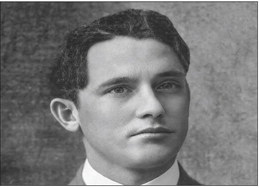
There are certain names in the history of the law that refuse to disappear beneath courthouse dust and yellowed newspaper columns. Long after the verdicts have been rendered, the juries discharged, and the old lawyers laid beneath stone, those names continue to linger in legal memory like echoes that never fully die away. They survive because they belonged to people who possessed something difficult to definebutunmistakableonce witnessed: the rare ability to stand before twelve citizens and slowly draw the gravity ofanentirecourtroomtoward their side of the case.
Every trial lawyer knows the type.
Many attorneys know the law. Many know procedure. Some know how to posture, argue, or perform. But every generation produces only a smallhandfulwhoseemborn for the courtroom itself—advocates whose instincts for juries, witnesses, timing, emotion, and human nature elevatethembeyondordinary practice into something approaching legend.
For nearly forty-one years now, I have spent my professional life inside courtrooms. I began as an assistant district attorney in Johnston County, trying criminal cases in communities where everybody knew everybody else and where jurors often formed opinions about a lawyer before he ever uttered a word. In fact, the very first jury trial I ever handled took place in Madill. Later I served as elected district attorney over a five-county district, spent years in private practice, and eventually became a capital defense attorney— and later chief of the capital division—for the Oklahoma IndigentDefenseSystem.My career has revolved around juries, witnesses, evidence, persuasion, strategy, and the strange machinery of human judgment.
Perhaps because of that, I have always been drawn to great trial lawyers.
Not merely successful lawyers. Not merely prominent or politically connected lawyers. I mean genuine courtroom advocates—those rare figures capable of walking into a courtroom carrying little more than a file and emerging having altered the course of another human life through advocacy alone.
Criminal litigation, particularly murder cases, exists in a category unto itself. It is law in its most stripped-down and unforgiving form. There are no abstractions there. No distant commercial quarrels measured only in contracts, paper, and money. Murder trials place liberty, reputation, and sometimes life itself directly into the hands of twelve ordinary citizens. They bring fear, vengeance, grief, pride, ego, violence, desperation, and mercy into the same room at the same time.
Andthelawyerswhobuild their reputations in that world are rarely ordinary people.
The work itself does not allow ordinary temperaments to last long. High-stakes criminal practice demands qualities far beyond intelligence alone. It requires the ability to remain steady where other people recoil—to absorb pressure, spectacle, hostility, grief, and human ruin without surrendering discipline or clarity. Courtrooms of that kind become theaters of risk, places where freedom or death may turn on a single witness, a single answer, or a single moment of hesitation before a jury.
The advocates who thrive there are often restless people. Driven people. Combative inonemomentanddeeply perceptive in the next. Some possessextraordinarymemories, others unusual stamina, confidence, or courage. Some command juries through force of personality. Others possess a colder and more methodical gift—the ability to dismantle testimony piece by piece until certainty itself begins to crack.
Over time, many become students not merely of law, but of human nature. They learn fear, vanity, deception, weakness, ambition, pride, and desperation almost as though studying a second language. They learn to hear uncertainty in a witness’s voice the way an old rancher hears weather approaching across open country.
And almost all of them become marked, in one way or another, by long exposure to humanity at its extremes.
Murder trials, especially in the rougher years of Oklahoma and Indian Territory, were never polite legal exercises. They were collisions of violence, politics, family loyalty, class, vengeance, reputation, and survival. The lawyers who entered that world and flourished within it tended to leave impressions wherever they went.Somebecameadmired. Some became feared. A few became both.
Charles Arthur Coakley belonged unmistakably to that breed. Perhaps that is why his story captured my attention so completely.
I did not originally set out to research him. In truth, I encounteredhisnamealmost byaccidentwhileresearching an entirely different subject related to Marshall County history. At first, he appeared only in fragments—a brief newspaper reference, a passing line in an old criminal case, a scattered mention buried deep in early county records after Oklahoma statehood.
But the fragments kept accumulating.
The more I searched, the more often his name surfaced. What first appeared to be the record of a respectable local attorney slowly revealed something much larger.Case after case emerged from the archives. Murder prosecutions. Sensational criminal proceedings. Appeals. Fierce courtroom battles. Political contests. Acquittals. Public controversy. Newspaper praise. His name appeared repeatedly in some of the most significant criminal cases of his era, not merely in Marshall County, but across Oklahoma and beyond.
Then came the realization that stopped me cold.
Once I finally traced the full arc of his career—from a young attorney arriving in early Marshall County to his eventual rise as one of Oklahoma’spremiercriminal defense lawyers—it became impossible for me to avoid the conclusion that Charles Arthur Coakley may well have been the finest courtroom advocate Marshall County ever produced.
That is not a small statement.
Marshall County has produced a governor, judges, prosecutors, legislators, businessmen, ranchers, educators, and public figures of every kind. Yet once the surviving record is assembled in full, Coakley stands comfortably among the very best the county ever produced in the specialized world of criminal trial advocacy. He became a lawyer trusted in murder cases where reputations, fortunes, liberty, andsometimes life itself stood balanced on a razor’s edge. He developed a statewide reputation as a formidable defense attorney. In time, he would participate in cases that drew not merely local attention but national scrutiny.
One of those cases would become one of the most sensational criminalproceedings inMarshallCountyhistory— a case filled with violence, notoriety, public fascination, and the combustible tensions that so often characterized early Oklahoma justice.
Another would grow far beyond southern Oklahoma and eventually carry consequences reaching across the nation.
Those stories deserve full telling, and they will come in the articles ahead.
But before reaching the sensational trials, the headlines, the courtroom theatrics, and the national attention, it is worth understanding where Charles Arthur Coakley came from, how he arrived in Marshall County, and how a young lawyer from Iowa transformed himself into one of the most celebrated courtroom advocates Oklahoma ever produced.
Because great trial lawyers are rarely accidents.
They are shaped by place, timing, ambition, hardship, instinct, intellect, and temperament. The courtroom does not merely test a lawyer’s knowledge. It tests the entire person—nerve under pressure, endurance, discipline, judgment, and the willingness to stand alone when the stakes become unbearable.
AndCoakleyemergedduring one of the roughest and most combustible periods in Oklahoma legal history.
This was not the polished corporate-law environment of the modern metropolitan era. This was early Oklahoma, still carrying the dust and violence of Indian Territory, still shaped by frontier personalities, political factionalism, deadly feuds, oil booms, bootlegging, and sudden fortunes. Criminal courtrooms in those years were often crowded public theaters where entire communities gathered to watch justice unfold. Lawyers became local celebrities. Murder trials became front-page spectacles. Jurors weighed not merely facts, but reputation, honor, personality, and public sentiment.
In that environment, courtroom advocacy mattered inwaysmodernlawyers sometimes struggle to fully appreciate.
A gifted jury lawyer could change everything.
And by every surviving account, Coakley was gifted indeed.
What fascinates me most, perhaps, is that his career represents something increasingly rareinthemodern legal world: the rise of the pure trial lawyer. He was not knownprimarilyasascholar, appellate specialist, legal theorist, or political insider. Hewasknownasacourtroom lawyer—a man who fought cases directly before juries, where outcomes depended as much upon persuasion and instinct as upon statutes and precedent.
Assomeonewhohasspent a lifetime trying cases myself, I recognize how difficult that truly is.
Trials humble lawyers. They expose weakness immediately. Jurors forgive neither arrogance nor confusion. Witnesses can destroy months of preparation with a single unexpected answer. Evidence rarely unfolds exactly asplanned.Andmurder cases, above all others, carry a pressure unlike anything else in the legal profession.
The lawyers who repeatedly succeed there are never ordinary. Which is precisely why Charles Arthur Coakley deserves remembrance. And perhaps that is the deeper purpose of local history itself.
Too often, we reserve our attention only for governors, generals, industrialists, or outlaws while forgetting the lawyers, judges, teachers, editors, and advocates who quietly shape the communities around them. Yet the history of a county is also the history of its courtrooms. It is the history of the people who stood before juries arguing over guilt and innocence, liberty and punishment, property and reputation, life and death.
Those lawyers helped shape the moral and civic character of Oklahoma itself. Charles Arthur Coakley was one of them. Indeed, he was far more than merely one of them.
By the full maturity of his career, he stood among the elite criminal trial attorneys of his generation. Yet today, outside scattered legal references and fading newspaper archives, his name is largely forgotten.
That, in my view, is a mistake worth correcting.
So, in this series, we will begin at the beginning. We will follow Coakley from his birth in Iowa in 1884 through his journey to Oklahoma, into the formative years of Marshall County and the rough-edged legal culture of early statehood. We will examine the cases that first established his reputation, the courtroom victories that elevated his standing, and the criminal trials that transformed him from a local county attorney into one of the most formidable defense lawyers in Oklahoma.
Along the way, we will revisit an era when courtrooms still occupied the center of public life, when murder trials filled newspaper columns for weeks at a time, and when a lawyer’s reputation could spread across the state from a single dramatic verdict.
For me, this story goes beyond historical curiosity alone.
Writing this column for the Madill Record has long served as something of a refuge from the daily grind of legal practice. The law, rewarding though it can be, isexhaustingwork.Afterfour decades of trials, investigations, clients, crises, deadlines, and courtroom battles, historical writing offers a different kind of engagement with the past—less hurried, less adversarial, and perhaps more reflective.
But every so often, those two worlds unexpectedly meet.
And when I encountered CharlesArthurCoakley,they met completely.
I recognized in him something every career trial lawyer recognizes almost instinctively: the unmistakable outline of a person who belonged in the courtroom. Someone who understood juries. Someone who understood criminal litigation not merely as law, but as human drama. Someone who built his reputation case by case until even the newspapers of his own era began speaking of him with something approaching awe.
That kind of advocate is rare in any generation.
And in Marshall County, there may never have been another quite like Charles Arthur Coakley.
Charles Arthur Coakley did not come to Marshall County as a native son, but in timehebecameoneofitsmost remarkable legal figures. He was born February 1, 1884, in Farley, Iowa, in Dubuque County, far from the red dirt roads, open ranges, and courthouse struggles that would later define the first great chapter of his career. His parents were Cornelius C. Coakley and Anna Coleman Coakley. His father was a farmer and stock raiser, a man rooted in the agricultural life of Iowa and later SouthDakota,andthatbackground matters more than it may first appear. Coakley came from stock-country people. He knew, at least by upbringing and inheritance, the world of livestock, land, hard work, rural custom, and the rough economy of cattle and farms.
That early world was far removedfromsouthernOklahoma, but it was not entirely foreign to it. The boy born in Iowa would one day find himself prosecuting cattle thieves in a county where the line between old frontier custom and modern law was still being drawn with difficulty. The lawyer who would later stand against organized rustlers in Marshall County had been raised in a family familiar with livestock and farm life. There is no need to overstate the point, but it is hard not to notice the symmetry. Before he ever became a courtroom advocate, Coakley had come from a world where cattle were not abstractions in a criminal statute. They were livelihood. They were property. They were wealth on four legs.
His family history also carried a certain frontier strain. His maternal grandfather had served in the MexicanWarand,duringthe California gold rush of 1849, madethelonganddangerous journey across the plains in search of gold. That was the kind of family memory that belonged to the nineteenth century: war, westward movement, risk, ambition, and the old American hunger for opportunity somewhere beyond the horizon. Charles Arthur Coakley inherited that world just as it was passing away.
He received his early education in the public schools of Iowa and graduated from high school in Dubuque County. From there, he began the long climb toward the legal profession. He read law for a time in the office of Rice & Benson in Flandreau, South Dakota, then attended the University of Iowa, where he completed a literary course and earned a Bachelor of Arts degree. By then, the law had claimed him. He entered the law department at the University of Minnesota and graduated with a Bachelor of Laws.
That education was not handed to him cheaply. Contemporary accounts noted that Coakley worked his own way through school, earning the funds necessary to obtain his higher education. That detail should not be passed over lightly. The later image of Coakley as a celebrated attorney,movingcomfortably among prominent lawyers, businessmen, and society figures, canobscuretheyounger man who paid his own way forward. He was not merely trained; he was forged. He had ambition, but it was am- bition backed by labor.
Before coming to Oklahoma, Coakley had already developed clear political instincts. He was a Democrat in Iowa, Minnesota, and South Dakota at a time and in places where that affiliation required considerably more conviction than convenience. A 1909 sketch of him captured the point with dry humor, noting that he had been a Democrat in those northern states “where it takes courage to be a democrat” and where the prospects of political reward were hardly sufficient “to cause a nightmare.” In Minnesota, he served as a precinct committeemaninMinneapolis and supported the Democratic cause during an era when both the city and the state leaned heavily Republican. He was also described as an admirer and supporter of Minnesota Governor John A. Johnson.
That political background becomes especially fascinating when viewed against the larger sweep of history, because the political geography of America at the beginning of the twentieth century looked dramatically different from the one modern readers know today.
InCoakley’sera,Minnesota was firmly Republican territory. Oklahoma, by contrast, entered the Union in 1907 as an overwhelmingly Democratic state. Southern Oklahoma in particular—including Marshall County—formed part of a deeply Democratic political culture that would dominate the region for generations. For a young Democratic lawyer arriving fromRepublicanMinnesota, Oklahomamaywellhave appeared not merely as a new professional opportunity, but as a place where his political identity finally aligned with the prevailing public sentiment rather than opposing it.
The irony, of course, is that the modern reader sees the exact reverse. Today, Minnesota stands as one of the nation’s most reliably Democratic states, while Oklahoma has become one of the nation's strongest Republican strongholds. The political map has effectively flipped over the course of a century. The same Minnesota that once required “courage” to openly identify as a Democrat is now viewed nationally as a Democratic bastion, where identifying as Republicanrequiresevenmore courage, while Oklahoma— the very place that likely offered Coakley political comfort and opportunity—has become overwhelminglyRepublicanin nearlyeverystatewidecontest.
That reversal makes Coakley’s journey all the more interesting. In a sense, he traveled from what was then hostile political ground into far friendlier territory, though history would later turn both landscapes upside down.
Of course, politics alone cannot fully explain why he chose Madill. The historical recordleavesnodiaryentry,no surviving letter, no interview in which Coakley plainly explained why he departed Minneapolis for a raw county-seat town in southern Oklahoma. History often leaves clues rather than confessions. But the clues are difficult to ignore.
Madill in 1908 was not simply a Democratic town. It was a young town in a young county in a brand-new state. Oklahoma itself had barely entered the Union. Marshall County was still constructing the machinery of local government almost in real time. Courthouses, county offices, records systems, enforcement structures, political alliances, and legal institutions were all still taking shape.
For an ambitious young lawyer, it was fertile ground.
The old Indian Territory order had technically passed away with statehood, but many of its habits, tensions, and conflicts still lingered beneath the surface. Law existed on paper, certainly. Judges had been appointed. Courts had been organized. Sheriffs, prosecutors, and county officials now carried state authority. But enforcing law across isolated ranch country, river bottoms, rough settlements, and old outlaw corridors was something altogether different.
In many ways, Oklahoma was still becoming Oklahoma.
And into that unsettled landscape stepped Charles Arthur Coakley—a young lawyer from the upper Midwest with political instincts, courtroom ambition, and, as history would soon reveal, a remarkable talent for criminal trial work.
CoakleyarrivedinMadillin April 1908. The Madill News announced on May 15, 1908, that “Attorney Charles A. Coakley, late of Minneapolis, Minn., has located in Madill, where he will make his future home,” adding that the town welcomedhimandwishedhim abundant success. It was a brief notice, the kind printed routinelyinsmallnewspapers, but in hindsight it reads almost like the opening line of a much larger story. A young lawyerfromMinnesotahadarrived. MarshallCountydidnot yet know what it had received.
Soon after arriving, Coakley formed a partnership with F. E. Kennamer, one of the important legal names in early southern Oklahoma. By November 1909, the firm had expanded to include Judge Isaac O. Lewis, and the partnership became Kennamer, Coakley & Lewis. The firm was said to enjoy a lucrative practice, and Coakley quickly came to be regarded as one of the bright young members of the southern Oklahoma bar.
His rise was swift. In 1909, only a year after his arrival in Madill, Coakley was admitted to the Oklahoma bar. He did not merely pass. He reportedly achieved the highest average among a class of seventy-five applicants examined at Guthrie. That is the sort of fact that, in a young lawyer’s career, mattered enormously. It gave him immediate standing. It told the bar, the courthouse, and the public that this was notmerelyanotheryoungman hanging out a shingle. He had the ability, and that ability was recognizedfromthebeginning.
Madill soon put him to work. In May 1909, the Madill Board of Trustees appointed him city attorney for the town. By December of that year, the Marshall County News-Democrat was already praising his record, stating that he had made “the best record of any previous holder of that office.” That was newspaper politics, certainly, but it was alsoevidencethatCoakleyhad quickly become a public man. He had entered the legal and civic life of Madill almost immediately.
His private life also tied him to the community. On June 8, 1910, Coakley married Elizabeth Langley of Madill, a womanwellknowninthecity’s literary and social circles. Elizabeth Coakley became significant in her own right. She was closely involved in the movement to establish a public library in Madill. Along with Mrs. J. P. Rierdon and M. Scott, she helped investigate and organize plans for the library effort. Their work helped place approximately 600volumesinthenew courthouse as the nucleus of a public library. The county commissioners set aside two rooms for library purposes, and by 1916, a source of public revenue had become available to help ensure the library’s permanence.
That small detail gives the Coakley story a broader civic dimension. Charles Coakley was not merely practicing law in Madill; he and his wife were helping to shape the town’s public institutions. The law office, the newspaper, the courthouse, the political party, the library, the commercial club, and the church all formed part of the same civic world. CoakleybelongedtotheCatholic Church, participated in the Madill Commercial Club and the Madill Library Association, and became associated with the Democrat Publishing Company, which published the Marshall County News-Democrat. He was a lawyer, but he was also a builder of local influence.
By 1910, his name was already appearing in connection with the office of county attorney. Notices in the Red River Farmer listed him among the candidates, along with Syd J. Wheeler, J. O. Minter, and A. W. Rison. He did not win that first time, but his ambition was clear. In a new county, the office of county attorney was one of the most important public posts a lawyer could hold. It was not simply a stepping-stone. It was the office through which the new state asserted itself against the rougher habits of the old territory.
In 1912, Coakley ran again, this time against men including George March and George Sneed, and he won. In August 1912, he was elected Marshall County’s second county attorney. When he took office in January 1913, he followed J. O. Minter and became part of a broad turnover in county government. The Marshall County News-Democrat reported the change in county officers, listing “Charles Coakley” as succeeding Minter as county attorney. The new officers took their oaths and went immediately to work.
The campaign praise offered on Coakley’s behalf gives us a revealing glimpse into how he was presented to the voters of Marshall County in 1912—and perhaps more importantly, what qualities the people of early Oklahoma believed a county attorney actually needed.
The Marshall County News-Democrat of June 28, 1912, declared that the office of county attorney should be entrusted only to a lawyer of “tried ability, unquestioned courage and the strictest integrity.” Thosewerenotcasual words tossed into a routine campaign endorsement. They reflected the realities of the place and time. Ability alone wasnotenough.Couragealone was not enough. Integrity alone was not enough. In the rough and still-forming counties ofsouthernOklahoma,the preservation of law and order required all three. A county (See attorney needed to be willing to confront not merely crime, but custom, local loyalties, intimidation, and the lingering habits of the old frontier.
A few weeks later, the Red River Farmer of July 13, 1912, made much the same argument. It described the office as an “important trust” carrying “grave responsibilities,” and said Coakley understood that fact fully. The paper promised voters that he would enforce the law “without favorites or partiality,” would bring violators “to the bar of justice,” and would endeavor to give every man “a fair deal.” It praised his “strong mind” and legal ability and declared he would be prepared to handle “any knotty question that may present itself to obstruct the wheels of justice.”
Campaignrhetoricalways carries a degree of polish. Newspapers of that era often wrote openly partisan endorsements, and glowing language was hardly uncommon. Yet in Coakley’s case, the descriptions proved remarkably prophetic.
Because the first great test awaiting Charles Arthur Coakley would not be a sensational murder trial.
It would be cattle theft. There is, for me, another unexpected thread running through this story—one I did not realize existed when I first began researching Charles Arthur Coakley.
As I dug deeper into the old newspaper accounts surrounding the cattle-theft prosecutions that helped establish Coakley’s reputation, one particular name kept surfacing in the reports: “S. W. Henry.” At first, it was simply another stockman listed among those who had lost cattle to the rustling operation working the Red River country between Marshall County and Texas. But historical research has a way of turning strangers into family.
“S. W. Henry” was Samuel Wright Henry—my own great-granduncle.
Suddenly, the story became more than the biography of a remarkable trial lawyer. It became, in a small and unexpected way, part of my own family history.
The newspapers leave little doubt that Samuel Wright Henry played an important role in uncovering the cattle theft operation. During the closing days of April 1913, several head of Henry’s cattle disappeared near Woodville. Rather than simply reporting the loss and waitingonauthorities,Henry joined Woodville Constable T. J. Coffee in following the trail south into Texas. Their investigation reportedly led them to a slaughter pen in Denison, where the hides of the missing cattle were found hanging in the hide house. That discovery helped expose what officials believed to be a long-running interstate operation moving stolen cattle across the Red River.
In many ways, the case became one of the earliest major proving grounds for Charles Arthur Coakley as county attorney. And quite unexpectedly, it was there— in those old Marshall County newspaper columns—that the story of Coakley crossed paths with the story of my own family.
Thatispartofwhatmakes local history so endlessly fascinating. Thedeeperonedigs, the narrower the distance between public history and personal history becomes. Names that begin merely as faded print on brittle newspaper pages slowly emerge as living people who once traveled the same roads, stood in the same courthouse corridors, worked the same land, and endured the same turbulent years when Oklahoma was still young, and the frontier spirit had not yet fully faded away.
For me, finding Samuel Wright Henry woven directly into Coakley’s first significant prosecutions changed the story entirely. What had begun as historical research suddenly became something far more personal. It, however, unexpectedly tied my own family to the events that helped launch the public reputation of the man who may ultimately have become Marshall County’s greatest courtroom advocate.
To understand why these prosecutions mattered so deeply, one must understand the world into which Marshall County itself had been born.
For decades before Oklahoma statehood, the old Indian Territory had been open range country. The range stretched across enormous expanses where cattle roamed widely, and fences remained sparse or nonexistent. Later generations romanticized that era—the cattle drives, the trails, the ranches, the horsemen crossing the prairie beneath enormous skies—but the system carried lawlessness in its bones. Where cattle ranged freely, where brands could be altered with a hot iron in the darkness, where ownership could become difficult to prove, and where jurisdiction itself often remained uncertain, theft became not merely temptation but industry.
A man could gather cattle from the range, alter the brands, and claim them as his own. In some regions, and during some periods, the practicerosebeyondordinary theft into an organized criminal enterprise. It could lead to violence. It could lead to murder. One later account observed that it placed “disfiguring blackspots”uponthe otherwise romantic history of the region.
As settlement increased and fences slowly narrowed the open range, cattle theft evolved rather than disappeared. The great sweeping raids diminished, but organized rustling survived in another form. Some men stole merely enough to survive. Others made fortunes. Some escaped punishment entirely. Others used their profits to hire lawyers, secure influence, or evade prison sentences.
And Marshall County’s geography madethe problem uniquely difficult. Texas was near. The Red River was not merely a state boundary. To cattle thieves, it was opportunity.
Asmallgroupcouldgather livestock from scattered ranges in Marshall County under the cover of darkness, move the animals southward before daylight, cross the Red River into Texas, and dispose of them before Oklahoma officers could fully react. Denison and Sherman became especially important points in that underground trade. Once cattle crossed the river, jurisdictional confusion complicated everything. Trails disappeared. Evidence vanished into slaughter pens and hide houses.
This was the world Coakley inheritedwhenhebecame Marshall County’s second county attorney following his election in August 1912.
Oklahoma statehood had imposed a new legal order upontheoldIndianTerritory, but law on paper and law enforced are two very different things. The men elected to county office during those early years faced challenges unlike those confronted by later generations. They were not merely prosecuting crimes; they were attempting to replace decades of tolerated habits with a stricter, more institutionalized system of law.
Coakley soon discovered that one of his principal duties would be to suppress organized cattle theft. And the thieves he confronted were not amateurs.
Theyunderstoodthecountry. They understood the roads, the ferries, the buyers, the river crossings, the silence of neighbors, and the weaknessesofproof.Insoutheastern Marshall County, a loose but organized network allegedly operated between Oklahoma and Texas, gathering stolen livestock and transferringthemsouthward for slaughter and sale.
The surviving newspaper accounts paint a remarkable picture of just how extensive the operation had become.
On May 15, 1913, the Madill Timesranaheadlinethat mixed frontier humor with unmistakable seriousness: “Wholesale Cattle Theft Charged — Nine Cases Have Been Filed Against Jones Boys. Others Implicated.”
The article reported that eleven criminal cases had already been filed before Justice Gwaltney against individuals living in southeastern MarshallCountyand in Denison and Sherman, Texas. Luke Jones alone reportedly faced nine cases and was released only after posting $5,250 bond—an enormous amount for that era. Cul Jones likewise faced nine cases and at one point remained jailed for lack of bond. Joe Lynch of Woodville was implicated in multiple cases. Rich Lamb of Denison faced several charges. Dot Gorrell of Kingston was jailed in connection with four or five separate accusations. Joe Collins of Sherman was also jailed.
This was not a scattered theft problem. It was viewed as an organized interstate criminal enterprise.
The Madill Times explained that “for a number of years past, stock, cattle, horses and hogs have been mysteriously disappearing,” and that during the previous six or eight months the problem had become “quite common.” Ranchers had simply watched livestock vanish without a trace. But finally, according to the paper, several head of cattle stolen from Samuel Wright Henry and others near Woodville had been traced southward into Texas.
That discovery broke the affair open. Soon, arrests rippled outward across both sides of the Red River.
A week later, on May 17, 1913, the Red River Farmer covered the affair with heavy sarcasm under the unforgettable headline: “Cattle Men’s Convention.”
The paper mockingly described an “impromptu convention” of local cattle “raisers” gathered in Madill under the careful supervision of county authorities. Judge Hatchett of the district court was humorously described as the “principal toast-master,” while Sheriff Littrell and his assistants supposedly ensured the “hall doors are kept securely locked” so outside parties could not interfere with the proceedings.
The “delegates” to this fictional convention included many of the same men whose names now filled the criminal docket: Luke Jones, Cul Jones, Joel Collins, Joe Lynch, Dot Gorrell, Litch Lamb, Joe Wisdom, Parks, and Underhill.
The humor barely concealed public outrage.
The article bluntly stated that hides from cattle belonging to “sundry citizens” had been discovered in the Denison hide market after the animals had “mysteriously disappeared from their home range.” It further observed that “this has been going on for some time and is the first opportunity that has presented itself for a dragnet haul to be made.”
That phrase—“dragnet haul”—captures the atmosphere precisely. Authorities were no longer dealing with isolated thefts. They believed they were dismantling an entrenched system.
The testimony reported in the papers gives a remarkable glimpse into how the operation allegedly worked. Witnesses described cattle disappearing directly from the range during August and September of 1912. One rancher testified that he had lost 12 or 13 head of cattle. Another described cows and heifers disappearing without his consent. Still others described missing steers branded with their marks.
Thencametestimonytracing the livestock southward.
Witnesses claimed Luke andCulJones,alongwithJoe Lynch, drove cattle through Preston toward Denison. Someoftheanimalsallegedly carried brands belonging to Marshall County stockmen. Other testimony described cattle gathered near Red River ferry crossings before dawn and driven into Texas to slaughter pens near Denison.
The river itself became almost a character in the story.
Again and again, the accounts describe cattle quietly assembled in southeastern Marshall County during the night, pushed toward river crossings by early morning, thenmovedsouthwardbefore owners realized the animals were gone. Geography itself aided the enterprise. The Red River provided distance, confusion, and escape.
The testimony even ventured into alleged profitsharing arrangements. One witness claimed Rich Lamb paid him $175 for seven stolen cattle and that he received one-third of the proceeds after expenses. Other testimony described cattle selling for approximately $35 per head, with profits divided among participants.
And standing at the center of these prosecutions was Charles Arthur Coakley.
The newspaper reports repeatedly place him directly inside the proceedings. The Marshall County News-Democrat of September 5, 1913, reported under the headline “Gorrell Convicted — Gets Two Years” that Dot Gorrell had been convicted at Sherman, Texas, for introducing stolen cattle into Texas and sentenced to two yearsinthepenitentiary.The article specifically noted that the prosecution in Grayson County had been conducted by the county attorney of GraysonCounty,“assistedby C. A. Coakley of this county.”
That detail matters enormously.
It shows Coakley operating beyond Marshall County itself, coordinating directly with Texas authorities in interstate prosecutions. He was not merely filing local charges in Madill. He was participating in a broader campaign stretching across state lines.
The same article noted that a grand larceny charge still remained pending against Gorrell in Marshall County. A later report from the Marshall County News-DemocratdatedJune8,1916, stated that Deputy Sheriff Tom Christian personally transported Dot Gorrell to thepenitentiaryatMcAlester following conviction, noting that Gorrell had previously served time in the Texas penitentiary as well.
And once again, quite unexpectedly, another branch of my own family emerged from the old newspaper record. Deputy Sheriff Tom Christian was also my greatgranduncle. As I continued tracing the early prosecutions and criminal investigations surrounding Coakley’s rise as county attorney, I found members of my own family appearing repeatedly inthesamestories—working the cases, tracking suspects, transporting prisoners, and operating the rough machinery oflawenforcementduring Oklahoma’s earliest years of statehood.
It is a striking reminder of how tightly interwoven local history often becomes. The farther back one looks, the more the boundaries between public events and family history begin to blur. What first appears to be the distant story of old court cases and forgotten prosecutions slowly becomes populated by familiar names and blood connections, until the past no longer feels entirely distant at all.
The prosecutions also revealed how dangerous and difficult such cases could become.
At hearings involving the Jones brothers, testimony emerged suggesting witness intimidation. One witness, Drew Hamilton, reportedly testified that after being subpoenaed against the Jones boys, he was approached in Denison and offered money by Mrs. Cul Jones to leave the country before the hearing date.
Whether every accusation proved true mattered less than what the allegations themselves revealed: these were high-stakes prosecutions involving organized defendants, frightened witnesses, interstate movement, and considerable local attention.
Nor were the accused without strong legal representation.
The papers noted that the defendants were represented by experienced counsel, including F. E. Kennamer— Coakley’s own former law partner. Thus, even at this early stage of his career, Coakleywasalreadyengaged in serious courtroom battles against capable attorneys in highly publicized criminal proceedings.
And he was still not yet thirty years old.
That fact struck me perhaps more than any other while researching these prosecutions. It struck me becauseitcarriedanotherunexpected connection between Charles Arthur Coakley and my own life.
I was thirty-four years old when I was elected District Attorney for Oklahoma’s Twentieth Judicial District, a district that included Marshall County itself. By that age, I already understood something about the enormous weight that accompanies prosecutorial authority in a rural Oklahoma courtroom. A prosecutor in such communities is not merely handling files and statutes. He is making decisions that affect reputations, liberty, families, and sometimes life itself. Every difficult prosecution carries pressure—from the public, law enforcement, victims, politics, local relationships, and sometimes from fear itself.
Looking back now across more than four decades of trying cases, I can better appreciate what must have rested on the shoulders of a young Charles Arthur Coakley as he stood in those early Marshall County courtrooms confronting organized cattle thieves operating across the Red River country.
He was younger than I was.
Yet there he stood, coordinating prosecutions that crossed state lines, working with Texas authorities, handling frightened witnesses, battling experienced defense lawyers, and attempting to impose the authority of Oklahoma law upon a region where older frontier habits still lingered stubbornly beneath the surface.
Perhaps that is another reason this story has drawn me in so deeply.
There are moments in a lawyer’s life when the years collapse a little. The old newspaper accounts stop feeling distant. The names stop feeling abstract. The courthouse ceases to be merely historical scenery and becomes recognizable terrain. The pressures, the burdens, the calculations, the uncertainty, the responsibility— they become familiar. Reading about Coakley at twenty-eight or twenty-nine years old, carrying prosecutions of this magnitude in a newly formed county still struggling to define law and order, I find myself no longer looking merely at a historical figure.
I recognize the young prosecutor.
Looking back now from more than a century later, these cattle prosecutions reveal something larger than simple stock theft. They capture Marshall County itself during the uneasy years when the old Indian Territory frontier was giving way to statehood law. The open range had narrowed, but not vanished. The old habits still lingered. Men stillrememberedatimewhen crossing the river could erase a trail. Local justice was becoming institutional, but thetransformationremained incomplete.
Into that unsettled world stepped Charles Arthur Coakley—a young lawyer from Iowa and Minnesota carrying university degrees, political ambition, and courtroom ability into a region still deciding what kind of law it intended to have.
Before he became famous for defending men accused of murder, Coakley first made his reputation prosecuting men accused of stealing.
Before juries knew him as one of Oklahoma’s premier criminal defense lawyers, Marshall County knew him as the young county attorney helping break a cattlerustling organization that stretchedfromWoodvilleand Kingston southward across the Red River into Denison and Sherman.
And in those early prosecutions along the Red River, the outlines of the future CharlesArthurCoakleywere already beginning to emerge with remarkable clarity.
Even as a young county attorney, the qualities that would later make him one of Oklahoma’s most celebrated criminal trial lawyers were plainly visible. He was methodical in preparation, aggressive in pursuit, fearless in the courtroom, and strategic in the way he built a case. He understood accomplice testimony. He understood coordinated criminal enterprises. He understood witness pressure, local loyalties, and perhaps most importantly, the unpredictable psychology of juries.
He already grasped a truth every seasoned trial lawyer eventually learns: courage without preparation is merely noise, and criminal enterprises are rarely broken by force alone. They are dismantled through patience, leverage, timing, and proof.
Those lessons would serve him well.
Because the cattle-theft prosecutions of 1912 and 1913wereonlythebeginning.
Far more sensational cases still lay ahead.
In the years to come, Charles Arthur Coakley would step out of the role of prosecutor and into the far more dangerous and controversial arena that would ultimately define his career—the defense of men accused of murder. He would become known not merely as a capable lawyer, but as a courtroom advocate of uncommon skill whose name wouldeventuallybecometied to some of the most closely watched criminal trials in Oklahoma.
And the first of those great murder cases was coming.
It would erupt out of Marshall County itself in a storm of violence, publicity, and courtroom drama. The killing would shock the county. The trial would divide public opinion. Newspapers would follow every development closely. And for the first time,CharlesArthurCoakley would stand not for the state, but beside a man accused of taking another human life.
That case—and the sensational murder trial that followed—will be the subject of Part II.