
When the first families came into the oak thickets and prairies of what is now Marshall County, they brought plows, axes, and rifles, but seldom a doctor. Illness and injury walked beside them—fevers that took a child in a week, accidents in the mills and gins, and childbirth that could end a life in a single hard hour. Home remedies and midwives did what they could; traveling pitchmen sold “cure-alls” from painted wagons. Then in 1895, that changed. Into the Chickasaw Nation rode Dr. Emory Franklin Lewis of Pittsburgh, Pennsylvania, trained at the Medical Department of Arkansas Industrial University in Little Rock—the first medical school in Arkansas. For three decades, his black bag, his horse and buggy, and his steady hands became the difference between despair and hope. He settled in Cliff and Oakland, then established himself as the first permanent resident of the railroad town called Helen, later renamed Kingston. By daylight and lamplight, he set bones, delivered children, fought epidemics, and, when the county needed it, served as postmaster, banker, builder, bandman, and deacon. His story is not simply the life of a physician; it’s the map of how a raw place becomes a community.
Born on March 14, 1865, in Pittsburgh, Lewis came of age in a country emerging from the Civil War and stepping into the furnace heat of industrial growth. Pittsburgh’s mills colored the sky and taught hard lessons about injury and infection. He chose medicine in a period when American doctoring stood with one foot in folklore and the other in science: Pasteur’s germ theory had taken root; Lister’s antiseptic technique was remaking surgery; chloroform and ether were common but still dangerous in inexperienced hands.
Lewis sought training where need was most significant— Little Rock, at the Medical Department of Arkansas Industrial University (founded 1879), the state’s first medical school and the seed that would become UAMS.Theearlycurriculum was heavily weighted in anatomy, physiology, chemistry, materia medica, and practical surgery. Students dissected cadavers, memorized systems, and watched their professors move quickly and cleanly, scrubbing with carbolic, learning to work in places with more grit than gear. There were no residencies asweknowthem—onlya hard graduation and a more challenging road ahead.
The school itself survived on willpower and borrowed rooms. Eight Little Rock physicians anchored the faculty at the start; classes began in rented quarters near the city’s charity wards and almshouse, where the real world of disease paid no respect to syllabi. In those rooms, young men learned to keep instruments clean, tempers even, and hands steady. Thatwouldmattermorethan any textbook when their operating tables turned out to be family kitchen boards and their nurses, a mother and a neighbor with sleeves rolled high.
Bythemid-1890s,diploma in hand, Lewis pointed toward Indian Territory, where trained physicians were scarce and time itself could be the margin between life and death. He began at Cliff, then Old Oakland, answering knocks at midnight and riding the red-dirt tracks by creek and fencerow. In that era, malaria haunted the bottomlands, typhoid followed contaminated wells, and childhood diseases— measles, whooping cough, scarlet fever, and diphtheria— spread through oneroom schools like a prairie fire. There were no hospitals here, no lab tests to confirm a diagnosis—only the doctor’s knowledge, a stethoscope, a thermometer, and good judgment.
Around 1900, as the Frisco Railroad carved a line through Pickens County, the old and new towns moved forward in a slow, hesitant waltz. J. Hamp Willis—merchant, later a Chickasaw Nation mining inspector, and a man who understood where railbeds could build or break a settlement—relocated his store from Old Kingston (King’s Chapel) to the new lineandnamedtheplaceHelen after his little daughter. There were storefronts and a depot, but no post office. Two miles away, Kingston had a post office but no rails. Mail went to Kingston. Freight wenttoHelen.Twonamesfor one growing community. The heart of the place belonged wherever the wagons and letters connected.
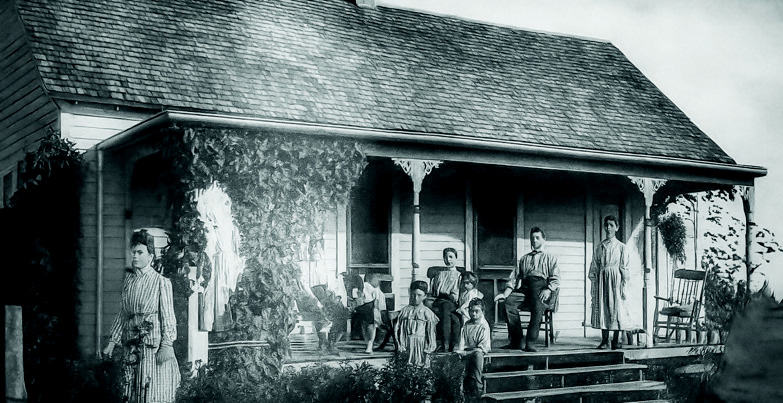
Into that confusion, Lewis did what frontier doctors do: he pitched in, set up practice, and became the first permanent resident of Helen—building the town’s first home, then taking on the work in front of him: tending fevers, delivering babies, sewing up wounds, and bridging old remedies with new science.
The doctor’s black leather kit is the closest thing that era had to a hospital on hinges. While no precise inventory survives, the standard contents of a late-19th/ early-20th-century country physician were predictable— and telling:
•Quinine,bitterand indispensable, for the shivers and heat cycles of malaria.
• Calomel (mercurous chloride), a purgative meant to cleanse, though it too often punished.
• Laudanum, opium’s tincture, to quiet pain and relentless coughs—beneficial, risky, sometimes the only mercy at hand.
• Carbolic acid and alcohol, the sharp-scented guardians of cleanliness for wounds and instruments.
• Chloroform or ether, folded into cloth for an anesthetic when minutes felt like mercy.
• Scalpels and bone saws, wrapped in oilcloth.
• Obstetric forceps, a grim but lifesaving promise when labor turned perilous.
• Syringes and needles for morphine, quinine, and strychnine (then used as a stimulant).
• A stethoscope and thermometer, two simple instruments that made a poor room feel like a clinic.
In Dr. Lewis’s day, the idea of a doctor’s office or clinic scarcely existed in rural Indian Territory. His office was the saddle or the buggy seat, the black bag on the floorboard, the reins in his hand. His waiting room was the front porch where worried families stood scanning the lane for hoofbeats, and his examination rooms were kitchens hastily cleared of dishes, bedrooms where quilts were folded back, or barns where lanterns threw long shadows across makeshift beds. The home itself became the hospital, with family members pressed into service as nurses, orderlies, and stretcher bearers. A kitchen table was scrubbed and set for surgery, lamps brought close, water boiled on the stove, and clean cloth torn into bandages. On those boards, Lewis set fractures, stitched wounds, lanced infections, and—when there was no other choice—amputated to outrun gangrene.
Heinsistedthathisinstruments beboiledandhishands washed, the best defenses he had against invisible enemies, and when the work was done, he left orders as firm as any ward nurse’s: keep the flies away, change the dressings, boil the water, and let the patient rest. In such a world, the doctor carried not only his instruments but the full weight of modern medicine on wheels, bringing science and hope into the humblest cabins one patient at a time.
Frontier women faced childbirth with courage and clear eyes. The line between joy and grief could be as thin as a hair. Lewis worked with midwives, respecting their experience and stepping in when his training could pull mother and baby back from the edge. Forceps came out when labor stalled; chloroform in careful drops when pain became a wall; and always the watch for hemorrhage or childbed fever, the invisible thief that could claim a mother days after a safe delivery.
What families remembered most was not just what he did, but how he stayed— long hours through the labor, a quiet word for the father pacing outside, a seat by the bed until breathing steadied and color returned. On the worst nights, he stayed then, too, bearing witness when medicine had no more to give.
Payment rarely arrived in cash. Instead, it came as chickens, hogs, corn, a side of beef, and a quilt carefully folded and pressed into his hands. He accepted what people had and gave back what the county needed, constancy.
Typhoid was the frontier’s bad bargain with water. It rode unsealed wells and slopped creeks into homes. Lewis turned to preaching about boiled water and covered wells, and kept stock away, but prevention in that age fought uphill. Diphtheria pressed a gray membrane across children’s throats; the antitoxin that began to appear in the 1890s was scarce and distant in ruralareas.Whoopingcough, scarlet fever, and measles swept through schoolhouses each season. Tuberculosis lingered like a shadow—you could measure its trail in the weight people lost and the cough that would not leave.
Then came the year that writes its own chapter: 1918. Influenza didn’t arrive politely; it erupted. Families were healthy in the morning and bedridden by night. Strong young men’s lips turned blue as they struggled to breathe. There were no antivirals, no antibiotics to treat pneumonia. There were mustard plasters, fresh air, fluids, whiskey or brandy to soothe the cough, sheets hung in doorways to slow the spread, and the doctor’s judgment about what to do next and what to avoid.
Lewis rode until the horse knew the trails without a handontherein.Hecouldnot save everyone—that would be a lie—but he did not let anyone down. He showed up, sat by beds, listened to lungs, steadied the worst moments, and moved on to the next cabin. Schools closed. Churches fell silent. Funerals increased at a pace communities could hardly handle. When people rememberwhostoodbetween panic and surrender, they mention the man with the bag and his calm voice.
After the pandemic, Lewis was no longer young. He kept at it—into the 1920s—but those months left weight on his shoulders that never lifted.
A doctor on the frontier is never just a doctor. People will ask him to mediate a quarrel, draft a letter, weigh in on whether the water is to blame, or advise on what to do about a school issue. They will also ask him to anchor institutions so that a place can call itself a town.
When a fire destroyed an early Kingston post office, the community turned to the man they trusted: Dr. E. F. Lewis. In 1905, he purchased a building and relocated the post office into it, marking the establishment of the first stand-alone Kingston post office. He served as U.S. Postmaster from 1905 to 1914. In an era when Helen had the depot and Kingston had the mail, managing that post office meant more than just sorting letters. It meant identity and permanence— the line on the envelope that says, we are a place.
That’s how the name war was won. The two towns— rail in one, post office in the other—had become one marketplace and one people. In 1906, the name Kingston prevailed—the mail matters. In a county’s memory, that isn’t a footnote; it’s a headline.
Lewis didn’t stop there. Along with Ed Jones and Charley Brown, he invested sweat and money into bricks. The Lewis–Jones–Brown Building, completed in 1902 on the northwest corner of what is now Highway 70 and Main, sent a clear message: we’re not a tent town. The bricks, fired in Shay, were transported by wagons and stacked into a landmark you can still point to today. The building has housed hardware, groceries, and furniture, and it still carries thespiritofmenwhoaimedto create something that would outlast them. Today, it holds the distinction of being the oldest structure in Kingston.
When business required a vault and ledgers, he aligned with the side that measured trust: Director of First National Bank of Kingston (charter 1905). Capital stock: $25,000. Deposits: $42,000 in two months. Officers with influence—from A. B. Scarborough (Bonham and Durant) to J. Hamp Willis himself—trusted the doctor’s name on the letterhead becausethetowntrustedhim with its children.
He took his turn at politics— temporary chairman of the 1908 Marshall County Republican Convention— and at his own profession’s housework—president of the County Medical Association, pushing standards up in a state that was still shrugging off rough-and-ready practice.
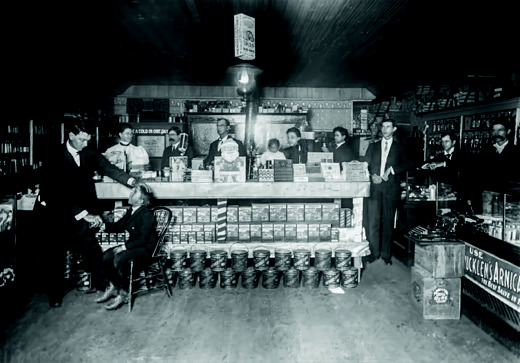
And because life isn’t only a ledger and a waiting room, when the town formed a 24-piece “Booster Band” in 1907 (sponsored by the new bank), Dr. Lewis took a chair. On Saturday evenings, the bandstand between the First National Bank and the Owens-Willis-Wheeler store, the town heard Sousa by starlight. The “doctor who delivered my sister” playing marches beside a liveryman and a clerk says more about community than any speech.
It bears retelling cleanly because it explains Kingston’s stubborn identity. Old Kingston (King’s Chapel)— two and a half miles southwest— had a post office (chartered 1894), a cotton gin, and a schoolhouse that doubled as a church. Then the Frisco came through on a different line. J. Hamp Willis moved his store to that line and founded Helen in 1900, naming it for his two-year-old daughter. The town boomed—stores, hotels, and a bank by 1905. A schoolhouse (1901) hosted all the congregations until the Methodists (1904) and Baptists (1906) built their own buildings. Brick came in 1902. By 1905, Helen had seven dry goods and groceries stores, two hardware stores, a lumber yard, two blacksmiths, two banks, a barber shop, a livery stable, a cotton yard and elevator, two hotels, and a population of 800. It had everything but a post office. The government said no—“Helen” too close to “Helena” already in the Territory.
The mail continued to be sent to Kingston, and the train carried both freight and passengers to Helen. When the post office eventually moved into town, managed by Dr. Lewis, it kept the name “Kingston.” In 1906, the depot adopted the name “Kingston,” and the legal incorporation followed. Two towns were lost so one could thrive. If that seems like a quirk, remember how identities are formed: by where you pick up mail, catch a train, bury your dead, and cash a check. Dr. Lewis is at the center of every one of those facts.
Behindthedoctor’srounds was a household that bore its own heavy load. Mary Lewis—born shortly after the Civil War in Arkansas, married near Conway—had learned early what it takes to keep a family together. She moved to Old Oakland in 1893, then to Helen/Kingston, and later to Ada. With eight children, a husband often away for long stretches, and payments that came irregularly or in feed sacks, she built a warm home out of very tight margins. She sewed, kept records of household debts and favors, and made sure the doctor could lay down his hat at 2 a.m. and be a father again in the morning.Their children carried the family’s threads into public life:
•MittieLewisDavis(Ada) kept watch in her father’s final months; he died in her home.
•MyrtleLewisFlyntwove the name into Kingston’s daily life.
• Eunice married John Samuel Vaughan, a man whose name would become one of the most respected in Oklahoma education. Vaughan began his career humbly, as Kingston’s very first superintendent of schools, charged with shaping order and curriculum in a town still finding its footing. From there his influence only grew.HerosetobecomeState Superintendent of Public Instruction, guiding policy at a time when Oklahoma was still a young state, struggling to build a unified system of schools from scattered rural districts and territorial traditions. His leadership helped professionalize teaching, standardize curricula, and secure better funding for public education. Later, he ascended to the presidency of Northeastern State University at Tahlequah, one of the oldest institutions of higher learning in the state and a direct descendant of the Cherokee National Female Seminary. As president, Vaughan carried forward its legacy as a training ground for teachers, expanding its reach and prestige. By the time of his retirement, he was widely recognized as a man who had bent the arc of Oklahoma education itself—from the red dirt schoolhouses of Kingston to the lecture halls of one of its flagship universities. For Dr. Lewis, whose own life had been dedicated to service and progress, this union between his daughter and such a man must have seemed a powerful confirmation that the family’s calling to serve extended beyond medicine, into the very heart of Oklahoma’s civic and cultural life.
• Pearl became a dietitian and consultant in Chicago.
• Dr. Miles L. Lewis followed his father into medicine at Ada, forming the father-son partnership that symbolized the handoff from kitchen-table surgery to a modern clinic.
• Fred settled in Seminole.
•RoyalPalmerLewismarried Helen Willis, daughter of J. Hamp Willis, the very man who had founded the town of Helen that later merged into Kingston. J. Hamp was more than a merchant; he was a town builder, a figure whose decision to move his store and post office along the Frisco line ensured Kingston’s survival and eventual prosperity. His hand was on nearly every early civic enterprise, from commerce to politics. For his daughter to marry thesonofDr.EmoryFranklin Lewiswasmorethanafamily union—it was the intertwining of two of Kingston’s most enduring legacies. The Willis line represented Kingston’s civic birth, its founding, its tie to the railroad, and its name itself. The Lewis line embodied the town’s health, stability, and perseverance, the doctor who answered every call, the postmaster who gave Kingston its permanence, the deacon who steadieditschurch.Together, the two families symbolized the pillars of Kingston’s existence: one built the town, the other sustained it. With Royal and Helen’s marriage, their descendants carried both names forward, ensuring that the Lewis family was forever bound to Kingston— not merely as its first doctor’s kin, but as inheritors of the town’s very identity. Everychildbornofthatunion carried the dual heritage of Kingston’s founder and its first physician, a living testament to the fact that Kingston itself was as much a family legacy as a place on the map.• John Hoyt Lewis is seen in early rosters and church notes, part of the household life that never makes headlines but always makes a home.
The First Baptist Church was as central to Kingston and later Ada as any store or school. Lewis served as a Baptist deacon for years, the kind of man who sang hymns and stacked chairs, who visited the grieving and bowed when prayer was the only honest thing left to do. Nobody in that era saw a conflict between science and faith; they saw two hands on the same rope, pulling the sick back from the dark if they could, and comforting them when they could not.
By 1924, wheels and wires had reached Marshall County. Automobiles reduced the distance that once required a day’s journey. Telephones were making their way into homes. Small hospitals in nearby towns provided doctors with a place to send difficult cases. The work evolved. After thirty years in Kingston, Dr. Lewis moved to Ada and began practicing with his son, Dr. Miles.
That office was a hinge between centuries. The elder doctor came from chloroform and carbolic acid and was trained in judging breath sounds and skin tone; the younger doctor came from X-rays, lab tests, sterile operating rooms, and a profession tightening its standards with boards and protocols. Patients in Ada got both: a seasoned hand and a modern chart.
By the early 1930s, the old miles weighed heavily. Friendsnotedhe’dbeen“completely worn out by continuous riding” back when every call meant mud and creeks and the same road home to sleepanhourbeforedawn.He eased back but never quit. He advised. He saw people who would not see anyone else. He carried the town’s respect the way he had that bag— plainly, without ceremony.
Loss came in June 1946, when Mary died after more than fifty years of marriage. He moved into Mittie’s home in Ada. On January 13, 1948, he died in his sleep at the age of 82. The funeral at First Baptist, Ada, was crowded with memory; the pallbearers were his grandsons— Harold Rogers, Bill Roan, Hugh Dillingham, Earl Davis, Hollis Douglas, Walter Rappolee—young men strong enough to carry both a casket and a legacy. He was buried in Rosedale Cemetery beside Mary. He left three sons (Miles of Ada; Fred of Seminole; Royal of Siloam Springs), four daughters (Mittie of Ada; Myrtle of Kingston; Eunice of Tahlequah;PearlofChicago), fourteen grandchildren, and fourteen great-grandchildren.
Time plans its own erasures, but Kingston still keeps a few solid proofs with E. F. Lewis written between the bricks:
• The first brick building— the Lewis–Jones– Brown project at Main and Highway 70—still stands, its Shay-firedbrickamonument to intent.
• The First National Bank of Kingston (chartered 1905, deposits $42,260 in two months) later weathered the Depression and closed, but the structure lived on as groceries, furniture, and finally D’s Creative Corner. Inside, the wrought iron “BANK” arch, mosaic “First National Bank” tiles, and much of the tin ceiling remain.
• The Kingston Post Office story—rebuilt, relocated, finally housed in its own dedicated building (1909 on the east side of Main, next to Dr. Hornbeck’s Drug Store)—spells out how identity hardens into address. That 1909 location served until 1961, when the present officeopenedneartheBaptist Church.
You can argue about the soul of a place, but you can’t argue with stone and ironwork thatsurvivedahundred winters.Ifyouneedtoexplain to a child why Kingston didn’t blow away like a rail camp, take them to the northwest corner and point up.
Count the roles and you’ll see a pattern long before you see a monument:
• Physician for 30 years in Indian Territory and early Oklahoma, from 1895 until the mid-1920s.
•Postmaster(1905–1914) who gave a new name a legal spine.
• Builder of the first brick commercial building with Ed Jones and Charley Brown (brick made in Shay).
• Bank director at First National Bank of Kingston (Charter No. 7893).
• President of the County Medical Association; temporary chairman of a county Republican convention (1908).
• Band member in the Kingston Booster Band.
•Baptistdeaconandfaithful churchman in Kingston and Ada.
• Husband to Mary for more than fifty years; father of eight; grandfather and great-grandfather many times over.
• Partner in Ada with Dr. MilesLewis,thehandofffrom lantern to X-ray.
Tell it straight: none of that makes him a statue. It makes him the kind of man who shows up every time a community needs him.
Between 1895 and 1925, American medicine transitioned from guesswork to groundwork: germ theory was commonplace, antiseptics were routine, public health boards had teeth, schools were reformed (the Flexner spirit, if not the report itself, pushing for rigor), and hospitals were awakening to their modern role. Even small towns began to feel the pull: lab tests, better anesthesia, safer surgery, later antibiotics. Dr. Lewis straddled that shift—trained in the first wave of organized southern medical education, practicing with both a tincture and a thermometer, then closing his years in an office that kept X-ray plates in a lightbox.
He would not recognize much of what we do now— or instead, he would, but he would smile at the tools. The essentials he’d recognize entirely: wash your hands; keep your instruments clean; listen more than you talk; don’t make promises you can’t keep; stay as long as it takes.
By the time he passed away in 1948, newspapers across the state referred to himaswhathewas:apioneer physician. That phrase is not puffery. It’s a job description. It means you take sick calls when the roads are clogged and the bridges are a mess. It means you play a cornet on Saturday night and bury a child on Sunday afternoon with the same straight back. It means you file a federal form so a town can have a post office and then hand a father his daughter in a bundlebecauseyouwereable to turn the shoulders that would not turn.
If you want to see his monument, you don’t need a bronze statue. Walk to the northwestcornerofMainand 70, look at the wrought iron over the bank arch, and think about how many Saturday nights ended with someone saying, “The doctor is here,” and meaning not that he’d arrived but that the worst hour of the night was over. Or brush your hands against the brick in his building that still stands on the northwest corner of Highway 70 and Main Street, and maybe you can feel his presence still.
Ifyouwanttosayhisname right, tell the whole of it: Dr. EmoryFranklinLewis—doctor, postmaster, builder, banker, bandsman, deacon, husband to Mary, father and grandfather, first permanent resident of Helen/Kingston, and the man who kept riding when the work was ugly and the pay was poor.
And if you want to honor him, do what he did. Show up. Boil the water. Clean the instruments. Tell the truth kindly. Stay until it’s done.
Becausethat’showacounty gets born out of scrub and prairie. Not with speeches, but with steady hands. Not withgrandgestures,butwith quiet arrivals at midnight and the sound of a black bag set down on a kitchen table.