
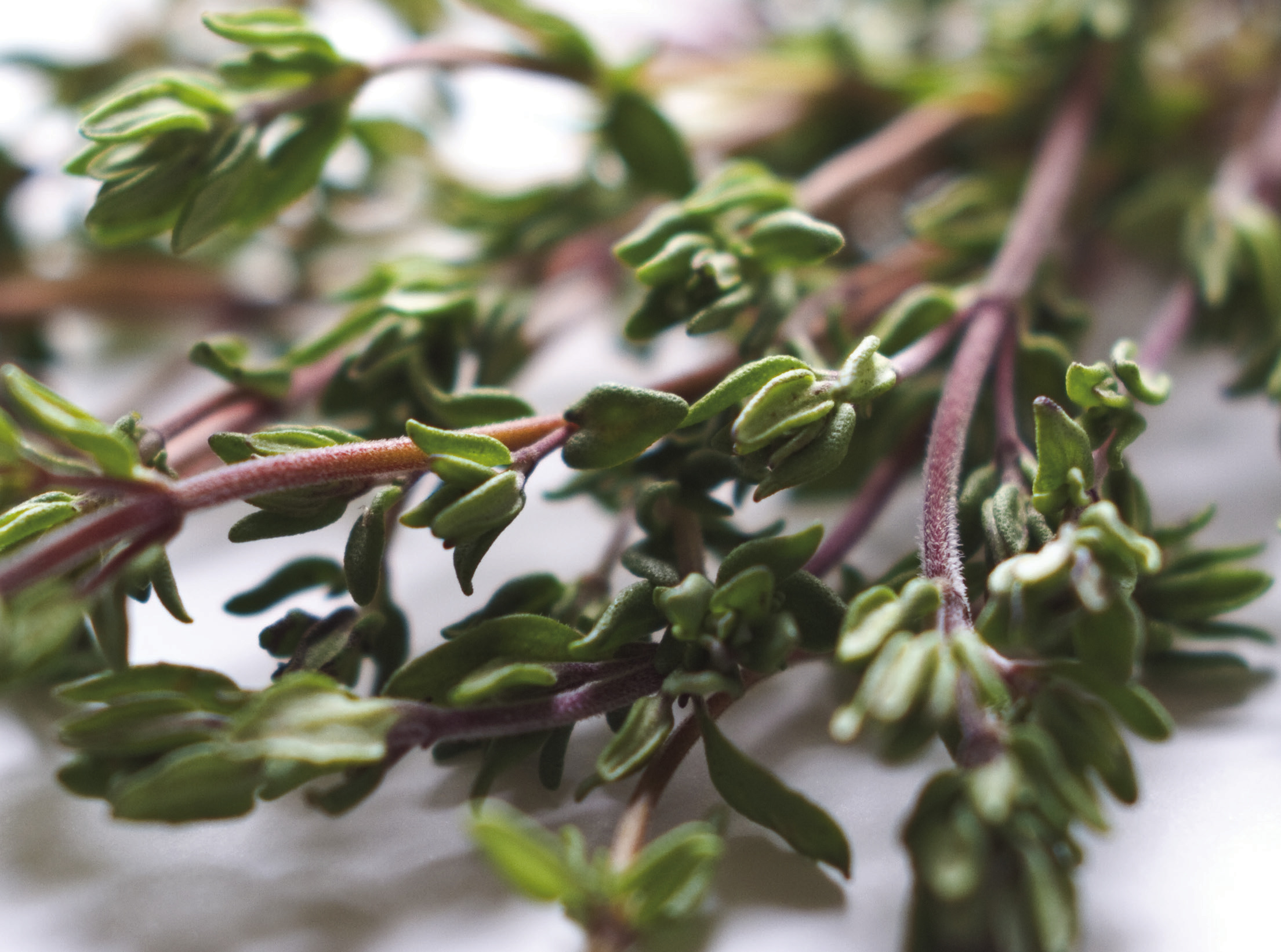
Thyme (Thymus vulgaris) is a small, woody perennial herb belonging to the mint family. Renowned for its pungent aroma and earthy flavor, thyme has played a prominent role in culinary traditions, folk medicine and spiritual practices for thousandsofyears.Withover 300 species, thyme grows abundantlyintheMediterranean region, where it thrives in dry, sunny environments.
Thyme’s history is as rich as its scent. Its name is derived from the Greek word thymon, meaning 'to fumigate' or 'courage,' reflecting its ritual and symbolic significance. Egyptians (c. 3000 BCE), used thyme in embalming practices due to its strong antiseptic properties. Oils infused with thyme were applied to mummies to preserve them.
For the Greeks and Romans, thyme was associated with courage and purification. Greek soldiers bathed in thyme-scented water before battle, believing it would instill bravery.
Romans used thyme to flavor cheese and liqueurs and burned it as incense in their temples and homes. Throughout the middle ages, thyme symbolized courage and protection.
Knights often received sprigs of thyme from loved ones before heading to battle. It was also placed under pillows to ward off nightmares and promote restful sleep.
Thyme is a low-growing shrub, typically six to 12 inches tall. It has small, oval, gray-green leaves and clusters of tiny, tubular flowers that range in color from pale pink to lavender.
The essential oils, especially thymol, carvacrol and linalool, give the plant its characteristic aroma and medicinal properties. Thyme is a cornerstone of many culinary traditions, particularly in France. As a key component of Herbes de Provence and bouquet garni, thyme is used to flavor stews, roasts and soups.
In Italy, thyme blends well with garlic and olive oil in pasta sauces, grilled meats and vegetables. In the MiddleEast,groundthymeis a key ingredient in za'atar, a spice blend used to season meats,breadsanddips.Inthe United States, it is popular in poultry seasoning, especially for Thanksgiving turkey, stuffing and gravies.
Fresh thyme offers a subtle, green flavor, while dried thyme has a more concentrated, earthy taste. Both are versatile, but dried thyme should be used sparingly.
Thyme complements ingredients like lemon, garlic, onions, mushrooms and various meats, especially lamb and poultry. Thyme has long been valued for its healing properties, thanks largely to its essential oil content, particularly thymol, which is antimicrobial, antifungal and antiseptic.
Thyme tea or syrup has been used to treat coughs, bronchitis and chest congestion. Its expectorant qualities help expel mucus and soothe the throat.
Thyme-infused teas or tinctures are believed to relieve bloating, cramping and indigestion, and thyme oil was used to disinfect wounds before the advent of modern antibiotics. In aromatherapy, thyme's scent is believed to uplift mood, ease stress and promote clarity.
Studies show thyme oil is effective against bacteria such as E. coli and Staphylococcus aureus. Thyme contains flavonoids like apigenin and luteolin, which combat oxidative stress.
Thyme essential oil is potent and should be diluted before topical use. Pregnant women and individuals with allergies or certain medical conditions should consult a healthcare provider before using thyme therapeutically.
Thyme’s antibacterial properties make it a natural choice for homemade cleaners and air fresheners. It’s often included in sachets or potpourri to repel pests and freshen air.
Thyme is drought-tolerant, deer-resistantandcanbe used as ground cover. Varieties like creeping thyme are used between paving stones or in rock gardens.
From ancient temples and medieval battlefields to modern kitchens and herbal remedies, thyme has proven itself a versatile and enduring herb.Whetherenhancing a savory roast, soothing a sore throat or scenting a garden path, thyme continues to live up to its historical reputation for resilience, utility and grace. In honor of such an earthy herb, here is a great recipe that I am sure everyone will love.
Lemon & Thyme Roasted Chicken Thighs 4 bone-in, skin-on chicken thighs 2 tablespoons olive oil 1 tablespoon fresh thyme leaves (or 1 teaspoon dried) 2 cloves garlic, minced Zest and juice of 1 lemon Salt and black pepper to taste Preheat the oven to 400°F.
Pat dry the chicken thighs and place them in a bowl or zip-top bag.
In a small bowl, mix olive oil, thyme, garlic, lemon zest, lemon juice, salt, and pepper.
Rub the mixture all over the chicken, making sure to get under the skin if possible.
Place chicken thighs skinside up in a baking dish or oven-safe skillet.
Roast for 35–40 minutes, or until the skin is golden and crispy and the internal temperature reaches 165°F.
Let rest for 5 minutes before serving. Garnish with extra thyme and lemon if desired.