
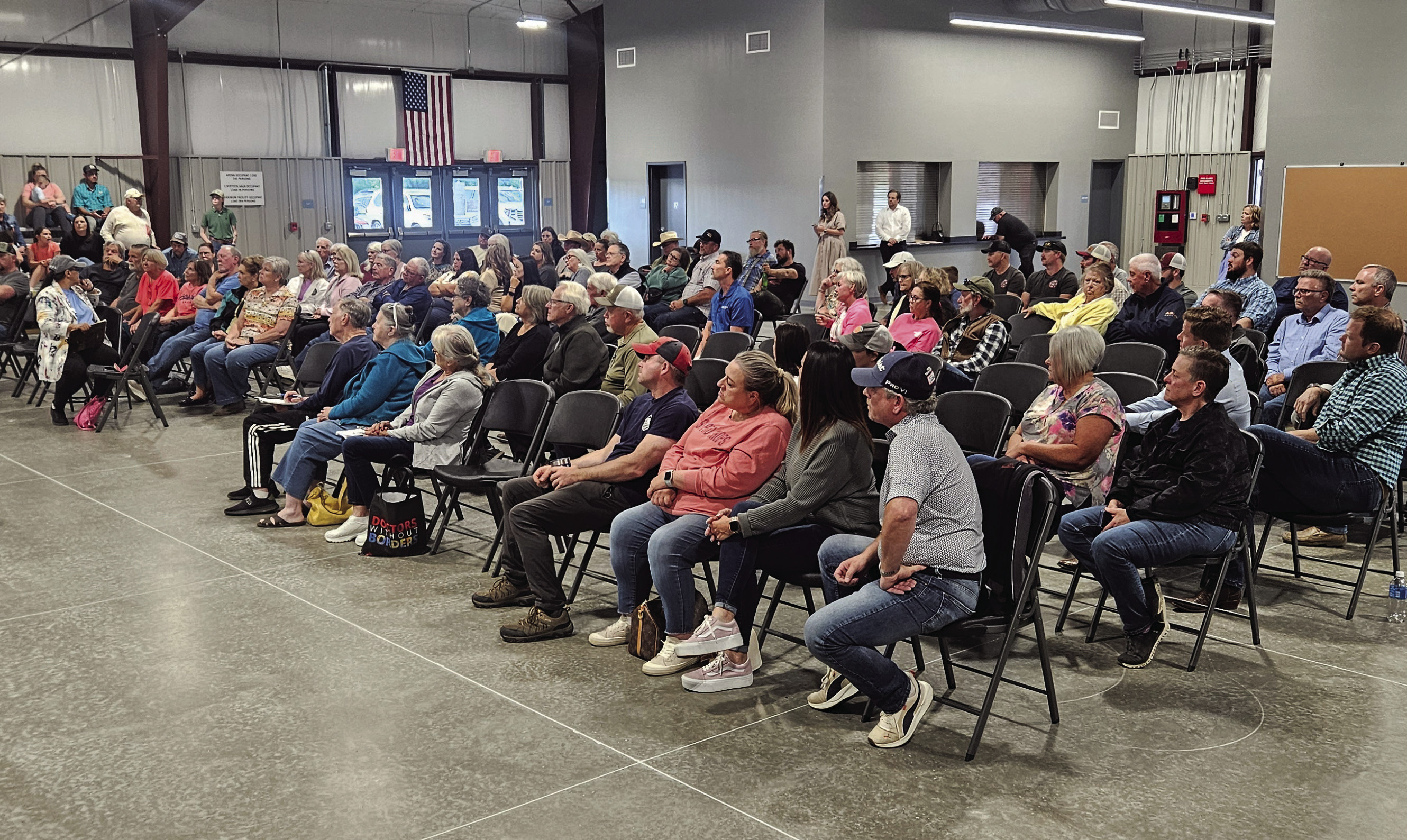
On May 5, 2025, the new Marshall County OSU Cooperative Extension building was filled with concerned citizens, developers and county officials as members of the Marshall County Commissioners, the Tax Increment Financing Review Board and representatives from the Point Vista Development group convened for the first of two required public hearings regarding a proposed TIF district in the Lake Texoma area.
The hearing marked a critical moment in the ongoing debate over the future of economic development in Marshall County. With the proposed TIF aimed at supporting the ambitious Point Vista Development project, a long-discussed plan that includes residential, commercial and recreational components along the Lake Texoma shoreline, this meeting was the public’s opportunity to learn about the specifics of the proposal and make their voices heard.
Attendance at the hearing exceeded expectations, with local residents, business owners, educators, and civic leaders showing up in strong numbers. County officials welcomed the turnout, emphasizing the importance of community involvement in the decision-making process, even though the final vote rests solely with the Marshall County Commissioners.
“This isn’t just a box checking event,” County Commissioner Nick Hartin said during the introduction.. “We want and need to hear from our community. Their questions and concerns help shape the direction we take.”
Following a brief presentation from the Point Vista Development team, which outlined the scope of the project and the financial mechanics of the proposed TIF, community members wasted no time in raising pointed and thoughtful questions. Among the most discussed issues were the anticipated impacts on local water usage and waste management infrastructure.
Given Lake Texoma’s environmental sensitivity and the county’s rural service limitations, several attendees questioned whether current systems could handle a development of this scale.
“How are you going to manage wastewater for a project this size,” asked one resident. “Are we talking about a new treatment facility, or is the county expected to retrofit what we already have?”
Residents were reassured that there are plans for the water treatment plant. The county is planning on building a modular water treatment facility so it can be added on as needed.
Others raised concerns about the project’s impact on local schools. The TIF district would redirect a portion of new property taxes generated within the district back into infrastructure for the development, potentially delaying full revenue benefits for school districts.
“With increased population comes increased enrollment,” said another resident.. “We need to know how and when schools will see those tax dollars if this project proceeds.”
The commissioners answered that the people moving into the new homes will pay property taxes and that will help the schools keep up with the growth.
Officials from the TIF Review Board clarified that the TIF would be structured in stages, with funds disbursed based on specific development milestones. The first stage would primarily focus on core infrastructure such as roads, utilities and public access enhancements.
Importantly, the conversation turned toward what would happen if the TIF was not approved. Developers expressed concerns that without public infrastructure support, the entire project could stall, potentially leaving undeveloped land and unfulfilled economic potential in its wake.
County officials acknowledged this possibility but also emphasized their responsibility to balance long-term growth with short-term fiscal responsibility.
“There’s no guarantee with or without the TIF,” said another commissioner. “But the TIF offers a structured way to build and manage growth in a way that’s transparent and accountable.”
Though the public cannot vote directly on the TIF, the feedback gathered during this and the upcoming second hearing will be reviewed by both the TIF Review Board and the County Commissioners before a final decision is made.
The commissioners are expected to vote later this summer, following additional review and adjustments that may result from the public input process. For now, county officials are encouraging residents to stay engaged and continue submitting questions, either in person at the next hearing or through formal written comments.
“This is your county,” said a representative of the Extension Office as the meeting concluded. “And these decisions shape what it looks like five, ten, twenty years from now. Your voice matters.”
The second public hearing date has been scheduled for May 19, 2025.