
Hypnotism, the act of inducing a trance-like state in individuals, has long fascinated both scientists and entertainers alike. Its history spans centuries, with applications ranging from medical therapy to stage performances.
The concept of hypnotism dates to ancient civilizations. The Egyptians and Greeks practiced forms of trance induction for religious and healing purposes.
In the 18th century, Franz Anton Mesmer, an Austrian physician, introduced the theory of 'animal magnetism,' which laid the foundation for modern hypnotism. Mesmer believed that a mysterious force could influence human behavior and health, a concept that was later debunked but sparked interest in altered states of consciousness.
In the 19th century, James Braid, a Scottish surgeon, coined the term 'hypnotism' and shifted the understanding of trance states from mystical forces to psychological phenomena. His work inspired further research into the nature of suggestion and the unconscious mind.
In the 20th century, Sigmund Freud briefly explored hypnosis before focusing on psychoanalysis. Over time, hypnosis gained credibility as a therapeutic tool in medicine and psychology, particularly for pain management and behavioral therapy.
Parallel to its medical applications, hypnotism became a popular form of entertainment. In the 19th century, stage hypnotists began captivating audiences with demonstrations of mind control and suggestion.
Performers such as Jean-Martin Charcot and James Esdaile showcased hypnotic states to both scientific and general audiences. By the 20th century, hypnotism was a staple in vaudeville shows and television programs.
Hypnotists like Ormond McGill and Paul McKenna gained fame for their ability to make volunteers perform amusing or unusual tasks under suggestion. Today, stage hypnosis remains a popular act in comedy clubs, magic shows and even reality television.
Despite its entertainment value, stage hypnosis has faced ethical scrutiny. Critics argue that participants may be vulnerable to embarrassment or psychological distress. To address these concerns, professional hypnotists follow ethical guidelines, ensuring that participants engage voluntarily and without harm.
Hypnotism has evolved from ancient spiritual practices to a respected scientific and entertainment phenomenon. While it continues to serve therapeutic purposes, its enduring appeal in entertainment highlights the human fascination with the power of the mind.
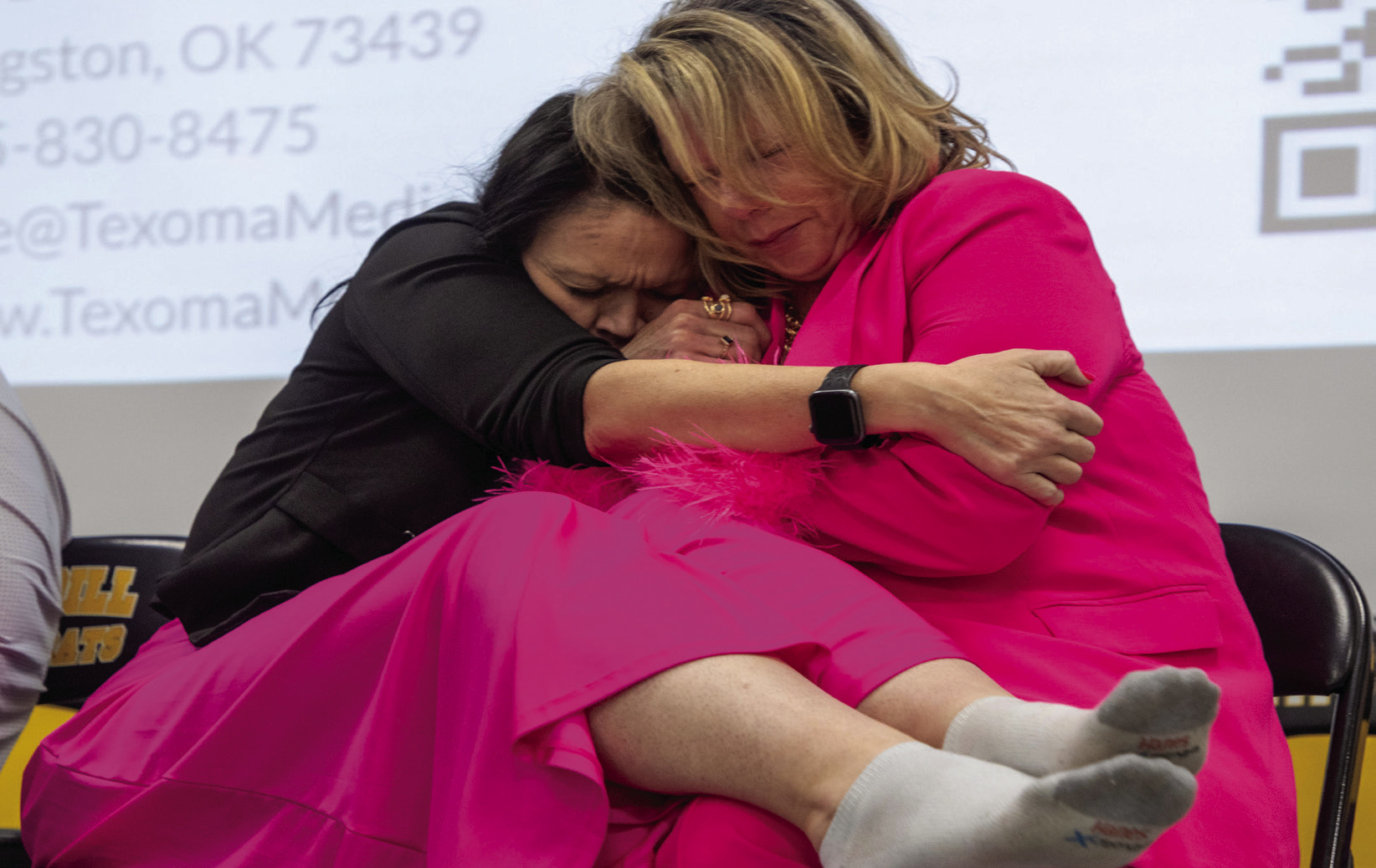
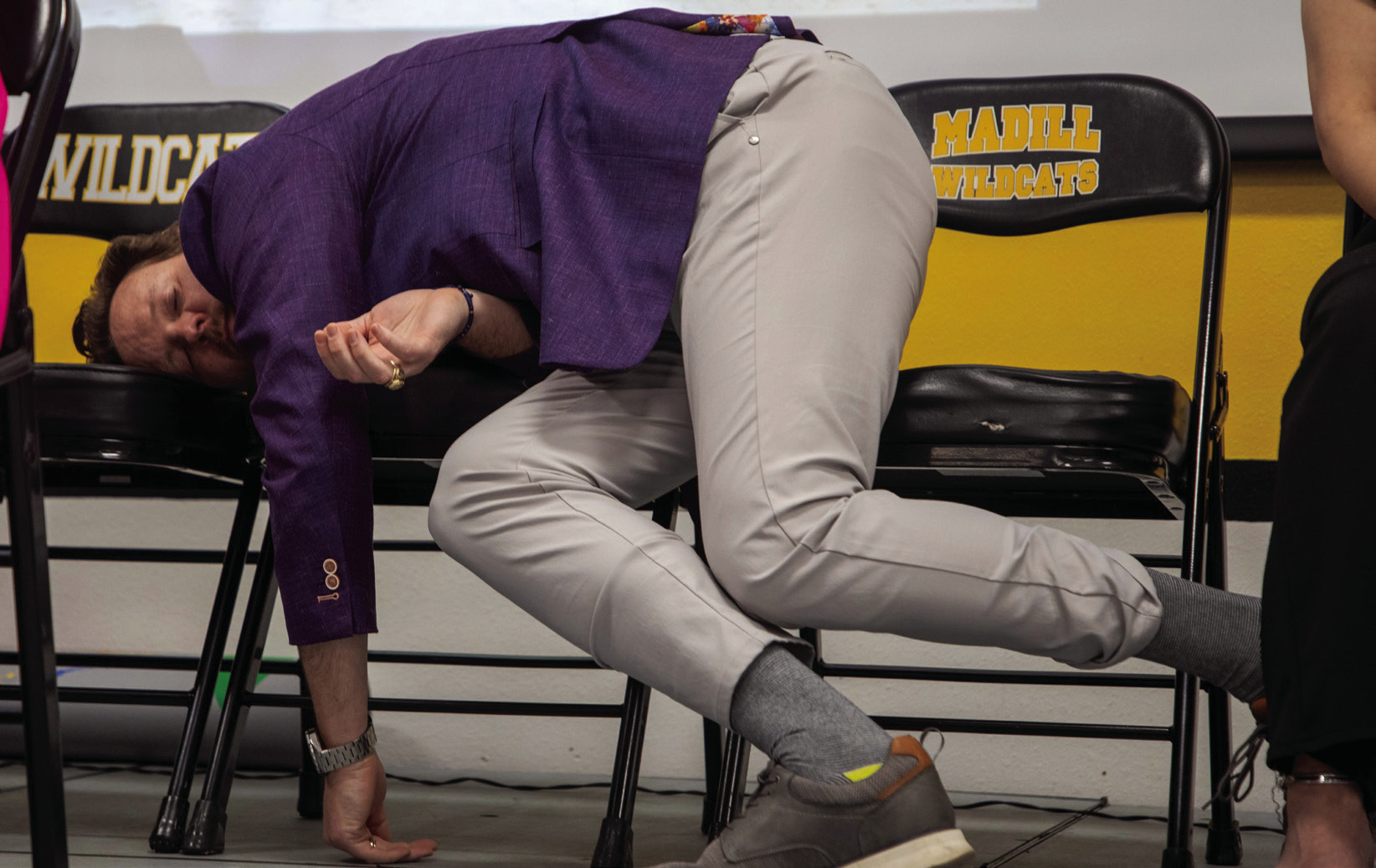
One such performer was recently invited to showcase his talents at the Marshall County Chamber of Commerce annual award banquet and silent auction. Micheal Mayo, Hypnotist, called several members of the audience up stage to be part of the hypnotic event.
Mayo introduced himself to the audience nd explained what hypnotism is, and what they could expect from his show. Once Mayo called the willing participants on stage, he began to put them under his spell.
Under Mayo’s instruction, participants began to relax and fall into a sort of hypnotic slumber. Mayo then had the participants believe that they were relaxing on the beach fanning themselves and drinking margaritas as the waves flowed over their feet. This brought laughter and cheers from the family and friends watching.
Once the seaside festivities had ended, the main purpose of the chamber’s evening was to recognize key people and outstanding businesses within the community. These awards highlight the dedication and contributions of local businesses and individuals to the Marshall County community.
Summer Bryant was awarded the Raymond Gary Leadership Award, Sami Jo Runyan received the Katye Hayward Volunteer Award, Kathy Germany was named the Humanitarian of the Year and Donny Raley received the Brandon Jacks “Mr. Wildcat” Award. CM Truck Beds received the Community Service Award, Gecko’s at Lake Texoma received the Community Investment Award, Lake Life Heating and Air received the Small Business of the Year Award and Banc 1st was the Large Business of the Year.
LeeAnn Callicoat and Randy Monroe both received Special Appreciation plaques for everything they havedone throughout the year. Bria Tyner sang the National Anthem while Buddy Tyner played the guitar.