
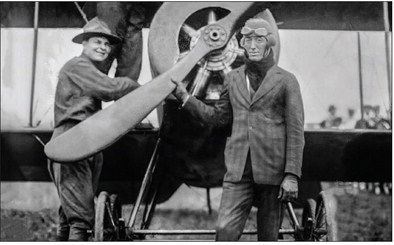
For centuries, humankind has been captivated by the idea of soaring through the skies. From ancient myths to modern aerospace innovations, the dream of flight has fueled imaginations, inspired groundbreaking inventions, and transformed how people travel and explore the world. The journey from fantasy to reality has been a remarkable testament to human ingenuity, perseverance, and the relentless pursuit of progress.
The earliest references to human flight can be found in mythology.Oneofthemostfamous legends is that of Icarus and Daedalus, the father and son who attempted to escape imprisonment using wings made of feathers and wax. While Icarus's tragic downfall served as a warning against hubris, the tale reflected humanity’s profound desire to defy gravity.
Other cultures also imagined airborne travel. Ancient Chinese inventors experimented with kites over 2,000 years ago, while the Islamic polymath Abbas Ibn Firnas is believed to have conducted one of the first recorded flight experiments in 9th-century Spain. Although unsuccessful, these early attempts set the stage for future pioneers.
The Renaissance period marked a resurgence of interest in flight, spearheaded by visionaries like Leonardo da Vinci. His intricate sketches of flying machines, such as ornithopters and parachutes, showcased a scientific approach to achieving flight. Although da Vinci’s designs wereneverconstructedduring his lifetime, they inspired future aeronautical engineers.
By the 18th century, the Montgolfier brothers in France successfully launched the first hot air balloon in 1783, demonstrating that humans could ascend above the earth under controlled conditions.Thisbreakthrough represented the initial step toward achieving powered flight.
Since humankind first dreamed of flight, the United States has been at the forefront of turning those dreams into reality. The turning point in aviation history occurred on December 17, 1903, when Orville and Wilbur Wright accomplished the first controlled, sustained flight in a powered aircraft at Kitty Hawk, North Carolina. Their Wright Flyer, a biplane powered by a lightweight engine, remained airborne for just 12 seconds— but those seconds changed the world. The Wrights' meticulous experimentation with aerodynamics, propulsion, and control mechanisms laid the foundation for the rapid advancement of aviation technology.
The Wright brothers’ success resulted from meticulous research in aerodynamics, engine design, and flight control systems. Their pioneering work laid the foundation for the rapid development of aviation in the 20th century.
Through their innovation and courage, American aviation pioneers laid the foundation for modern air travel and advancements in aerospace technology. Among thesetrailblazers,namessuch as Orville and Wilbur Wright, Charles Lindbergh, Ruth Law, and Amelia Earhart often take center stage. However, a lesser-known aviator from Marshall County played a crucial role in shaping the history of flight. In fact, that young boy from Marshall County may have contributed even more significantly to the advancement of aviation thanmanyofthemostfamous names mentioned above.
Overton Martin “Rusty” Bounds was born on January 15, 1895, in Woodville, Indian Territory, to James Hicklin Bounds and Francis “Fannie” Martin Bounds. Bounds’ father was a renowned rancher in Indian Territory who founded and operated the Bounds“Y-Bar”Ranch,which spanned southeastern Pickens County in the Chickasaw Nation. This area included most of what is now known as Marshall County, established upon statehood in 1907. Portions oftheoldBounds“Y-Bar” Ranch headquarters still exist todayatthecornerofHighway 70A and Bounds Road, just a mile northwest of Kingston. (More on that in an upcoming article.)
Bounds attended Kingston School as a child and later enrolled at Austin College in Sherman, Texas, in 1913 before transferring to the University of Oklahoma in Norman. While in Kingston and subsequently at Austin College and OU, he excelled as anathleteinbothbaseballand football.Hisaccomplishments in baseball garnered recognition throughout Marshall County, southern Oklahoma, andnorthernTexas.Although records are scarce, it appears that Bounds played professional baseball briefly before starting his aviation career.
Like many young men before and after him, Bounds gazed at the skies with wonder, imagining what it would be like to soar like the birds. He dreamed of leaving the bounds of the earth and soaring through the clouds above. But unlike most who only dreamed, Bounds did fly over the skies of Marshall County and into the record books of history.
In late 1914, at 19, Bounds traveled to California to attend the Schiller School of Aviation and learn to fly. Harry Schiller founded the Schiller School of Aviation in late 1912, operating from a room at the California Hotel in Los Angeles. In May 1914, Schiller relocated his school to an airfield in Venice, California, where Bounds learned to fly. However,whenIsay,“Bounds learned how to fly,” it wasn’t due to training from Schiller. From news reports, it seems that Schiller did little more than take students’ money and provide an airplane. It is said that Schiller neither “trained” nor “instructed” his students, simply offering an airplane and leaving them to their own devices. Thus, Schiller’s early students, including Bounds, were compelled to teach themselves to fly, and that is precisely what Bounds did. He learned to fly independently, and the skills he eventually mastered were by his effort. And master them, he did.
In late April 1915, Bounds left the Schiller School of Aviation and returned to Kingston, having completed his training. On May 5, 1915, the Aero Club of America (ACA) issued Bounds pilot’s license number 322. Established in 1905, the Aero Club of America (ACA) was the first aviation governing body in the United States. It played a vital role in the early development of American aviation, overseeing pilot licensing, promoting air sports, and setting aviation records before federal regulation took over. Before the U.S. government began regulating aviation, the Aero Club of America was responsible for issuing the nation’s first pilot licenses. These licenses were internationally recognized by the Fédération Aéronautique Internationale (FAI), the world's governing body for aviation records and standards. Some of the earliest American pilots, including Orville Wright and Glenn Curtiss, were licensed through the ACA.
The ACA was instrumental in establishing aviation records in the U.S., tracking achievements in altitude, speed, and distance flights. Additionally, it organized early air races and public exhibitions, helping to popularize aviation and inspire new generations of pilots.
During World War I, the Aero Club of America was crucial in supporting military aviation. It assisted in recruiting and training pilots for the U.S. military and influenced the formation of the Army Air Service, the predecessor of the U.S. Air Force. The ACA's efforts helped to professionalize military aviation and prepare the United States for aerial warfare.
With the passage of the Air Commerce Act in 1926, the responsibility for aviation regulation, including pilot licensing and aircraft certification, shifted to the U.S. Department of Commerce. As a result, the Aero Club of America gradually lost its regulatory role. Many of its functions were absorbed into federalagenciesandthenewly formed National Aeronautic Association (NAA), which continues to oversee air sports and aviation records today.
Before receiving his license, Bounds left Kingston and traveled to New York to purchase his first airplane. Upon returning from New York with his new custombuilt airplane, Bounds, along with J. E. McMillan and W. H. Baldwin, both from Madill, founded the “Bounds Aeroplane Company” in Madill. TheSecretaryofStateofOklahoma issued the corporate charter for Bounds Aeroplane Company on May 15, 1915.
The Bounds Aeroplane Company was Oklahoma’s firstcorporationestablishedto build, sell, exhibit and fly airplanes. Its capital was $3,500, which, in today’s dollars, amounts to about $110,000. After founding his company andpurchasingacustom-built airplane, Bounds began traveling around Oklahoma and Texas to market his company and flying in general. Shortly after returning to Kingston with his plane, Bounds made six flights at the Texas School of Aviation grounds. He then gave an exhibition at the Labor Day Picnic at Sherman on September 6, 1915. Then, on September 18th, 1915, he performed exhibition flights at the Marshall County Fair.
Writing about Bounds’ appearance at the Marshall County Fair, the Daily Ardmoreite wrote the following on September 13, 1915. “Young Bounds is said to do some sensational stunts, and while he lays no claim to be an 'Art Smith,' yet he is capable of pulling off a few thrillers that will make the spectators gasp for breath. He will make his first flight in the new machine at the Marshall County Fair on Saturday, September 18th.”
OnSeptember16,1915,the Muskogee Times-Democrat proclaimed,“OvertonBounds, a farmer boy living south of Madill, in Marshall county, has been spending some time in California learning the art of flying and will pilot an aeroplane in flights during the Marshall County fair, which is going on this week. It is not very often that a county fair canadvertiseanaviationexhibition andpointtothefactthat the exhibition is in the hands of local talent.” Overnight, Bounds became an aviation sensation in Oklahoma.
Just a week later, Bounds was flying in county fairs across Oklahoma. He next appeared at Hydro, Oklahoma, for the Caddo County Fair. The Kingfisher Daily Free Press, wrote, “Overton Bounds, the 18-year-old aviator of Madill, who exhibited four of the prettiest flights ever seen in this part of the country during the fair, started this afternoon for Carnegie, where he will give exhibitions Friday.Thedistance,33miles, was expected to be made in a very short time by Bounds, as his new biplane was in perfect condition.”
As part of his efforts to push flying as a means of travel, Bounds began competing in races against automobiles on tracks and cross-country. On September 17, 1915, the Daily Oklahoma wrote about the Carnegie race, “Overton Bounds, flying in a biplane, defeated L. P. Cross, who traveled in an automobile in a race from Hydro to Carnegie Thursday afternoon. The distance is thirty-four miles, which the biplane traveled In fifty minutes. The automobile arrived one hour and forty minutes later. Bonds lives at Madill, owns the biplane and is giving exhibitions of flying at fairs in Oklahoma. He made several flights during the fair, which are in progress at Hydro.”
Because of his popularity at county fairs, Bounds was invited and became a featured performer at the 1915 Oklahoma State Fair in Oklahoma City. His act was so popular, the State Fair began a large, media marketing campaign advertising Bounds’ flying act. The September 28th 1915 issue of the Oklahoma Daily Live Stock News wrote, “Overton Bounds of Madill, Oklahoma, one of the youngest and most daring aviators in the United States, will arrive in Oklahoma City today to make aeroplane flights for the State Fair visitors. This announcement was made by the State Fair management Monday night, shortly after it became definitely known that the famous Oklahoma visitor would come to the city.”
On September 29, 1915 the Daily Oklahoman wrote about Bounds and his act, “A great big treat is in store for every visitor to Oklahoma's wonderful fair and exposition Wednesday. The day is Oklahoma City day, always a time when practically everybody in the city goes out to the fair to whoop 'em up for a big, jolly time. The greatest program since the fair opened has been arranged for the day, including seven automobile events inwhichJohnnyRaimey,Wild Bill Endicott and other worldwide famous speed demons will race; the dare-devil flying of Miss Ruth Law, America's most noted aviatrix, and the parachute drop from her machine; and the upside down flying of Overton Bounds of Madill, Okla., one of the country's most daring aviators.”
The Tulsa World wrote the following on September 30, 1915. “The usual hippodrome acts were staged between races, and at 4 o'clock, Miss Ruth Law again thrilled the crowd with her wonderful performance in the air. The parachute drop from her biplane by an assistant was made directly in front of the grandstand. Afterward, Overton Bounds of Madill, Oklahoma, gave a splendid exhibition flight in his Day Tractor biplane. He soared high in the air, did the dip of death, the air tango and flew upside down. The two airship attractions will be seen tomorrow and the next day for the last time at the fair.”
During the State Fair, Bounds performed several shows with Ruth Law, the most famous female pilot in the world at that time, and Bounds and Law became friends and Law provided Bounds with a great deal of encouragement and insight in flying.
Ruth Law (1887–1970) was a pioneering American aviator known for her daring flight records, aerobatic skills, and contributions to aviation history. Dubbed the “Queen of the Air,” she was one of the most accomplished female pilots of the early 20th century, inspiring future generations of women in aviation.
Born in Massachusetts, Ruth Law developed an early interest in aviation. In 1912, shepurchasedaWrightModel B aircraft and trained under the Wright brothers despite their initial reluctance to teach women. She quickly gained a reputation for her fearless flying and technical skills.
Law made history in 1916 when she set a new American non-stop distance record by flying 590 miles from Chicago to Hornell, New York, surpassing the previous record held by the famous aviator Victor Carlstrom. This flight established her as one of the most capable pilots of her time.
She was also the first woman to perform a loop-theloop stunt, a highly dangerous aerobatic maneuver at the time, proving her exceptional flying ability.
During World War I, Law sought to fly in combat for the U.S.military,butwomenwere not allowed to serve as pilots. Instead, she supported the war effort by performing flight demonstrations to promote military aviation and inspire public support. Her efforts helped open doors for women in aviation, though it would take decades for the military to accept female pilots.
After the war, Law continued to perform in airshows and exhibitions, thrilling audiences with her aerobatic stunts. She retired from flying in the early 1920s but advocated for women in aviation.
While performing at the State Fair, Bounds agreed to two special events. One was a race with a Santa Fe steam locomotive, and the other was performing Oklahoma’s first “air mail” flight and drop. The Oklahoma News wrote about the events on September 30, 1915. “All was ready at 3:00 Thursday afternoon for The News airship delivery to Britton, inwhichOvertonBounds, Madill, Oklahoma aviator, was to race the Santa Fe over the nine-mile stretch. Paul Fugit, News agent at Britton, was at the station there, prepared to flag the aviator with a white sheet, and thereby, properly direct his drop of the papers. Bounds figured that he couid rake the trip end return within 20 minutes, proper weather prevailing.”
“At the fairgrounds, a signal system whereby Bounds wastostartonthedotwiththe Santa We had been perfected. Only bad weather coming up between 3:00 and 3:45, the time the Santa Fe is due to pull out would prevent the unique 'stunt.' The Britton paper bundles were to be rushed to the fairgrounds in an automobile, delivered to the aviator in front of the grandstand, and started on their Journey thru the ozone.”
As part of the race, Bounds flew newspapers from the State Fair grandstands to Britton, Oklahoma, where he successfully dropped them fromtheairtotheNewsAgent and returned to the fair. Additionally, Bounds beat the train to Britton. His stunt was a success. Following the State Fair, Bounds performed at countyfairsacrossOklahoma, performing numerous deathdefying stunts and races.
Because of his popularity and success as an aviator, Bounds became a stockholder and instructor at Robert’s Aviation School in Okmulgee, Oklahoma. He became a household name in aviation, and his services were in high demand nationwide.
Then, on November 24, 1915, Bounds became the first aviator in United States history to perform a stunt known today as “skywriting.” The plan was for Bounds to fly over the University of Oklahoma vs. Oklahoma State football game to be played in Stillwater, and at half-time, he was to write the half-time score in the air with smoke pots attached to his plane. TheOklahomaNewsreported the following on November 24, 1915. “Overton Bounds, the aviator who thrilled the crowds at the last state fair, will give the first demonstration of aerial illustration ever made in the state when he flies between halves at the Oklahoma-Aggie game at the fairgrounds Thursday afternoon, describing in his flight the score of the game at the end of the first half by means of smoke pots attached to his machine.Thesmokepotswith which Bounds will write the score in the air were secured from Art Smith following the latter flights at the Dallas state fair.”
“The smoke is heavy and hangs in the air several minutes. Bounds stated Wednesday that if Thursday is a clear day he will loop the loop, something he promised to do during the state fair but was prevented because of bad weather. Bounds himself is a former Oklahoma University student, and his appearance at the Sooner game accordingly has a peculiar attraction to those interested in state school affairs.”
“He was the flier who made the News delivery trip to Britton and return during the state fair, beating the northbound Santa Fe, with which he started on signal, to Britton. He delivered a bundleofOklahomaNewsand returned, making the 1-mile round trip in 21 minutes.”
Following the game, the Oklahoma News reported on November 15th, “A strong north wind Thursday afternoon spoiled a great climax to a great exhibition of flying by Overton Bounds, Oklahoma's young aviator, at the Sooner-Aggie football game. Bounds ascended between halves of the game and held the great crowd in awe as he executed a spectacular spiral, gliding drop straight down from an altitude of about 1000 feet. When the score stood 26 to 7 for the Sooners, Bounds arose once more, with a smoke-pot attached to his brown biplane. With the red and white of Oklahoma University, his old school, streaming from the planes, he went about 600 feet in the air and described a perfect '2,' but before he could make the other figures, the smoke was dissipated by the wind.”
Although he could not finish writing the entire score due to the wind, Bounds executed the first “skywriting” stunt in American history by inscribing a perfect number “2.” And with that, Bounds became a household name across Oklahoma.
From that point forward, Bounds would become known across America as one of the greatest aviators in the country, and his skills and abilities wouldbecomeinhighdemand. And he would one day invent a safety feature for airplanes still in use today. More on that in Part II next week.