
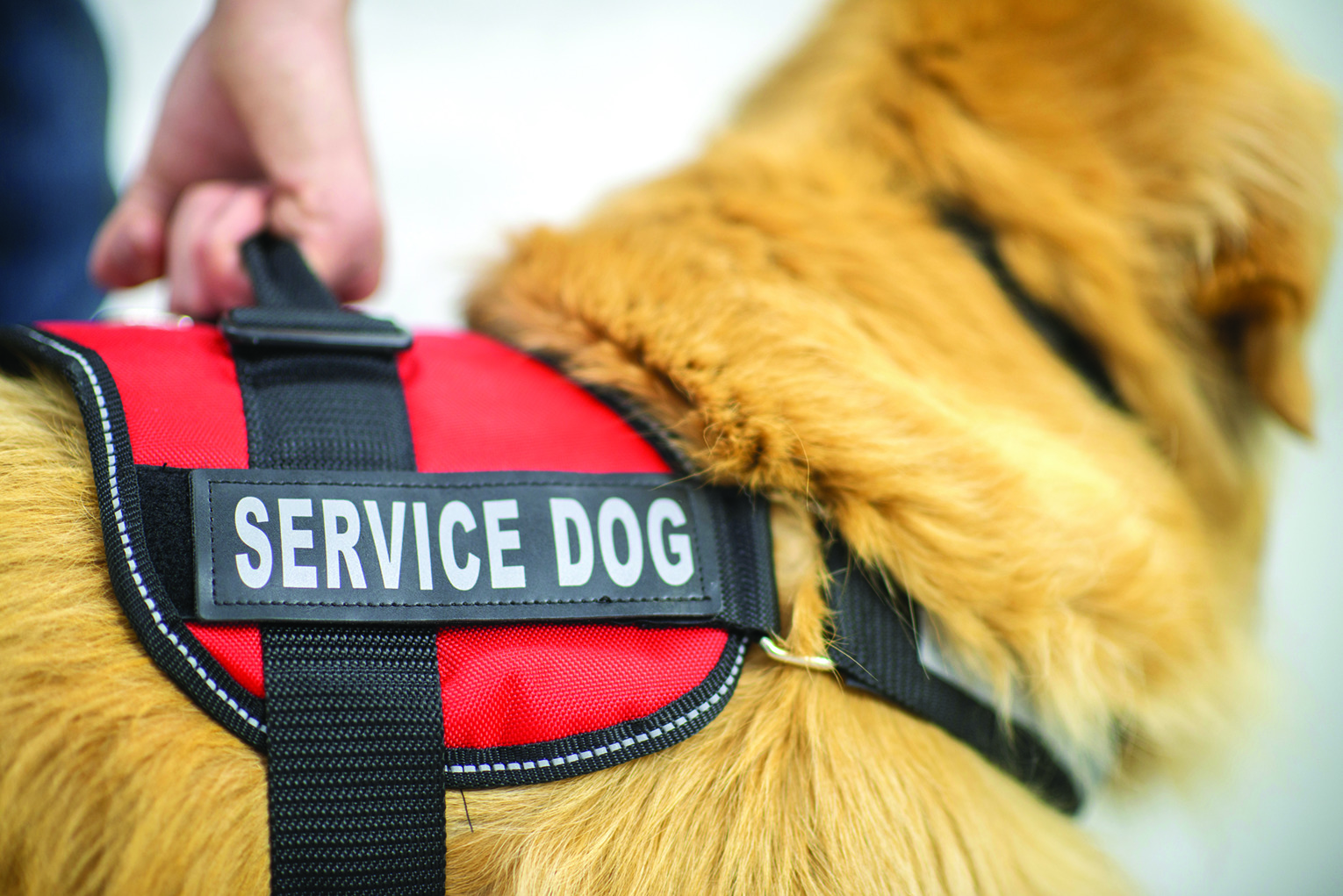
In the past, a service dog was typically only seen assisting somebody who was visually impaired. So much so that they were dubbed as “seeing eye dogs” or “guide dogs.”
Even though it is unknown just when and how dogs began working as service dogs, the idea has picked up steam in the past few years, or so. Many people rely on service dogs for a multitude of reasons.
According to the American Kennel Club, “A service dog helps a person with a disability lead a more independent life.” The Americans with Disabilities Act (ADA) defines a service dog as “a dog that is individually trained to do work or perform tasks for a person with a disability.”
A service dog is trained to assist their owner when the owner’s disability prohibits them from completing the task on their own. The service dog can also be trained for other tasks.
Other things that a service dog can be trained for are as hearing dogs. They alert their handlers to important sounds, such as alarms, doorbells, and other signals. Guide dogs, which help visually impaired navigate unfamiliar terrain.
Psychiatric service animals assist their handlers manage mental and emotional disabilities such as providing calm during high anxiety events or panic attacks. Seizure alert animals alert the handlers of impending seizures and typically guard them during the seizure or corral them to a safe spot, so they do not get injured during the seizure.
Allergen alert animals let their handlers know if they are in close proximity to any foods or substances the handler might be highly allergic to, like peanuts.
Even though service animals have become extremely commonplace over the past year, some businesses do not know the regulations pertaining to the person with a disability and their service dog. The biggest stigma for bringing a service animal into a public place is knowing that many businesses have a no animal policy, even though a service animal is different.
Take restaurants for example, a customer would not be able to carry in their Chihuahua in their purse just because the bow matches the owner’s purse. However, if the Chihuahua had a specific duty that assisted the owner with a disability, then the dog could arrive in style with the matching collar.
The ADA has clear instructions on their website about where the service animal is allowed to enter with their handler.
“Under the ADA, State and local governments, businesses, and nonprofit organizations that serve the public generally must allow service animals to accompany people with disabilities in all areas of the facility where the public is allowed to go.”
Some people utilize emotional support animals, and there is a difference between the two types of animals. An ESA does not perform a specific tax for the handler. They are typically used for support and to ease anxiety, depression, and some phobias. Emotional support animals are not protected under ADA regulations. Businesses are typically requested to offer “reasonable accommodations” for people with emotional support animals. Airlines no longer accommodate emotional support animals like they do service animals.
The ADA and HIPPA restrict businesses from asking an individual with a disability for proof or what their disability entails. There are restrictions on inquiring about a service animal, as well, except for two instances.
“When it is not obvious what service an animal provides, only limited inquiries are allowed. Staff may ask two questions: (1) is the dog a service animal required because of a disability, and (2) what work or task has the dog been trained to perform,” according to the ADA. “Staff cannot ask about the person’s disability, require medical documentation, require a special identification card or training documentation for the dog, or ask that the dog demonstrate its ability to perform the work or task.”
Allergies to the animal or fear of it is not a valid reason for the business to deny service to the individual. Businesses are also prohibited from isolating the individual and service animal from other patrons, treated worse than other patrons, or charge extra fees because of the animal.
Surprisingly, miniature horses can be trained to be service animals. Even they are protected under the ADA regulations. They must be housebroken, be under the handler’s control, be small enough for the business to accommodate the animal, and not be a safety risk to other patrons.