
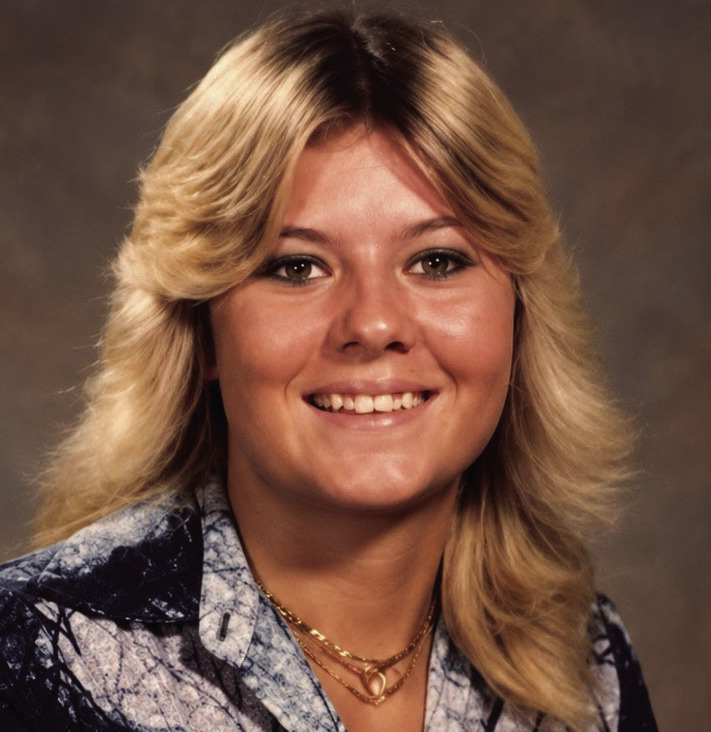
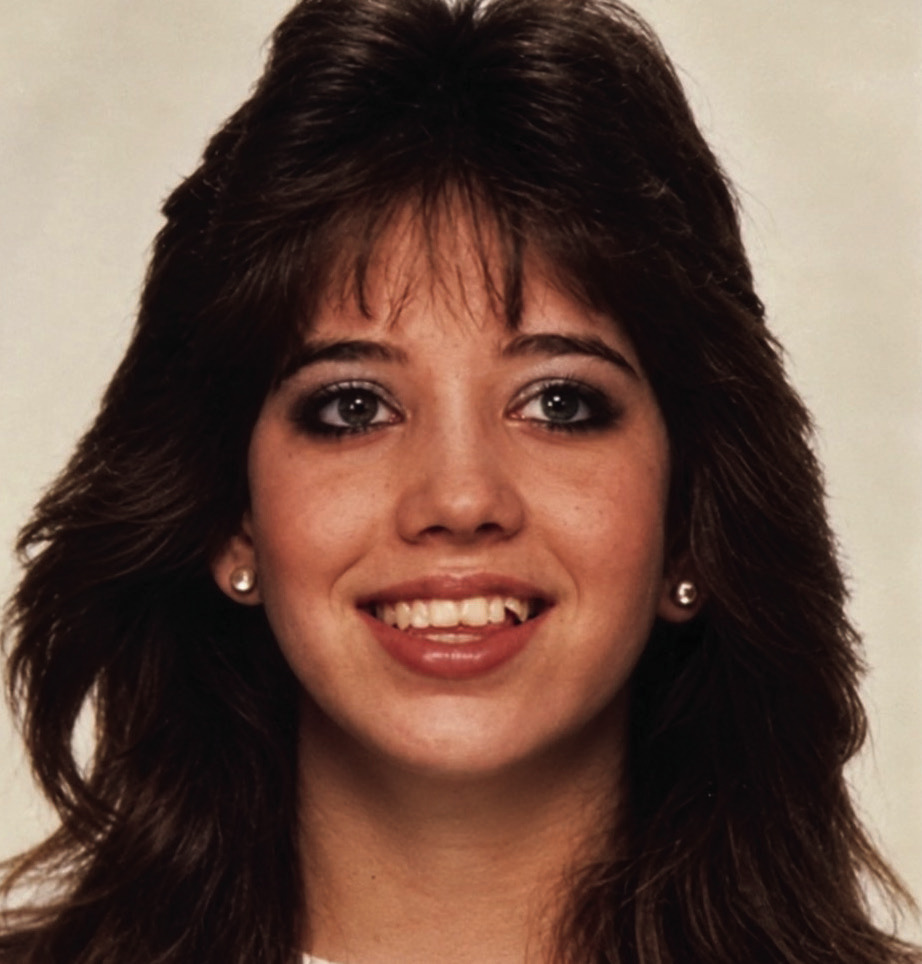
When we left off with the story of Cheryl Genzer and Lisa Pennington last week, the two sisters had finally been found. For 27 days, Rocky and Charlette Pennington had lived without knowing what had happened to their daughters. On October 20, 1987, a car salesman demonstrating a fourwheel-drive vehicle and his prospective customer drove into an undeveloped field in northwest Oklahoma City and discovered two shallow graves. The following day, the remains were identified as Cheryl, 25, and Lisa, who had turned 17 while she was missing. Both had been shot in the head. The search for the two missing sisters was over, but a far more difficult search had begun: finding the person or persons who had killed them.
Police were not starting with a blank sheet of paper. Investigators already knew something about Cheryl and Lisa’s final hours. They knew the sisters had spent part of the evening of September 23 at the Oklahoma State Fair with two men. One was Douglas Eugene Lawson, who worked at the fair operating the monorail. The other was Lawson’s friend, Lane Russell Henley III. Investigators had information that the four left the fairgrounds together and eventually went to Henley’s residence. Henley was not some unidentified stranger whose name surfaced years later. Rocky Pennington had spoken with him while trying to find his daughters, and Henley acknowledged that Cheryl and Lisa had been at his residence, although he maintained that the sisters had left.
Circumstances naturally drew investigators’ attention to Henley. Later reporting placed the burial site less than a mile from his residence, and Cheryl and Lisa had been in his company during their final known hours. But those facts, however suspicious they might appear, did not establish that Henley murdered them. Police could place the sisters with Lawson and Henley. They could place them at Henley’s residence. They had two bodies buried relatively nearby. What they apparently did not have was an eyewitness who claimed to have seen Henley attack the sisters, a confession from Henley, or physical evidence conclusively identifying him as their killer. Henley denied killing Cheryl and Lisa, and for nearly three years no one was charged with their murders.
That changed dramatically in 1990, when Douglas Lawson told investigators a very different story. Lawson was himself facing three felony drug charges when he began cooperating with authorities, and those charges were eventually dismissed in exchange for his testimony against Henley. That fact would become enormously important because Lawson was not simply a disinterested witness who suddenly remembered something he had forgotten. He stood to gain substantially by cooperating with prosecutors. That circumstance did not necessarily mean his account was false—criminal cases are frequently built in part upon testimony from witnesses who receive consideration from the State—but it gave Henley’s attorneys an obvious and potentially powerful subject for crossexamination.
According to the account Lawson eventually gave authorities, he and Henley met Cheryl and Lisa at the State Fair and left with them. The four went to another residence and later to Henley’s home, and Lawson described an evening involving beer, marijuana and cocaine. He said that at some point he passed out. When Lawson claimed he awakened, however, his account became considerably darker. He said Cheryl was confronting Henleyoveranallegedsexual assault upon Lisa. Lawson claimed he then saw Henley strikeCherylwithahandgun and hit Lisa with a shovel before forcing the sisters into a vehicle and driving away with them. Contemporary reporting subsequently described Lawson’s allegations in essentially those terms.
It was a devastating account if it was true. For almost three years, investigators had possessed circumstances that generated suspicion but apparently lacked a witness who could connect Henley directly to violence against the sisters. Lawson now claimed he was that witness. His new account placed HenleyattackingbothCheryl and Lisa shortly before they disappeared and were murdered. But the distinction is important:Lawsonsaidthese things happened. Henley denied killing the sisters, and no jury ever determined that Lawson’s account was true. That distinction would become critical before the case was over.
On August 28, 1990, prosecutors filed two counts of first-degree murder against Lane Russell Henley III. Henley, who was then living in Texas, was returned to Oklahoma to face the charges. Nearly three years after CherylandLisadisappeared, Rocky and Charlette Pennington finally saw someone formally accused of murdering their daughters. What had been a cold investigation suddenlyappearedtobemoving toward a courtroom.
The case eventually reached a preliminary hearing in March 1991. A preliminary hearing is not a criminal trial, and prosecutors were not yet required to prove Henley’s guilt beyond a reasonable doubt. The question was whether the State had presented sufficient evidence to establish probable cause that the crimes had been committed and that Henley hadcommittedthem.Lawson testified, supplying the narrative prosecutors needed to connect Henley directly to violence against the sisters, andthejudgeorderedHenley to stand trial on the two murder charges. The March 30, 1991,DailyOklahomansummarized the development in its headline: “Murder Trial OrderedinSlayingsofSisters Who Vanished at Fair.”
A trial now seemed likely, but the prosecution had a weakness from the start. The State’s most important witness had not told this story in 1987. He had given it years later while facing serious criminal charges of his own, and prosecutors had agreed to dismiss three felony drug charges in exchange for his cooperation. A defense attorney would inevitably ask why Lawson waited nearly three years, why his account changed, why jurors should believe this version rather than what he said earlier, and precisely what he received from the State in exchange for telling it. None of those questions necessarily established that Lawson was lying. Prosecutors routinely use witnesses with criminal histories, who initially lied to investigators, orwhoreceivedconsideration in exchange for cooperation. Sometimes those witnesses are telling the truth and sometimes they are not. The critical questions are whether their testimony can be independently corroborated and whether a jury can ultimately believe it beyond a reasonable doubt.
There was physical evidence in the case, and nearly four decades later, that evidence remains one of the most intriguing aspects of the State Fair murders. Materials presented during the Oklahoma Senate’s 2025 cold-case study included an unusually detailed inventory of items associated with Cheryl and Lisa. According to that presentation, evidence associated with Lisa included scalp and pubic hair, a fingernail, clothing, a full scalp-hair sample, jewelry and the bullet recovered from her cranial vault. Evidence associated with Cheryl included scalp and pubic hair, fingernails, clothing, a full scalp-hair sample, a bullet jacket and metal fragments recovered from her skull, along with additional bullet fragments from the crime scene.
That inventory is significant because this is not a case in which investigators were left solely with old memories and contradictory witness statements. Physical evidence existed, and much of it was collected at a time when forensic science bore little resemblance to what investigators have available today. DNA profiling was only beginning to enter American criminal investigations in 1987. Forensic genetic genealogy was decades away, and the ability to develop genetic information from small or degraded biological samples has advanced enormously since Cheryl and Lisa were killed. None of that means DNA will solve this case. We do not know from the public record precisely which items remain, how they have been stored, what testing has already consumed portions of them, whether biological material fromanotherpersonexists on them, or whether any surviving material is suitable for additional testing. Indeed, one recommendation from the 2025 Senate study was to comprehensively inventory the surviving physical evidence and determine its current condition.
There is another name in the old forensic record that cannot simply be ignored: Joyce Gilchrist, then a forensic chemist with the Oklahoma City Police Department. The Senate presentation identifies evidence recovered with the bodies as having been described in testimony by Deputy Medical Examiner Larry Balding and Gilchrist. Gilchrist’s later history became notorious. Serious questions arose about conclusions and testimony she had offered in numerouscriminalcases;her work underwent extensive review, and Oklahoma City eventually fired her in 2001. Her name became associated withoneofthemosttroubling forensic controversies in Oklahoma criminal justice history.
For that reason, some later accounts of the State Fair murders have suggested that faulty forensic work by Gilchrist caused the prosecution of Henley to collapse. The available contemporary record does not justify stating the matter that simply. Gilchrist’s involvement is certainly relevant, and any modern review of the murders should determine exactly what she examined, what conclusions she reached, what testimony she gave and whether those conclusions remain scientifically supportable. But the contemporary record is considerably clearer about the immediate event that destroyed the prosecution in March 1992. The problem was not merely a disputed laboratory conclusion. The State’s central witness took back his story.
By then, Henley had spent about 19 months in the Oklahoma County jail awaiting trial. Lawson returned to court and acknowledged that the account that had helped put Henley there was false. Thewitnesswhohadclaimed to see Henley strike Cheryl with a handgun and Lisa with a shovel now said he had lied. Lawson was arrested for perjury moments after his testimony, and prosecutors indicated that they would also pursue the three felony drug charges that had previously been dismissed in exchange for his cooperation.
For the murder prosecution, however, the damage was far greater. Assistant District Attorney Gary Ackley summarized the problem in a remarkably candid sentence: “With Mr. Lawson backing up on his testimony, we didn’t have a case.” That statement is important because prosecutors were not announcing that Henley had been proven innocent. They were acknowledging something different and fundamental to the criminal justice system: the State no longer believed it possessed evidence sufficient to prove him guilty beyond a reasonable doubt.
The distinction matters. Suspicion is not enough to convict someone of murder. Even probable cause—the standard that had been sufficient to bind Henley over for trial—was not enough. At trial, the State would bear the burden of proving every element of the murders beyond a reasonable doubt. Its principal witness had now admitted that the story supplying the critical connection between Henley and violence against Cheryl and Lisa was a lie. Proceeding to trial under those circumstances also carried another risk. If prosecutors tried Henley and a jury acquitted him, the constitutional prohibition against double jeopardy would ordinarily prevent the State from simply prosecuting him again if better evidence later emerged. Dismissing the charges before jeopardy attached left open the possibility of another prosecution if new evidence were eventually discovered.
On March 26, 1992, District Judge Dan Owens granted the State’s request to dismiss both first-degree murder charges. After approximately 19 months in the Oklahoma County jail, Lane Russell Henley III walked free. The Daily Oklahoman reported simply that Henley had been freed after prosecutors dropped the two murder counts. A jury had not acquitted Henley, nor had it convicted him. The State had accused him of two murders and then dismissed the charges before trial when prosecutors concluded they could no longer prove the case.
Henley’s public defender, David Autry, maintained that his client was innocent and argued that investigators had pressured Lawson into implicating him. Members of Cheryl and Lisa’s family viewed the collapse very differently. Alan Pennington continued to believe authorities had charged the correct man and wanted a jury to hear the evidence. The two positions illustrate precisely why this case must be told carefully. On one side was a man who had spent 19 months jailed awaiting trial largely on the testimony of a witness who ultimately admitted lying. On the other was a family that had watched what it believed was its best opportunity for justice disappear without a jury ever deciding the case.
Lawson’s recantation did not leave him untouched. He was arrested for perjury after repudiating his testimony, and the drug charges that had been dismissed as part of his cooperation agreement again became an issue. Lawson’s conflicting accounts also left behind an evidentiary problem that remains with the case today. If his 1990 account implicating Henley was true, then his later recantation was false. If his recantation was true, then the story that helped cause a man to spend 19 months in jail awaiting trial for two murders was false. Either way, Lawson had given materially conflicting accounts concerning an extraordinarily important event.
That is also why it would be irresponsible, nearly four decades later, simply to choose whichever Lawson story best fits a preferred theory and present it as fact. We know what Lawson alleged. We know Henley denied responsibility. We know prosecutors charged Henley. We know a preliminaryhearing judge found sufficient evidence to send the case toward trial. We know Lawsonsubsequentlyrepudiated his critical testimony, and we know prosecutors then dismissed the charges. What we do not have is the one thing that would have resolved the criminal accusation against Henley: a verdict from a jury.
The dismissal returned Rocky and Charlette Pennington to a place they knew all too well. Their daughters were still dead, no one had been convicted of killing them, and the years continued to pass. The Penningtons did not stop asking questions. Their frustration eventually took the form of a public appeal. They created flyers displaying photographs of Cheryl and Lisa beneath four words: “Where’s Our Justice?” The poster went on to say: 'It is sickening to us that in this country your children can be senselessly murdered, the killers identified by officials, and yet nothing can be done. This is unacceptable to us, and should be to every law-abiding citizen. For this reason, we have persisted after more than a decade of rejection and absurdity, enduring the horrible knowledge that while our daughters lie in their graves, their killers continue to mock our justice system by literally GETTINGAWAYWITH MURDER. Rocky & Charlet Pennington, Parents of Lisa & Cheryl.”
A copy of the flyer survives, and it was blown up and placed before the Oklahoma Senate during its 2025 cold-case study. Whatever one thinks about the family’s conclusions concerning the investigation, the anguish behind that question is unmistakable.
Rocky and Charlette wouldbothdiewithoutseeing anyone convicted of murdering their daughters. Rocky passedin2008,andCharlette died in 2021. Henley had died six years earlier, in 2015, never having been tried for Cheryl and Lisa’s murders. Yet the case did not disappear with the people who had occupied so much of its history. Family members and advocates continued to press for a renewed examination of the evidence, particularly as forensic science developed capabilities that investigators in 1987 could not have imagined.
In 2025, Cheryl and Lisa’s case reached the Oklahoma Senate. Senator Carri Hicks convened an interim study entitled Justice Delayed: Strengthening Oklahoma’s Response to Cold Cases and Unsolved Violent Crimes, and the Genzer-Pennington murders became an important example of why Oklahoma might benefit from a formal cold-case review procedure. The question was not whether legislators could solve the murders or determine whether investigators had focused upon the correct suspect. The more modest question was whether, after decades had passed and investigative leads had been exhausted, a victim’s family should have a formal mechanism for requesting that someone new examine the old file.
The OSBI Cold Case Unit explained to lawmakers what such a review can involve. Investigators may reinterview witnesses and suspects, locate old evidence and establish its chain of custody, reconstruct the original investigation and reconsider the people connected with it. Criminalists can determine whether evidence may benefit from newer DNA techniques, firearms examination, latent-print analysis, trace-evidence testing or forensic genetic genealogy. The same presentation was equally candid about the obstacles. Evidence can be lost or degraded, chains of custody can become difficult to establish, memories fade, and witnesses and suspects die. Modern technology can sometimes provide answers unavailable to investigators decades ago, but it cannot recreate evidence that no longer exists.
Those difficulties could almost have been written specifically about the State Fair murders. There are old witness statements and contradictory statements. There was a prosecution built substantially around a witness who eventually recanted. Forensic work was done in an era when both the available technology and the accepted interpretation of some forensic disciplines were very different from today. And, according to the evidence inventories placed before the Legislature, there was physical evidence—hair, fingernails, clothing, a bullet and bullet fragments—that at least once existed in official custody and might warrant examination to determine what, if anything, modern science can still tell investigators.
The legislative effort that followed became Senate Bill 1636. Hicks identified Cheryl and Lisa’s murders as one of the cases that helped inspire the legislation. The measure ultimately passed both chambers of the Oklahoma Legislature without a dissenting vote and was signed by Governor Kevin Stitt on May 7, 2026. Beginning November 1, qualifying family members can use a statutory process to request a review of an Oklahoma cold case after investigative leads have been exhausted. One of the law’s most significant provisions requires that someone who did not participate in the original investigation conduct the review. In other words, after all the years, conflicting statements, suspicions and accusations that accumulated around Cheryl and Lisa’s murders, Oklahoma law now provides for something remarkably simple: fresh eyes.
That concept seems particularly appropriate for this case. Another review should not aim to prove that investigators in 1987 were right or wrong. It should not begin with a commitment to Henley’s guilt or his innocence, nor should it begin by choosing which of Douglas Lawson’s contradictory accounts to believe. Investigators can return to the surviving evidence, determine what remains, examine it using whatever modern techniques are appropriate, reconsider thestatementsandtimelines, and follow wherever reliable evidence leads.
That is also where our examinationofthiscasemust end. This series of articles about Oklahoma Cold Cases is not intended to conduct an investigation or solve these crimes. It is meant to tell these stories, preserve the facts, remind readers that these cases remain unsolved, and perhaps help keep alive the search for the answers victims and their families have waited years—sometimes decades—for. We can return to the public record, separate established facts from allegations, explain what investigators found and what happened in the courts, and ask the questions the record itself leaves unanswered. But where the evidence ends, we must stop. The task of following new leads, identifying suspects, and ultimately solving these crimesbelongstolawenforcement.
Nearly thirty-nine years after Cheryl and Lisa went together to the Oklahoma State Fair on a Wednesday evening in September 1987, their murders remain unsolved. Rocky and Charlette Pennington spent much of the rest of their lives asking a question printed beside their daughters' photographs: “Where’s Our Justice?” They died without receiving an answer. Yet their persistence was not entirely without consequence. The murders of their daughters helped inspire a law that will give other Oklahoma families— and perhaps someday their own family—a formal opportunity to ask that an old case be examined again.
For Cheryl and Lisa, the file remains open, and so does the question their parents asked for so many years. Perhaps somewhere among the old reports, contradictory statements, and surviving pieces of physical evidence is an answer investigators in 1987 could not find. Oklahoma’s new law cannot promise that answer will ever come. What it can promise is that, under the circumstances prescribed by the law, someone new can look again.
And after nearly four decades, sometimes a new look is the only place left to begin. Let us never forget Cheryl and Lisa. Their lives were taken from them far too soon, but we should not allow their memories to disappear with the passing years. As long as their story is told, they are more than names in an old police file or photographs from a crime committed long ago. They were daughters, sisters and young women whose lives mattered.
Cheryl and Lisa may have died nearly four decades ago; we can make certain their memories never do.
If you have information concerning the murders of Cheryl Genzer and Lisa Pennington, no matter how insignificant you may believe that information to be, please contact the Oklahoma City Police Department Cold Case Unit at (405) 297-1126 or the Oklahoma State Bureau of Investigation at 1-800-5228017. Tips may also be submitted to the OSBI by email at tips@osbi.ok.gov.