
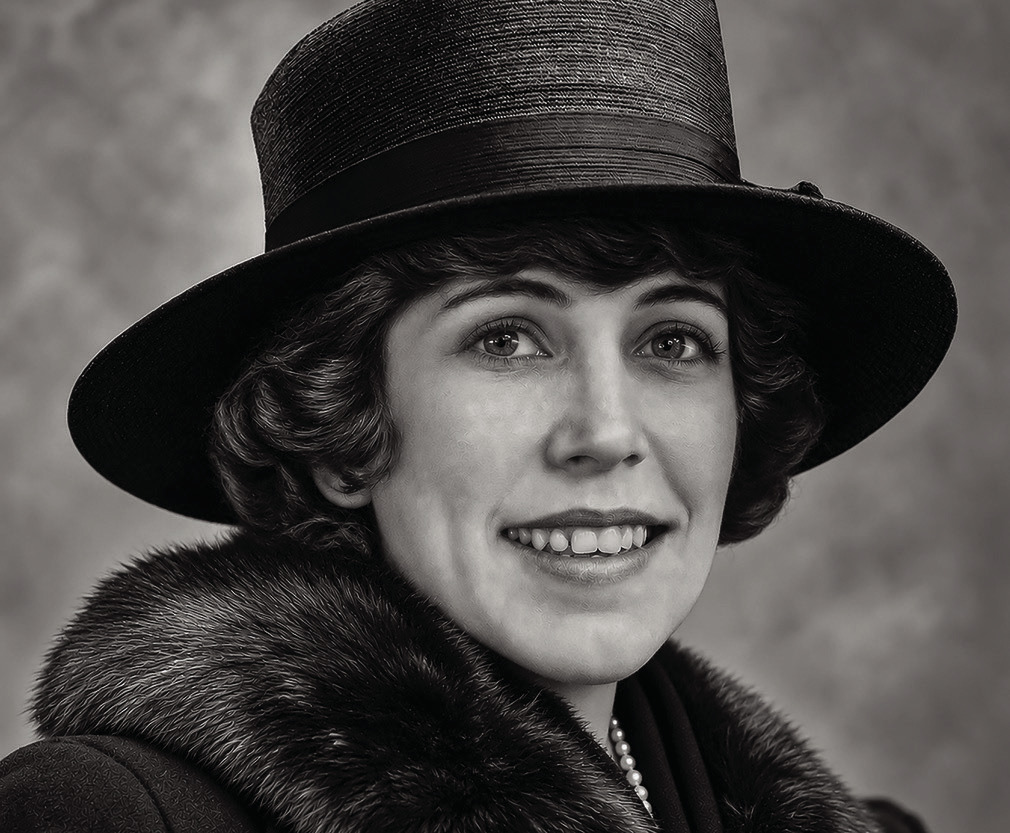
Clara Takes the Stand Last week, the State of Oklahoma presented its case against Clara Smith Hamon. Over three days, Attorney General S. P. Freeling and the prosecution called witness after witness to reconstruct what happened behind the closed door of the Randol Hotel on the evening of November 21, 1920. The State established that Clara owned and carried a pistol. Several of Jake Hamon’s friends and associates testified that, although Hamon initially insisted he had accidentally shot himself, he later privately blamed Clara. Frank Ketch testified that Hamon ordered him to spread the accident story, give Clara $5,000, and get her out of Ardmore before Hamon’s wife and children arrived. Finally, Georgia Hamon took the stand and described the extraordinary triangle from Jake’s wife’s perspective.
But when the State rested on Monday, March 14, one problem remained. No witness had actually seen the shooting. The prosecution could place a pistol in Clara’s possession, trace her movements afterward and repeat what others said Jake had told them from his hospital bed. The jury had even walked from the courthouse to the Randol Hotel and inspected the rooms where the shooting occurred. But only two people had been inside when the pistol fired. One was dead. The other sat at the defense table.
BeforeClaraSmithHamon told her story, however, her lawyers had work to do.
The defense began almost immediately after the State rested. Its strategy was apparent. Freeling had spent three days trying to persuade the jury that Jake Hamon’s original accident story was a lie intended to protect Clara. The defense would now turn that argument around. If Jake had repeatedly told people immediately after the shooting that he had shot himself accidentally, why should the jury disregard those statements in favor of different versions attributed to him later? And if some of the State’s own witnesses admitted that they had concealed or misstated what they knew, which version of the dying man’s story deserved belief?
The Defense Begins
When Georgia Hamon stepped down on Monday afternoon, March 14, the State rested. Clara’s lawyers did not make an opening statement. Instead, they went directly to their witnessesandmovedthrough them with surprising speed. Contemporary reports remarked upon it: the defense “waived its right to make an opening statement” and “rushed through the greater part of its witnesses” that same afternoon. By adjournment, the lawyers announced that only Clara’s sister and niece would precede her the following morning, after which Clara herself would take the stand.
There was method in the speed. The defense had already been presenting much of its theory through cross-examination. For three days, Coakley, McLean and theotherdefenselawyershad forcedtheState’switnessesto acknowledge contradictions in the accounts attributed to Jake Hamon. Dr. Walter Hardy admitted that he had originally given County Attorney Russell Brown the accident story. Rev. T. J. Irwin had been confronted with his own funeral sermon referring to Hamon’s shooting as an “accident.” Frank Ketch admitted that he had arranged Clara’s departure and given her $5,000. Most important, the various accounts of what Jake supposedly said had not been identical. The defense did not need to prove which of those stories was true. Its immediate purpose was to make the jury uncertain that the State had proved which one was true.
Now the defense would addaffirmativeevidenceofits own. It would call the public officials who had investigated theshooting,thelawmenwho spoke with Hamon before his death, the nurses who remained at his bedside, people who could attack E. W. Sallis’s credibility, and finally members of Clara’s family who had seen her immediately after the shooting. Taken together, their testimony was designed to weaken several of the most important supports beneath the prosecution’s case before Clara ever entered the witness chair.
The defense was doing something else as well. It was changing the center of gravity of the trial. During the State’s case, the jury had heard primarily from Jake Hamon’s world—his friends,associates,physician, minister, business manager and wife. The defense would nowbringforwardpeoplewho hadencounteredtheshooting fromdifferentvantagepoints. Some were Clara’s relatives, certainly, but others were law-enforcement officers, nurses and public officials. If enough of those witnesses could place doubt around the State’s reconstruction, Clara would not have to take the witness chair carrying the entire defense upon her shoulders.
The Man Who First Filed the Charge The defense’s first witness was Russell B. Brown, the former Carter County Attorney who had been prosecutorwhenHamonwas shot and who had originally filed the charge against Clara. Brown occupied a peculiar position in the case. Unlike the prosecutors trying Clara in March, Brown had investigated the matter while Hamon was still alive, when the public explanation remained that the shooting had been accidental.
Brown’s testimony immediately returned the jury to one of the mysteries surrounding the original investigation: Hamon’s clothing. Frank Ketch had testified only minutes earlier. Brown now contradicted him. According to Brown, Ketch had told him that the underclothing and shirt Hamon wore when he was shot had been burned. Ketch had just denied making such a statement.
The disagreement did not establish who shot Hamon, but it served a larger defense purpose.Theprosecutionhad spent three days asking the jurytoaccepttherecollections of men who surrounded Jake during the five days between the shooting and his death. Brown’s testimony reminded the jury that those recollections were not always consistent—not merely with one another, but sometimes with what the witnesses had reportedly said during the original investigation.
The clothing question would not disappear when thetestimonyended.Itwould return during the closing arguments,whenthelawyers argued over the suit Hamon supposedly wore on the night he was shot. The Ardmoreite laterreportedJamesMathers arguing that the clothing introduced at trial was not the suit worn during the shooting. Mathers pointed to Dr. Hardy’s testimony concerning an older suit and contrasted it with testimony that Hamon had intended to wear a newer one to the presidential inauguration. By then the question of Hamon’sclothinghadbecome another small but revealing example of the evidentiary uncertainty surrounding the case.
Buck Garrett and Bud Ballew Next came two witnesses whom an Oklahoma jury in 1921 would have found hard to dismiss as timid or naïve observers. Sheriff Buck Garrett and his deputy, Bud Ballew, were lawmen, and bothhadspokenwithHamon while he was still alive.
Their testimony went directlytothecentralproblem in the State’s case. Garrett testified that he visited Hamon at the sanitarium and that Hamon told him he had shot himself with an automatic pistol. According to contemporary reporting, Garrett and Ballew testified that Hamon said he had been “fooling with an automatic” when he shot himself. They alsosaidDr.Hardy—whohad testified for the State that Hamon told him Clara shot him—had himself described the shooting as accidental.
Garrett’s testimony became even more important when he described a conversation with Hamon on the day before Hamon died. By then rumors were circulating that Clara might be prosecuted. Garrett said Hamon told him he did not want that to happen and againmaintainedthathehad accidentally shot himself.
This differed from some of the testimony the jury had already heard. The State’s witnesses had generally explained the original accident story as a deception that Jake ordered to protect Clara and spare his family the scandal. But Garrett was the sheriff—the man charged with enforcing the law—and he said Hamon was still maintaining the accident account to him as death approached. If the prosecution was right, Jake had been deliberately lying to the sheriff. If the defense was right, the State was asking the jury to discard the wounded man’s own account in favor of stories attributed to him by others.
Garrett’s testimony was not entirely favorable to Clara, however, and that is important to our story. He also testified that Hamon eventually told him Clara had shot him, although Jake still did not want her prosecuted. Garrett therefore embodiedthecontradictionat the center of the case. Even according to the testimony of one witness, Jake Hamon had told two different stories. That was precisely the difficulty confronting the jury: the question was no longer simply whether Hamon had spoken before his death, but which of his statements—if any— described what actually happened.
Ballew reinforced the earlier account. He too testified that Hamon said he had shot himself while “fooling with an automatic.” The defense had therefore placed two Carter County law-enforcement officers before the jury who said the supposedaccidentstorycame directly from Jake. It was no longer merely a rumor printed during the confused hours after the shooting. According to Garrett and Ballew, Hamon himself had said it.
There was considerable irony in Garrett appearing as a defense witness. The sheriff had been one of the most visible figures in the entire drama. He had participated in the search for Clara, traveled to meet her when shereturnedfromMexicoand broughtherbacktoArdmore. Now the same lawman was giving testimony useful to the woman he had once escorted back to face prosecution. The defense did not need Garrett to declare Clara innocent. It needed something more valuable from a witness of his position:anacknowledgment that Jake Hamon himself had repeatedly told law officers that the shooting was accidental.
How Old Was Clara?
The defense then moved to an issue that might seem secondary until one remembers how the prosecution had framed the ten-year relationship. J. H. Edwards of Topeka, Kansas, president of the Kansas Life Insurance Company, identified an insurance application Clara had signed in January 1917. The applicationrecordedherbirth date as October 22. The State had tried to portray Clara as a mature woman when her relationship with Hamon began; the defense wanted the jury to understand how young she was when Jake entered her life.
The point mattered because the defense was beginning to construct the history that would make Clara’s own testimony intelligible. The prosecution saw a long adulterous relationship that had finally produced jealousy and motive. The defense would describe something different: a young woman drawnintotheorbitofamuch older, married, wealthy and increasingly powerful man, a relationship in which the balance of power had never been equal.
Clara would later testify to the promises, dependence, affection, domination and violence she said characterized those years. Edwards’s insurance record supplied something less emotional but useful— the documentary evidence from Clara’s earlier life against which the jury could measure her age when that relationship began.
The question of age mattered to the lawyers because the defense intended to ask the jury to look backwardratherthanmerely at November 21, 1920. If Clara had entered Hamon’s orbit as a very young woman and remained there for years while he grew richer and more powerful, the defense could argue that the final confrontation could not fairly be understood apart from everything that preceded it. That theme would later dominate J. B. Champion’s closing argument, when he portrayed Clara as a “brown-eyed country girl” who encountered a man already experienced in law, business and politics.
The Nurses at Jake’s Bedside Then came two witnesses whose testimony struck directly at some of the State’s most damaging evidence: Clara B. Homer, a nurse from Warren, Pennsylvania, and Rose Cannon, an Ardmore nurse. Both had attended Hamon during his final illness. The defense called them specifically, contemporary reporting said, “in its announced effort to refutetestimonythatHamon hadmadeadyingstatement.”
Their testimony wassimple but potentially powerful. Both nurses said they had seldom been away from Hamon’s bedside for more than five or ten minutes at a time. Neither remembered hearing Hamon tell visitors that he believed he was dying or that Clara had shot him.
That testimony went directly against the picture presented by several State witnesses. Nichols, Dunlap, Hardy and Ketch had each supplied statements attributed to Hamon. Some were presented as the words of a man who knew death was near. Yet the nurses who spent hour after hour beside him said they had not heard those statements.
That did not necessarily mean the conversations never occurred. Five or ten minutes could be enough time for a private exchange, and the jury had to decide whether the nurses were always within hearing. But the defense had created another point of friction in the State’s case. Men who visited Hamon remembered dramatic declarations. The women professionally charged with caring for him at his bedside said they had not heard them.
MissHomeraddedanother detail.Hamon,shesaid,“used very profane language.” That hardlydecidedamurdercase, but it did begin to chip away at the almost reverential picture of Hamon’s final hours that some testimony had created.
Rose Cannon’s testimony was more consequential. She said she telephoned Clara the morning after Hamon arrived at the hospital, and Clara came immediately. What happened next did not resemble the behavior one might expect between a man who believed a woman had deliberately tried to murder him and the woman who had done it. According to Cannon, HamontookClarainhisarms and kissed her.
That was a remarkable detail. The State’s theory was that Clara had deliberately shot Jake the previous evening. Yet the next morning, according to the nurse standing in the hospital, Jake embraced and kissed her. The prosecution could answer that Hamon still loved Clara and was tryingtoprotecther—indeed, that was part of its case. But the defense could ask the jury whether the conduct was also consistent with Clara’s contention that what happened in the Randol had not been a calculated attempt to kill him.
Cannon also challenged Rev. T. J. Irwin’s account of Hamon’s spiritual preparation for death. The minister had testified about Hamon’s repentance and prayer. Cannon said she had heard no such dying statement to Irwin and that neither Hamon nor the minister prayed in her presence. Once again, the defense was not simply presenting an alternative story. It was attacking the reliability of the State’s reconstruction of Hamon’s final days.
Cannon would not disappear when the defense rested.TheStatewouldrecall her in rebuttal after Clara testified, and the prosecution would use her own earlier statements against the defense. According to the March 16 Ardmoreite, Cannon denied telling Errett Dunlap that she had been surprised to see Clara come to the hospital because she thought Clara had left Ardmore the previous night. Dunlap was then recalled and said Cannon had made precisely that statement. Dr. Hardy followed and testified that Cannon had told him after Clara left the hospital that she “would have given her life to have heard the conversation.” Thus even one of the defense’s important hospital witnesses would eventually become part of the tangle of contradictions that characterized the trial.
The Missing Chauffeur The defense next turned again to one of the State’s most colorful witnesses, E. W. Sallis, the Texas chauffeur who had testified thathedroveClarawestfrom Dallas during her flight from Oklahoma.Sallishadtoldthe jury that he saw two pistols in Clara’s lap and that during the journey she admitted she had shot a man. If believed, his testimony gave the prosecution something particularly valuable. It was not another secondhand account of something Jake Hamon supposedly said from his hospital bed; it was an alleged admission by Clara herself while she was fleeing toward West Texas and, eventually, Mexico.
The defense wanted Sallis back on the witness stand. But when Clara’s lawyers attempted to recall him, they discovered that he was gone. Contemporaryreportingsaid Sallis apparently understood thathehadbeenreleasedasa witness, collected the mileage and per diem due him, and left Ardmore. Whatever the reason for his departure, the practical consequence was the same: the defense could not bring him back before the jury for the additional questioning it had intended.
That mattered because Salliswashardlyaperipheral witness. His story connected threecircumstancestheState wanted the jury to consider together—Clara’s flight, the presence of firearms and an alleged admission that she had shot someone. The defense had already given the jury one reason to approach his testimony cautiously. During his earlier cross-examination, Sallis acknowledged that he had soldthestoryofhisexperience with Clara to a newspaper for $60. Now Clara’s lawyers wanted another opportunity to examine him, but the chauffeur who claimed to have heard one of the most damaging statements attributed directly to Clara was no longer in Ardmore to answer their questions.
The defense would later have another opportunity to challenge Sallis’s account, although not by putting the chauffeur himself back in the witness chair. Clara acknowledged traveling with Sallis when she testified, but disputed key portions of the story he had told the jury, including what she supposedly said during the journey. The issue therefore ultimately became another question of credibility. Sallis said Clara had made an incriminating admission while he drove her across Texas; Clara denied making theadmissionashedescribed it. With Sallis gone, the jury would have to decide between the two accounts without seeing the chauffeur subjected to the additional examination the defense had sought.
By the close of Monday’s proceedings, the defense had therefore attacked several pillars of the State’s case in remarkably short order. Brown contradicted Ketch concerningHamon’sclothing. Garrett and Ballew put Jake’s original accident story backbeforethejury.Edwards supplied documentary evidencebearinguponClara’s age when the relationship began. Homer and Cannon challenged the alleged deathbed conversations, while Cannon supplied the striking image of Jake embracing and kissing Clara the morning after he was shot. The defense also tried to recall Sallis, whose testimonyaboutClara’sflight included one of the State’s most damaging alleged admissions, only to discover he had already left Ardmore. Contemporaryaccountswere not exaggerating when they said the defense “rushed through”mostofitswitnesses that Monday afternoon.
But the defense was not finished.
Tuesday Morning
When court resumed Tuesday, March 15, the witnessesbecamemuchmore personal.
The defense first called Mrs. V. B. Walling, Clara’s sister. Walling testified about her family’s discovery of Clara’s relationship with Hamon. For a time, she said, she did not know about the relationship. When their father, J. L. Smith of El Paso, learned about it, his reaction wasanythingbutacceptance. AccordingtoWalling,hecame to Ardmore “to kill Hamon” and had to be disarmed by the sheriff. The State objected to this line of testimony, and Judge Champion sustained the objections. McLean nevertheless insisted that the jury should be permitted to understand how Clara’s familyhadreactedwhenthey learned the truth.
Theexchangeproducedone of the trial’s most emotional courtroom eruptions. Special prosecutor H. H. Brown said the State was willing for the jury to know how the family had taken it, referring to Clara’s mother as “the old woman.” McLean was instantly on his feet. Mrs. Smith, he declared, was the equal of the mother of any lawyer participating in the trial. Spectators applauded. JudgeChampionpoundedhis gavel and ordered deputies and bailiffs to clear the courtroom. Proceedings were recessed for an hour, and the judge warned that another demonstration could result in the remainder of the case being tried without spectators.
Clara wept bitterly. Her response, recorded by the contemporary press, was not about herself: “I don’t care what they do with me, but they must let my poor old mother alone.”
The episode is worth remembering because it would return during the lawyers’ final arguments. By then the reference to Clara’s mother had become part of the emotional vocabulary of the trial. The lawyers were no longer fighting only over trajectories, pistols and statements from a hospital bed. They were fighting over the moral identities of the people involved— Jake Hamon, Clara, Georgia Hamon, Clara’s mother and even the lawyers themselves. What might have been an insignificant phrase in another trial became combustible in this one.
Once order was restored, Mrs. Walling supplied testimonyfarmoreimportant to the self-defense claim. She said Clara came to her home at Wilson on the morning after Hamon was shot. Clara was leaving Ardmore, she said, under instructions from Hamon and his business manager, Frank Ketch, and had stopped to say goodbye. Walling testified that she saw bruises on Clara’s throat, breast and hands.
Her fourteen-year-old daughter, Phyllis Walling, Clara’s niece, corroborated her mother. She too testified that Clara bore bruises when she arrived at their home the morning after the shooting.
That testimony directly confronted evidence Freeling had deliberately placed before the jury during the State’s case. Jerry Foster said he saw no injuries to Clara’s hands or throat. Frank Ketch said he noticed no scars on her hands or face. The State wanted those observations waiting for Clara when she claimed Jake had beaten and choked her. Now, before Clara said a word from the witness stand, her sister and niece testified that they had in fact seen bruises on her body the following morning.
Then Mrs. Smith, Clara’s mother, testified. She had not seen Clara the morning after the shooting. Clara reached her in El Paso four days later during the journey that eventually carried her into Chihuahua. Mrs. Smith testified that even then the bruises remained visible. She also testified about Clara’s age, another point the prosecution contested in trying to establish that Clara was a mature woman when her association with Hamon began.
The sequence was deliberate. Walling and her daughter placed the bruises on Clara the morning after the shooting. Mrs. Smith said they remained four days later. Together, the three family witnesses supplied corroboration for a fact that would become central within minutes: Clara was about to tell the jury that Jake Hamon had beaten, kicked and choked her before the pistol fired.
Naturally, the jury had reason to consider their relationship to Clara when weighing their testimony. These were not disinterested strangers. They were her sister, niece and mother. But neither were Foster and Ketch strangers to Jake Hamon. Much of this trial had become a contest among witnessesdrawnfromthetwo overlapping worlds that had surrounded Jake and Clara for years. The jurors would have to decide not merely what each witness said, but why they should—or should not—believe it.
By the time Mrs. Smith left the witness stand, Clara’s lawyers had done what they could to prepare the ground. The original accident story was back before the jury through Garrett and Ballew. Thenurseshadchallengedthe dramatic deathbed accounts and one had testified that Jake embraced and kissed Clara the morning after the shooting. Clara’s age and the reaction of her family to the relationship had been placed before the jury. Most important, three members of Clara’s family had testified that they saw physical injuries consistent with the beating she was about to describe.
Yet all of those witnesses shared the same limitation that had confronted the prosecution. Russell Brown had not been inside the Randol room when the pistol fired. Buck Garrett had not been there. Bud Ballew had not been there. The nurses had seen Jake afterward. Clara’s sister, niece and mother had seen Clara afterward. They could tell the jury what Jake said, what Clara looked like, what they observed and what they remembered. They could attack the credibility of the State’s witnesses and corroborate pieces of the defense story. But none could tell twelve men what happened during those final minutes inside the room.
Therehadbeentwopeople there. Jake Hamon could no longer speak for himself. Clara could.
On Tuesday, March 15, 1921, the defense accepted the risk and called Clara Smith Hamon to the witness stand.
Clara Tells Her Story The moment had been anticipated almost from the beginning of the trial. Contemporary accounts described Clara walking to the witness chair dressed in a blue tailored suit and hat. She appeared composed. She answeredseveralpreliminary questions quietly. Then the questioningmovedbackward through the years.
She had known Jake Hamonforalongtime.Hehad paid her tuition at business college. She had become his stenographer and later his private secretary. She acknowledgedwhateveryone in the courtroom already knew: Jake was married. She also acknowledged that they had occupied rooms at the Randol Hotel.
There was little reason to hide the relationship now. The defense strategy depended upon explaining it. Indeed, the defense went further and introduced a second written contract bearing Clara and Jake's signatures. According to the Ardmoreite, the agreement provided that Jake would pay Clara $35 a week as an employee of the Colonel, subject to termination on two weeks’ notice, and that if a child should be born to them, Hamon would be responsible for the child during its lifetime while Clara would bear the expense of the child’s education. Hamon, the newspaper reported, agreed to acknowledge the child as his. It was an extraordinary document to place before a 1921 jury, but the defense plainly preferred exposure to concealment. If the jury was to understand the relationship, the lawyers intended that it see how completely Clara’s private and economic life had become entangled with Hamon’s.
Clara’s story was that she had entered Hamon’s life as a young woman and gradually surrendered more and more of it to him. The relationship that the prosecution presented as a possible source of jealousy and motive was portrayed by Clara as years of domination, promises, dependence and abuse. She had loved him, she said, but that love had existed alongside fear and resentment. That contradiction—loving Jake and at times hating what he had done to her—would become one of the most revealing themes of her testimony.
The Ardmoreite account gives us another revealing detail.Duringthepreliminary portion of her testimony, the newspaper reported that Clara told the jury she had “no reason for wanting to kill Colonel Hamon except to protect herself from bodily harm; that she loved him, and that after he had told her she had shot him she wanted to kill herself if that were the case.” Whether the jury accepted that explanation was another matter, but the defense had now put its theory in unmistakable terms. Clara was not denying that the fatal bullet came from the pistol in her hand. She was denying murder.
Eventuallythequestioning reached Sunday, November 21.
Clara described the day in detail. She and Jake had breakfast late that morning. He went to his office. She returnedtoherroom.Whenhe came back later, according to Clara, he had been drinking. His condition worsened as the day continued. When she reached this part of the story, contemporary reporters noted a change in her composure. Her voice broke. Tears appeared.
“Hewasdrunkandcrazier than he ever had been in all the years I had known him,” she testified.
The jury had already heard what Jake’s friends said happened next. Nichols described Clara approaching Jake as he lay on a bed and placing the gun against him. Dunlap said Hamon told him Clara placed one hand upon his head and another on his shoulder before firing. Ketch remembered something different—a shooting in the dark and “a struggle over the gun.”
Now Clara supplied another account, and hers was the only one from a personwhohadactuallybeen in the room.
“He Choked Me”
According to Clara, the final confrontation was violent.
The Daily Ardmoreite devoted extraordinary space to this portion of her testimony, attempting to reproduce not simply the substance of her story but the emotion with which she told it. The newspaper reported that three times during her narration Clara “broke into tears and wept silently into her handkerchief.” When she reached the beginning of the fight, she said Jake had “snatched her into a chair beside him in front of the hotel where they lived,” cursed her and accused her of riding in an automobile with someone else. According to the newspaper, the words “Clara,youhitme,”whichshe said Hamon exclaimed after the shooting, nearly caused her to break down again.
She described Hamon cursing her and becoming physically abusive. She said he struck her, kicked her and choked her. In her account, the shooting was not the culmination of a calculated plan to kill the man who was abandoning her. It was the chaotic ending of a physical struggle with a man who had become violent.
Her description was graphic. “He choked me and bit me, and somehow he threw me over on the bed in one of his kicks,” the Ardmoreite recorded her saying. She continued that he “got me on the bed,” beat her and slapped her, and that he“kickedmeandchokedme andIstruggledtogetup.”She said she finally escaped him, only for the confrontation to continue.
The details mattered because the State had anticipated precisely this defense.JerryFostertestified that he saw no injuries to Clara’s hands or throat the followingday.Ketchsimilarly saidhenoticednoscarsonher hands or face. Freeling had placed those observations before the jury before Clara ever had an opportunity to describe an assault. Now the defense was supplying the explanation those witnesses hadbeenpositionedtoattack, supported by Clara’s sister, niece and mother, who said they had seen bruises.
Clara also described a knife. According to her testimony as printed in the Ardmoreite, Jake reached for a knife, and the knife fell from his pocket. She picked it up and put it on the table. When he demanded it back, she refused. She said Jake then remarked that if she had given it to him he would have “slit your throat as draw this cigar.” Whether the exact words were spoken could only be judged from Clara’s testimony, but the purpose of the evidence was plain. The defense wanted the jury to understand why Clara claimed she feared serious injury before the pistol appeared.
According to Clara, Jake then moved away, only to return and reach into her purse on the windowsill. “He tookthegun,”theArdmoreite recorded her saying. She testified that he approached her with it and that she reached for the pistol. What followed was the instant upon which the murder case turned.
The Gun Goes Off
The distinction was crucial. Clara did not tell the jury that she calmly armed herself, aimed at Jake and consciously decided to shoot him. Nor did she offer the simple accident story Jake had initially given from the hospital. Her account occupied ground between accident and intentional self-defense: she said she reached for the pistol during a violent encounter because she feared Jake, and the weapon discharged amid the struggle.
Clara demonstrated the encounter for the jury. These were the same jurors who only days earlier had stood inside the rooms at the Randol Hotel. They knew the dimensions of the space. They had seen the doorway and the arrangement of the rooms. Now the woman who had occupied that space on November 21 physically showed them what she said happened there.
The Ardmoreite summarized the crucial moment in words worth preserving. Clara testified that the fatal bullet came fromthetinyautomaticpistol she held in her right hand, but she did not describe a deliberate shot. “It went off as it fell, or I pulled the trigger, or something as he hit me,” she said. “The gun went off.”
Elsewhere in the testimony, the newspaper recordedthesameuncertainty in slightly different words: “I did not do it. It went off.” That uncertainty was not an incidental feature of her defense. It was the defense. Clara conceded possession of the weapon and conceded that she might even have pulled the trigger. What she denied was the mental act upon which murder depended—the deliberate decision to kill Jake Hamon.
The newspaper account reported that Jake’s immediate reaction, according to Clara, was: “Clara, you hit me.” She said he then threw back his vest and showed her a widening spot of blood on his right breast. As she testified about this sequence of events, her emotions became so overwhelming that it took several minutes before she could continue her account. Whatever one thinks of the truth of her story, the scene the defense presented was far removed from the prosecution’s theory of a jealous woman deliberately approaching Hamon and firing into him.
Clara also testified that she wanted to remain with Jake after the shooting, but that Hamon and Ketch told her to leave Ardmore. That testimony gave the defense an important answer to the State’s argument that her departure demonstrated a consciousness of guilt. Clara did not portray herself as fleeing because she had deliberately shot Hamon and feared arrest; she portrayed herself as leaving reluctantly, at the direction of the wounded man and his trusted business manager. That was why Ketch’s admission that he gave Clara money and helped arrange her departure mattered so much. Flight could certainly suggest guilt, but if Hamon himself told Clara to go, and Ketch supplied the money andhelpedherdoit,thesame conduct could carry a very different meaning. Instead of the instinctive flight of a guilty woman, the defense could argue that Clara’s departure was part of the plan Hamon and Ketch set in motion.
That distinction would eventually appear in Judge Champion’s instructions. The surviving charge to the jury recognized not merely murder and the degrees of manslaughter, but excusable homicide, justifiable homicide and selfdefense. Judge Champion would tell the jurors that in considering self-defense they must view the circumstances as they reasonably appeared to Clara at the time, and that if she reasonably believed herself in imminent danger of losing her life or suffering serious personal injury she was entitled to act upon those appearances. The law did not require that the danger later prove real; it required the jury to consider whether the danger reasonably appeared real to her.
But on Tuesday afternoon those legal instructions were still to come. What mattered thenwaswhethertwelvemen believed the woman sitting before them.
Love and Fear
Clara’s testimony could not be confined to the few seconds surrounding the gunshot. The defense needed the jury to understand why she said she feared Jake. That required exposing still more of their private life.
She described a relationshipinwhichaffection and fear existed together. Jake could be generous, powerful and protective. He could also, according to Clara, be dominating and violent. The man she described bore little resemblance to the publicfigurewhosedeathhad produced glowing accounts of an empire builder and national political power broker.
The defense also explored promises about their future. The Ardmoreite reported testimony concerning a contract and Clara’s expectation that Hamon would eventually marry her. The years had passed, promises had been made, and the relationship had continued while Hamon’s public fortunes rose. The State could use that history to establish resentment when Hamon’s wife returned and his national political ambitions expanded. The defense could use precisely the same history to explain dependence, emotional confusion and why Clara remainedwithamanshenow said had abused her.
This was also where the diary discussed earlier in our series acquired new significance. Whether every word attributed to Clara in the published diary was authentic remainedaseparate evidentiary question, but the emotional portrait printed months earlier—of a woman simultaneously attached to andafraidofHamon—closely resembled the contradiction Clara now acknowledged under oath.
She loved him. She also hated him. Attorney General Freeling would seize upon that contradiction.
A Battle of Wits
When the defense completed its initial questioning, Freeling rose to cross-examine Clara. The Daily Ardmoreite characterized what followed as “A Battle of Wits.” That description was apt. The newspaper said Clara “stood the test of a strenuous fourhour cross-examination,” and its account preserved exchanges in which the Attorney General repeatedly tried to turn her own words against her.
Freeling was not crossexamining a witness who had never before faced hostile questions about the relationship. Clara had spent months living inside the story. She had been questioned, interviewed and written about from Oklahoma to Mexico and all across the country. She knew the facts of her own life better than anyone in the courtroom.
At one point, Freeling asked whether she hated Jake. Clara answered almost dismissively: “Whatever you like, General.”
The exchange captured the tone. Freeling was Oklahoma's Attorney General, an experienced courtroom lawyer representing the State in the most publicized murder trial of his career. Clara was the defendant whose liberty— and under the information, potentially much more— depended upon how twelve meninterpretedheranswers. Yetshedidnotcollapseunder the first pressure of crossexamination.
Freelingpressedherabout the long relationship and about her feelings toward Jake.“Youhatedhimbecause you yielded to his dominance for so long?” the Attorney General asked.
“I hated him and loved him at the same time,” Clara answered.
“Love, decidedly,” she replied when Freeling asked which emotion had been stronger.
That answer may have done more to explain Clara’s relationship with Jake than pages of testimony. The State wanted resentment to become motive. The defense wanted the jury to understand that human relationships, particularly one lasting nearly a decade, were not so simple. Clara did not deny anger. She did not deny hatred. She insisted that those feelings existed alongside a stronger attachment.
Freeling also pressed her about marriage. According to the Ardmoreite, Clara acknowledged that Jake had always promised to marry her after his wife asked for a divorce. The prosecutor was plainly trying to establish the motivehisopeningstatement had foreshadowed: after years of waiting, Clara faced the possibility that Hamon’s wife and children would reclaim the place beside him just as his political future reached its height. Clara’s answerdidnoteliminatethat theory. It instead required the jury to decide whether disappointed expectations explained murder or merely explained the tortured relationship she described.
Sam Blair’s Interview The cross-examination also returned to Clara’s previous statements. Freeling confronted her with the interview Chicago newspaperman Sam Blair obtainedaftershewaslocated in Chihuahua. Clara did not simply deny speaking with Blair. Instead, she disputed portions of the published account and the precision with which her words had been reproduced.
The exchange became remarkably specific. Asked whether the account of the shootinginBlair’snewspaper interviewwasaccurate,Clara answered that there were “several occasions” where it was not. “As I said that to Mr. Blair, what did I say?” Freeling asked at one point. “I can’t recall saying just that,” Clara answered. When he continued to confront her withpassages,sherepeatedly distinguished between what she remembered saying and the exact language that later appeared in print.
Freeling then reached one ofthemostdangeroussubjects in the Blair interview: Clara’s feelings toward Hamon after the violent confrontation in the Randol rooms. Blair’s account had attributed to her words suggesting that she hated him following what she called “that scene.” Clara acknowledged the emotion but drew an important distinction between the events of that night and the man himself. Asked whether she had told Blair, “Yes I hated him for that scene,” Clara answered, “Yes I hated him for that scene; I loved him at the same time.” When Freeling pressed further, asking whether she hated Hamon after returning to her room, Clara corrected him: “I hated the scene, not Mr. Hamon.” She then added what perhaps best captured the contradiction running through her testimony: “I loved him always.”
That distinction would matter almost immediately. Blair himself would be called by the State in rebuttal. He would testify that the published interview substantially represented what Clara told him, and Freeling would attempt to put the newspaper account before the jury. The defense would object, arguing that Blair was present and could himself be examined and cross-examined about what Clara said. Judge Champion sustained the objection and refused to admit the newspaper itself.
For the moment, however, the contest remained between Freeling and Clara. The Attorney General was attempting to demonstrate that the woman on the witness stand was softening, qualifying or retreating from statements made before lawyers had prepared her for trial. Clara’s answer was that Blair’s printed words did not always precisely reproduce what she had said. The jury had to decide whether those differences represented misunderstanding, faulty recollection—or a defendant reshaping her story.
The Knife, the Pistol and the Room Freeling returned repeatedly to the physical mechanics of the shooting. Where was Jake? Where was Clara? Which hand held the pistol? How close were they? What happened immediately before the weapon discharged? He also returned to the knife Clara said Jake had possessed and to the sequence in which she said Jake retrieved the pistol from her purse.
These were not abstract questions to this jury. The twelve men had already been inside the Randol rooms. Clara had now stood before them and demonstrated her movements. They could compare her description with the spacethey hadpersonally inspected.
The prosecution’s problem remained the same one it had faced from the beginning. There was no third person in the room. If Clara’s account was physically possible and if the State could not disprove it beyond a reasonable doubt, the prosecution’s circumstantial case became substantially more difficult.
The defense, however, faced its own problem. Clara’s story did not perfectly duplicate Jake’s original account either. Jake had initially said he accidentally shot himself. Clara now acknowledged a struggle in which she had possession of the pistol and conceded that she might have pulled the trigger. The defense therefore could not simply argue that Jake’s first account was literally true in every detail. Instead, the original accident story becameevidenceofsomething subtler: immediately after being wounded, Jake himself had not accused Clara of intentionally shooting him.
That left the jury with several competing versions from the same dying man. The State’s witnesses remembered deliberate shooting. Ketch remembered a “struggle over the gun.” Jake initially claimed he had shot himself. Clara described a violent assault followed by a struggle in which the weapon discharged.
Somewhere among those accounts lay what had happened inside the Randol.
TheWomanBehindthe Headlines By the time Clara’s testimony neared its end, the trial had changed.
Until Tuesday, Clara Smith Hamon had largely been an object of other people’s testimony. The State’s witnesses described her actions. Jake’s associates described her relationship with him. Georgia Hamon described her from the wife's standpoint. Newspaper reporters had spent months describing Clara’s appearance, her clothes, her expressions, her tears and even the way she moved through the courtroom.
Now the jurors had heard her voice.
They had heard her admit the relationship rather than evade it. They had heard her acknowledge contradictory feelings toward Jake. They had heard her describe violence. They had heard her concede that the fatal pistol was in her hand and that she could not say with certainty whether it discharged when Jake struck it or because she pulled the trigger. They had watched her demonstrate the encounter, and they had watched her endure approximately four hours of questioning by the Attorney General.
None of that meant they believed her. Credibility was the very question the trial existed to decide. But Clara had accomplished something the State could not prevent: she had supplied the jury with an alternative narrative from the only living eyewitness.
The Ardmoreite itself recognized the significance of the performance. Its March 16 front page announced, in enormous type, “Epitomization of Statements of Clara Smith Hamon, Testifying in Her Own Behalf at Tuesday’s Session of the District Court.” Another headline declared that the “Final Sentences” were being written in the closing chapter of Hamon’s death. The newspaper reported that Clara had undergone “a strenuous fourhour cross-examination.” Whatever the jury ultimately thought of her story, she had survived the ordeal that her lawyers had chosen for her.
The legal significance was equally profound. Judge Champion would ultimately tell the jury to consider the circumstances as they reasonably appeared to Clara. His instructions would allow the jury to consider murder, first-degree manslaughter and seconddegree manslaughter, but also excusable and justifiable homicide. On self-defense, he instructed that if Clara reasonably believed herself in imminent danger of death or serious bodily injury, she could act upon appearances astheypresentedthemselves to her. And if the jury retained a reasonable doubt as to whether the killing was excusable or justifiable, that doubt belonged to the defendant.
The defense had therefore accomplished something essential. Before Judge Champion ever spoke those words of law, Clara had supplied the facts to which the defense hoped the jurors would apply them.
That made Tuesday, March 15, the pivotal day of the trial.
The State had spent three days telling twelve men what JakeHamonsupposedlysaid happened. Clara had now told them her story of what happened. The accounts could not be reconciled. If the prosecution was right, a woman facing the end of a long relationship approached an unsuspecting man with a pistol and shot him, then fled while he attempted to protect her from prosecution. If Clara was right, a drunken and enraged Hamon attacked a woman he had dominated for years, beat and choked her, threatened her, and during the violent struggle that followed a pistol discharged.
No third person was in the roomtochoosebetweenthem. The jury would have to do it.
The State Answers Clara But Clara’s testimony did notend the evidence.The State wasentitledtorebutwhatthe defense had presented, and Attorney General Freeling immediately began doing so. The Ardmoreite later summarized the final stage succinctly: after the defense announced that it rested, Freeling presented five rebuttal witnesses—Erwin C. Daniels, Sam Blair, Errett Dunlap,RoseCannonandDr. Walter Hardy.
Daniels was a Denison, Texas, service-car driver. He testified that he had driven Clara from Denison to Dallas after Hamon was shot and that during the trip he saw a pistol in Clara’s handbag. His appearance produced one of the few moments of laughter in the otherwise tense proceedings. When McLean asked whether he was always in a receptive mood when a passenger offered a larger fare than usual, Daniels answered, “Did you ever see a taxidriver who wasn’t?” The spectators laughed. Daniels drew another laugh when, describing the man who had brought him to Ardmore to testify, he referred to a mustache as “them little things under his nose.”
The State then called Sam Blair, the Chicago newspaperman who had interviewed Clara in Chihuahua City. Blair testified that he first saw Clara on the night of December 18, 1920, and again twice later. Asked about Clara’s statements concerning a will left by Hamon, Blair said she had discussed the subject and believed there was a will that was being concealed until after she might be tried. More important, Blair said that the lengthy interview he obtained from Clara in Chihuahua had been reported “in substance” as she gave it to him.
Freeling attempted to offer a copy of the newspaper containing Blair’s interview as part of the trial record. The defense objected. Judge Champion sustained the objection. McLean argued that Blair himself was sitting on the witness stand and could be examined and crossexamined about anything Clara supposedly said. The newspaper would not speak for Clara; Blair would have to do so.
The remaining rebuttal witnesses returned the jury to the hospital. Rose Cannon was recalled and denied telling Errett Dunlap that she had been surprised when Clara came to the hospital because she believed Clara had left Ardmore the previous night. Dunlap was recalled immediately afterward and testified that Cannon had made exactly that statement to him. Dr. Walter Hardy was then recalledandsaidCannonhad told him after Clara left the hospital that she would have given her life to have heard the conversation. Hardy also identified a plum-colored suit as the one Hamon wore when he came to the hospital, while Clara had testified that the suit had been blue. Even at the very end of the evidence, the case continued toproducecontradictionupon contradiction.
The court also refused to admit a large package of letters purportedly written by Hamon to Clara. The defense had rested, the State completed its rebuttal, and at last the testimony was finished. According to the Ardmoreite, only those five witnesses were introduced in rebuttal. After months of newspaper stories, days of testimony and competing accounts from the only two peoplewhocouldhaveknown what happened inside the Randol room, the evidentiary portion of the case was over.
The question had narrowed.
The State said Clara Smith Hamon murdered Jake Hamon.
Clara said Jake attacked her and the pistol went off in the struggle.
Now the witnesses would fall silent, and the lawyers would speak.
Judge Thomas W. Champion would first tell the twelve men what Oklahoma lawrequiredofthem.ThenH. H. Brown, James Mathers, J. B. Champion, W. P. McLean, Attorney General Freeling— and the other lawyers who had spent the week fighting over nearly every important fact in the case—would make their final appeals.
The Daily Ardmoreite understoodwhatwascoming. ItsMarch17frontpagewould describe the proceeding in the extravagant language of the era as the “Most Bitterly Contested Criminal Case In Oklahoma’s History” and announce that “Master Legal Minds” were hurling their “oratorical anathemas” across the courtroom.
Among those lawyers was Charles Arthur Coakley.
For most of this series, we have followed Coakley toward this courtroom: from Marshall County, through the county attorney’s office, through murder trials and war service, into Ardmore and eventually into one of the most famous criminal trials Oklahoma had yet seen. The evidence was now closed. What remained was the part of a murder trial at which men like Coakley had built their reputations—the final attempt to take days of conflicting testimony, reduce it to a story twelve jurors could understand, and persuade those twelve men that the story was true.
Next week: The Lion of the Courtroom, Part XIX — Judge Champion gives the law, the lawyers make their final appeals, and the fate of Clara Smith Hamon passes into the hands of twelve men.