
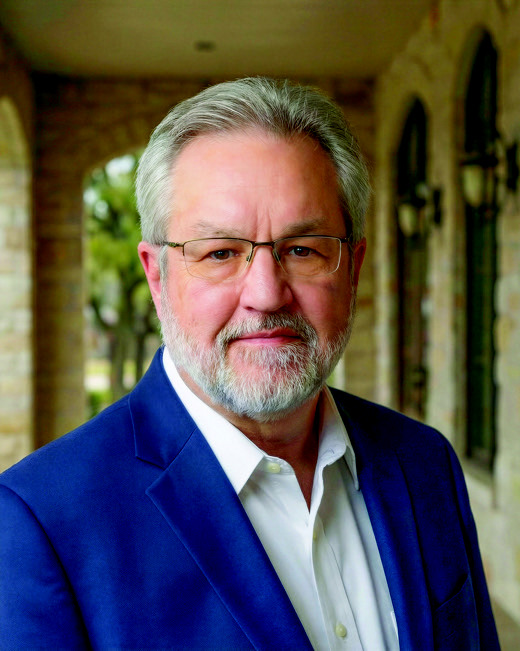
Last week, I mentioned that on Monday, June 15, I underwent anterior cervical discectomy and fusion surgery, more commonly known as ACDF. In my case, it was a two-level surgery involving the C4-C5 and C5-C6 areas of my neck.
For those who have been blessed enough never to need such a procedure, ACDF is surgery on the cervical spine — the neck portion of the backbone. The surgeon reaches the damaged area from the front of the neck, carefully moving through tissue to reach the spine. The damaged discs between the vertebrae are removed. Those discs, when diseased or compressed, can press on nerves or the spinal cord itself, causing pain, weakness, numbness, and other problems.
Once the damaged discs are removed, the pressure is relieved. But that is only part of the work. Something must then replace those discs and stabilize that section of the spine. So, in my case, bone graft material (cadaver bone), spacers, plates, and screws were used to hold the vertebrae in proper position. The goal is for the bones to grow together over time and become solid. That is the “fusion” part of the surgery.
In plain English, the surgeon went through the front of my neck, removed two damaged discs, relieved pressure on the nerves and spinal cord, and then rebuilt that part of my neck so that, Lord willing, those vertebrae will eventually fuse into one stable structure.
That is the kind of thing that sounds almost manageable when written in a neat medical sentence.
But there has been very little neat or manageable about the week that followed.
Surgery has a way of humbling a person. It takes ordinary things — swallowing, sleeping, showering, turningyourhead,sittingina chair, holding a conversation — and turns each one into its own small undertaking. In my case, the pain has been considerable, but pain has not been the only problem. The swelling in my neck, together with the titanium plates and screws now fastened to the repaired vertebrae, has largely disrupted my ability to swallow. For several days, the most basic acts of daily life — drinking water, eating food, taking medication, and carrying on a conversation — have been difficult, and at times almost impossible. A body that has been cut, moved, repaired, braced, medicated, and ordered to heal does not care much about calendars, deadlines, pride, or weekly newspaper columns.
And so, this week, I have found myself in a place I do not especially enjoy.
I have not felt up to doing the kind of research I normally try to put into these stories. Last week, the obstacle was time.Thedaysbeforesurgery were swallowed up by work, family, preparation, and all the ordinary duties of life that must come first, even before this weekly column I have come to love so much. This week, the obstacle has been different. It has been the aftermath of the surgery itself — the pain, the swelling, the weakness, and the exhaustion I did not fully expect and could not fully understand until I was living inside it.
None of this is because the stories are not there. They are. There are always more stories in Marshall County. Courthouse files still wait. Oldnewspapersstillwhisper. Forgotten names still ask to be remembered.
But this week, the body has had the floor.
There is another reason this week feels different. If my count is right, this marks roughly 150 weeks since I first began writing these stories for The Madill Record. One hundred and fifty weeks of old newspapers, courthouse records, forgotten names, family stories, war dead, outlaws, lawyers, judges, farmers, soldiers, sheriffs, preachers, tragedies, victories, and all the small pieces of Marshall County life that somehow still speak if a person is willing to listen.
I have not always known on Monday what would appear in Thursday’s paper. More than once, I have wondered whether the well had finally gone dry. But it never has. Some name would alwaysappear.Someclipping would turn up. Some halfforgotten story would step out of the shadows and ask for one more look.
That is why this week has bothered me more than I expected.
After 150 weeks, the habit becomes more than a habit. It becomes a promise. Not a grand promise, perhaps, but a steady one. A promise to remember. A promise to dig. A promise to treat the past as something more than dust.
It is a promise to you, the readers, and I do not take that lightly. But even more, it is a promise to those who came before us — those who labored, fought, prayed, failed, endured, built, buried, loved, and left their mark here. They deserve more than silence. They deserve remembrance. They deserve reverence. And when the record allows it, they deserve to have their names carried back into the light.
But this week, after surgery, pain, swelling, weakness, sleeplessness, and the strange exhaustion that follows when the body has been through more than the mind wants to admit, I have had to accept a hard fact.
The past may be patient, but the body is not always obedient.
The first phase of this surgery was the operation itself. That part is now behind me. The second phase is less dramatic, but just as important, if not more so. It is the long, quiet work of recovery. In an ACDF surgery, the damaged discsareremoved,pressureis taken off the spinal cord and nerves, and the vertebrae are stabilized so that the bones can properly fuse over time.
That last part matters. Fusion is not a word that carries much poetry, but it is the whole point of the operation. The metalwork and grafts do their part, but then the body must do what only the body can do. It has to knit bone to bone. It must accept the repair. And it has toturntraumaintostructure.
That is where I am now — waiting on the slow work.
I will admit something else. This recovery has surprised me. In February of 2025, I had hip replacement surgery. In my mind, that seemed like it ought to have been the more traumatic of the two operations. A hip replacement sounds like major construction, and in many ways it is. Yet my recovery from that surgery was much quickerthanIexpected.After a few days, I felt fairly good. I was sore, certainly, but I could tell I was moving in the right direction.
This time has been different.
Sixteen months later, this surgery has kicked my fanny.
There is no more delicate way to say it. It has drained me in a way I did not expect. It has taken more out of me than I anticipated. It has reminded me that age has a way of changing the terms of the bargain. The body may recover, but it does not always rebound as quickly as it once did. Time keeps its own account, and eventually it begins collecting.
That is not an easy thing for me to admit.
Like many men, I suppose I have spent most of my life believing I could push through almost anything. I have always viewed myself, fairly or not, as indomitable. If something knocked me down, I expected to get back up. Quickly. Ifwork neededto be done, I did it. If a deadline was coming, I met it. If pain or fatigue got in the way, I treateditasaninconvenience rather than an instruction.
I suppose there is some virtue in that. A person ought to have grit. There is honor in doing what has to be done, whether one feels like it or not. Most of us were raised that way. That has always been the Marshall County way. You don’t complain much. You don’t dramatize discomfort. You put your head down and keep moving.
But age and time have a way of correcting a man’s theology about himself.
They remind him that he is not iron. They remind him that willpower, useful as it is, cannot fuse bone. They remind him that pride is a poor substitute for healing. They remind him that even the strongest among us are still housed in flesh, and flesh has limits.
That is the lesson I did not ask for this week.
But maybe it is a lesson thesestorieshavebeentrying to teach me for a long time.
When I look back over the past 150 weeks, I do not just see articles. I see people. I see lives. I see men and women who stood in hard places and did what they could with what they had.
I see people who came to this land when there was little here but timber, stone, rivers, red dirt, and wild open prairie. They did not come to ease. They came to a place that had to be cleared, broken, fenced, planted, defended, and endured. With hard work, grit, determination, and perseverance, they scratched an existence from the soil and began building something for themselves and for the families who would follow them.
They built through drought, sickness, poverty, death, disappointment, loneliness, and plain old bad luck. They built despite outlaws, in-laws, courthouse fights, family feuds, hard winters, dry summers, failed crops, unpaid debts, and every other trouble life could throw across their path. They were not marble saints. They were flesh-and-blood people, flawed as all people are. But they kept going.
And because they kept going, there was eventually more here than trees and rocks and prairie. There were homes. There were farms. There were schools. There were churches. There were stores, roads, cemeteries, courtrooms, ball fields, dinner tables, and front porches. There was a county. There was a community. There was something important and lasting where once there had only been open land and hard possibility.
I think about the soldiers from Marshall County whose names are carved into stone andmemory.Youngmenwho left farms, towns, families, churches, and schoolhouses, and went into wars they did not start. Some came home. Some did not. Some died by bullet or shell, and many more in our nation’s wars died from disease, infection, exposure, and the invisible enemies that marched beside every army. Their stories remind me that courage is not the absence of fear or pain. Courage is obedience to duty when fear and pain are both present.
I think about the families who waited for them. Mothers watching roads. Wives reading letters until the paper grew soft. Fathers who did not know how to speak their worries aloud. Children who learned too early that history is made not only by generals and presidents but also by empty chairs at supper tables. Those families endured in silence, and their endurance was no less noble because no monument was raised to it.
I think about the old communities we have visited together in these pages — places that were once full of noise and commerce and hope. Some of them changed. Some faded. Some disappeared almost entirely, leaving behind little more than names on maps, scraps in newspapers, or memories passed down by families. Yet thoseplacesmattered.People laughed there, worshiped there, married there, buried their dead there, failed there, and began again there.
I think about the old county seat battles, when communities fought over more than the location of a courthouse. Oakland and Madill. Kingston and Madill. Those struggles were about pride, identity, commerce, survival, and the future itself. A courthouse could mean life for one town and decline for another. Those fights were sometimes bitter, sometimes bruising, and sometimes almost hard to believe from the safedistanceoftime.Butthey remind us that communities are not built without conflict. They are built by people who care enough to contend for them, even when the contention leaves scars.
I think about women like Lucy Payne and Dassie May, whose stories we have touchedinThanksgivingseasons past. Women who lost more than most people could bear, yet somehow refused to give up. They endured grief, disappointment, loneliness, and the hard arithmetic of life, and still found a way to go on. Their stories remind me that gratitude is not always born from abundance. Sometimes it rises out of loss, stubborn and holy, like a small light refusing to die.
I think about Jessie Bell Laird,theteacheratCamrose School, whose final moments revealed a courage beyond ordinary measure. When her estranged husband came to thatschoolhouseandbrought death with him, she did not think first of herself. She thought of the children. In the face of terror, she distracted him. She bought time. She gave her students the chance to escape not only danger, but the lifelong horror of watching their teacher die in a murder-suicide. There are some acts of courage that unfold over years, and others that are decided in a handful of seconds. Jessie Bell Laird’s courage belonged to that second kind — swift, sacrificial, and unforgettable.
I think about Clarence Hudson, who rose in the Jim Crow world of early Oklahoma, where racism tried to mark the boundaries of a man’s life before he ever had the chance to live it. Yet he overcame. He became a man of honor, success, dignity, and prestige. His life reminds me that true worth is not granted by the age in which a person lives. It is carried within him, and sometimes it shines brightest when the world has tried hardest to dim it.
I think about families devastated by crime, violence, and lawlessness — families whose ordinary lives were broken open by the worst things one person can do to another. We have told some of those stories, too. They are not easy stories, but they matter. They remind us that history is not only made in courthouses, churches, battlefields, and town squares. It is also made in grief. It is made in the long aftermath. It is made by those who must keep living after the newspaper headline has yellowed and the rest of the world has moved on.
And through all of it, one lesson keeps returning.
People endure. Not always gracefully. Not always without anger, fear, doubt, or tears. But they endure. Towns endure. Families endure. Names endure. Memories endure. And sometimes, by the mercy of GodandthestubbornnessHe planted in the human spirit, something good and lasting rises from ground that once seemed fit only for sorrow.
That, too, is a kind of healing.
Communities, like bodies, take wounds. Fire, drought, flood, depression, war, scandal, death, and time all leave marks. Yet somehow people gather the pieces, sweep the floor, rebuild the wall, replant the field, reopen the store, and go on.
I think about the lawyers, judges, sheriffs, and courthouse figures who have passed through these stories. Some were noble. Some were flawed. Most, like all of us, were complicated. They lived in a time when justice was often imperfect, politics was rough, tempers were high, and life could turn hard in a hurry. Yet their stories remind me that order matters. Duty matters. Words matter. Recordsmatter.Whatiswritten down may outlive the writer by a hundred years.
That thought has often stayed with me.
Many of the people I have written about had no idea anyone would ever come looking for them. They did not know that a newspaper clipping, a court record, a military marker, or a family memory would one day become the thread by which their name was pulled back into daylight. They simply lived their lives. They endured their troubles. They met their hour. Then time moved on.
And yet here we are, still speaking their names.
That is one of the blessings of this column. It has taught me that remembrance is not a small thing. To remember someone is to say that his life mattered. Her sorrow mattered. Their sacrifice mattered. Their place in the story was not erased simply because the years kept moving.
I have also learned that almost every good story contains some measure of trial and tribulation. The old stories are rarely about lives of uninterrupted ease. They are about storms weathered, losses absorbed, wounds carried, and roads continued. The people who came before us were not made of marble. They were flesh and blood. They hurt. They feared. They grew tired. They buried loved ones. They made mistakes. They prayed. They got up the next morning and did what the day required.
That is where these stories meet me this week.
Lying still, wearing a collar, waiting on bone to fuse and strength to return, I find myself thinking less about the dramatic parts of history and more about the quiet ones. The waiting. The healing. The uncertainty. The days when no battle is being fought in public, but a private one is underway all the same.
There is a kind of courage in that, too.
I do not say any of this in a haughty way, or to suggest that my present trouble belongs in the same category as the great hardships we have written about in these pages. It does not. A difficult recovery from surgery is not war. It is not injustice. It is not violence, tragedy, or the kind of grief that changes a family's course for generations. If anything, this week has humbled me enough to understand that more clearly than before.
But it has also helped me see courage in a quieter way.
Not all courage rides a horse, carries a rifle, argues to a jury, or stands before a crowd. Sometimes courage looks like a person sitting in a chair, taking medicine on schedule, swallowing carefully, walking slowly, and refusing to despair. Sometimes courage is found in accepting help. Sometimes it is found in the admission of weakness. Sometimes it is found in laying aside pride long enough for God and time to do their work.
That last part may be the hardest for some of us.
We live in a world that praises motion. Keep going. Push through. Stay busy. Produce. Answer the message. Meet the deadline. Do not fall behind. That may be useful advice in ordinary times, but it is poor medicine when the body is trying to heal. There are moments in life when the most responsible thing a person can do is stop long enough to let repair take hold.
I do not say that easily. I have always had more respect for work than for rest. I suspect many of you are the same way. But sometimes wisdom is not found in gritting your teeth and doing more. Sometimes wisdom is found in admitting that, for a season, the work must wait.
Scripture says there is “a time to every purpose under the heaven.” A time to plant and a time to pluck up. A time to break down and a time to build up. A time to weep and a time to laugh. A time to mourn and a time to dance.
Perhaps there is also a time to research and a time to rest.
That is especially true when the work taking place is hidden. No one can see bone fusing. No one can watch nerves settle. No one can measure the quiet labor of a body trying to recover from trauma. But unseen work is still work. In fact, it may be the most important work of all.
History teaches that lesson again and again.
Thethingsthatendureare rarely built in haste. Courthouses, churches, bridges, families, reputations, communities — all of them require time. They require foundations. They require patience after the noise of construction has ended. A thing may be framed quickly, but it is proven slowly.
Maybe that is true of healing as well.
Right now, my job is to give this surgery every reasonable chance to succeed. That means being careful. It means wearing the collar. It means listening to the doctors. It means not pretending that a major operation was merelyaninconveniencetobe shovedasidebystubbornness and willpower.
It also means accepting a truth I would rather not need to learn. The next chapter depends, at least in part, on what happens in this quiet stretch. Bones do not fuse becauseamanthinkshimself tough. Nerves do not settle because he has work to do. Strength does not return simplybecauseprideordersit back into service.
So, for now, I have to let others help carry what I cannot. I have to let family and friends take up some of the slack in my life, my work, and my home. I have to learn the old lesson again: receiving help is not weakness. Resting is not surrender. Healing is not idleness. And humility is not defeat.
It is wisdom. And perhaps, at this point in life, it is overdue.
So, on what appears to be about the 150th week of this column, I will not pretend that this is the column I intended to write.
It is not.
I had hoped to be back among the old records by now, following another trail through Marshall County’s past. Instead, I am here, in a neck collar, learning again thatthebodyhasitsownlaws and enforces them without appeal.
But maybe that is fitting in its own way.
For 150 weeks, I have written about lives that were tested by war, sickness, loss, hard labor, bad luck, courage, folly, and time. I have written about people who endured things they did not choose and carried burdens they did not advertise. This week, in a much smaller way, I am reminded that endurance is not always dramatic. Sometimes it is simply sitting still long enough to heal. Sometimes it is admitting that the work must wait. Sometimes it is trusting that what has been built over time will not disappear because one week comes hard.
And that is the uplifting part, at least to me.
Hard weeks do not erase good work. Pain does not cancel purpose. Weakness does not mean defeat. A pause is not the same thing as surrender. Sometimes a man has to stop walking for a little while so that, later, he can travel farther down the road.
Theoldstorieshavetaught me that.
They have taught me that people are stronger than they know, but also more fragile than they like to admit. They have taught methatcommunitiessurvive by remembering. They have taught me that duty and grace are not enemies. They have taught me that there is honor in labor, but there is also wisdom in rest.
Most of all, they have taught me that God often does His work quietly.
A seed beneath the soil. A child growing unseen. A wound closing beneath a bandage. A bone knitting in the dark. A heart learning patience after years of mistaking motion for strength.
Iwouldalsoasksomething of those who read this column and have followed these stories over the past almost three years.
I would appreciate your prayers.
Pray that the fusion does what it is supposed to do. Pray that the swelling settles, the pain eases, the strength returns, and the healing takes hold. Pray also for patience, because that may be the harder request. I am not naturally gifted at waiting. I suspectIamnotaloneinthat. The old stories are still there.
The newspapers still wait. The courthouse records still wait. The names still wait.
And when I am physically able, I will return to them. I will be back to the research, back to the writing, back to the forgotten corners of Marshall County history where so many good stories still remain.
But this week, I was just not there.
For now, the bones have business of their own. And after roughly 150 weeks of chasing the past, I suppose I can give the present body a little time to mend.