
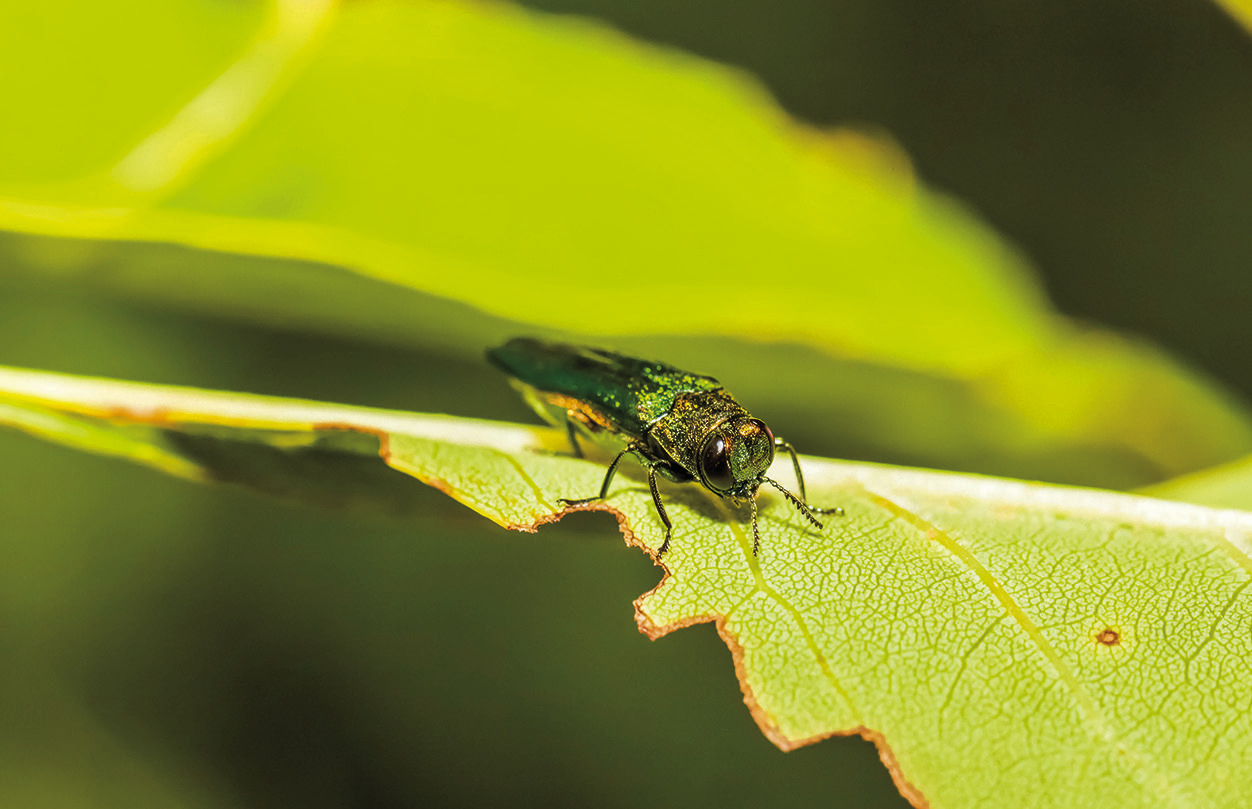
The tiny metallic-green beetle is barely longer than a grain of rice, but forestry officials across Oklahoma say it carries the power to change entire landscapes. Known as the emerald ash borer, the invasiveinsecthasonceagain beenconfirmedinOklahoma, with the latest discovery reported in Wagoner County, adding to a growing list of affected counties stretching across eastern and southern parts of the state.
To many Oklahomans, the discovery may sound like just another agricultural warning. However, to rural communities such as Marshall County, where lakeside campgrounds, river bottoms, windbreaks and small wooded properties are part of everyday life, the spread of the beetle represents a long-term threat to both the environment and local economies.
The emerald ash borer, often shortened to EAB by forestry officials, is native to northeastern Asia and is believed to have arrived in North America through infested wooden shipping materialssometimebeforeits official discovery near Detroit in 2002. Since then, it has spread relentlessly across dozens of states, killing tens of millions of ash trees along the way.
In Oklahoma, the beetle was first confirmed in Delaware County in 2016. Since then, confirmed infestations have appeared in Carter, Choctaw, Love, McCurtain, Murray, Pushmataha and now Wagoner County. Forestry experts believe additional infestations likely exist but have not yet been detected.
The insect attacks ash trees by laying eggs in cracks along the bark. Once the larvae hatches, they tunnel beneath the surface, feeding on the inner layers that carry water and nutrients through the tree.
Over time, those tunnels effectively choke the tree to death.Leavesbeginthinning, branches die back, bark splits apart, and eventually the entire tree dies, often within just a few years. Small Dshaped holes left behind by emerging adult beetles are one of the clearest signs of infestation.
For communities surrounding Lake Texoma and throughoutMarshallCounty, ash trees may not always commandthesameattention as pecans or oaks, but they quietly serve important roles along creeks, shorelines, parks and rural homesteads. Their roots help stabilize soil near waterways.
Their shade cools livestock areas, campsites and fishing spots during brutal Oklahomasummers.Inmany small towns, older ash trees line streets, cemeteries and courthouse lawns.
If the beetle spread deeper into southern Oklahoma and the Texoma region, experts warn the consequences could ripple far beyond dead trees alone. Removing large dead ash trees can cost homeowners and small towns thousands of dollars per tree, especially when located near homes, roads or power lines.
Rural volunteer fire departments and county crews could face growing safety hazards from brittle trees weakened by infestation. Campgrounds and parks near Lake Texoma could eventually require extensive tree removal projects to prevent falling limbs from injuring visitors.
Forestry officials say one of the greatest dangers comes from how easily humans unknowingly help spread the beetle. While the insect can naturally fly several miles each year, its rapid movementacrossthecountry has largely occurred because people transport infested firewood from one area to another.
A bundle of firewood carried from an infected county to a hunting lease, campsite or lakeside cabin can unknowingly introduce the pest to an entirely new region. That warning has become increasingly important for rural Oklahoma, where hauling firewood to deer camps, fishing cabins and summer cookouts is a longstanding tradition.
Officials continue urging residents to “buy it where you burn it,” a slogan that has become central to efforts aimed at slowing the beetle’s spread. The impact could also touch wildlife.
Ash trees growing near streams and lake edges provide shade that helps regulate water temperatures for fish and aquatic ecosystems. Dead and dying trees alter habitats for birds, squirrels and countless insects that depend on healthy woodlands.
In areas already stressed by drought, storms and invasive species, the loss of another native tree species adds further strain to fragile ecosystems.Stateandfederal agenciesarenowexperimenting with biological controls, including the release of tiny parasitoid wasps that target emerald ash borer eggs.
The wasps do not harm humans and are intended to help slow beetle populations naturally, though forestry specialists say it may take years before results become clear. For now, officials say public awareness remains one of the strongest defenses.
Residents are encouraged to watch for thinning ash canopies, unusual woodpecker activity, bark splitting and the distinctive D-shaped exit holes associated with the beetle. Suspected infestations can be reported to Oklahoma Forestry Services.
Inmanyways,theemerald ash borer is a reminder of how something almost invisible can reshape the rural landscape. A beetle small enough to rest unnoticed on a fingertip now threatens trees that have shaded Oklahoma farms, lakes and backroads for generations.