
How a celebrity deals with depression
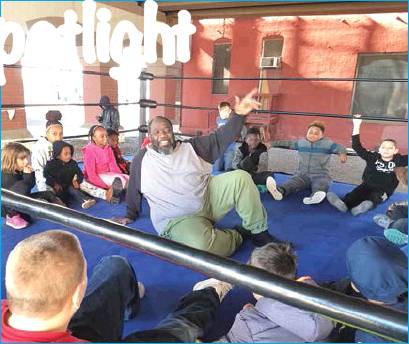
Editor’s Note: September is National Suicide Prevention Awareness Month. As the month draws to a close, The Madill Record staff chose to spend some time on the topic. Our reporter, Shalene White, and her husband, Charles, who many of you know as the Jedi Chef, have been heavily involved with professional wrestling both regionally and nationally for the past two decades. This is relevant because this week, Shalene is sharing the story of Bobby Horne, a semi-retired professional wrestler, who has struggled with depression and even contemplated suicide. We tell you this so you can be aware of the mature content that is to follow and to put a face on suicide and mental awareness that is not someone from our community.
There are many types of celebrities who go above and beyond by putting their lives in danger just for the sake of entertainment. The gamut includes actors who do their own stunts, stuntmen, professional wrestlers and others. One may think it is impossible for wrestling to be dangerous, it is fake, right? Wrestlers put their lives in the opponent’s hands every time they step into the ring. One wrong move can seriously injure them, some have been paralyzed or lost their lives.
Many professional wrestlers have suffered major, career ending injuries, while some have even proved fatal. Physical health is not the only thing that wrestler’s put in danger for the business. It is also possible to damage one’s psychological self. Many wrestlers, retired and current roster alike, have faced issues of depression, not sure where to turn. How does a celebrity smile in front of fans while fighting back his own inner demons?
Bobby Horne is a semi-retired professional wrestler. He hit the big times in wrestling in 1993, back when it was known as the World Wrestling Federation. Even though he was living his dream, inside his mind felt like a nightmare. In 1994. Horne would not elaborate on the incident but said a rookie mistake caused him to be absent from the spotlight and TV for some time. Horne wound up feeling so depressed that he almost took his own life. He had consumed almost an entire case of beer and was planning on ‘blowing his brains out’ with a 9 mm. Thankfully, fate interrupted and saved him. “My girlfriend was staying with me that weekend, she was down from Chicago. Her dog ran off, and she came screaming into the backyard where I was.”
Horne said it took three hours to locate the canine. By the time they found it, he had temporarily forgot about his own issues. Horne struggles with depression to this day. However, he does not take the medications that the doctors have prescribed him because of a diagnosis in the late 90s. Horne was diagnosed with a rare kidney disease called Focal Segmental Glomerulosclerosis — a condition where scar tissue builds on the kidney, demising the ability to filter. Horne discontinued taking Celexa for depression to limit the damage to his kidneys from the side effects.
The retired wrestler, who now runs a wrestling school and an antibullying campaign for children, said that even though he constantly has depressing thoughts, he smiles in front of the fans. “I’ve always been about helping other people, no matter my emotional state.” Horne said his depression should not hinder the children having fun or feeling safe, so he smiles through the pain.
Horne is not the only professional wrestler who has battled depression. Wrestlers like Dwayne “The Rock” Johnson, Hulk Hogan, Shawn Michaels and Brock Lesnar have struggled with the demon of depression. Some of the wrestlers lost the fight because they did not seek help for whatever reason. There are over 40 documented wrestlers who died by their own hands. Most of the wrestlers thought the end of their depression would be fixed by alcohol and pills. One wrestler did not go quietly into the night. Chris Benoit allegedly murdered his wife and young son before taking his own life. The doctors attributed his actions to brain damage from wrestling, steroid abuse and depression.
Oklahoma carries the seventh highest ranking in the nation in suicide deaths. Unfortunately, Horne and the other wrestlers are not a small pocket of people, the trend seems to go into hyperdrive in Oklahoma. Over 3,600 Oklahomans committed suicide in a four-year span. The ratio of suicides to homicides in Oklahoma are three to one. More than three fourths of suicides per year are males age 35 to 44.
Some people with suicidal tendencies have a double whammy, like Horne. He also served in the military, adding to the depression by being deployed. According to the United States Census Bureau, the suicide rate for Oklahoma is 122.3 per 100,000 veterans. This number far exceeds the national average at 70.4 per 100,000.
Marshall County is a place that is proud and very steeped in the tradition of football and wrestling, two extremely high impact sports. Researchers at the Mayo Clinic found significant evidence between sports induced brain injuries and depression. The clinic posted that “some studies suggest that the risk for developing depression following atraumatic brain injury may be two to five times higher than in the rest of the population.”
Unfortunately, in sports, a Traumatic Brain Injury (TBI) is not the only danger for depression in student athletes. The National Federation of State High School Associations (NFHS) found that the coach/student dynamic can also be a trigger for depression and suicidal tendencies. The need to do well in the sport to please the coach can cause anxiety and depression.
“The relationship between coaches and athletes can be complex,” the NFHS reported. “Coaches may feel pressured to base their interactions around techniques and tactics of the sport in order to ‘win now.’ Ideally, coaches will have the desire and administrative support to have a lifelong impact on their athletes, helping them develop into caring, competent and productive adults.”
If not careful, the need to please the coach could turn into a bad thing. “In turn, many student-athletes, relishing the positive feedback, rewards of immediate success and attention of a coach may feel pressured to stay in the athletic-performance focused part of the coach-athlete relationship, hiding the ways in which they are struggling and in need of emotional and mental support,” NFHS continued. This means the depression could potentially go untreated, and be fatal.
The organization also warns of the “just play through the pain” stigma, or how some use sports as an escape. If the student never learns to deal with the stress, and most times depression, from the game, it puts them at a higher risk for a mental-health crisis.
To assist parents or mentors in identifying depression, the Mayo Clinic posted some of the symptoms. “Common symptoms of depression include, among others, persistent feelings of sadness, emptiness or hopelessness; frequent tearfulness, anger, irritability or frustration; loss of interest or pleasure in activities a person usually enjoys; sleep problems; significant fatigue or lack of energy; changes in appetite; feelings of worthlessness or guilt; difficulty concentrating; problems with thinking and memory; and recurrent thoughts of death or suicide.”
For anybody who is depressed and having suicidal thoughts, needing somebody to talk to, there are resources available to help. National Alliance on Mental Illness has multiple programs to assist. Oklahoma Heartline is a multiple faceted organization with many resources that focus on assistance. This organization makes it simple to connect to somebody for many different crises. One can either call 800-273-8255 or simply dial 211.