
Forthepastseveralweeks, I have been telling the story of Charles Arthur Coakley, the remarkable lawyer who rose from the Marshall County courthouse to become one of Oklahoma’s legendary trial attorneys. We will return to Coakleynextweek.However, with Labor Day upon us and after the events of the past week and a half, my thoughts have been elsewhere.
On August 20th, my wife and I lost our 18-year-old grandson, Austin Turner, in a traffic accident. After laying Austin to rest, I have found myself reflecting deeply on family, on how quickly the years pass, and on the people who come into our lives for what always seems, in hindsight, far too short a time. As Christ’s brother James wrote in his epistle, “Yet you do not know what tomorrow will bring. What is your life? For you are a mist that appears for a little time and then vanishes.” (James 4:14) I think of the breath we see when we step outside on a coldwintermorning—asmall cloud of vapor that appears before us for only a moment before disappearing into the air. James says that is what our lives are like: visible and real, yet astonishingly brief, here for a little while and then gone.
Perhaps that is why this Labor Day has sent my mind traveling backward more than usual. It has taken me back more than sixty years, to a little cabin beside Lake Texoma, crowded with people, food, dominoes, sleeping bags, and laughter. It has taken me back to people who have been gone for decades but, in my memory, remain exactly as they were. Before getting there, however, it is worth remembering why we have a Labor Day in the first place, as the history of the holiday and my family’s reunion eventually became intertwined.
LaborDayemergedduring one of the great transformations in American history. In the decades after the Civil War, the United States rapidly industrialized. Factories expanded, railroads spread across the continent, mines and mills employed armies of workers, and millions of Americans left farms and small communities for industrial jobs. The prosperity produced by that transformation was enormous, but working conditions for many were often harsh. Twelvehour days were not unusual, and six-day workweeks were common. Workplace safety laws,workers’compensation, unemployment insurance, paid vacations, and many of the other protections later generations came to expect either did not exist or existed only in rudimentary form.
Out of those conditions grew the American labor movement and, eventually, the idea that the people whose labor was building the country deserved a day set aside in their honor. The first Labor Day celebration was held in New York City on September 5, 1882, under the auspices of the Central Labor Union. Thousands of workers marched through Manhattan, forming the first Labor Day parade. Afterward, workers and their families gathered for speeches, food, music, and recreation. That last point is worth remembering. From itsverybeginning,LaborDay was envisioned not simply as a political demonstration or a day away from work, but also as a day when working people could spend time with their families.
There remains some historical disagreement over who deserves credit for proposing the holiday. For many years, Peter J. McGuire, a prominent carpenter and labor leader who later helped found the American Federation of Labor, received most of the credit. Other evidence points to Matthew Maguire, a machinist and secretary of the Central Labor Union in New York. Both men participated in the first celebration, and more recent historical research has strengthened Matthew Maguire’s claim. Whoever first conceived of it, the idea spread quickly. Oregon became the first state to establish Labor Day by law in 1887. Other states followed, and on June 28, 1894, President Grover Cleveland signed legislation making the first Monday in September a national holiday.
The holiday arrived in what would become Oklahoma in an interesting way. Before statehood, Labor Day was apparently recognized here more in theory than in practice. The Madill News offered a wonderfully local example on September 9, 1904, reporting that the previous MondayhadbeenLabor Day, yet Madill’s “laboring population” had observed it by laboring rather than abstaining from work. The public square was packed with horses, mules, and people from Powell, Willis, Lebanon, McMillan, Shay, Bee, Russett, Randolph, Cumberland, Aylesworth, Weaverton, Tyler, Linn, Cliff, and other communities. Merchants were busy behind their counters, the banks were handling money, and the blacksmith shops were so active that the newspaper jokedtheysoundedasthough Vulcan himself were behind on an order for thunderbolts. That, the News concluded, was how Labor Day was spent in Madill, “that excellent commercial point” in the Chickasaw Nation. (Madill News, Sept. 9, 1904.)
Oklahoma became a state on November 16, 1907, and almost immediately the new Legislature began considering whether Labor Day should become an official state holiday. The Marshall County Democrat reported on December 20, 1907, that Senator Goulding had introduced a bill designating the first Monday in September as Labor Day and a legal holiday. The proposal moved through the Legislature during the first months of 1908. In February, newspapers reported various proposals to recognize not only Labor Day but also Oklahoma Day, Columbus Day, and other holidays. The Madill News followed the legislation closely, reporting on February 13 that the Goulding bill fixing the first Monday in September as Labor Day had been referred to a special committee, and a week later that the measure had been amended and returned to committee. (Marshall County Democrat, Dec. 20, 1907; Madill News, Feb. 13 and Feb. 20, 1908.)
Governor Charles N. Haskell apparently grew impatient with the pace. On May 22, 1908, he sent the Legislatureaspecialmessage urging immediate action on a series of measures affecting workers. Among them were measures concerning the state labor department, child labor, enforcement of the new Oklahoma Constitution’s eight-hour workday provision, andtheestablishmentof Labor Day as a legal holiday. Haskell told lawmakers that he did not minimize the importance of other unfinished business, but believed the Legislature needed to protect what he called the state’s “wealth producers.” (Daily Oklahoman, May 23, 1908.)
TheLegislatureacted.The followingday,theDailyOklahoman reported that Haskell hadapprovedSenatorGoulding’s bill establishing Labor Dayasalegalholiday.Senate Bill No. 437 established an annual holiday on the first Monday in September. By August, as dozens of measures passed by the first Legislature took effect, the Madill News listed among them the law “creating the first Monday of September as Labor Day and a legal state holiday.” (Daily Oklahoman, May 24, 1908; Madill News, Aug. 28, 1908.)
In 1904, Madill celebrated Labor Day by working. Four years later, the newly created State of Oklahoma officially told Madill and everybody else that they were entitled to take the day off.
Over the generations, Labor Day gradually shifted in the public imagination. Its connection to organized labor remains important, but for millions of Americans it also became the unofficial closing weekend of summer. Schools were starting. Vacations were ending. Football seasonwasarriving.Families cooked hamburgers, went to the lake, held picnics, and tried to squeeze one final summer weekend out of the calendar. In a sense, that was not really a departure from the original Labor Day at all. The very first celebration in 1882 ended with workers and their families gathering for recreation. The holiday was always partly about work, but it was also about what work was supposed to make possible: a life beyond work, including time with the people we love.
For much of the twentieth century, Labor Day also became one of the great weekends for another American institution that seems to be slowly disappearing: the extended family reunion.
There was a time when large family reunions were fixtures on calendars across ruralAmerica.Somelastedan afternoon. Others consumed an entire weekend. People traveled long distances to attend them. Great-aunts, second cousins, and elderly relatives whose exact place on the family tree a child might not fully understand were still familiar. Children grew up knowing not only their grandparents, aunts, uncles, and first cousins, but also branches of the family extending several generations and sometimes several states away.
Those gatherings served a function we may not have fully appreciated at the time. They held extended families together. They introduced one generation to another. They gave elderly relatives an audience for their stories and younger relatives a reason to listen. They preserved family history long before most people used that term. Nobody arrived carrying a genealogy chart, and nobody announced that oral history was about to begin. People simply sat around tables and on porches and talked. Yet that was precisely what was happening.
A census record can tell us that someone lived. A courthouse record can tell us that he bought property. A newspaper may tell us where she taught school, whom she married, or when she died. Those records are invaluable, and I have spent untoldhourssearchingthem. But they cannot tell us how someone laughed. They cannot tell us the expression an uncle always wore, the story everyone told about a grandfather, the recipe an aunt never wrote down, or why the mere mention of someone’s name could make everyone aroundatablestartlaughing. Those things survive only when one generation tells them to another.
Families have changed. We are more geographically dispersed. Households are smaller. Work schedules have shifted. Children’s weekends are filled with sports and other activities. Vacationscompeteforlimited time. Air travel and interstate highways have made it easier to move farther from home, while telephones, email, text messages, and social media have made it possible to stay in contact without being together. It has never been easier for families to stay in touch, and perhaps it has never been easier to convince ourselves that staying in touch is the same as being together. But we all know it isn’t.
Idonotthinkyounger generations love their families less, nor do I think there was a golden age when everyone eagerly attended every family gathering. I am certain people occasionally attended ourreunionbecausesomeone told them they had better be there. Human nature has not changed that much. But the institution itself was stronger. There was a date on the calendar when everybody knew where they were supposed to be, and because everybody knew, people planned around it.
For many families today, the funeral has become the family reunion. Someone dies, and people who have not seen each other in years gather in the same room. They hug, exchange phone numbers, talk about how much the children have grown, and invariably say some version of, “We shouldn’t wait until somebody dies to get together.” Everyone means it. Then everyone goes home. The years pass, and too often the next gathering is another funeral. Increasingly, even those gatherings are smaller as extended families grow more distant.
Perhaps recent events have made me more aware of that than I otherwise would be. When a family loses an 18-year-old, the illusion that there will always be another Christmas,anotherbirthday, another summer, or another chance to get together becomes harder to sustain. We know intellectually that our time together is limited. Every obituary reminds us of that.Butknowingsomething and truly understanding it are different.
For my family, Labor Day and the family reunion became inseparable long before I was born.
The story begins with my great-grandfather, Perry Walter Henry. Around 1940, hebegangatheringhisfamily athishomeinMadill.Inthose early years, the reunion was simple, essentially a family dinner. Perry had four children: mygrandfather,George SkipworthHenry;JimHenry; AlethaHenryLemmons;and MaudeHenryJones.George’s wife had died in 1938, and he attended with his children. George was an educator who served as superintendent in Brownsville, Aylesworth, and finally Kingston, where he remained superintendent for twenty-eight years. Jim came with his family. Aletha and her husband, Elmer Lemmons, came with theirs. Maude, who had no children and spent decades teaching school, completed the four branches of Perry Henry’s immediate family.
One surviving newspaper account offers a glimpse into those early reunions. Under the headline “P. W. Henry Family Has Reunion Sunday,” the paper reported that the family gathered at the Madill home of Mr. and Mrs. Walter Jones, where dinner was served at noon. Attendees included Perry Henry of Aylesworth; Jim Henry and his children; George S. Henry and his sons Skippy, Tommy, andWalterBruce;andElmer and Aletha Lemmons and their children. It was still essentially what Perry had started: a family gathered around a meal.
But families grow, children marry, grandchildren arrive, and eventually somebody needs a bigger table.
By the 1950s, the Henry reunion had grown far beyond a Sunday dinner. Labor Day weekend became the established time, and the gathering moved east of Madill into the Cumberland area, to a recreation cabin associated with Warren Camp. Newspaper accounts from those years allow us to watch the transition unfold. The Madill Record of September 4, 1958, described the family’s “second annual get-together” near Warren Camp over Labor Day weekend. There were picnics, swimming, boating, and water skiing. The list of attendees already showedhowwidelythefamily had spread: Tulsa, Sapulpa, Oklahoma City, Shawnee, Fort Worth, and elsewhere.
Another account, from the Daily Ardmoreite on September 3, 1958, under the headline “35 Attend Reunion Of Henry Families,” reported that the reunion was held on Lake Texoma andatWarrenCabin.George Henry and family came from Oklahoma City, Jim Henry from Sapulpa, and the Jones andLemmonsbranchesfrom Madill. Activities included swimming, boating, waterskiing, and other water sports, along with a large Sunday dinner at the cabin. Thirty-five people attended.
Still another newspaper story called the Warren recreation cabin “the scene of the recent Henry family reunion” and listed not only the children of Perry Henry but their children and grandchildren. By then my father, Skippy Henry, was attending with his own family, including me. The family tree was adding anothergeneration,andIhad unknowingly become part of a tradition already older than I was.
One of the most revealing ofthoseoldarticlesconcernsa reunionatCumberlandCove. TheSeptember17,1959issue of the Madill Record reported that Swimming and skiing provided entertainment during the two-day event, with a hamburger supper Saturday evening and a large family dinner on Sunday. But the family did something else. A special memorial service was conducted in tribute to Perry Walter Henry, Jennie Henry (my paternal grandmother), Tom Christian and Walter Jones, family members who had died.
That small detail means more to me today than it likely would have when I was aboy.TheHenryreunionwas not simply about the living. The dead remained part of the family gatherings. Their names were spoken, and they were remembered by those who had known them, in the presence of children and grandchildren who perhaps had not known them. Memory itself was part of the reunion.
The Warren Camp, where these reunions were held, was part of another important chapter in Marshall County history. Warren and neighboringPureCampwere company communities built around the petroleum industry east of Madill, near Cumberland and Little City. For the families who lived there, they were more than places of employment. They were communities with homes, neighbors, and shared lives. The Warren recreation cabin served as a natural gathering place and, for several years, was the Labor Day home of the Henry family.
Then came April 2, 1957. Shortly before 5:35 that Tuesday afternoon, a tornado swept into the area. The Madill Record described the storm’s “terrible quick destructive power” as it struck Warren Camp first, moving from southeast to northwest through the east side of the Warren refinery before tearing into Pure Camp. Buildings, towers and homes were destroyed. The Pure Oil Company office building was stripped down to its steel framework. The camp water tower and pump house were destroyed. Cars were picked up and thrown hundreds of yards. Pieces of wood and sheet metal were scattered across miles of countryside. (Madill Record, April 4, 1957.)
The human cost was worse. Two women, Mrs. W. O. Simpson and Mrs. C. L. Wert, were killed, six people were injured, and fifteen families were left homeless. Mrs. Wert and her husband apparently attempted to reach safety in their automobile and drove directly into the tornado’s path. Their car was carried nearly a mile and torn apart. The storm badly damaged the Warren Petroleum plant, destroyed a Warren Camp home and devastated a large portion of Pure Camp. Residents of both camps were evacuated because leaking gas created the danger of an explosion, and Madill’s National Guard unit was dispatched to guard the area through the night. (Madill Record, April 4, 1957.)
The following week, the Record reported that Pure Oil moved quickly to help its employees, but fifteen destroyed or badly damaged homes would not be rebuilt. The tornado did not by itself end the oil camps, but it became part of the closing chapter of that era. Within a few years, the larger Warren andPurecompanycommunities were being dismantled as the petroleum operations changed and families moved elsewhere.TheWarrenrecreation cabinslastedsomewhat longer, continuing to accommodate visitors into 1961, but their time was ending as well. (Madill Record, April 11, 1957.)
By then, however, another remarkable recreational complex had risen only a few miles away, and it would become the setting for the next chapteroftheHenryreunion.
Lake Texoma itself was still relatively young. Denison Dam was completed duringWorldWarII,creating the enormous Lake Texoma that transformed southern Oklahoma. In 1951, the State of Oklahoma began developing Lake Texoma State Park along the western shore of Catfish Bay. State leaders were thinking far beyond a few picnic tables and fishing docks. They envisioned one of the premier public resorts in the Southwest.
The centerpiece was Lake TexomaLodge,whichopened in 1956. Its distinctive shape quickly earned it the nickname “piano-shaped.” The lodge contained 106 rooms, a dramatic two-story lobby with a massive native-stone fireplace and terrazzo floors, a circular dining room with floor-to-ceiling glass overlooking Catfish Bay, a ballroom that could host hundreds of guests, and virtually every modern convenience Oklahoma could offer in the mid-1950s. Around it spread an entire recreational complex: duplex cottages, cabins, a golf course, boating facilities, picnic areas, an airstrip, and the unforgettable mushroom-shaped swimming pool.
The State of Oklahoma had built something unusually ambitious. Lake Texoma State Park was intended to allow ordinary families to enjoy something approaching a resort vacation without needing to be wealthy. A family could rent a cabin and prepare its own meals, swim, fish, water ski, play golf or simply picnic beneath the trees. At the same time, they could walk into a lodge sufficiently grand to entertain governors, legislators and national conventions. It represented a remarkable postwar idea: that public recreation could be both affordable and beautiful.
The dedication of the lodge in May 1956 demonstrated just how seriously Oklahoma took the project. Thousands crowded the park. Governors from several states attended. Bands played, boats moved across Catfish Bay and water skiers performed before the crowd. The Roosevelt Memorial Bridge’s whiteway lights were illuminated by remote control from the lodge patio. The new resort was not being introducedasmerelyanother state park. Oklahoma was showing it off as one of the state’s crown jewels.
That was the world into which the Henry family reunion moved.
In 1962, the Labor Day reunion relocated to Lake Texoma State Park. The September 5, 1962 issue of the Daily Ardmoreite reported that 47 people attended the gatheringanddescribedthem as descendants of the late Mr. and Mrs. Perry Walter Henry, a pioneer Woodvillearea couple. George Henry’s family was represented by my father and mother, Mr. and Mrs. Skippy Henry and children,OklahomaCity,and Mr. and Mrs. Walter Bruce Henry and family, Dallas, along with George Henry, who for many years served as superintendent of schools at Kingston. Representing the Jim Henry family were Mr. and Mrs. Fritz Henry and family, and Mr. and Mrs. Heinie Henry and family, all of Sapulpa, and Mr. and Mrs. Darwin Eaton and family, Tulsa. The Elmer Lemmons, Madill, were joined by their children and families, Mr. and Mrs. Harry Gill, Fort Worth; Mr. and Mrs. Clinton Williams, Madill, and Mr. and Mrs. Walter Lemmons, Fort Worth. Others included guests of Mrs. Maude Jones, Mr. and Mrs. Ed Shaw, Houston; also a foster-sister of the Henry children, Mrs. J. W. Webb and son, Jim, and a guest, Jack Duke, all of Hobart. Mrs. Webb is the daughter of the late Mr. and Mrs. Tom Christian, another pioneer couple in Marshall County.
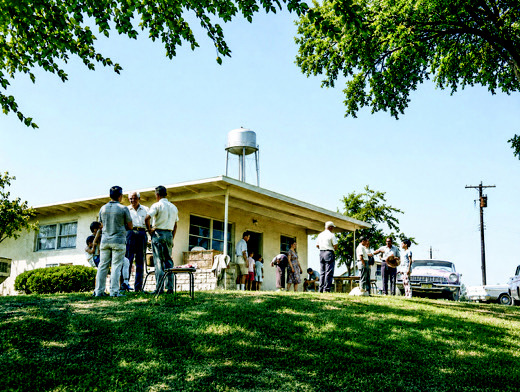
The place that became our headquarters was Cabin 12.
For more than a decade, Cabin 12 was enough. Eventually, the family grew too large for it, so nearby Cabin 10 was added. At some point, the state renumbered the cabins, turning 12 and 10 into 268 and 270. I am sure those numbers made perfect sense to whoever changed them. They meant nothing to the Henry family. They were Cabin 12 and Cabin 10, and thatwaswhattheyremained.
By modern standards, there was nothing luxurious about Cabin 12. It had two bedrooms, each containing a double bed, one small bathroom, a kitchenette and a living area with a couple of hide-a-bed sofas. Yet on Labor Day weekend we packed people into that little cabin as though occupancy limits had not yet been invented. Every night the floors were covered with people sleeping on pallets. Some family members brought camp trailers. Some slept outside. When Cabin 10 wasadded,wepromptlyfilled that one too.
Nobody seemed particularly concerned about privacy. Today, planning a family vacation might begin with deciding whether everyone can have a private bedroom and bathroom. Our principal concern was whether everyone could get there. If someone had to sleep on the floor, another blanket solved the problem. If the bathroom was occupied, you waited. If someone snored, you complained thenextmorningand probably told the story again the following Labor Day.
The crowding was not an inconveniencethatinterfered with the reunion. In its own peculiar way, it was evidence that the reunion was succeeding. A floor covered with sleeping cousins meant the family had come home.
Most people arrived Friday afternoon and stayed until sometime Monday. Once everybody was there, ordinary life seemed to stop for three days. Several family members brought boats, and much of the weekend revolved around Lake Texoma. We swam, skied, and spent hours on the water. Somewhere during those Labor Day weekends, I learned to water ski and to drive a boat. There were no formal lessons. Someone put skis on my feet, someone handed me a rope, someone else drove the boat, and eventually I either learned or swallowed enough Lake Texoma water to become properly motivated. Eventually I got good enough; I learned to slalom; that is, ski on one ski.
The park seemed enormous to me as a boy. There was the lake, the golf course, cabins scattered among the trees, boats everywhere, and, sitting above Catfish Bay, that great piano-shaped lodge. I did not know anything about mid-century architecture or self-liquidating state bonds. I did not know that governors had gathered there for its dedication or that Oklahoma once advertised it as one of the Southwest's finest public resorts. Children have a wonderful ability to accept extraordinary things as ordinary when they grow up around them. To me, it was simply the Lodge.
And then there was that swimming pool.
Anyone who spent much time at Lake Texoma Lodge inthoseyearsremembersthe mushroom-shaped pool. Its main body stretched about one hundred feet, opening into the distinctive rounded section that gave it its nickname. There were low diving boardsand,mostimportantly to a boy who would later need to prove he could do it, a high diving board. Somewhere during those Labor Day weekends, I learned to dive from the high board.
That does not sound terribly important now. Childhood memories seldom announce their importance as they happen. Nobody standing beside that pool told me to pay attention because sixty years later I would give almost anything to stand there again for five minutes. It was simply another Labor Day weekend. My cousins were nearby. My parents and grandparents were alive. The family was waiting back at Cabin 12. The smell of chlorine and lake water filled the air, and it seemed there would always be another summer.
Theoldermenspentmuch of their time on the cabin porch playing dominoes. Elmer Lemmons was a master at dominoes. He was a gentle man, as sweet and kind as anyone who ever lived, but whenhesatdownatadomino table, something changed. Elmer had a killer instinct when it came to dominoes, and he especially enjoyed watching a confident young gun decide he was finally goodenoughtotakeontheold master. Elmer was usually happy to oblige. He would sit there quietly, never boastful, never needing to tell anyone how good he was, and then proceed to give the youngster an education. More than one young man came to that table believing he knew how to play dominoes and left understanding that knowing the rules and knowing how to play the game were two entirely different things. Elmer taught them a little about dominoes, a little about humility, and perhaps a little about how life worked. At Cabin 12, dominoes was not a child’s game, and challenging Elmer Lemmons was one of the quickest ways to learn it. I learned that there too. The sound of dominoes striking the table became part of the LaborDaysoundtrack,mixed with the roar of boat motors, screen doors opening and closing, children laughing, and people calling to one another from one cabin to theother.Aroundthedomino table, there were also stories, teasing, arguments over bids, and the good-natured accusations of incompetence or dishonesty that apparently accompany every serious game of dominoes ever played.
The older women did most of the cooking, except for the meat, which was usually cooked outside on the grills. In retrospect, I suspect the men may have understood the “holiday from labor” aspect of Labor Day better than the women.
Eventually, I graduated to helping grill hamburgers and hot dogs. That was another thing I learned at Cabin 12: how to cook for a crowd. Nobody called it teaching. You simply stood around the older people until somebody decided you were old enough to be trusted with something. Then you did it, probably received some criticism, did it again the next year, and eventually became one of the people showing somebody younger how it was done.
Allofourmealswereeaten together. That may be one of the simplest facts about the Henry reunion, but I have come to believe it was one of the most important. We did not scatter to restaurants or eat whenever it happened to be convenient. Food was prepared, everyonewascalledin, and the family ate together. Children sat among adults. Cousins who lived hundreds of miles apart talked to one another.Someonetoldastory about a relative who had died. Someone corrected the story. Someone remembered something that had happened twenty or thirty years earlier, and someone else remembered it differently.
The younger people listened.
Nobody called it genealogy. Nobody called it oral history. But that is exactly what it was. That is how family history survived before ancestry websites and digital archives. It survived because Uncle Jim told a story, Aunt Mauderememberedsomeone differently, Mamaw corrected both of them, and a child nearby absorbed enough to remember years later.
Looking back, I realize Cabin 12 was something of a classroom, though nobody ever called it that. I learned to water ski there. I learned to drive a boat. I learned to dive from a high diving board. I learned to play dominoes. I learned to grill hamburgers and hot dogs. Somewhere alongtheway,withoutrealizing anyone was teaching me, I also learned to sit among adults and carry on a proper conversation.
Children were not always separated into a children’s world. We listened while adults talked. We heard stories we had heard before and stories we had not. We learned when to speak and when to listen. We learned how older people teased one another and disagreed without becoming enemies. Eventually, we became old enough to pull up a chair, sit at the domino table, and join the conversation ourselves. There were lessons at Cabin 12everyLaborDayweekend, and most of them never felt like lessons.
The magnificent Lake TexomaLodgebecamepartof those weekends, too. We used the pool, wandered through the lobby, and moved around a place I now realize was extraordinary.Theenormous native-stone fireplace, terrazzo floors, sweeping lobby, and glass overlooking Catfish Bay were simply there. So were the Circle Dining Room, the golf course, the patios, and the boats moving across the water below. We were growing up in the middle of one of the most ambitious public recreation projects Oklahoma had ever undertaken, but to us it was home ground.
That may explain why the eventual loss of the lodge and those cabins affected so many people more deeply than someone who never knewthemcouldunderstand. Buildings acquire meaning from what happens inside them. The great stone fireplace was just stone until families gathered around it. The swimming pool was concrete and water until children learned to swim and dive there. Cabin 12 was nothing more than a modest state-owned rental cabin until generations of one family crowded through its door every Labor Day weekend.
Places become important because people leave pieces of their lives there. My family left a great many pieces of ours at Lake Texoma State Park.
Today, much of that world is gone. The great lodge that once stood above Catfish Bay hasbeen replaced by a casino, glittering with lights and offering amenities the old lodge could never have imagined. And where those little state park cabins once stood, a shiny new development is now taking shape. I am sure it will be impressive. It will benew,modernandundoubtedly far more expensive than anything that ever occupied that ground before.
But nothing they build there, no matter how grand, shiny or opulent, can replace what was lost. I do not say that merely because I am an old man looking backward and wishing everything could remain exactly as it was when I was a boy. I understand that places change. Buildings grow old. Communities develop. Progress sometimes requires us to let go of things that have outlived their usefulness. But I have difficulty calling what happened at Lake Texoma State Park progress, because progress ought to leave us with something better than what we had before, and “better” cannot always be measured by the amount of money invested, the size of the building, or the number of lights glowing against the night sky.
What disappeared from thathillwasmorethananold lodge and a collection of aging cabins. We lost a public place builtaroundfamilies.Itwasa place where an ordinary family could rent a little cabin for a weekend, cook hamburgers outside, take the children swimming, play golf, spend the afternoon on the lake and walk through the doors of a beautiful resort lodge that belonged, in a very real sense, to them. You did not have to be wealthy. You did not have to belong to a club. You did not have to gamble or buy your way into an experience. You simply came to the park.
That sense of family is what I believe was lost. The old Lake Texoma State Park invited families to come and stay together. The cabins faced outward toward the lake and toward one another. Porches invited people to sit. Picnic tables invited them to eat together. The pool was filled with children. The lake was filled with families in boats. The lodge provided a common living room for everyone who came through its doors. The entire place seemed designed around the simple idea that people needed somewhere to spend time with one another.
What stands there today may be newer. What is being built may ultimately be grander. It may generate more money, attract more visitors and produce economic benefits that the old park never could. I do not deny any of that. But those are different measurements of value. A place can become more valuable on a balance sheet while becoming less valuable in ways a balance sheet cannot measure.
Perhaps that is what bothers me most when I look at that ground today. We have become very good at measuring what land is worth and not nearly as good at measuring what a place is worth. Land has an appraisal. Buildings have construction costs. Developments have projected revenues. But there is no line on a financial statement for the value of a grandfather teaching his grandson to play dominoes, a child learning to swim, cousins sleeping shoulderto- shoulder on a cabin floor, or three generations sitting around the same table after supper telling stories about a fourth generation that has already passed away.
You cannot put a dollar value on those things. But that does not make them worthless. It may make them priceless.
So, yes, I suppose what stands there now can properly be called development. I have a harder time calling it progress. Development tells us what was built. Progress requires us to ask whether, after everything was torn down and replaced, we actually gained something better.
For me, that answer will always be complicated by the people I can still see when I look across that ground. No amount of glass, steel, neon or money can put them back there. No luxury development can recreate a Labor Day morning at Cabin 12. No architect can design the sound of Elmer shuffling dominoes at the table, the slap of that cabin door, children laughing on their way to the lake, or my mother and father talking with people who have now been gone for decades.
Those things cannot be rebuilt.
They can only be remembered.
The Henry reunion continued every Labor Day weekend until about 1979 or 1980. By then, the tradition that Perry Walter Henry had started around forty years earlier had survived several generations, several locations and enormous changes in both the family and Marshall County. It had begun with a meal. It had grown into a weekend at Warren Cabin. It had survived the disappearanceoftheoil-camp world around Cumberland and moved to the new state park.Cabin12becameCabin 12 and 10, and for nearly two decades those little buildings served as the center of our family’s calendar.
Then, as happens to so many family traditions, it ended.
I do not remember anyone announcing that we had held the final Henry reunion. There was no closing ceremony. Nobody stood on the porch Monday morning and said that this was the last time all of us would gather there. Traditions rarely end that neatly. People grow older. Children marry. Families scatter. Someone dies. Someone moves. Schedules become complicated. Attendance declines. Eventually one year comes when the gathering does not happen, andthenanother.Bythetime anyone realizes a tradition has ended, it has already become a memory.
More than forty-five years have passed since those reunions ended. That is enough time for an astonishing amount of a family to disappear.
Since the last reunion, we have lost two entire generations of our family, many members of a third, and some from a fourth and even a fifth. Uncle Jim, Aunt Maude and Aunt Aletha are gone. Elmer and Mamaw are gone. My Mom and Dad are gone, along with their siblings. Numerous grandchildren and great-grandchildren have died, and even a handful of great-great-grandchildren.
When I look at those old newspaper reunion stories now, the lists of names read differently than they once did. To the newspaper reporter they were simply attendance lists. To me they are voices. Faces. Personalities. People sitting at a table, standing beside a boat, shuffling dominoes or walking through the cabin door. The newspaper preserved the names, but memory supplies everything else.
Perhaps that is why I understand the memorial service at that old Cumberland reunion better today. They were doing then exactly what I am doing now. They were refusing to allow death to erase membership in the family.
Every Labor Day, something remarkable happens in my memory. They all come back.
I can see Clint and Betty, their son-in-law Alan Ortloff, Bub and Betty Lemmons, HarryandMaryGill,Darwin and Georgia Eaton and their son Jimmy, Aunt Maude, Elmer and Aletha, Granddad, UncleJimandsomanymore. I see my mom and dad, Uncle WalterBruceandUncleTom. And I can see all my cousins who have moved on from this life.
I can hear dominoes hitting the table. I can hear the cabin door slapping and children laughing. Somewhere a boat motor starts. Hamburgers and hot dogs are cooking outside. Coffee is brewing inside. People who have been dead for decades are talking again.
Memory pays very little attention to calendars.
The old gospel song includes the line, “Precious memories, how they linger.” I understand that line much better now than when I first heard it. Memory can be painful because it reminds us of what we have lost, but it is also one of God’s great gifts. It allows those who are gone to remain part of us. A voice we have not heard in forty years can return in an instant. A smell can open a door to a room that no longer exists. A photograph can collapse half a century.
So can a place. By 2011, the old Lake Texoma cabins had been closed for several years and were awaiting demolition. That summer, knowing their time was nearly over, I went back.
The place I found was not the Cabin 12 of my childhood. Thegroundswereovergrown. The buildings had deteriorated badly. Rock walls were coming apart. Wood was rotting. The state had added a pitchedrooftoCabin12sometime over the years, changing its appearance, but there was no disguising what time and abandonment had done. The cabin that had once seemed so full of life was dying.
I took pictures. I also took two or three loose pieces of rock or brick from the crumbling walls. They were already falling away, and I wanted something physical from the place before it disappeared. I still have them.
Then I stood there for a while.
The remarkable thing about memory is that sometimes what your eyes see and what your mind sees are completely different. My eyes saw an abandoned cabin in terrible condition. My mind saw Labor Day.
I could see my loved one who had already gone on. I could hear that door slapping shut. I could hear children laughing and boats roaring across the lake. I could smell hamburgers, hot dogs and coffee.
For thirty minutes or more, I simply stood there and soaked it up one final time.
I remember thinking that if I could choose what Heaven might look like, Cabin 12 wouldsuitmejustfine.Iknow Scripture speaks of streets of gold and gates of pearl, but the Henry family was never particularly concerned with such extravagance. Give us a card table, some folding chairs, a sleeping bag, a patch of ground, a grill, a boat and enough water to ski on, and we could manage quite well.
That was really all we needed.
The next time I passed through the area, Cabin 12 was gone.
Eventually the Lodge disappeared too. The grand piano-shaped building that had watched over Catfish Bay since 1956 closed in 2006 and was later demolished. The swimming pool where I learned to dive disappeared. The cabins disappeared. Much of the physical landscape of those Labor Day weekends was erased. Warren Camp had disappeared before them. The Warren recreation cabins were gone. TheworldinwhichtheHenry reunion had grown and flourished had almost completely vanished from the ground.
Yet here is the strange thing about places that truly matter: sometimes they become more permanent after they are gone.
A building can be demolished. A cabin can rot. A swimming pool can be filled.
An oil camp can disappear. The people can die. But once aplacebecomeswovendeeply enough into who we are, bulldozers cannot completely remove it.
I think that is one reason I have spent so many years writing local history. We sometimes think history is about preserving dates, buildings and the names of important people. It is, but it is also about preserving the connection between people and places. Without those connections, a cabin is just an old building, a park is acreage, an abandoned oil camp is merely a place where something used to stand, and a list of names in a seventy-year-old newspaper is nothing more than type on yellowed paper.
Butwhenweknowthestories, the landscape becomes populated again.
The Warren Cabin is no longer merely an old recreation building near a vanished oil camp. It becomes the place where thirty-five members of a family ate Sunday dinner together, where children swam and skied, and where the family paused long enough to remember those who had already died. Cabin 12 is no longer merely an obsolete state park cabin. It becomes the place where a boy learned to ski, drive a boat, play dominoes, dive from a high board, grill hamburgers, and talk to adults. Lake Texoma Lodge is no longer simply a demolished example of mid-century architecture. It becomes the place where families spent weekends, children grew up, andgenerationsaccumulated memories.
That is what history does when it is at its best. It puts the people back into the places.
And that brings me back to this Labor Day.
The events of the past weekandahalfhavemadeall of this more difficult to write than it ordinarily would have been. Our grandson Austin never knew those old Labor Day reunions. They belonged to another generation and another chapter of our family’s story. But his death at eighteen has reminded me, with a force I would rather not have experienced, of something those reunions were teaching me all along.
Family exists in time. For a few years, if we are fortunate, our lives overlap. Grandparents know grandchildren. Cousins grow up together. Parents watch children become adults. Great-grandparentsmaylive long enough to hold another generation. Then, one by one, people leave the picture while new people enter it. No family gathering can ever be exactly repeated because by thenextgatheringsomeoneis older,someonehasbeenborn, someone has moved away and, eventually, someone’s chair is empty.
When we are young, we think the people around us are permanent. Granddad will always be there. Mom and Dad will always be there. The aunts and uncles will always be sitting around that table. There will always be another Labor Day. There will always be another reunion. There will always be another chance to ask the question, hear the story, take the photograph or make the trip.
Then suddenly forty-five years have passed.
Perhaps that is what I miss most about the old family reunion. It was not merely that we gathered. It was that, for three days every year, we stopped the ordinary movement of life long enough to notice one another. We ate together. We played together. We talked. We listened. We laughed. We remembered those who had died. We created memories with people we did not yet realize we would someday desperately miss.
I wish families still did more of that. I wish mine did.
Not because everything about the old days was better. It wasn’t. Not because ourgrandparentsunderstood family better than we do. They had their disagreements, grudges, problems and peculiarities just as we have ours. But they understood the importance of showing up. They put a date on the calendar and came. For one weekend, distance and inconvenience lost the argument.
There is a lesson in that which has very little to do with nostalgia.
One day the photograph you almost did not take may become one of your most valuable possessions. One day the story you have heard a hundred times may be the story you would give anything to hear once more in the voice of the person who told it. One day you may find yourself standing in front of an abandoned cabin listening in your mind to people who have been dead for decades.
And one day you may bury someoneyouwerecertainyou had many more years to love.
That is not an argument for living in the past. It is an argument for paying attention to the present.
So, this Labor Day, while we properly remember the American workers for whom the holiday was created, perhaps we can also remember something that was part of Labor Day from its very beginning. The first celebration did not end when the parade did. Workers gathered afterward with their families. The day was intended not only to recognize labor but also to provide recreation and fellowship for the people whose labor built the country.
Maybe my great-grandfather understood something about that when he began gathering his children around a table more than eighty years ago. Maybe the generations who turned his family dinner into an entire Labor Day weekend understood it too. Work matters. Achievement matters. Careers matter. But none of those things lasts forever.
People matter. This weekend, more than forty-five years after the last Henry Family Reunion at Lake Texoma State Park, I know exactly where part of me will be.
The boats will be running again. The dominoes will be clicking against the table. Somebody will be grilling hamburgers and hot dogs. Coffee will be brewing in that tiny kitchen. The floor will be covered with pallets. Children will be running in and out, and somebody will yell at them about slamming the door. The older folks will be talking. The younger ones will be listening, even when everyone assumes they are not. Out at the Lodge, the mushroom pool will still be full of water, and somewhere a boy will be standing on that high diving board trying to work up the courage to jump. Uncle Jim will be there. Aunt Maude and Aunt Aletha will be there. Elmer and Mamawwillbethere.Granddad will be there. Mom and Dad will be there. All those names in the old newspaper clippings will once again become people.
And this year, when my mind wanders among all those precious memories, I suspect there will be another young face among them.
The physical Cabin 12 disappeared fifteen years ago. The family reunion ended more than forty-five years ago. Most of the people who made the place what it was aregone.YeteveryLaborDay weekend, I can still go there.
In my heart, there will always be a Cabin 12.
Thank you for indulging me in this little journey back home. I hope you have a wonderful Labor Day—or, as I have come to think of it, Family Day. Spend some of it with the people you love, make a few memories, and don’t be too quick to assume there will always be another Labor Day.
Next week, we return to Charles Arthur Coakley, the Lion of the Courtroom, as he steps into the greatest trial of his remarkable career.