
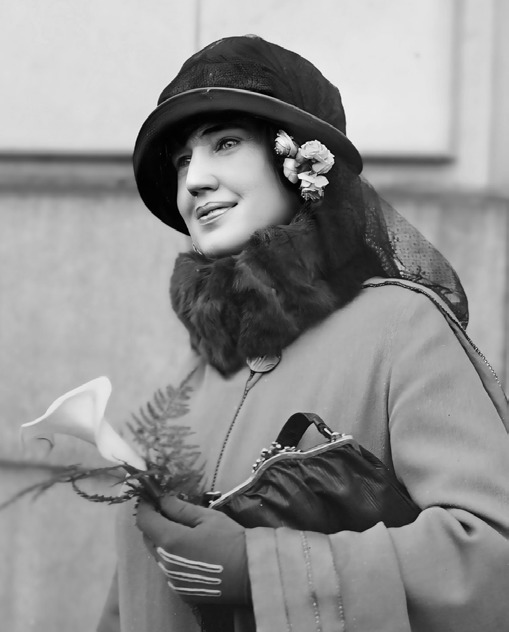
The conclusion of our last installment marked the end of one chapter in Charles ArthurCoakley’sremarkable career and the beginning of another.
For more than a decade, Coakley had practiced law in Madill alongside his friend and partner, Franklin ElmoreKennamer.Together, they had builtone ofsouthern Oklahoma’s most respected law firms. Coakley developed a reputation as a formidable courtroom advocate, a lawyer at his best before judges and juries. Kennamer became equally well known for his scholarship,soundjudgment, and judicial temperament. Theirpartnershiphadserved both men well, but by late 1919 it had become apparent that change was coming.
AlthoughKennamerwould not officially take his place on the Oklahoma Supreme Court until 1920, those close to the legal and political world already understood that his appointment was forthcoming. It was the culmination of years of distinguished practice and public service, but it also meant that the firm of Kennamer & Coakley would soon come to an end. Rather than wait for events to overtake him, Coakley acted.
In December 1919, he left Madillandmovedhispractice to Ardmore. There, he joined with James H. Mathers, an established Ardmore attorney, and during the first week of January 1920 the new firm of Mathers & Coakleyopeneditsdoors.The movewasmorethanasimple change of address.
Madill had been the place where Coakley established himself. There he had served as county attorney, prosecuted serious criminal cases, defended clients in difficult litigation, served on the Marshall County Exemption Board during the First World War, enlisted in the United States Army, attained the rank of Captain, and served at the War Department in Washington, D.C. He earned the respect of judges, lawyers, and juries. Madill had given him his beginningandhisreputation. Ardmore offered something different. It offered a larger stage.
Ardmore was not simply a largertownwithmoreclients. It represented a different kind of legal world. Madill remained a close-knit countyseat community where an attorney’s reputation was built case by case and often passed from one family to another by word of mouth. Ardmore, by contrast, had become a city of rapid growth, shifting alliances, and increasingly complex fortunes. Men arrived with oil leases in their pockets, borrowed money in search of the next producing well, and formed companies that could rise or collapse within months. The legal questions created by such activity were often as complicated as the financial arrangements behind them.
The oil boom brought prosperity, but prosperity also brought conflict. Mineral interests were divided and sold. Titles were challenged. Partnerships dissolved. Investors accused one anotheroffraud.Landowners disputed leases. Railroads, banks, drilling companies, and merchants all required lawyers capable of handling matters that reached far beyond the routine business of a county-seat practice. Criminal cases likewise reflected the speed and uncertainty of a city transformed by sudden wealth, transient labor, gambling, liquor, and the fierce competition that accompanied the oil fields.
Coakley was not abandoning the kind of law he had practiced in Madill. He was taking the skills he had developed there into a larger and more demanding arena. He had already shown that he could prepare a case, examine witnesses, withstand pressure, and command the attention of a jury. Ardmore would providemoreopportunitiesto exercise those abilities—and more people with the means to hire a lawyer of uncommon talent.
His new partner also mattered. James H. Mathers was already established in theArdmorebarandfamiliar with the lawyers, judges, businessmen, and political figures of Carter County. Coakley brought with him the reputation he had earned in Marshall County. Mathers brought the local connections and knowledge of an experienced Ardmore attorney. The partnership gave Coakley something more valuable than an office in a larger city. It gave him an immediateplacewithinoneof thebusiestlegalcommunities in southern Oklahoma.
The timing could scarcely have been more consequential. Coakley arrived in Ardmore as the city’s oil wealth, political importance, and national visibility were converging. He could not have known precisely what awaited him, but he had placed himself where the important cases were likely to arise.
And one of them was already approaching.
By 1920, Ardmore had becomeoneofthecommercial, financial, and legal centers of southern Oklahoma. The development of the nearby Healdton oil field had brought extraordinary wealth into Carter County. Banks expanded. New businesses opened. Oil companies, railroads, landowners, speculators, and investors created legal disputesinvolvinglargesums of money and complicated questions of property, contracts,mineralrights,and corporate control. The city’s courtrooms increasingly handled cases that drew attention well beyond Carter County.
Foralawyerwhosegreatest strength lay before a jury, there were few better places in Oklahoma to practice.
Neither Coakley nor Mathers could have known that, within a year of establishing their new firm, one of the most powerful men in Oklahoma would be dead, the woman accused of killing him would become one of the most talked-about figures in America, and the firm of Mathers & Coakley would be drawn into one of themostsensationalcriminal prosecutions of the twentieth century.
But before Charles Arthur Coakley could stand beside Clara Smith in the Carter County courtroom, another remarkablestoryhadalready unfolded. It was the story of the man whose death would captivate the nation—a man who had climbed from modest beginnings on the Kansas prairie to become one of the wealthiest and most politically influential figures in the Southwest.
His name was Jake Louis Hamon.
Few criminal trials become part of American history. Most begin with a death, proceed through an indictment, occupy the attentionofalocalcommunity for a few days or weeks, and then disappear into courthouse archives. Even many notorious murders eventually fade from public memory, remembered only by descendants, historians, or an occasional student of the law.
The Clara Smith murder trial was different.
Long before Charles Arthur Coakley entered the courtroom to defend her, the case had become national news. Newspapers from New York to Los Angeles followed every development. Correspondents traveled to Ardmore from across the country. Political leaders watched anxiously. Oilmen discussed the case in hotel lobbies and railroad cars. Lawyers debated it in courthouses and barrooms. The public followed every rumor, every witness, and everyturnintheinvestigation.
The reason was simple. Thedeadmanwasnotmerely another wealthy oil operator. He was Jake Louis Hamon.
To understand why his death produced such extraordinary interest, one must first understand the remarkablelifethatpreceded it.
At the time of his death in November 1920, Hamon occupied a position unlike that of almost any other man in Oklahoma. He possessed immense wealth, but Oklahoma had other wealthy oilmen. He exercised enormous political influence, yet he was not a governor, senator, or congressman. His powerresteduponsomething less visible and often more effective than public office. It rested upon relationships.
Hamon knew national political leaders. He advised candidates and helped select them. He raised campaign money. He cultivated friendships in Washington. He understood the complicated system of federalpatronageandbecame one of the men Oklahoma Republicanssoughtoutwhen appointments, campaigns, or party strategy were at stake.
Many contemporaries referred to him as the “Republican boss of Oklahoma.” The title was not entirely complimentary. Neither was it entirely inaccurate.
YetnothingaboutHamon’s rise had been preordained. He inherited neither great wealth nor political influence. No famous family name opened doors for him. He began with no producing oil leases, no chain of banks, no vast ranches, and no national political organization behind him. What he became, he built through intelligence, ambition, political instinct, calculated risk, and an uncommon ability to recognize opportunity before itbecameobvioustoeveryone else.
His rise closely paralleled the rise of Oklahoma itself.
That parallel is important. Hamon did not build his career within an old and settled society whose institutions had been established for generations. He came of age professionally while Oklahoma itself was being assembled. Counties were organized, towns incorporated, railroads extended, courts established, and political parties formed. Menwhoarrivedearlyenough could help shape institutions that later generations would simply inherit.
In an older state, Hamon might have spent years waitingforseniorlawyersand long-established politicians to surrender their positions. In Oklahoma Territory, many of those positions did not yet exist. Offices had to be created. Party organizations had to be built. Local governments needed officials. New communities required men willing to write ordinances, organize campaigns, settle disputes, and convince residents that they were capable of leadership.
Hamon understood that in a place undergoing such rapid change, ambition itself could become a valuable credential. The young lawyer who volunteered, spoke confidently, remembered names, and appeared wherever decisions were being made could advance with remarkable speed. He did not need to displace an entrenched political dynasty. He needed only to become indispensable before one could form.
That was the opportunity Oklahoma offered him.
As the territories grew, so did Jake Hamon. As oil transformed the Southwest, it transformed him. As Oklahoma moved from frontier territory to statehood and national political importance, Hamon moved with it.
His story began hundreds of miles north of Ardmore, far removed from oil derricks, political conventions, and presidential campaigns. It began on the Kansas prairie.
Jacob Louis Hamon was bornonAugust16,1873,near Grenola, Kansas, less than a decade after the Civil War. America remained a nation in transition. Reconstruction continued in the South. Railroads pushed steadily westward.Greatcattledrives crossed the plains. Kansas itself was still a young state, having entered the Union only twelve years earlier after years of violence over the question of slavery.
The world into which Hamon was born rewarded energy more than pedigree. The generation before him had broken prairie sod, built towns where none had existed, and struggled to establish farms, businesses, schools, churches, and local governments. Advancement was possible, but it usually belonged to those willing to seize opportunity rather than wait for it. Hamon displayed that quality early.
Friends and later associates described him as energetic, personable, confident, and unusually comfortableamongstrangers. He possessed a quick smile, remembered names and faces, and had a gift for making people believe he was genuinely interested in them. Those qualities would eventually make him a formidable political organizer, but they first servedhimasayounglawyer.
Education offered one of the surest paths to advancement, and Hamon pursued it. He attended the University of Kansas and studied law at a time when legal education was changing.Theprofessionwas slowly moving away from the older system of “reading law” in an established attorney’s office and toward formal instruction in universities and law schools.
He graduated in 1898. That same year, another event occurred that would shape the remainder of his life.
He married Georgia Perkins of Sedan, Kansas.
Georgia had worked as a schoolteacher and came from circumstances not greatly differentfromJake’sown.She was educated, capable, and accustomed to the discipline and responsibility expected of a teacher in a small Midwestern community. In an era when most women were offered few professional opportunities, teaching was one of the limited occupations considered respectable for an educated young woman. It required patience, selfcommand, organization, and the ability to maintain order—qualities that would serveherwellintheuncertain years ahead.
When Georgia married Jake, she was not marrying an oil millionaire, railroad promoter, or political kingmaker. She was marrying a newly graduated lawyerwhoseambitionswere evident but whose future remained entirely uncertain. There was no guarantee that he would establish a successful practice, much less become one of the most powerful men in Oklahoma. Their early life together was built not upon wealth but upon expectation.
Georgiawouldaccompany him through nearly every stage of his ascent. She would leave the familiarity of Kansas, follow him into a newly opened territory, and help create a home in a place that had scarcely become a town. While Jake formed partnerships, cultivated clients, and entered politics, Georgia carried the responsibilities of family life. She provided the stability that allowed him to spend long hours away from home, attend political meetings, travel across the territory, and pursue opportunities that might not produce immediate income.
The nature of that contribution is easily overlooked. Public records preserve the names of men elected to office, admitted to practice, appointed to committees, or identified as partners in business ventures. They rarely record the work performed within the home that made those careers possible. The meals prepared, children raised, moves endured, social obligations met, and periods of financial uncertainty survived seldom appear in biographies. Yet without that private foundation, many public careers could not have been built.
Georgia’s role would become more complicated as Jake’s fortunes rose. The young schoolteacher who married a struggling lawyer would eventually become the wife of a millionaire whose name appeared in newspapers across the country. She would occupy an increasingly prominent place in Oklahoma society while also enduring the loneliness, absences, rumors, and humiliations that accompanied her husband’s public life. Those later burdens still lay far ahead.
In 1898, Jake and Georgia Hamon were simply a young married couple beginning life with modest means. Jake possessed a law degree, considerable ambition, and remarkable confidence in his own abilities. Georgia possessed education, practical judgment, and confidence in the man she had married. They could not have known that the road before them would lead from a Kansas classroom to an Oklahoma boomtown, from financial uncertainty to immense wealth, and finally into one of the greatest public scandals of the age.
The newly married couple began life with modest means. Jake had a law degree, ambition, and confidence. Georgia had training, practical judgment, and faith in her husband’s ability. Beyond that, they possessed little of the wealth or influence that would later surround the Hamon name.
Had they remained in Kansas, Jake might have become a successful smalltown attorney, trying local lawsuits, preparing deeds, drafting wills, collecting debts, and occasionally prosecuting or defending criminal cases. It would have been a respectable life.
History, however, was opening another door.
South of Kansas lay one of the last great regions of opportunityinthecontinental United States. It was not one territory, but two: Oklahoma Territory in the west and Indian Territory in the east. To modern readers, the distinction between the two may seem technical. To those living at the end of the nineteenth century, it was fundamental.
Oklahoma Territory possessed a government organizedundertheauthority of the United States. It had a territorial governor appointed by the President, a legislature, courts, counties, and municipalities established largely upon the model used elsewhere in the nation. Its population had increased rapidly following federal land openings, and many of its towns were dominated by settlers who had arrived only a few years earlier.
Indian Territory followed a different history. The tribal nations exercised forms of sovereignty that predated the creation of Oklahoma Territory. They maintained governments, legal systems, schools, and political institutions of their own. Federal courts possessed jurisdiction over certain matters, while tribal courts and governments retained authority over others. The result was a complicated legal landscape in which jurisdiction could depend upon the identity of the parties, the nature of the dispute, the location of the event,andthelawsgoverning the land involved.
For lawyers, that complexity created both difficulty and opportunity. ThefuturestateofOklahoma would not be formed upon an empty map. It would emerge from the forced union of two territories with different histories, different governments, and different legal traditions. The years surroundingstatehoodwould produce difficult questions involving tribal sovereignty, allotment, land ownership, taxation, jurisdiction, and the authority of newly created state institutions.
Hamon’s principal early opportunities would arise in Oklahoma Territory, but the transformation occurring in Indian Territory formed part ofthesamelargermovement. Both regions were being drawn toward statehood. Bothwereexperiencingrapid settlement and economic change. Both offered exceptional opportunities to ambitious professionals willing to accept uncertainty as the price of advancement.
By the time Hamon graduated from law school, many Americans believed the frontier had disappeared. In 1890, the UnitedStatesCensusBureau had declared that there was no longer a continuous frontier line separating settled communities from the wilderness beyond. The great western migrations hadslowed.Thebuffaloherds were gone. The cattle trails were fading into memory. Railroads stretched across the continent. Millions of acres that only a generation earlier had been open prairie had become farms, towns, and cities.
Yet south of Kansas, the old order was still giving way to the new.
Indian Territory occupied the eastern portion of present-day Oklahoma and was home principally to the Cherokee, Chickasaw, Choctaw, Muscogee Creek, and Seminole Nations. Decades earlier, those nations had been forcibly removed from their ancestral homelands in the Southeast. In Indian Territory, they rebuilt their governments, established schools, adopted constitutions, maintained courts, chartered businesses, and created communities of considerable sophistication.
The popular image of Indian Territory as a lawless expanse populated only by outlaws, cattlemen, and Native Americans had been reinforced by dime novels and sensational newspaper accounts. It contained enough truth to survive, but by the end of the nineteenth century it no longer accurately described much of the territory. Indian Territory was not empty. It wasnotwithoutgovernment. It was a region undergoing profound political, economic, and legal change.
To the west lay Oklahoma Territory, created in 1890 from lands opened to non-Indian settlement through a series of land runs and other federal openings. Towns such as Guthrie, Oklahoma City, Kingfisher, Enid, and Perry had risen rapidly from the prairie,attractingmerchants, bankers,physicians,lawyers, railroadmen,andspeculators eager to establish themselves before older interests could take control.
Al t h o u g h t h e two territorieswereadministered separately, they were moving toward a common destiny.
Congress accelerated that movement through the Curtis Act of 1898. The act weakened tribal courts and governments and advanced the division of communally held tribal lands into individual allotments. For tribal citizens, the policy often meant the loss of land, authority, and institutions their nations had rebuilt after removal. For many non-Indians, however, the dismantling of the existing order appeared to create opportunity on a scale rarely seen elsewhere in America.
As governments changed, lawyerswereneeded.Asland changedhands,lawyerswere needed. As towns formed, banks opened, railroads expanded, and businesses organized, lawyers were needed.
The legal transformation of the two territories created an extraordinary demand for young attorneys. Every land transaction could require deeds, mortgages, contracts, title examinations, or litigation. New municipal governments needed ordinances. Businesses needed organization. Estates required probate. Criminal cases crowded territorial and federal courts. Civil disputes followed nearly every stage of development.
A capable lawyer arriving at the right time could build more than a practice. He could build a career of influence.
Young attorneys across the Midwest understood that. Many remained in Kansas, Missouri, Illinois, or Iowa, where older and better-established lawyers already dominated the profession. Others looked toward Oklahoma, where towns, courts, and political institutions were still being built.
Older states offered stability. The territories offered possibility. Jake Hamon belonged to the second group.
Fresh from law school, recently married, and possessing more confidence than capital, he understood that the greatest opportunities were often foundwhereestablishedmen had not yet taken every seat at the table. He was hardly alone. During the final years of the nineteenth century and the opening years of the twentieth, attorneys, merchants, physicians, teachers, ministers, and speculators poured into Oklahoma in search of new beginnings.
Some failed and returned home. Others built respectable careers. A handful accumulated extraordinary fortunes. No one could yet know which path awaited Jake Hamon.
Nor could anyone foresee that another young attorney would establish himself in southern Oklahoma and eventually become part of Hamon’s story. Charles ArthurCoakleywasbeginning the career that would make him one of the state’s most accomplished courtroom advocates. For the moment, however, the two men moved in separate worlds. Hamonsoughtopportunityin western Oklahoma. Coakley built his reputation before juries in Marshall County.
Their paths would not converge for nearly two decades.
When they finally did, the result would be one of the most celebrated criminal trials in Oklahoma history.
Before that could happen, Jake Hamon had to find his place in a country where fortunes and reputations could still be made with astonishing speed.
The opportunity arrived in 1901.
That year, the federal governmentpreparedtoopen nearly three million acres of Kiowa, Comanche, and Apachelandsinsouthwestern Oklahoma Territory to non-Indian settlement. Earlier land openings had been conducted through dramatic runs in which settlers raced across the prairie at a signal, hoping to claim the best farms and town lots before anyone else.
The land runs became part of American folklore, but they also created confusion, violence, fraud, and years of litigation. Competing claimants often arrived at the same tract within minutes of each other. “Sooners” entered the lands illegally before the official opening. Territorial courts became clogged with disputes over who had arrived first and whether claims had been lawfully made.
For the 1901 opening, the federal government chose a different method. Instead of a race, there would be a lottery.
The system appeared more orderly and more fair. Qualified applicants would register, and names would be drawn.Successwoulddepend not upon the speed of a horse or wagon, but upon chance.
The announcement electrified the country.
Railroads advertised excursion fares to Oklahoma. Hotels filled. Tent cities appeared near registration centers. Merchants sold food, bedding, tools, and supplies to men and women convinced that a single drawing might change their lives. Farmers dreamed of richsoil.Merchantsimagined new towns. Doctors, bankers, teachers, ministers, and lawyers saw the opportunity to establish themselves in communities that did not yet exist.
More than 160,000 people registered for approximately 13,000 homesteads. Among them was Jake Hamon. He did not win.
For many disappointed applicants, that would have ended the adventure. They returned home and resumed the lives they had known before. Hamon did not.
Georgia’s father had successfully obtained a claim near the area where the new city of Lawton was being established. Jake and Georgia followed him into the newly opened country. Although Hamon had failed to obtain a homestead of his own, he quickly recognized that the people settling the land might offer him something more valuable than the land itself.
Every new farmer needed clear title. Every new merchant needed contracts. Every new business required organization. Every new city required ordinances, prosecutions, courts, and lawyers.
The greatest fortunes, Hamon understood, would not necessarily belong only to those who farmed the land. They might also belong to those who served the thousands of people arriving to settle it.
Foranambitiousattorney, a boomtown could be more valuable than a quartersection of prairie.
Lawtonscarcelyresembled a settled city when the Hamons arrived in the late summer of 1901. Buildings rose almost daily along streets that remained little more than dirt and dust. Lumber arrived as quickly as carpenters could use it. Businesses operated from tents and temporary wooden structures while permanent buildings were still being planned. Wagons crowded the streets. Freight teams, saddle horses, pedestrians, surveyors, and construction crews competed for space.
Everything seemed unfinished. Everything seemed possible.
Lawton had been designated as the county seat of the newly created Comanche County, ensuring that much of the legal and political business of the surrounding region would flow through the town. That designation alone made it attractive to attorneys. Every county office, prosecution, probate matter, land dispute, tax controversy, and civil action promised work for the local bar.
Thetown’sspeedofgrowth also produced a social world in which strangers were constantly introducing themselves, forming partnerships, and making plans. A man’s reputation wasnotyetfixedbydecadesof family history. Few residents could point to grandfathers who had founded the local bank, served on the bench, or controlled the courthouse. Nearly everyone was new. Past status mattered less than present ability.
That atmosphere favored a man like Jake Hamon.
He was not burdened by excessive caution. He did not wait to be invited into public life. He made acquaintances, attended meetings, volunteered his services, and placed himself where opportunities might arise.Inasettledcommunity, such ambition might have been viewed with suspicion. In a boomtown, it was almost expected.
Lawton also taught him to live with uncertainty. Businesses opened and failed. Land values rose and fell. Political alliances formed quickly and sometimes disappeared just as fast. Men who seemed prosperous one month could be insolvent the next. Success depended upon knowing not only the law but also the people who controlled credit, property, newspapers, transportation, and public office.
Hamon became a careful student of all of them.
For Georgia, the move must have required considerable courage. She had left the relative order and familiarity of Kansas for a place where streets, schools, homes, businesses, and local government were being created almost at once. Thecomfortsthatwouldlater accompanywealthwereyears away.Likemanywomenwho helped establish Oklahoma’s new communities, she carried much of the burden of creating stability within an unstable place.
While Jake built a practice and made political acquaintances, Georgia built a home. She endured the uncertainty of frontier life and supported a husband whose ambitions already extended well beyond the ordinary practice of law. The public story of Jake Hamon’s rise would later be told through offices held, fortunes made, and political alliances formed. Georgia’s contribution was quieter, but no less real.
Within weeks of arriving, Hamon entered into a law partnership and opened an office. Like most lawyers beginning practice in a frontier community, he could not afford to specialize. One day might involve preparing a deed or examining title to a newly claimed tract. The next might require drafting a contract, collecting a debt, organizing a business, defending a criminal charge, or resolving a dispute over property boundaries.
The work demanded versatility. Hamon thrived in it.
He possessed an easy confidence before strangers, a strong memory for names, and an ability to make acquaintances quickly. Clients found him energetic and approachable. Fellow lawyers recognized his intelligence.Evenhispolitical opponents acknowledged his capacity for hard work.
Those qualities soon attracted attention beyond the courtroom.
Lawton was organizing a municipal government almost from nothing. It needed men capable of drafting ordinances, advising public officials, prosecuting violations, and establishing the legal machinery of a new city. There were no entrenched courthouse families and no generationsold political organizations. In such a place, a young lawyer could rise rapidly.
Hamon did. He became Lawton’s first city attorney and later served as mayor. By national standards,thoseweremodest offices. For Hamon, they provided something more important than salary or title.
Theyintroducedhimtothe workings of politics.
Local office also taught Hamonthatgovernmentcould shape economic opportunity. A city determined where streets would be opened, which businesses would receive licenses, how public services would be provided, and which improvements would receive public support. Countyandterritorialofficials influenced roads, courts, schools, public contracts, and the administration of newly opened lands. At the federal level, political connections affected appointments, land policy, Indian affairs, post offices, and other decisions of enormous consequence to developing communities.
Hamon saw that public policy,business,andpersonal relationships were rarely separate worlds. They overlapped constantly. The lawyer who understood government could better serve businessmen. The businessman who supported political organizations could gain access to decisionmakers. The politician who knew both could become valuable to everyone.
There is no reason to concludethatHamonarrived in Lawton with a fully developed plan to become a statewide political power. His career appears to have grownthroughasuccessionof opportunities, each revealing another possibility. A legal practice led to municipal office. Municipal office led to party activity. Party activity led to statewide relationships. Statewide relationships opened doors in Washington.
At each stage, Hamon recognized the usefulness of what he had learned and carried it forward.
The courtroom had taught Hamon how to persuade judges and juries. City government taught him how to build alliances, reward loyalty, remember obligations, and transform personal acquaintances into political organization. Every campaign produced friendships. Every appointment created expectations. Every favor granted or received became part of a network that might one day extend far beyond Lawton.
Hamon learned quickly that politics did not begin on election day.
It was built in courthouse corridors, hotel lobbies, newspaper offices, railroad depots, and private conversations. It depended uponpeoplewhowouldattend county conventions, organize precincts, contribute money, speak for candidates, and remain loyal when victory was uncertain.
That kind of politics suited him.
He remembered names and faces. He remembered families. He remembered who had supported him and who might be persuaded to do so in the future. He rarely treated a political opponent as a permanent enemy, understanding that today’s rival could become tomorrow’s ally.
AtatimewhenDemocrats held a numerical advantage in much of Oklahoma, Republicansuccessdepended heavily upon organization. Every county chairman mattered. Every delegate mattered. Every dependable party worker mattered.
Hamon became one of the most effective of them.
Hamon’s growing influence also reflected the peculiar importance of Republican politics during periods when the party controlled the federal government. Oklahoma Republicans might lose state and local elections, but a Republican administration in Washington still possessed thousands of appointments and considerable authority over matters affecting the territory and, later, the state.
Postmasters, federal marshals, United States attorneys, judges, land officials, and other federal officers depended upon presidential appointment or national political influence. For ambitious Republicans, access to federal patronage could compensate for weakness at the ballot box. A man who enjoyed the confidence of national party leaders could exercise power even when his own party remainedaminorityathome.
Hamon understood the value of that system. Patronage was more than the distribution of jobs. It was a means of maintaining party loyalty, rewarding dependable workers, and building an organization capable of surviving defeat. A county chairman who knew his efforts might one day be recognized had reason to remain active. A lawyer, businessman, or newspaper editor who hoped for appointment had reason to support the party and those who spoke for it in Washington.
The system could appear unseemly, and it frequently was. Yet it was an accepted feature of American politics during that period. Political parties depended upon patronage to hold their organizations together, and national leaders depended upontrustedmenineachstate to recommend candidates for appointment.
Gradually,Hamonbecame one of those trusted men.
That did not mean he personally controlled every federal appointment in Oklahoma.Politicalinfluence was divided among senators, congressmen, national committeemen, state party leaders, and competing factions. But Hamon had learned how to participate effectively in that contest. He knewwhomtocontact,which alliances mattered, and how local disputes appeared from Washington.
More importantly, he was building a reputation as a man who could deliver political support when it counted.
He served on the Republican Territorial Central Committee and traveled widely, meeting attorneys, bankers, newspaper publishers, merchants, county officials, and party leaders. Travel across territorial Oklahoma was often slow and uncomfortable, but long train rides and overnight stays created opportunities. Railroadcarsbecamemeeting rooms. Hotel lobbies became political headquarters. Meals, conventions, and late-night conversations created friendships that formal speeches alone could never produce.
By the time Oklahoma entered the Union on November 16, 1907, Jake Hamon had become one of the best-known Republicans in the new state.
Yetstatehooddidnotbring Republicans the political success many had hoped for. Oklahoma’s population included large numbers of settlersfromtheSouth,many ofwhomcarriedlongstanding Democratic loyalties with them. Democrats dominated state government and most statewideoffices.Republicans frequently struggled simply to remain competitive.
For some ambitious Republicans, that might have been discouraging. For Hamon, it created opportunity.
Because the party held relatively few elective offices, it relied heavily upon organization, fundraising, and connections with national Republican leaders. The party needed men who could recruit candidates, raise money, hold county organizations together, and maintain relationships in Washington.
Hamon possessed each of those abilities.
His influence did not grow because voters repeatedly elected him to high office. It grew because candidates, party leaders, and businessmen increasingly depended upon him. Young politicians sought his endorsement.Countyleaders askedhisadvice.Contributors supported campaigns he favored. National party officials began to recognize that the lawyer from Lawton could deliver delegates, organize supporters, and speak for a growing faction of Oklahoma Republicans.
He had become more than a lawyer or local officeholder. He had become a political strategist.
During these years, Hamonbegantravelingmore frequently to Washington. What started as occasional party business developed into lasting relationships with members of Congress, federal officials, and national Republican leaders. Washington, like Oklahoma, operated through personal acquaintance, and Hamon possessedanunusualabilityto cultivate friendships without making every conversation appear transactional.
One introduction led to another.Onemeetingopened the door to several more.
By the close of the first decade of the twentieth century, Jake Hamon was known not merely as an Oklahoma Republican, but as an Oklahoma Republican withinfluenceinWashington.
At nearly the same time, Charles Arthur Coakley was building a very different kind of influence in southern Oklahoma.
Hamon’s power grew through party organization, personal alliances, and access to political leaders. Coakley’s reputation grew in courtrooms. Hamon learned how to count delegates, cultivate officeholders, and secure the loyalty of political allies. Coakley learned how to read juries, expose weaknesses in testimony, and transform facts into arguments capable of changing a verdict.
One man was becoming a masterofpoliticalpersuasion. The other was becoming a master of courtroom persuasion.
Their talents were different, but each depended upon an understanding of people. Hamon needed to know what motivated politicians, contributors, and voters. Coakley needed to know what persuaded witnesses, judges, and jurors. Both men possessed confidence, ambition, and the abilitytocommandattention. Both were moving toward Ardmore.
Only one of them knew it. Thatdistinctionwouldbecome enormously important.
Politics, however, satisfied only part of Hamon’s ambition. He had become respected. He had become connected. He had learned how power worked and how political organizations were built. But influence without independentwealthremained vulnerable. A political leader who depended entirely upon the contributions and favor of others could lose his position when alliances shifted. Wealth promised something different. It offered freedom, permanence, and the ability to finance political ambitions rather than merely seek support for them.
Hamon had not yet found the enterprise capable of producing that kind of fortune. The opportunity lay nearly one hundred miles to the southeast, in a city already established as the commercial center of the Chickasaw country and soon to become one of the great capitals of Oklahoma’s oil industry.
Its name was Ardmore. Beneath the rolling hills of Carter County lay vast reservoirs of petroleum waitingtotransformordinary land into extraordinary fortunes. The discovery and development of oil would change nearly everything it touched. Farmers and ranchers who had once measuredthevalueoflandby its soil and grazing capacity suddenly discovered that the true wealth might lie thousands of feet beneath the surface. Merchants became investors. Lawyers became leasebrokers.Banksfinanced drilling ventures that could end either in spectacular success or complete ruin.
Oil did more than create wealth. It accelerated time.
Fortunes that might once have required generations to build could be made in months. Men who had spent their lives in obscurity could suddenly command banks, newspapers, railroads, and political organizations. Every producing well created new winners, new disputes, and new ambitions.
Jake Hamon had spent the first half of his career masteringthelaw,cultivating political relationships, and building influence. The next chapter would teach him how influence, combined with oil, transportation, and calculated risk, could become an empire.
In Ardmore, he would enterthepetroleumbusiness, join forces with men whose names were already recognized across America, and assemble interests reaching far beyond the oil fields. He would become involved with railroads, banks, real estate, town development, and enormous oil holdings. His business ambitions would connect isolated drilling sites to markets and link southern Oklahoma to investors far beyond the state.
His political influence would expand just as rapidly. The Lawton lawyer who had once depended upon local clients and municipal office would become a national Republican figure. He would attend presidential conventions not merely as a spectator, but as a strategist. National party leaders would seek his support. Candidates would court his delegates. Newspaperswouldspeculate about his influence over the selection of a president.
Before the story ended, Hamon would be mentioned as a possible member of a presidential cabinet. He would be described as the most powerful Republican in Oklahoma and one of the most influential political organizers in the Southwest. His friendship could advance a career. His opposition could close doors. His reach would extend from the oil fields of Carter County to the political corridors of Washington.
Thetransformationwould be extraordinary.
The young Kansas attorney who had failed to winanOklahomahomestead would become a millionaire many times over. The lawyer whoonceservedtheresidents of a raw frontier boomtown would help create towns, build railroads, organize corporations, and influence national politics. He would stand within reach of the greatest political triumph of his life.
YetthehigherJakeHamon rose, the more unstable his private world became.
Beside him remained Georgia, the woman who had married him before the fortune, before the oil wells, and before national political leaders knew his name. She had followed him from Kansas into the uncertainty of territorial Oklahoma and had helped create the home from which his career had grown. She would share in the outward rewards of his success, but she would also bear consequences that no public title or private fortune could erase.
Somewhere ahead waited another woman. Her name was Clara Smith.
Intime,Clara’snamewould become inseparable from Hamon’s. Their relationship would be concealed, denied, discussed, and eventually exposed before the entire nation.ItwouldplaceGeorgia in an almost impossible position, threaten Hamon’s standing at the very moment he approached the summit of national political power, and transform a private tragedy into a public spectacle.
The empire Hamon built in Ardmore would raise him to heights few Oklahomans had ever imagined. It would also place him at the center of a chain of events that would end with a gunshot in an Ardmore hotel room, sendshockwavesthroughthe circle surrounding Presidentelect Warren G. Harding, and bring Charles Arthur Coakleyintothemostfamous courtroombattleofhiscareer.
Next week, in Part VIII of The Lion of the Courtroom, Jake Hamon comes to Ardmore. The Healdton oil field transforms opportunity into immense wealth. A partnership with one of the most famous businessmen in America carries his ambitions beyond Oklahoma. Railroads, oil leases, political conventions, and presidential aspirations lift the former Lawton lawyer toward the summit ofnationalpower.Butbehind that spectacular rise, the personal relationships that will eventually destroy his empire have already begun to take shape.