
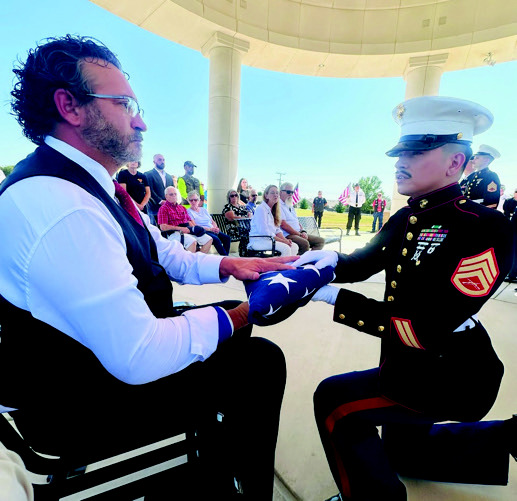
On October 2, the remains of seven veterans were brought to Ardmore for their final resting place.
From the earliest days of the nation’s military history, the United States has held a deep and solemn respect for those who gave their lives in service. Among the most sacred traditions to emerge from this reverence is the practice known today as the Dignified Transport, the ceremonial return of fallen service members and unaccompanied veterans to their final resting place.
The roots of this tradition trace back to the Civil War, when fallen soldiers were often buried where they fell, far from home. It was only after the war that a national effort began to recover and rebury those who perished, leading to the creation of national cemeteries and formal military burial honors.
The return of remains became a visible symbol of the nation’s gratitude, a promise that no soldier, sailor, airman or Marine would ever be forgotten. Through the world wars, this promise deepened.
During World War I and II, the U.S. military, often working alongside the Red Cross, carefully documented the burial sites of the fallen and repatriated them when possible. In 1947, the government launched Operation Glory, one of the largest repatriation efforts in history, bringing home tens of thousands of remains from overseas battlefields.
BythetimeoftheVietnam War, the return of fallen troops was handled with even greater ceremony. The Defense Department established the Dignified Transfer protocol, an official process that ensures every fallen service member is met with honor, respect and precision upon returning to American soil.
The practice continues today at Dover Air Force BaseinDelaware,whereflagdraped transfer cases are handled in silence as honor guardsstandatattentionand families look on. That same reverence extends to veterans who die without family, known as unaccompanied veterans.
Across the nation, organizations such as the Missing in America Project, the National Cemetery Administration and state departments of veterans affairs ensure that these men and women are not forgotten. Their remains, when discovered or released by funeral homes, are escorted in a dignified transport by veteran motorcyclists, military personnel and community members to their final resting places, often accompanied by a full military ceremony and the playing of “Taps.”
That solemn commitment was on full display in Oklahoma on Thursday when the Oklahoma Department of Veterans Affairs received the remains of seven unaccompanied veterans during a ceremony marking the beginning of their final journey home. At approximately 12:30 p.m., the agency’s Cemetery Division took custody of the remains for dignified transport to the Seaman First Class Billy Turner Veterans Cemetery in Ardmore.
E scorted by the Oklahoma Highway Patrol, the Patriot Guard Riders and State Veterans Cemetery Administrator Jamee Cassity, the procession carried the veterans south through the state with full honor and respect. The escort, a moving tradition of gratitude, ensured that no veteran’s service would be forgotten, even in the absence of family.
Upon arrival in Ardmore, the seven veterans were laid to rest with a committal service featuring full military honors. Representative Josh Cantrell received the ceremonial flag on behalf of the unaccompanied veterans, symbolizing Oklahoma’s collective gratitude for their sacrifice.
Cantrell stated it was an honor to receive the flag, and for the Oklahoma Department of Veterans Affairs, the ceremony reaffirmed the state’s pledge that every veteran deserves dignity in death and remembrance in perpetuity.
Thursday’s transport served as a powerful reminder that the nation’s promise endures in life and in death, no one who served stands alone. Each dignified transport, whether witnessed by thousands or just a few, carries the same message of unity, honor and respect for those who wore the uniform of the United States.