
In the late evening hours of 1881 or 1882, beneath the bruised sky of a settling Chickasaw twilight, Henry Martin stepped through the weathered doorway of Mrs. Elizabeth Brooks’s home—a modest dwelling on the outskirts of Woodville, where he boarded—and disappeared into the shadows. He had left on horseback, on a simple errand, something unremarkable and routine, the kind of chore a man performs without a second thought. But he would never return. Gunshots shattered the silence, and moments later, Martin’s lifeless body lay in the dust just down the road. He had been ambushed and gunned down, struck by bullets from pistols wielded not by strangers, but by two men he knew well, who had waited in the dark with cold intent—James“Jim”Wasson and John McLaughlin.
They had come with purpose hardened and hatred burning,drawnbyafestering grudge and emboldened by the grim reality of the time: a land not yet settled, not yet tamed, and increasingly ruled not by laws or courts, but by personal vengeance and the raw violence of retribution. In those years, the southern reaches of Indian Territory—where the hills met the river and the trails blurred with blood—were a crucible of lawlessness. Fences were few, justice was even fewer. The gun was a constant companion, and justice, if it came at all, rode slow.
After the murder, Wasson and McLaughlin vanished, slipping across the border into Texas. They knew the terrain. They knew the code. And they knew the reach of the law was long, but not immediate. For a time, they remained phantoms, their names whispered and their guilt presumed. However, the federal law had a memory, and its reach extended further than most expected.JamesWassonwas arrested near Muskogee on April 18, 1885, nearly five months after the killing, and delivered to Fort Smith, the hardened frontier seat of the U.S. District Court for the Western District of Arkansas, presided over by the relentless Judge Isaac C. Parker—knownfarandwide, and not affectionately, as the “Hanging Judge.”
At Fort Smith, Wasson’s fate was sealed. He was tried in open court, convicted of murder on July 30, 1885, and formally sentenced to death on January 30, 1886. The date of execution was set with finality: April 23, 1886. There would be no appeal, no clemency, no postponement. The wheels of justice turned swiftly when the charge was murder, and the rope awaited.
John McLaughlin, meanwhile, was captured later that year, in the Sherman– Denison region of Texas, and after his preliminary examination in Dallas, was transported to Fort Smith and delivered to the jail on October 9, 1885. There, in the basement of the federal courthouse, in the dank, airless stone cells known grimly among inmates and jailers alike as “Hell on the Border,” he was locked up—just yards away from the man he had once killed alongside. For the nextsixmonths,McLaughlin andWassonlivedsidebyside, not as fugitives now, but as captives—two men awaiting whatever justice remained.
That basement was no ordinary jail. It was a stone crypt carved beneath the courthouse itself, reeking of mold,waste,anddespair.The cells were iron cages, jammed with up to fifty men, most awaiting trial, others sentenced, some merely forgotten. There was no plumbing. Thebeddingwasdampstraw. Food was doled out in rusted tin buckets, and the only toilets were open slop pails that festered in the corner. But in truth, the worst of it was not the filth, or the rats, or the cold.
The worst of it was the waiting. And the sound.
Above them, looming over their thoughts like a specter, stood the gallows—erected in the yard behind the courthouse, visible to the town, but not to the men below. The prisoners could not see it, but theyknewitintimately.They heard every creak, every hammer strike, every boot fall. They knew the sound of the scaffold boards being tested. They knew when the bolts were tightened. They knew what it meant when a ministerarrivedbeforedawn, and when deputies began pacingmorefrequently,boots thudding above like distant thunder. And they knew the executioner. Everyone knewtheexecutioner,George Maldon.
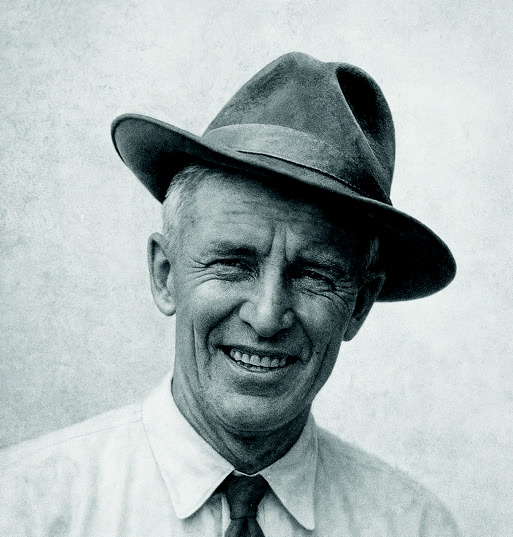
In the annals of American frontier justice, few names conjure a grimmer silhouette than that of George Maledon, the so-called “Prince of Hangmen.” A man wrapped in myth as much as in duty, Maledon stood at the intersection of law and legend— wheretheruleofropemetthe cry for order in a land without fences. From the gallows beneath JudgeIsaacC.Parker’s sterngaze,Maledonwasboth instrument and enforcer, his steady hands tying the knot that ended the stories of men gone too far astray.
Born in Germany on June 10, 1830, George Maledon was still a boy when his family sailed across the Atlantic, settling near Detroit, Michigan. It was there, among the budding German Catholic enclaves of the Great Lakes, that he came of age. But Maledon had a heart tuned westward. He left Detroit as a young man and drifted towardtheuntamedmargins of Indian Territory, working firstinaChoctawlumbermill before establishing more permanent roots in Fort Smith, Arkansas.
In the late 1850s, Maledon joined the Fort Smith police force, marking the beginning of a lifetime of law enforcement. When the Civil War broke out, he served the Union Army as part of the First Arkansas Light Artillery Battery, a rare distinction in a region sharply divided by loyalties. He returned to Fort Smith a veteran and found his place once more within the arm of federal justice.
By 1871, Maledon had become a guard with the U.S. Marshals, and a year later served briefly as deputy sheriff. During one violent jail escape attempt, he was reported to have shot two prisoners, marking the kind of hardened resolve that would characterize his later years. That same year, he assisted with executions under CharleyMessler,theprimary hangmanatthetime.Though not yet the master of the gallows, Maledon’s hands were learning the trade.
The appointment of Judge Isaac Parker to the bench in May 1875 was the dawn of a new, more brutal era of frontier law. Maledon, having returned to Fort Smith as a town constable, would soon become an unofficial extension of Parker’s gavel. Although records are spotty—andMaledonhimself admitted he never kept strict count—it is believed that he carried out between fifty and eighty-one executions, the majority of them hangings. Whether solemn duty or sanctioned ritual, these acts carved Maledon’s name into the folklore of Western justice.
To the condemned, he was the last man they saw.
Maledon’s process was methodical. He favored the long drop, a technique meant to break the neck instantly, avoiding the cruel spectacle of slow strangulation. It was a method rooted in geometry, anatomy, and cold precision. The length of the fall was calculated by the man’s weight, the strength of his neck, and the elasticity of the rope. Done correctly, the neck snapped, and death came quickly. Done poorly, and the man strangled—or worse, was decapitated by the force.
Maldonwassaidtoinspect the ropes himself, to ensure a swift and “humane” death, if such a word can be applied here. It was a mechanical mercy in a time of bloodsoaked justice.
In 1894, Maledon finally laid down his noose and opened a grocery store in Fort Smith. But retirement was brief. Lured back into the public eye by a clever local attorney, he toured the country with a macabre display of ropes, gallows timber, and photographs—grimtokensof the men he had sent into eternity. He became a showman of death, his booth dubbed a “museum of justice.” One could say he helped pioneer the true-crime exhibit before the term existed.
The mythos around him only grew. The 1899 publication of “Hell on the Border”, a book chronicling Fort Smith’s violent frontier days, furthered Maledon’s fame. He was portrayed as a necessary evil—a man of dark profession but unwavering purpose, an angel of death in the employ of federal law.
By the early 1900s, his health had failed. He moved briefly to a farm near Rogers, Arkansas, before finally being admitted to the Old Soldiers’ Home in Johnson City, Tennessee. It is there that he died in obscurity, his mind clouded by dementia, and his legacy both notorious and strangely forgotten. His grave at Mountain Home National Cemetery bears no birth or death date. Even his final breath is uncertain— some say May 6, others June 5, 1911.
His family life remains shrouded in similar fog. He is believed to have married young, losing his first wife early. His second wife, Mary Maledon, survived him. Reports claim he fathered as many as twelve children, with three sons living in the Fort Smith region at the time of his death.
To this day, Maledon’s name echoes through Fort Smith like the creak of an old gallows. Some called him cruel. Others, a necessary functionary of a wild age. But none could ignore the role he played in the federal campaign to tame the Indian Territory—a campaign not won by bullets alone, but by thesteadyhandofamanwho tightened the rope when the law commanded it.
He did not write the law. But he enforced it. And on the morning of April 23, 1886, a meeting with George Maldon came for Wasson.
Just after sunrise, McLaughlin, already awake on his cot, heard the guards approach. He stepped to the bars as they stopped outside the cell. “Wasson—on your feet.” There was no ceremony. Only ritual. The condemned was ordered to change into burial clothes— a freshly laundered black suit. McLaughlin watched as the man he had once called a partner fastened buttons with trembling fingers and heard the clink of iron as shackles were applied to his wristsandankles.Thencame the sound that struck the deepest chord—the jangling of chains as Wasson was led up the stairs, one measured footfall at a time.
McLaughlin heard every step, and with each one, felt the weight press down on his chest.
Then came the familiar signs of the gallows ritual. The shuffle of boots on the scaffold above. The minister’s voice, rising in prayer, muffled by stone but still recognizable in its cadence. The murmur of spectators gathered behind the fence line. The brief, tense silence that always came before the final words.
And then, the moment when George Maldon pulled the lever. The unmistakable sound that followed.
The thunderous crack as the trapdoor flung open beneath Wasson’s feet.
For the crowd above, there was an audible gasp, quickly followed by quiet. But in the basement,McLaughlinheard everything that followed. The thud of the body hitting the end of the rope, the sharp snap of vertebrae dislocating, the heavy creak of the noose tightening against the beam. Perhaps there was a groan, a faint gurgle, the last breath torn from Wasson’s lungs by the brutal calculus of the long drop method.
But no amount of science could erase the horror of the sound.
For John McLaughlin, locked in darkness just below, it was more than an execution. It was an omen. A reckoning. A mirror held to his future. He had stood beside Wasson on that night near Woodville. He had raised his pistol, harbored the same hatred, and spilled the same blood. Now, the gallows had claimed the first of them.
He said nothing. He wept nothing. But he stood there long after the echoes faded, his fingers wrapped tight around the iron bars.
Because he knew what everyone in that basement knew.
The gallows had not finished its work.
Not yet. John Duke McLaughlin’s life—and the crimes in which he became entangled—cannot be fully understood apart from the long shadow cast by his family’s influence. His descent into lawlessness, most notably his role in the ambushandmurderofHenry Martin, stands in stark contrast to the powerful men whose blood ran in his veins. While James “Jim” Wasson came from humble stock—a rural background with little money, few prospects, and no shield against the hangman’s noose—McLaughlin was cradled by privilege. He was not merely connected; he was born into the ruling bloodlines of the Chickasaw Nation and had at his back a web of kinship that included a Chickasaw governor, a Confederate officer turned coalmagnate,andapatriarch whose name still lingers on the land. This is not merely the story of a man—it is the story of the family that protected him.
JohnMcLaughlin’smaternal family, the Burneys, were among the most prominent and influential families in the Chickasaw Nation. His mother, Amanda Burney McLaughlin, was the daughter of Judge David Calhoun Burney, a Chickasaw elder and patriarch of the family who had served in multiple capacities in tribal government. Judge Burney’s descendants would shape Chickasaw governance for generations. Their influence can still be seen in the geography of Oklahoma: the community of Burney, located in modern-day Love County, bears the family’s name, as does the Burney Academy, a significant Chickasaw boarding school once located in present-day Marshall County.
Burney Academy was not just any school—it was a place where Chickasaw youth, often from mixedancestry families like the Burneys, received an education in both Anglo-American and Chickasaw traditions. The Burney Academy, also known as the Chickasaw Orphan Home and Manual Labor School, was a historic Chickasaw educational institution located near Lebanon, Oklahoma, close to the Red River. It was established in 1854 by order of the Chickasaw Council, under the leadership of Chief Daugherty Colbert, with early trustees including David Burney, Joel Kemp, George D. James, and A.V. Brown. The school was situated approximately one and a half miles east of the town of Lebanon, itself named after Lebanon, Tennessee.
Originally opened in 1859 as a school for Chickasaw girls, it was operated under the direction of the Cumberland Presbyterian Board, with Rev. Robert S. Bell and his wife serving as early teachers. The school ceased operations during the Civil War and Reconstruction era, but reopened around 1872 as a co-educational institution.
In 1887, the name was changed to the Chickasaw Orphan Home and Manual Labor School, with facilities capable of housing 60 students. The curriculum included not only standard English education but also vocational training: boys were instructed in agriculture and horticulture, while girls learned domestic skills such as cooking, cleaning, sewing, quilting, and knitting.
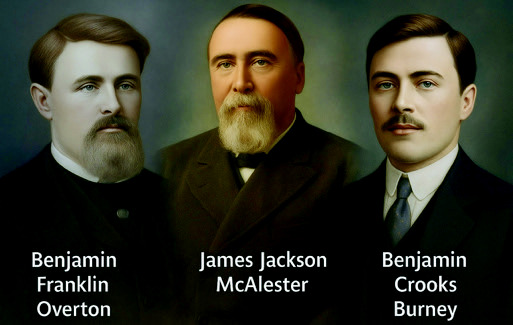
Among the most prominent of McLaughlin’s uncles was Benjamin Crooks Burney. Born in 1846 and raised in Indian Territory, Benjamin Burney was a devout Presbyterian and deeply invested in education, tribal reform, and civil service. During the Civil War, he served with distinction in the Chickasaw Battalion of the Confederate States Army. After the war, Burney rose quickly in prominence. He served as National Treasurer oftheChickasawNationfrom 1876 to 1878 and was elected Governor of the Chickasaw Nation from 1878 to 1880.
Governor Burney was known for his integrity, measured leadership, and ability to straddle the worlds of tribal tradition and white frontier politics. His administration focused on building institutions, strengthening tribal governance, and preserving Chickasaw sovereignty against federal encroachment. As a Presbyterian elder, Burney also influenced religious life and moral instruction across the Nation, promoting both literacy and Christian values. He was widely respected, and his standing in the community gaveconsiderableweight to those associated with him, including his nephew, John.
Uncle Benjamin Franklin Overton: A Progressive Force Another of McLaughlin’s uncles, Benjamin Franklin Overton, was one of the leading political minds of the Chickasaw Nation. Born in 1836, Overton lost his parents at a young age and was raisedbyhisextendedfamily, including the Burneys. He was educated at the Chickasaw Male Academy, another elite institution designed to prepare the Nation’s sons for public leadership. By the 1870s, Overton had become a key figure in Chickasaw politics.
He served multiple terms in the Chickasaw legislature beforebeingelectedGovernor oftheChickasawNationfrom 1874 to 1878. He was the first leader of the Progressive Party, which advocated for modernization, legal reform, and greater cooperation with the U.S. government on infrastructure and judicial systems.
Governor Overton advocated for expanding public schools, building roads, and professionalizing tribal institutions. His reputation as a reformer earned him respect even beyond Indian Territory. Unlike many leaders of his era, Overton kept extensive correspondence with officials in Washington, D.C., and played a key role in early debates on tribal sovereignty and citizenship. His stature brought not only power but also protection to his family.
While Benjamin Franklin Overton died before McLaughlin was arrested, his name still carried much weight in Indian Territory, andhisancestorswereshown great respect for Overton’s service to the people of Indian Territory.
The most widely known of McLaughlin’s uncles was James Jackson McAlester, a man who rose from Confederate service to become one of the most powerful industrialists and politicians in pre-statehood Oklahoma. Born in Arkansas in 1842, McAlester served in the Confederate Army during the Civil War and afterward settled in Indian Territory, where he married into the Chickasaw Nation.
James McAlester is best known for his discovery and exploitation of the McAlester coal beds, which would fuel the railroads and steamships of the American West. He secured vast coal leases and founded the McAlester Coal Mining Company, which became one of the most profitable enterprises in the region. He also operated the McAlester General Store, one of the largest and bestsupplied trading posts in the Territory.
Politically, McAlester wielded enormous influence. He served as U.S. Marshal, National Auditor of the Choctaw Nation, Lieutenant Governor of Oklahoma, and was, for a time, Secretary of State. He founded the city of McAlester, which remains a thriving regional center to this day. His influence reached into every courtroom and jailhouse in the region. For a nephew facing criminal indictment, such a connection could mean the difference between a noose and an acquittal.
Despite his bloodline, McLaughlin did not follow the steady hand of his uncles. Instead, he associated with outlaws and killers. Though often publicly described as a farmer and landowner, McLaughlin’s reputation withintheChickasawNation told a darker story. While he did live near the Washita River and farm some land near Linn, he was not a notable planter.
What he was, instead, was a man whose name surfaced repeatedly in association with violence. He was arrested and charged multiple times in the Federal Court at Fort Smith. He had previously been charged in connection with the 1876 murder of Thomas Remley, a brutal killing that shook the region. Along with Almarine Watkins and others, McLaughlin was implicated in the ambush-style murder, but through a combination of family influence, wealth, and carefully applied political pressure, he escaped conviction.
Locals whispered that McLaughlin’s kin had intervened behind the scenes— that letters had been sent, favors called in, and prosecutors quietly dissuaded. The pattern was clear: McLaughlin did not stand on his own. He stood on a pedestal built by the men who had built the Nation.
His return to violence in the 1880s—this time in the murder of Henry Martin— was not a fall from grace, but a continuation of a privileged man’s criminal pattern. He utilized the same connections, protections, and political network to evade full accountability. When his co-conspirator, Jim Wasson, was sent to the gallows, McLaughlin sat quietly in the Fort Smith jail, wondering if he would once again be shielded more by his last name.
Would his uncles—Benjamin Crooks Burney, former Governor of the Chickasaw Nation, and James Jackson McAlester, the towering coal baron and politician— summon their power once more to rescue him from the hangman’s grip? Or would Lucy Juzan Watkins, proud and unrelenting, see justice triumph again beneath the shadow of Judge Parker’s gallows? Would tensions withintheChickasawNation crack open—Burney blood on one side, Juzan pride on the other?
Time alone would answer. But for now, John Duke McLaughlin sat in the filth and darkness of the most accursed cell in all the Indian Territory—a hell carved of stone and iron beneath the federal courthouse at Fort Smith. Hell on the Border, they called it, and no name could be more true. He sat in silence as the final moments ofJamesWasson—hisfriend, his accomplice, his brother in crime—echoed through the yard above.
He had heard the clink of shackles… the rustle of burial clothes… the soft cadence of the minister’s prayer… and then, the marshal’s grim command.
And then—the fall. That sharp, terrible clack of the trapdoor opening reverberated like a rifle crack through the courthouse foundations. The gallows had claimed Wasson. And McLaughlin knew—felt it in his marrow—that the same rope, the same hangman, the same crowd might soon rise for him.
Would the mighty lineage of his kin save him again, as it had in the past when he dodged the noose for the murder of Thomas Remley? Or had the tide of influence receded, swept back by a rising thirst for frontier justice?
Was justice the law? Or was it vengeance? Was it a question of guilt—or of who held the greater name?
These were riddles left to the judge, to the jury, to Providence itself.
But in that hour, in the damp stillness of the jail, John McLaughlin knew only this—that James Wasson had just died for the same crime for which he would soon answer. And no matter how powerful his family, no matter how storied his bloodline… That was not a comforting thought.
Next week, Part XI – The trial of John McLaughlin.