
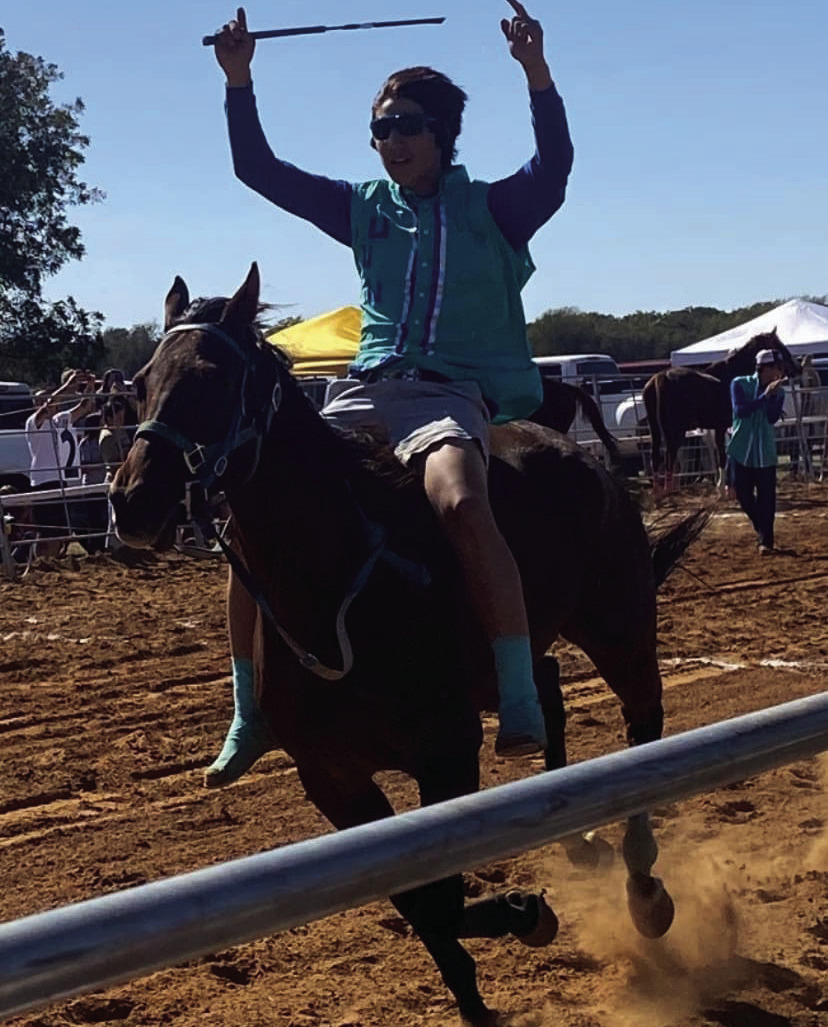
The weekend of October 18 through October 20 held a special event. The Oklahoma Indian Relay Championship took place in Wilson, Okla. at Bucks Racetrack.
The event was presented by Marc McIntyre with 1st Star events and coordinated by Jim Stevenson. Several nations from five states and Canada participated in this highstake’scompetitionwith a winning purse of $100,000.
There were several categories, including Woman’s Indian Race, Jr Indian Race (13-16), Maiden Race and Warrior Race and Kids Pony Race (12 and under). Upon arrival, one could sense the excitement not only in the riders but also the spirit of the horses, ready to run.
The teams gathered around their horses, exercising them and preparing for the races to begin. The horses were painted or “decorated” with designs and colors that hold a symbolic meaning within the tribe reflecting their traditions.
Centuries of tradition and history are the main significance of these races. The horse has played a central role in the history and mythology of many Native American tribes.
Men,womanandchildren use horses in what has been called the “American Original Extreme Sport.” This event is physical, competitive and an entertaining showcase of skill and determination of strength.
These races are more than just winning, they are a celebration of history, pride and community. This custom originated when men of different nationswouldtravelat night to seize a “prize” horse and return it to their native territory.
They would exchange horses along the way as they were typically being chased. The sport that people know now has a long history, dating back to the early 1900’s when formal competitions began.Usually,raceshappen between tribal communities or their reservations.
On this championship Sunday in Wilson, the track is 7/8 of a mile long compared to the ½ mile track that is typically used. This makes the races more challenging and interesting for all participants.
An Indian relay can begin with up to six thoroughbred horses at the starting line. At the sound of a horn, the riders leap on the bare backs of horses without halters, reins andmouthbitsandteardown a dusty track.
After the riders make one lap around the track, they all speed into an equine pit area where teammates are waiting with fresh horses for what’s known as the exchange. Ridersvaultbetween horses, creating a hazardous, chaotic dance with six teams coming into the same space.
The process begins with a setup person. Their role is to ensure the next horse is in its precise position upon the rider’s arrival.
Simultaneously, they must secure the horse coming in at high speeds. This exchange is such an adrenaline rush to watch. Amazing and scary wrapped up in seconds. This is the part of the race when most accidents and injuries occur.
The day prior, in the women’s race, there were two teams unable to race due to an accident and one with an injury to the horse.
In this event, the third memberoftheteamholdsthe last horse for the final lap. The team that can skillfully avoid collisions and secure a win in this final lap are the winners. This Sunday, Crow Creek Nation from South Dakota, with the team Bird in Ground won the Championship.