
In recent weeks, the restoration of the historic McMillan Building at the intersection of Lillie Boulevard and Highway70hasbeenasource of excitement in Madill. The building, built in 1914, was recently purchased by local resident and businessman Robert Jackson, who has ambitious plans to restore it to its original state and bring it back to life. This restoration project is not just about preserving a building but about preserving a piece of Madill’s history and the community's identity. It's a project everyone should be proud of and look forward to.
Recently, Jackson posed a question that piqued my curiosity about the story behind the McMillan Building. Intrigued, I delved into the archives, unearthing a fascinating tale of a man who playedasignificantroleinthe early development of Madill.
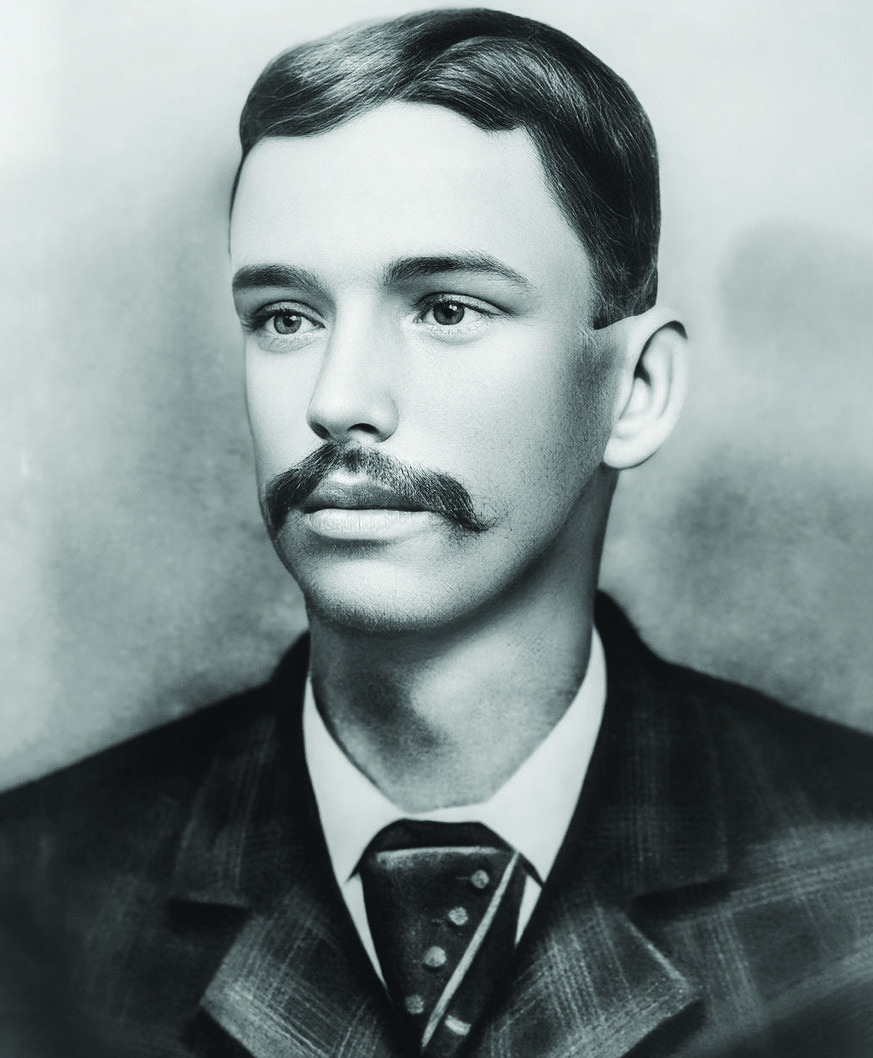
Joseph Edward McMillan (who was known as Ed to his family and friends), the man behind the McMillan Building, was born in Texas on January 10, 1868, just three years following the end of the Civil War. His parents were James Michael McMillan and Mary Bunch McMillan. James Michael fought in the Civil War and was a sergeant in the 8th West Virginia Infantry during the Civil War, enlisting in August 1962 just before the second battle of Bull Run, in the early days of the Civil War.
The Second Battle of Bull Run,alsoknownastheBattle of Second Manassas, was on a much larger scale and in larger numbers than the First Battle of Bull Run and was a pivotal moment in the nation's history.
It was fought in Prince William County, Virginia, from August 28–30, 1862. It was the culmination of the Northern Virginia Campaign waged by Confederate Gen. Robert E. Lee's Army of Northern Virginia against Union Maj. Gen. John Pope's Army of Virginia. Before this battle,ConfederateMaj.Gen. Thomas J. 'Stonewall' Jackson had captured the Union supply depot at Manassas, threatening the Union Army’s line of communications with Washington, D.C.
Pope became convinced that he had trapped Jackson and concentrated the bulk of his army against him. On August 29, Pope launched a series of assaults against Jackson's position along an unfinished railroad grade. The attacks were repulsed with heavy casualties on both sides. On August 30, Pope renewed his attacks, seemingly unawarethatMaj.Gen. James Longstreet and his armyhadarrivedandwereon the field. When massed Confederate artillery devastated a Union assault by Maj. Gen. Fitz John Porter's V Corps, Longstreet's wing of 25,000 men in five divisions, counterattacked in the largest simultaneous mass assault of the entire Civil War. The Union left flank was crushed, andthearmywasdrivenback to Bull Run. Success in this battle emboldened Lee to initiate the ensuing Maryland Campaign,whichpushedthe nation further into a war that would continue for at least three more years.
James Michael McMillan, fought in and survived the Second Battle of Bull Run, and continued his service in the Union Army for three more years, being involved in numerous battles and engagements, including a lengthy period where his unit was involved in the defense of Washington, D.C. following the Union Army’s defeat in theSecondBattleofBullRun.
Following the war, James Michael and Mary moved to Jack County, Texas, northwest of Ft. Worth. Joseph Edward was born there in 1868. About 1875, the family moved to Lincoln Township in Crawford County, Kansas. There, Ed’s sister, Lula Bernice, was born in 1878. Within a few years, the family moved to Missouri, where the family’s third child, John Henry McMillan, was born in 1885.
Around 1890, the family moved to Wynnewood, Indian Territory, where James Michael worked as the Highway Commissioner, DeputyCountySurveyorand hotel owner.
After the family moved to Wynnewood,Edmethiswife, NancyLu“Nannie”Edwards, on December 9, 1891. Family legend is that Nannie caught Ed’s eye when a buckboard she was driving got away from her, and he stopped to help her. At the time, Nannie was about 16 years old, with long dark brown hair that extended to her waist. Ed caught Nannie’s eye as he was a tall, handsome man, standing about six foot, five inches tall. They were married shortly after they met.
InWynnewood,Edopened and operated his first business, a hardware store. He wasquitesuccessfulandbuilt a thriving business. Between 1894 and 1899, Ed and Nannie welcomed their first three daughters, Cecilla Gertrude, Eunice Ruth and Margaret. In 1904, they welcomed their fourth daughter, Lucille. After about five years, Ed and NanniemovedtoHoldenville, Indian Territory and opened anotherhardwarestore. This store was also quite successful, and between the two, Ed had acquired a fair amount of money, which put him in a good position for future endeavors.
In 1898 or 1899, Ed got a job at Kingston, Indian Territory, working with Jim Bounds. But then, In 1900, a new town was founded, and Ed saw an opportunity. In about 1901, Ed and Nannie movedtheirfamilytothenew town named Madill. Shortly after arriving in Madill, Ed opened another hardware store. Ed constructed a large building in the northwest corner of the town square to house his new store. Ed’s building was where Dino’s Cleaners and the Marshall County Abstract company are now located. Ed’s Madill store was also successful, just like his stores in Wynnewood and Holdenville. Eventually, he would bring in a partner in the hardware store, H.B. Wiggs.
By this point, Ed had accumulated a sizeable amount of money, and in 1901, he decided to branch out into another business venture that was even more successful than his hardware store. On June 7, 1901, Ed incorporated his new business, the Madill Gin, Compress and Manufacturing Company. This was Madill’s first cotton gin. Ed’s new gin was located on the block bounded on the south by Tishomingo Street, on the north by Taliaferro Street, and the west and east by 4th and 5th Streets. Ed’s gin was the only cotton gin in Madill. Within a few years, two or three other gins were established in Madill, plus the huge Madill Oil and Cotton Company located on Oil Mill Hill.
Ed made a fortune in money between his hardware store and cotton gin and was soon one of Madill’s two or three richest citizens. He became a close friend of W.N Taliaferro, founder of Madill, and the two and their wives traveled extensively together. One such trip lasted over thirty days when the four traveled across the northeastern part of the United States.
Sometime before 1904, Ed founded his third new business venture in Madill. After the success of his hardware store and cotton gin, Ed purchased some ranch land near Madill and opened a hog ranch. Like his other two businesses, the new hog ranch was also successful. The three businesses kept Ed so busy that in 1904, his 70-year-old father, James Michael, moved to Madill for a time to run the hog ranch.
In 1905, Ed was one of the founders and officers of a new bank in Madill. The City National Bank was organized on March 22, 1905, and began with a capital stock of $50,000. The bank operatedunderthenameCity National Bank from 1905 to 1917, when the name was changed to Guaranty State Bank. Itthenoperatedunder that name until it failed in 1927. From 1911 to 1917, the bank was housed in the Hollingsworth Building on the northwest corner of the square, now known as the Madill Professional Building. Theotherbankfounderswere W. H. Lawrence, Tom and Ross Hollingsworth and Dr. G.H. Funk.
Also, in 1905 or 1906, Ed’s younger brother, John Henry McMillan, moved from Wynnewood to Madill and began living with and working with EdandNannie. Edhadasked John to come to Madill to help him run his hardware store, while Ed began his fourth, and most lucrative business venture.
On September 4, 1906, Ed and Mal Dumas founded the Mal-Millan Oil and Gas Company. Ed got the idea for this company when natural gas was discovered under his Madill Gin while a water well was being drilled. Mal-Millan started with $25,000 in capital stock. By 1908, that had increased to $100,000.
In 1909, the company hit a huge oil deposit on a lease about a mile and a half east of Madill. The well was a “gusher” with oil shooting up above the oil derrick by several feet. A March 26, 1909 edition of the Madill News reported, 'Monday at eleven o’clock the town was excited by the news that the Mal-Millan Oil Co. had brought in a gusher that was throwing oil over the derrick. In a little while, everybody that could get conveyance was on the road to see the wonder.”
The gusher flowed so well that it ran off in all directions before being controlled. Oil was pumped into a tank, iron cisterns, and earthen reservoirs. Initial efforts to cap the well were unsuccessful as the flow and pressure were too great, and it was feared that capping the well would blow out the casing. It took about ten more days before the workers could get the gusher capped.
This was the company's fifth successful well, and oil and money flowed unabated. News of Ed’s company's success spreadthroughouttheoil andgasbusinesscommunity, and within days, oilmen from Texas and Pennsylvania arrived in Madill to see if they, too, could get in the game. Mal-Millan was now one of the most successful oil companies in all of Oklahoma. The area around Madill was labeled the biggest oil field everdiscoveredinOklahoma.
Then,inJuneof1909,Mal-Millan Oil and Gas Company hitanother“gusher”. Amajor oil deposit was hit after only five days of drilling, and it had only reached a depth of only 430 feet. This gusher was even bigger than the one in March, with a four-inch around stream of oil and gas shooting around 75 feet into the air. Drillers and oilmen estimated that this well would produce about 1,500 to 2,000 barrels of oil daily, which put the Mal-Millan daily production from all wells to be around 4,000 barrels daily.
The Marshall County News Democrat proclaimed in their Friday, June 18, 1909, issue that “Oil men in Madilldeclarethatthereisno field in the world that equals the Madill field in respect to being a shallow field with the strong gas pressure, amount of production and the high grade of oil.”
Ed had now achieved both fame and fortune. At this point, Ed was the wealthiest citizen of Madill. Then, in September 1909, Ed became even more wealthy. Then, oilmen from Kansas City approached Ed and offered to purchase their stock in the company. In what the Marshall CountyNewsDemocrat labeled as the “biggest deal that has occurred” in the Madill Oil Field, Ed and Mal sold their company. The sale netted both men a sizable fortune.
Following the sale of Mal-Millan, Ed went back to running his cotton gin and his hardware store, but more importantly, Ed began doing what he really wanted to do: spend more time fishing. Then, he and Nannie began their decades-long love of traveling to Gunnison, Colorado, to vacation and fish.
In January 1913, Ed sold his share of the hardware store to his brother John Henry. Then, John Henry McMillan and H.B. Wiggs brought in John Woody. Woody had been operating a hardware store in Oakland, but he moved his operation to Madill, and together, they incorporated the new business under the name Woody-Wiggs Hardware.
In December of 1913, Ed purchased the entire south corner of the half-block fronting Lillie Boulevard at what is now Highway 70. At that time, the corner was known as “Bounds Corner” or the “Taliaferro Triangle.” In the December 5, 1913, issue of the Marshall County News-Democrat, it was stated that “J. Ed McMillan has closed a deal whereby he becomes the owner of what will prove one of the best business corners in Madill, provided it should be converted into use as a location for business houses alone.”
They asked about his plans for the corner, and the paper stated that “Mr. McMillan stated that all depended upon the city of Madill and upon the businessmen here. A great deal has been said in the past by McMillan about the need of the town for a good, strictly modern and up-to-date hotel building. If the people of the city, if the businessmen of the city, if the city itself is in earnest over the hotel, then I will say that within a short time, a hotel building representing an investment of $30,000 will beerecteduponthisproperty. But I shall expect the city, or the business interests of the city to show something in the matter of evidence of good faith. I realize the need of a commodious hotel in this city. And I also realize that a modern hotel, equipped with all the conveniences, will be a drawing card and a money makerforeverybusinessman in this city. Knowing this, I stand ready to submit to the people of Madill, or to the city, propositions which cannot be overlooked by anyone who is alive to the interests of Madill.”
Ed McMillan laid out his plan when asked what propositions he was making to the city and its citizens. He offered the following: “One would be that the city of Madill or the citizens of Madill should raise a bonus equal to the amount which he paid for the lots, $6,500, together with an addition of six percent, net, said bonus to be deposited in a local bank to be paid over when the hotel building shall be completed.” The second proposition was that McMillan “will turn the lots over to the city, or to any company that will incorporate for the purpose of building a modern hotel, for the purchase price of $6,500, plus six percent net.” McMillan then offered to contribute $1,000 towards a bonus to the city or the corporation that would take the lots over and build the hotel.
The third proposition was that if either of his first two propositions failed to gain support, McMillan would make a $1,000 donation as a bonus to any company that built a hotel. McMillan then stipulated that the three propositions would only be held open for thirty days, after which if none of them “are accepted,” he would begin erecting a “strictly modern business block with upper stories divided into convenient modern offices.” McMillan then promised that the office building would “represent an investment of an amount equal to that which he proposes to put in the hotel structure, a sum of $30,000.” Today, that $30,000 investment would amount to approximately $1,000,000.
The Marshall County News-Democrat reported that “other towns have done far more than is asked in this matter” regarding McMillan’s proposals. The article stated, “Ardmore, a few years ago, raised a bonus of over fifty thousand and offered it to anyone who would erect a modern hotel, and no one materialized to build the hotel.” However, it said, “The same cityistodayworkinguponanother bonus proposition to try to induce some individual, or some company to come there and build a modern hotel.”
Thepaper'seditorthenimplored the citizens to support one of the plans by saying, “Madill has the man who will erect the hotel; he is one of the best-known and successful businessmen of this section. It is now simply up to those who have the public spirit, who have the required ‘gitup- and git,’ to say whether all the talk about a hotel that will handle the heavy traffic of transients which stop over in Madill will become reality or remain simply hot air. The News-Democrat thinks, believes, may we well say, that our citizens are publicspirited and enterprising enough to grasp any opportunity by the fore-lock and that they will not overlook so advantageous an offering as Mr.McMillanismaking. And the News-Democrat would like to suggest that someone, someoftheleadersinMadill’s businessworld,getbusyright now. The time is at hand when something has to be done, or we will go on record as being good starters and poor finishers, good talkers, but poor workers, good hot air dealers, but poor goods deliverers.”
McMillan’s propositions divided the city. The other newspapers opposed the plan, writing editorials imploring the citizens to reject Ed’s propositions. When his thirty-day deadline arrived, no one had stepped forward to accept any of his proposals. It was then that Ed announced that he was going to proceed with his office building plan. He has already selected an architect, and plans were being drawn up for the building.
Ed planned a building made of reinforced concrete with a pressed brick façade along the Lillie Boulevard and First Street frontages. It was planned to be two stories in height, with the first floor occupied by “business houses” and the second floor arranged into modern offices. Further, the building would be the first in the county with steam heat throughout. When the plans for the office building were released, Ed told the News-Democrat, 'I bought this property with the intention of building for the people of Madill a first-class hotel…The majority of the public-spirited citizens of the city, however, seem to think we can struggle along for another period without the hotel. This being the case, I am willing that their ideas on the subject shall be law. But I am going to build upon the property something else of which Madill stands in the most urgent need, a modern business block.”
By the fall of 1914, the McMillan Building was completed and ready for occupancy. Ed had already lined up many businesses that wanted offices in his building. Almost immediately, H.E. Croff, a “restaurant man” from Georgia,leasedthebasement to house a restaurant, night club and pool hall. Croff invested over $12,000 in pool tables and restaurant equipment. The pool hall/ nightcluboperatedforseveral years. Doctors, lawyers, dentists, insurance men and real estate businesses have all been housed in the McMillan Building over the years. The Marshall County Grand Jury also operated out of the building, holding monthly sessions for several years. In 1924, the building became home to the first Chevrolet dealership in Marshall County. In that year, Buford Taliaferro openedChoctawChevroletin the building. The building In June 1918, a group of local businessmen founded the Marshall County National Bank. The first president was W. H. Colby, a long-time grocery store operator in Madill. The Bank opened in the McMillan Building and had a capital stock of over $66,000. Then, on December 31, 1926, the First National Bank of Madill and the Marshall County National Bank merged. The new bank's name was “The First National BankInMadill.”When the merger occurred, the bank consolidated its operation to the Marshall County National Bank location in the McMillan Building. The President of the new bank was D.B. Taliaferro. He had been the president of the old First National Bank of Madill.
In April of 1931, the First National Bank In Madill purchased and absorbed the FirstNationalBankofKingston. The Kingston Bank was then closed, leaving Kingston without a bank. With that consolidation, Bruce May, who was the President of the Kingston bank, was named a vice president of the First National Bank In Madill.
The First National Bank InMadilloperatedunderthat name until November 19, 1984, when it was changed to the First National Bank of Marshall County. Then, on March 31, 1989, the First National Bank of Marshall County was merged into the BancFirst of Oklahoma City. The bank continues under that flag today.
In 1915, Ed McMillan bought out the Wiggs-Woody Hardware store and went back into the hardware business with his brother John. He also continued to operate hiscottongin.Whenthebank movedtotheMcMillanBuilding, Ed sold the structure to the bank and then, in 1919, Ed and Nannie moved to Dallas, Texas.
Ed continued to run cotton gin operations in the Dallas areaandventuredintoanother newbusinessareawhenhe opened the McMillan Motor SalesCompanyonCommerce Street in downtown Dallas. EdwasanAppersonBrothers AutomobileCompanydealer. TheAppersonBrothersCompany, founded in 1904, went out of business by 1928.
Throughout his life, Ed was known as an 'energetic' fellow who spent his youth as a laborer. He worked laying track for the Second Trans-ContinentalRailroad.Hewas a successful businessman in numerous ventures, making and losing several fortunes. Ed and Nannie lived the classic pioneer lifestyle in their youth and a lavish life in their later years. For the celebration of Ed and Nannie’s 50th Wedding Anniversary in 1941, the Dallas Morning News ran an article about the storied life of Joseph Edward McMillan.
In that article, the Dallas Morning News stated that “Cotton growers and cattlemen all over southern Oklahoma and northern Texas know McMillan as the man who sold machinery to them and their fathers and took their cotton in pay in gins at Madill, Okla., Sherman, Grand Prairie, Pottsboro and other points.”
Sadly, in 1943, Ed’s health began to decline quickly, and on February 2, 1945, Ed took his own life with a gunshot to the head. Nannie then passedonDecember27,1964.
The McMillan Building representsanimportanttime in Madill's history. It symbolizes a time when Madill was one of the wealthiest areas in Oklahoma. It honors the name of a man who is largely responsible for Madill's fortunes and growth. It is a binding tie to a time 110 years ago when a wealthy businessman pushed Madill to be bigger and better than she was. Sadly, at that time, the people of Madill rejected his plea and his plan to help Madill grow, but he carried on and left a legacy and landmark that stands just as strong today as it did 110 years ago.
The restoration of the McMillan Building is an homage to Joseph Edward McMillan—an homage he deserves and one that should happen. Hopefully, Ed Mc-Millan's memory will live on for another 110 years and beyond.
Thank you, Robert, for your efforts to bring life back to the building that represents the dreams and aspirationsofJosephEdward McMillan. A pioneer and a trailblazer. A man who dreamed big and succeeded even more.