
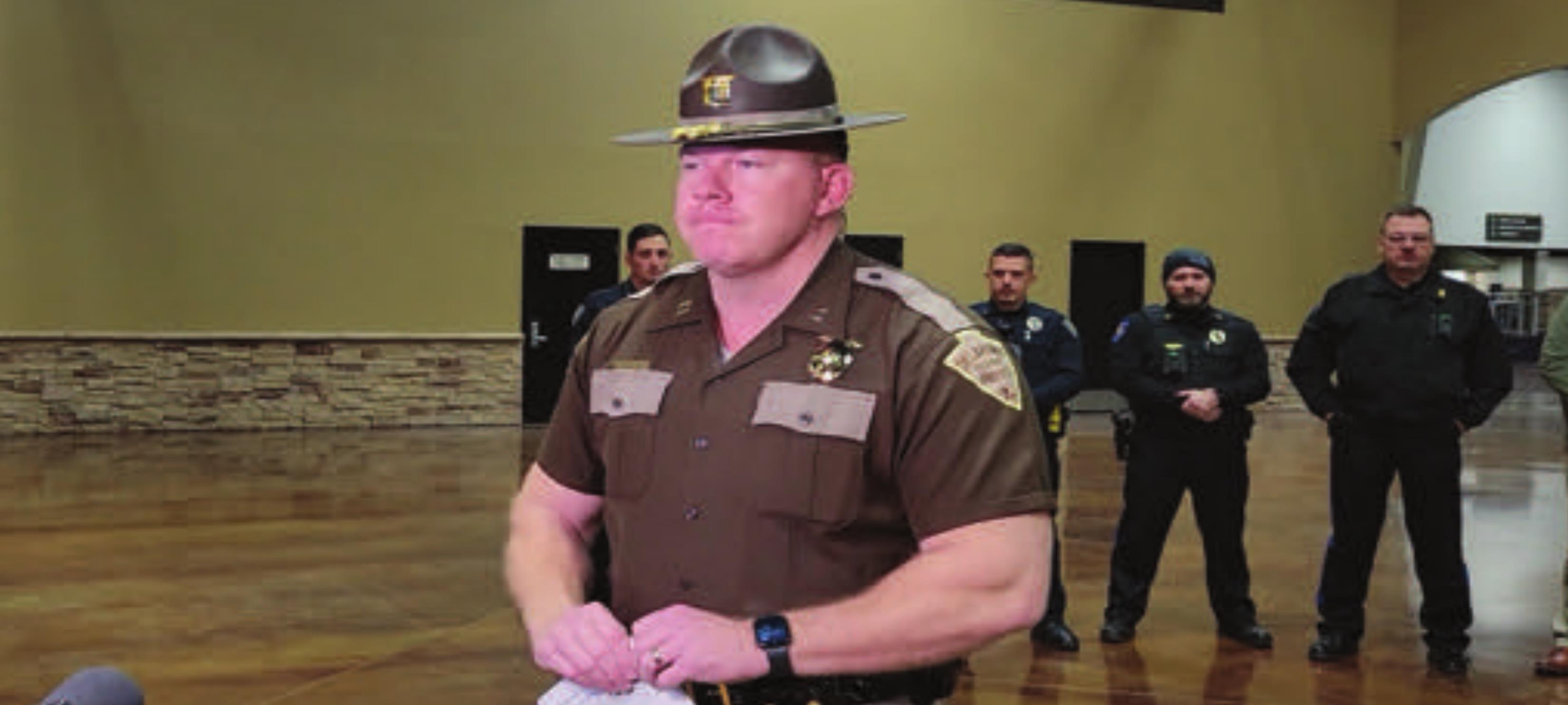
On J anuary 20, 2022, a few select members of the media were invited to ride along with various law officials in search of distracted drivers. The law statute for the distracted driving is Title 47-11-901d, and states, "it shall be unlawful for any person to operate a motor vehicle on any street or highway within this state while using a h andheld electronic communication device to manually compose, send or read an electronic text message while the motor vehicle is in motion."
According to the press handout, "the mission of the Distracted Driving Enforcement Mobilization project is to decrease the number of distracted drivers from public roadways through high visibility saturation enforcement, take appropriate enforcement action against operators determined to be driving while distracted by any manner in violation of state statute or municipal ordinance on public roadways, be vigilant for all signs or indicators of criminal wrong doing while in contact with motorist and conduct follow up investigations where reasonable suspicion and probable cause is determined, prevent fatal and injury collisions through joint enforcement effort, and reduce property damage caused by distracted drivers."
The agencies involved DDEM, also called the Dees Distracted Blitz, were the Oklahoma Highway Patrol, the Oklahoma Highway Safety Office, the Durant Police Department, and the Calera Police Department. The blitz idea was born from a loss that hit close to home for Oklahoma State Troopers.
Trooper Nicholas Dees, 30, was hit and killed while working a wreck on Interstate 40. Steven Clark, a 36-year-old male from Fort Smith, Ark. went around the wreck. He struck Dees and Trooper Keith Burch, 27. Dees was killed instantly, and Burch suffered serious injuries.
The investigation found that Clark was distracted by his cell phone while driving. Reports show that Clark and received and sent several text messages minutes up till the time of the crash.
Clark pleaded guilty to First Degree Manslaughter in August 2015 and was sentenced to 20 years in prison. It was ordered that he only needed to spend the first five of those years incarcerated, the rest would be suspended.
Captain Scott Hampton with the Oklahoma Highway Patrol said they are looking for specific infractions during the event.
"Specifically, we will be focusing on drivers who are travelling down the roadway u sing handheld devices or any kind of distraction going on inside the cabin," Hampton said.
He said that even though it can be a bit difficult to spot distracted drivers, especially on overcast days, there are usually some telltale signs.
"One of the firstindicators for us if we're behind them is they drive like an impaired driver," Hampton said. "They drift off of the road, jerking in their lane, and driving slow."
He also said it is "pretty common" to see drivers looking down at their steering wheels with their phones in their h and. Another sign is seeing the glow from t he phone light up the interior of th e car.
Hampton said that even in light of more vehicles coming equipped with "safety features" like Bluetooth an d talk to text options, th ere h as not been much of a decrease in distracted drivers. He said he believes it is because society has turned into an instant gratification group. Having information and th e ability to respond back so quickly has counter acted the reason for inventing the "safety features."
I had the ability to ride alone with Durant Policer Officer Drew Hale. He has been with the agency for over 14 years. During the ride along, he pulled over six vehicles for distracted driving and no seat belts.