
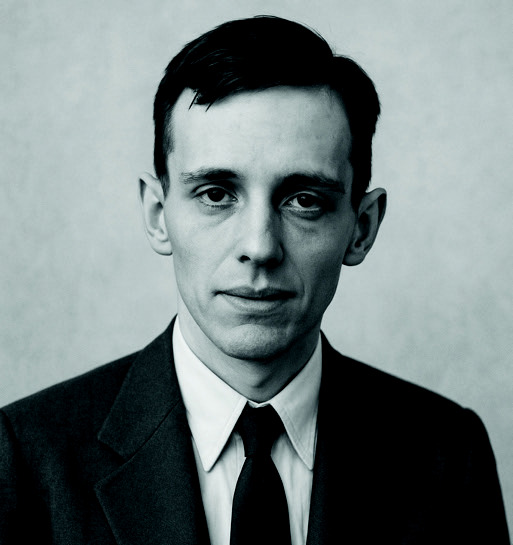
The law, in its lofty posture, claims impartiality. It purports to weigh only the evidence laid before it, blind to status, kin, or coin. But in the borderlands of Indian Territory—where lawmen bled for order, where whiskey bought silence, and where the gallows tree grew thick with use—such ideals rarely held. The case of John Duke McLaughlin, a handsome young Chickasaw of noble blood, and James Wasson, his drink partner and, some said, murderer, would lay bare the fault lines of class, reputation, and justice.
From the moment Henry Martin’s lifeless body was found on a dusty Chickasaw road in November 1881, pierced by bullets and silenced forever, suspicion quickly and heavily fell on McLaughlin and Wasson. But suspicion, in the Indian Territory of the 1880s, did not always lead to chains—at least not for the well-born. For over two years, the pair rode free among the cowboys of the Texas Panhandle, returning homeonlywhenthey believed the dust had settled.
But justice came knocking— late and with the scent of vengeance. It was not the government’s resolve that brought the killers in. It was a woman. Her name was Lucy Juzan Watkins, a wealthy Chickasaw widow, and her motives were laced with grief and fury. When her husband,AlmarineWatkins, was gunned down by James Wasson in July 1884 during a dispute over horse thieves, Lucy placed a $1,000 reward for Wasson, dead or alive. It was this bounty that finally brought Wasson to the iron doors of the Fort Smith jail.
What followed was the beginning of one of the most consequential series of murder trials in the region’s history—culminating in a dramatic execution, a lifethreatening illness, and three separate trials that would test the reach of federal law and the weight of money in the scales of justice.
McLaughlin’s First Trial: April 1886 James Wasson stood trial first, accused of the murder of Henry Martin, and on January 30, 1885, he was convicted and sentenced to hang. Lucy Watkins spared no effort—some said she spent $7,000—to ensure Wasson was convicted not only for her husband’s death but for that earlier crime long forgotten by the courts. When McLaughlin was finally arrested in Denison, Texas, in late 1885 and brought to Fort Smith, he was facing the same body of evidence that had doomed his friend. His uncles, Ex-Governor Ben Burney and James J. McAlester, the founder of the town in Oklahoma that still bears his name—both wealthy, respected figures— stood beside him. “He’s a good boy, just misled,” they insisted. They hired the best defense attorneys they could afford and spared no expense. McLaughlin was treated like a young prince in jail—sickly but well-cared for, with newspapers noting that he was “receiving every attention, having wealthy relatives here looking after his wants.
In early April 1886, McLaughlin’s first trial began in the United States District Court under Judge Isaac C. Parker, the famed “HangingJudge”oftheWestern District of Arkansas. The courtroom was thick with anticipation. A phalanx of legal might led McLaughlin’s defense: Colonel Ben D. DuVal, a seasoned Confederate veteran and statesman; Colonel William M. Cravens, one of the most respected lawyers in the region; and thebrothersJamesK.Barnes and Thomas H. Barnes, both regarded as gifted orators and tacticians. On the prosecution side stood M.H. Sandels, the United States District Attorney, assisted by Colonel George A. Grace.
The trial was grueling. The government paraded witness after witness, all of whom had testified in Wasson’s trial just months before. Oneafteranother,theyswore to seeing the men drinking heavily, to hearing shots, and finding Martin’s bulletriddled body. Some recalled confessions McLaughlin had allegedly made, particularly to Miss Watkins’ brother, Alex Juzan. However, it is said that some of the witnesses, especially Alex Juzan, seemed less sure about what wassaidorwhatMcLaughlin meant.
Despite the defense’s best efforts, the same damning evidence that hung Wasson seemed poised to sink McLaughlin. Yet, unlike his co-defendant, McLaughlin had what Wasson did not— powerful uncles, endless resources, andalegalteamthat painted doubt like an artist with a brush. When the jury retired to deliberate, they did so under great strain. And aftertwodays,sequesteredat thecourthouse,theyemerged deadlocked. A mistrial was declared. The vote was five for conviction and seven for acquittal.
Just days later—on April 23, 1886—James Wasson was led to the gallows.
The day dawned gray and heavy. The people of Fort Smith, used to the rituals of death, still gathered in numbers for the double hanging of James Wasson and Joseph Jackson. The execution was delayed until the last moment as the Marshal awaited a telegram—some believed would be a reprieve from Washington. But it never came.
Wasson’s lawyers had petitioned President Grover Cleveland, asking for a reprieve. They argued that since McLaughlin’s trial had ended in a hung jury, Wasson might be innocent. Their request was simple: delay Wasson’s execution until after McLaughlin’s fate was determined, because if McLaughlin were acquitted, thatwouldlikewiseshowthat Wasson was also innocent. On the morning of April 23rd, everyone in Fort Smith awaited word from President Cleveland.
The execution scheduled for early that morning was postponed until the Marshal heard from the President. For the rest of the morning, Wasson stayed by himself, on his bedroll, in quiet contemplation.
In the early afternoon, word finally arrived that the President had denied Wasson’s reprieve, and then the U.S. Marshals entered the jail to take Wasson to the gallows. They brought with them new clothes for the condemned: “coat, pants, vest, shirt, drawers, undershirt, socks, slippers, and white necktie.” Wasson dressed quietly, assisted by his friend JohnMcLaughlin.Herefused the help of a minister. His fellow inmates, including McLaughlin, all wept bitterly as they embraced him one last time. He carried himself with quiet dignity.
But on the gallows, surrounded by hundreds of spectators, Wasson hesitated. As the noose was placed around his neck, he called for a minister after all. The executionwasdelayedsothat the Marshal could summon a minister. Once he arrived, prayers were said, and the execution began. Before the executioner, George Maledon, the so-called “Prince of Hangmen,” pulled the lever to open the trap door, Wasson announced once more that he was innocent. He shouted out, “I did not kill Henry Martin.” And then he added: “Johnny McLaughlin is innocent too.” He did not deny killing Watkins but claimed it was self-defense.
Then Maledon pulled the lever, and the trap was sprung. The noose did its grim work. And Wasson was silenced. Forever.
The crowd fell quiet. A young, handsome man had just died, insisting on his innocence. Later, when a jailor named Pryor was removing Wasson’s belongings from the cell, he discovered a note Wasson had left. It proclaimed, “it was either BobBirdsongortheprosecuting witness,” who had killed Henry Martin.
That summer, McLaughlin fell gravely ill. Confined in the filthy and putrid Fort Smith jail for months awaiting retrial, he was stricken by meningitis. Reports described him as dangerously ill, receiving the best care that money could buy. His wealthy relatives rushed to Fort Smith to care for him.
The illness nearly claimed him. It certainly weakened him. Reports from the second trial show a pale, gaunt young man—a ghost of the virile cowboy who once rode the Panhandle. His uncles pleaded for a bond, offering whatever sum the court required. But Judge Parker stood firm. The gravity of the charges, he ruled, warranted continued confinement. McLaughlin would not walk free—not yet.
The Second Trial: August 1886 Once again, the heart of theprosecution’scasewasthe controversial confession allegedly made by McLaughlin to Alex Juzan, the brother of Miss Watkins, shortly after the murder of Martin. But this time around, another “confession” was introduced by a surprise witness.
However, during the second trial, the prosecution introduced the testimony of Elizabeth Wasson, the sister of the late James Wasson, McLaughlin’s partner in Henry Martin’s murder. This new witness in the courtroom caused quite a commotion and left the packed audience breathless as she recounted her story. She was not among the initial witnesses and had not even been on the government’s original list. Her decision to testify came very late—possibly just weeks before the trial began. Some believed she had struggled with it, balancing loyalty against the truth. Others whispered that she might have been pressured by darker forces: guilt, fear, or outside influence from Parker’s marshals.
Regardless of motive, when she stepped forward and took the stand for the prosecution, the temperature in the courtroom dropped. She was composed, clothed plainly, with gloved hands folded in her lap. Her voice did not shake. What she said was brief, but heavy as iron.
Elizabeth Wasson’s testimony was filled with both shame and sorrow. She testified thatsheandMcLaughlin were engaged to marry and had been physically intimate just before Martin's killing; the day after Martin was killed, McLaughlin reportedly told her that he and Jim had to leave the country because they had killed Henry Martin. They did leave, and McLaughlin was absent for about two years, during which she said she gave birth to McLaughlin’s child. However, when pressed by the defense, Elizabeth Wasson could not produce a marriage certificate or any proof that McLaughlin had promised to marry her. With that, the defense aimed to cast doubt on her claims.
The evidence, aside from McLaughlin's confessions, was all circumstantial, as no one saw the crime committed. McLaughlin’s legal team used an alibi defense, claiming that there were other people near the scene at the time of the murder, just as close as McLaughlin and Wasson, and that some witnesses may be biased.
The press descended upon Elizabeth Wasson’s testimony like wolves upon a carcass.
The August 30, 1886, edition of the St Louis Globe-Democrat wrote: “At the trial just closed, some additional testimony was produced by the government, and three of the numerous witnesses examined said that McLaughlin and Wasson told them they killed Martin. One of these new witnesses was a sister of James Wasson, who testified that McLaughlin had seduced her just before the killing under the promise of marriage, which was frustrated by McLaughlin having to leave the country; that he told her the morning after the murder that he and her brother Jim would have to leave as they had killed Martin, and that during his absence she gave birth to a child of which McLaughlin was the father.”
The testimony shook the court. The defense did its best to discredit her, suggesting she was lying out of shame or revenge. But the impact had been made. The defense also argued that their client was not at the scene of the murder when it happened and tried to show that other men nearby were just as likely suspects, if not more so, than McLaughlin.
The St. Louis Globe-Democrat then offered: “The relatives of the prisoner, who are among the most prominent and wealthy people in the Indian country, were here at the trial, and the best legal talenttobehadwasemployed in his defense—his attorneys being the Honorable Ben D. DuVal, Colonel Thomas H. Barnes, Colonel William M. Cravens, and Colonel James K. Barnes. The government was represented by District Attorney M. H. Sandels and his assistant, Colonel George A. Grace.”
“The argument began on Wednesday afternoon, being openedbyColonelGrace,who was followed by James K. Barnes in a powerful appeal to the jury. The arguments for the defense lasted eight hours and the case was closed Friday morning by Mr. Sandels. The courtroom was crowdedwithspectatorsfrom the beginning of the trial to the end.”
“The defendant is a handsome young fellow, but has just recovered from a severe spell of sickness and was looking pale and haggard.”
“One of the interesting features of the case is the fact that some of the witnesses who testified so hard against Wasson are friends or distant relatives of McLaughlin and were loath to tell as much in his case as they were in that of Wasson, and yet they were compelled to tell the same story or place themselves in a very embarrassing attitude.”
“The fact is, if Wasson had notkilledWatkins,neitherhe nor McLaughlin would have been brought to the trial for theMartinmurder.Andeven if they might have, both came clear, as much of the evidence secured by Miss Watkins would probably never have been brought to light by the government.
McLaughlin has been in jail here nearly a year, the court refusing to release him on bond, notwithstanding he could have filed one for almost any amount readily.”
“There were some 30 witnesses examined,allofwhom were subjected to the most rigid scrutiny, and many interesting facts were developed touching the character of the defendant, his reckless disposition when drunk, and his agreeable and kindly qualities when duly sober.”
Of the dozens of spectators who watched the entire trial, there was one who caused quite the stir. And in closing its article about the trial, the St. Louis Globe-Democrat story reported that “Among the most interesting spectators at the trial was Belle Starr, the outlaw’s friend.”
In the lawless shadowlands of post–Civil War America, where the frontier blurred the line between survival and sin, few names conjured more myth, scandal, or fascination than that of Belle Starr. She rode where men ruled, shot where lawmen feared to follow, and carved out a reputation as the most notorious female outlaw west of the Mississippi. Branded “The Bandit Queen,” she became a living legend—not only for the crimes she committed, but for the company she kept and the power she wielded in a world that had little space for women with ambition, steel, or swagger.
By the time of her violent deathin1889,BelleStarrhad become more than an outlaw— she was an American archetype: a pistol-wearing, horse-riding, fiddle-playing woman who defied convention and the law with equal charm.
Born Myra Maybelle Shirley on February 5, 1848, in Carthage, Missouri, Belle was raised in comfort. Her fatherwasaprosperouslandowner andentrepreneur.She was educated, refined, and by all accounts, deeply intelligent. She played the piano. Shespokewithprecision.She had a gift for language and performance that would later serve her well—not on the stage, but on wanted posters and in courtrooms.
The Civil War shattered that genteel world. The Shirleys were Confederate sympathizers, and Missouri— torn by guerrilla warfare—was no place for neutrality. When Union troops destroyed the family business, they fled south to Scyene, Texas, where Belle’s transformation from young lady to rebel sympathizer took hold.
There she began consorting with Confederate bushwhackers, including Jesse James and Cole Youngermen who would later become household names in outlaw lore. Whether she ever rode with them is uncertain, but Belle would always claim those connections with pride. In a world where name and notoriety meant survival, she understood early the value of proximity to power—even when that power rode on horsebackwithstolensaddlebags.
In 1866, she married Jim Reed, a former Confederate soldier with a taste for crime. Reed dabbled in robbery and rustling and was rumored to have ridden with the James gang. Together they moved through Texas and Indian Territory, raising a family while skirting the edges of the law. Belle gave birth to a son, Edgar, and a daughter, Pearl, both of whom would carry the Starr name into future controversies.
Jim Reed was killed in 1874, shot down in a lawman’s ambush.Widowedand fiercely independent, Belle turneddeeperintotheoutlaw company.
In 1880, she married Sam Starr, a Cherokee man and known horse thief. Together, they set up camp near Eufaula in Indian Territory and began hosting one of the most infamous hideouts in the region. Belle Starr became the matriarch of a criminal empire—a gatekeeper to the underworld, offering shelter, strategy, and sometimes alibis to outlaws on the run.
Her ranch became a waypoint for fugitives and gunslingers, including the Younger brothers, the Dalton Gang, and numerous lesserknown criminals whose names never made it into dime novels but whose deeds carved scars across the Territory.
She was arrested repeatedly for horse theft, bootlegging, and harboring fugitives, and was once sentenced to federal prison in Detroit. Her conviction in 1883 was handed down by “Hanging Judge” Isaac Parker himself—the same judge who oversaw the trials of James Wasson and John McLaughlin.
Parker reportedly described her as “a woman of strong will, quick temper, and considerable intellect, sadly wasted.”
Belle Starr understood performance. She dressed in black velvet, wore plumed hats, rode side-saddle with a pistol on her hip and a Winchester across her lap. She favored lace but spoke like a soldier. She told reporters she was a “lady among thieves” and made no apologies for her life choices. She posed for photographs with arms crossed, chin lifted, eyes daring the world to judge her. And newspapers loved her.
They called her the “Bandit Queen,”the“FemaleJesse James,” and sometimes, “the most dangerous woman in the West.” She knew how to wield public fascination. Even her trials were theatrical affairs, where she appeared elegantly dressed and argued her own defense. Juries rarely knew what to make of her—outlaw or widow, criminal or character.
In Indian Territory, few women—white or Native— held the kind of power Belle Starr did. She had land, armed guards, and the loyalty of dangerous men. She knew the legal boundaries of Indian and federal jurisdiction and exploited them skillfully.
Just a few years after the McLaughlin trial, on February 3, 1889, just two days before her 41st birthday, Belle Starr was shot dead near her cabin in Younger’s Bend, near present-day Porum, Oklahoma.
Some claimed it was a disgruntled sharecropper, others said it was her son, Edgar, in a moment of rage. There were whispers of jealous lovers, rival outlaws, even federal agents with a score to settle. She was shot in the back. No witnesses. No justice.
The woman who had outlived husbands, trials, and the frontier itself had finally met a fate even she couldn’t charm her way out of.
Belle Starr’s life was short, violent, and fiercely independent. She did not rob trains or shoot up banks, but she aided those who did, and her home was as notorious as any outlaw camp in the Territories.
She became a folk hero to some, a villainess to others. Books, movies, and ballads turned her into a symbol of lawlessness, of female rebellion, of American myth. Her daughter, Pearl Starr, would go on to run bordellos and write memoirs, continuing the legend. Her name became shorthand for the Wild West itself: dangerous, romanticized, and never quite tamed. What made Belle Starr remarkable was not just her crimes, but that she owned them. In a world where women were meant to obey, she built her name in gunpowder and gall. “I am a woman of the border,” she once reportedly said, “and I live by its rules.”
But she was also loyal to her friends and her outlaw companions. And her presence at John McLaughlin’s trial spoke volumes. There was no mistaking her.
When Belle Starr entered Judge Parker’s courtroom during the third trial of John Duke McLaughlin in November 1886, heads turned—some in awe, others in apprehension. Dressed in her trademark black velvet riding habit, the widebrimmed hat veiled in lace, with silver spurs clicking against the stone floor, she didn’t just attend court—she commanded it.
She was not there as a witness. Shewasn’tunderindictment. She had no formal role to play in the proceedings. And yet, her presence alone sent a message—to the jury, to the press, and the outlaw world watching closely from Indian Territory to the Panhandle.
Belle Starr did not appear in public without a reason. Her quiet presence at McLaughlin’s trial carried significance. It indicated allegiance, or at least approval. McLaughlin’s defense team never acknowledged her, but the message was clear: one of the most influential and well-connected figures in the Indian Territory underworld had shown up to observe this man walk free.
Whether she arrived as a friend of the Burney, McAlester, or Juzan families, or simply as an interested party connected to men like John McLaughlin, remains unclear. However, Belle’s world andMcLaughlin’sworldwere not far apart. Their names appeared in the same saloons, and their stories were woven through the same geography—Younger’sBend, Eufaula, Fort Smith, and the backroadsoftheChoctawand Chickasaw Nations.
Her presence added a layer of menace to the atmosphere of the courtroom. If the federal marshals represented law, and Parker’s gavel represented justice, then Belle Starr was the embodiment of everything that existed outside those walls but still within reach of its consequences.
And for the jury—twelve men unaccustomed to seeing outlaw royalty in the flesh— her silent gaze may have reminded them that verdicts don’t just echo through law books. They echo through the Territories.
After the closing arguments were heard, the jury deliberated long and hard— yet once more, they could not agree. Another hung jury. Another trial awaited.
The Third Trial: November 1886 The third and final trial beganonNovember10,1886. By now, McLaughlin had been jailed for more than fifteen months. He was visibly frail but well-dressed, surrounded again by his formidable defenseteamandhis influential family. Spectators filled every seat.
Wasson’s sister returned to the stand, but this time she was armed with more than just her memory. She presented the marriage license McLaughlin had obtained in 1884 in Sherman, Texas. She also read aloud a handwritten note from him, sent during his absence in Texas, promising marriage and a new life when he returned. She also produced letters sent to her while he was jailed in Fort Smith. These letters contained statements that appeared further to incriminate McLaughlin in the murderofHenryMartin. The courtroom held its breath.
The courtroom crackled with tension as these testimonies were delivered. CravensandDuVallaunched their counterattacks with ferocity. They painted the witnesses as compromised, embittered, vengeful, or simply mistaken. They leaned into the discrepancies, the gaps, the uncertainties. Du-Val especially tore into the timeline—asking how a man could recall with certainty the identity of riders at twilight after drinks and years of silence. James K. Barnes delivered a blistering rebuke of the sister’s character, suggesting she had conjured the entire romantic tragedy for attention or revenge.
Most critical to the defense was the argument that had failed in earlier trials: the alibi. McLaughlin’s attorneys now more firmly asserted that he was not at the scene of Martin’s murder, pointing toward others in the area— namely Bob Birdsong and other unnamed men—who might have had reason and opportunity. Cravens leaned on the fact that Wasson, in his dying statement, named Birdsong or the prosecution’s key witness as the true killer. The line was thin, frayed even, but to a jury battered by two previous deadlocks, it was a line of reasonable doubt.
Outside the courthouse, the trial was a daily spectacle. Newsmen clustered under awnings, scribbling dispatches for papers as far away as St. Louis and New York. Once again, Belle Starr was among the trial’s most curious onlookers. Inside, the gallery was packed with townspeople, Chickasaw elites, and federal officials. Every eye turned toward McLaughlin, whose health had waned during his fifteenmonth incarceration. Now pale, gaunt, and hauntedlooking, he cut a sympathetic figure—one that DuVal and Cravens emphasized again and again in their addresses.
When the jury filed out on November 15, it took nearly four days to reach a verdict. Tension grew as whispers of another hung jury spread through the courthouse like smoke. But on November 18, the verdict was announced— “Not Guilty.” The courtroom was filled with gasps, then silence, then cries.
Governor Ben Burney— McLaughlin’s uncle—rose to his feet in relief and jubilation, only to be fined $50 for contempt by a clearly displeased Judge Parker. A juror who threw his hat into the air was also fined, though his penalty was later remitted. The courtroom buzzed with conflicting emotions— elation, disbelief, outrage, and speculation.
McLaughlin walked free that night, after fifteen months in a stone cell and three trials for a murder that had once seemed sure to send him to join James Wasson at the end of a rope. Whether he was guilty or not may never be fully known. But one thing was sure: he had been defended by the best that blood and money could buy, and in the courthouse of the Hanging Judge, that was enough.
In the end, the outcome of this case raises a question that still echoes through history’s long corridor: Had James Wasson not been poor, would he have lived? Had he possessed what McLaughlin’s family had— wealth, influence, a team of lawyers—would his neck have been spared?
Justice in Fort Smith did not wear a blindfold. It looked through lace curtains and ledger books and weighed pocketbooks as much as affidavits. And in the end, it decided who would die and who would walk into the sunlight, pale but breathing, free.
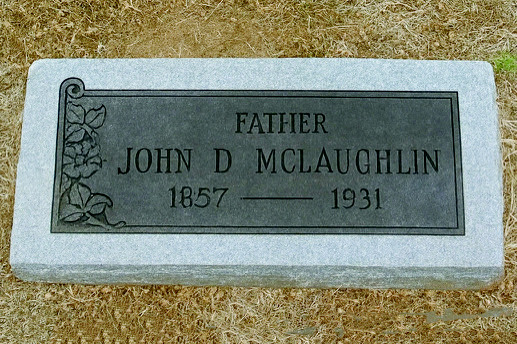
In the following years of hislife,JohnDukeMcLaughlin had several other minor run-ins with the law. Then, on August 1, 1887, he married Alice Dulcina Finch, a woman from the Woodville area. Together, they had seven children. To honor his legal team, McLaughlin named two of his sons after two of his lawyers. He named one son Oscar Benjamin McLaughlin after his lead attorney, Benjamin DuVal, and another son, Cravens McLaughlin, after Colonel William Murphy Cravens.
And so, the name of John Duke McLaughlin entered the lore of Indian Territory— a name both redeemed and stained, spared but never fully cleared. The defense— DuVal, Cravens, Barnes and Barnes—returnedhomefrom Fort Smith as men who had achieved what few could: pulling a man’s neck from Parker’s gallows and sending him back into the free air of the Territory.
But the whispers never stopped.