
Shortly after J. Hamp Willis founded Helen in 1900 (later renamed Kingston) … one of the first things Mr. Willis and the town folk wanted wasaschool.OnNovember1, 1900, a collection was taken to build a schoolhouse for the town of Helen. That school was completed on April 15, 1901. The new school building was a two-story, woodframe building.
The building was used as a school until about 1908, when the new brick Kingston School was constructed. This wooden school, a testament to its versatility, was also used as a meeting place for all the different churches in town before each could build their own buildings.
Community and civic organizations also used the building as a meeting hall. Those groups included Woodmen of the World, the Masons, Odd Fellows and the Ku Klux Klan. After the new brick school opened in 1908-09, the wooden building was converted into an opera house, showcasing its adaptability.
This building, a hub of various activities, was located onthecornerofSeventh andHarneyStreetsintoday’s Kingston. E. R. MacReedy was the first teacher and principal, followed by J.N. Davis in 1902, Professor Wickhum in 1904, Professor Nicholson in 1905, W.M. Abernathy in 1906 and John Vaughn in 1907. In 1907, Vaughn was hired as the first superintendent of the Helen/ Kingston School.
Vaughn was born in Knoxville, Tennessee, on November 29, 1885. During his youth,hisfamilymovedtothe Sherman, Texas area where he graduated from high school. When he began in Kingston, the school was still in the old wooden building.
Mr. Vaughn was instrumental in starting the high school classes in the fall of 1907. In 1907, he added the 9th grade, followed by the 10th grade in 1908, the 11th grade in 1909 and the 12th grade in 1910. In addition to creating the high school, Mr. Vaughn coached the football team, where he played quarterback and taught all the high school classes. Interestingly, in the early days of high school sports, male schoolteachers were allowed to play on the school sports teams with the students.
Vaughn was also responsible for adding the large brick school building at the north end of Main Street, where the current elementary school now sits. In 1908, Vaughn persuaded the citizens of Kingston to pass a fifteen-thousand-dollar bond package for the new school unanimously. Construction began in 1909 and was completed in 1910. The new building then served the community for many years as the center of education in Kingston.
In the fall of 1910, Mr. T.J. George was hired as principal, and six single women served as teachers. MyrtleWilliams,LizzieRock, Leta McAlester, Leora Carrol, Mable Carpenter and Irene Nicholson. Misses Carpenter and Nicholson had begun their teaching careers in Helen in about 1905. Other teachers under Mr. Vaughn included L.E. Hargrove, Clay Vedens, R. E. McCollum, Misses Ora Stanfield, Grace Rolofson, Edith Brown, Emilie Note, Alice Broadus, Roberta Broadus, Bonnie Mitchell, Ollie Rollins, Eunice Bunch, Alice Abernathy, Nina Waldrup and Letha Reed.
John Vaughn was also quite progressive for his time. In 1912, the Kingston School became one of the first in the new state to have women principals for both high and elementary schools.
In an article in the August 24, 1912, issue of the Kingston Messenger, the following was reported: “The Kingston Public School will begin its fall term on Monday, September 2nd, with its corps of teachers ready for an aggressive school year. At the head of the school as its superintendent willbeJohnVaughn, who has made of the school, one of the best in the state, and who is proud of the work that has been done. He has always exercised the most rigid and careful investigation oftheteachersunderhim and has never failed to get a corps of assistants who stood shoulder to shoulder with him in carrying out his plans for school work. This year there are two new teachers, who come with the highest possible recommendations and who are in every way fully equipped for their work.
Miss Grace A. Rolofson, who will be Principal of the school, comes from Marshall, Missouri from the Missouri Valley College. She holds the A.B. Degree, and is proficient in everything that go to make up a fully equipped and competent teacher in the position she will hold. She stands high in her profession, and will no doubt mane an able lieutenant for Supt. Vaughn. Aside from her abilities as a teacher, she is a young womanofchristianprinciples and social attributes that will be beneficial to our social life.
Miss Edith Brown, of Denison, will have charge of the Grammar School. She has been attending the East Central Normal, at Ada and acquainting herself with Oklahoma school methods and work and will come well prepared for her duties. She has the reputation of a good teacher, an estimable young lady, and will no doubt fit well in our school work.
Miss Ora Stanford, in the Intermediate, Miss Leila McCalester in the second primary, and Miss Mable Carpenter in the first primary departments, have been tried, and given perfect satisfaction, and the pupils in their room will be truly glad tomeetthemagain. Splendid progress was made in their roomsinthelastterm,andwe may only look for still better work in the next term.
Miss Irena Nicholson will again have charge of the ConservatoryofMusic,which means that this department will be efficiently managed this year. Miss Nicholson puts all her energy into her work, and as a consequence, her pupils are all well trained.
Our people have every reason to be proud of their splendid institution of learning. It is the best inducement we can offer to home seekers. A good school and churches are the best recommendation a town can have. The graduates from Kingston school who have taken the examination have easily secured first grade certificates. Out of 34 high school graduated in the county, 16 come from Kingston school. Its standing in the state is second to none in the efficiency of the work done by its pupils.”
The first graduation exercises wereinMay1911. Even though there were only six graduates, there was a fiveact senior play, 'The Merchant ofVenice.' Mr.Vaughn was the director. The play was on May 16, 1911. The baccalaureate was Sunday, May 18 and the commencement exercises were on May 22of1911. In1912,ninemore KHS students graduated.
Then,inMay1913,Vaughn was partly responsible for creating an organization that has become the longestcontinuously running school organization in state history. Vaughn and the graduates of 1911 and 1912 met in the school's high school room and organized the Kingston Alumni Association. Claud Click was elected president, Omar Brewster vice president, and Mabel Bailey and Bessie Flynt were chosen as secretaries. The 1913 seniors were the first to be initiated into the new alumni association.
This month, The Kingston Alumni Association, the oldest continuously active alumni association in Oklahoma, will celebrate its onehundred and eleventh year. Hopefully, John Samuel Vaughn will be forever remembered for contributing to this tradition that is second to none in the great State of Oklahoma.
In addition to being superintendent and teacher, Mr. Vaughn was a member of the town band, the worshipful master of the Kingston Masonic Lodge in 1913 and 1914, the chaplain of the first chapter of the Order of the Eastern Star which was organized in 1914, the city clerk for several years, leader of the literary and debate clubs, an ordained deacon and Sunday school superintendent, scoutmaster of the boy scouts, fire chief of thevolunteerfiredepartment and instructor of a weekly night class for adults.
In 1913, Mr. Vaughn married one of his former students, Miss Eunice Lewis, a1912KHSgraduateandthe daughter of Dr. E.F. Lewis, the first physician in Helen. John Vaughn and Eunice Lewis Vaughn were married for thirty-eight years and were together until he passed away in 1951.
In 1916, Vaughn was elected state senator for Marshall and Johnston Counties. After his election, he moved to Wapanucka in Johnston County. When he left the Kingston schools, he left behind forty-five graduates of KHS. In 1917 and 1918, he was invited back to Kingston todelivercommencementaddresses for both graduating classes.
In 1920, after four years in the state senate, Vaughan was appointed registrar and dean of Southeastern State Normal School, now Southeastern State University. While at Southeastern, he earned a bachelor’s degree from the University of Oklahoma in 1923 and served as acting president. During this time, Vaughn also served as the executive secretary of the Oklahoma Educational Survey.
In April 1927, Oklahoma Governor Henry Simpson Johnston appointed Vaughn as the Oklahoma Superintendent of Public Education, more commonly known as the State Superintendent of Schools. Vaughn was appointed to complete the unexpired term of M.A. Nash. He was then reelected for one full term. In all, Vaughn served as state superintendent from 1927 to 1936. Vaughn was the fourth state superintendent in Oklahoma history. During that same year, he served as the Director of the Oklahoma Educational Association.
Between 1917 and 1936, Vaughn served as the State Board of Education president, chairman of the State Library Commission, and vice president of the National Education Association. He also served as the chairman of the board of regents for the Northeastern Junior College, Miami, chairman of the board of regents for the Oklahoma College for Women in Chickasha, and chairman of the board for the EasternOklahomaCollegeat Wilburton.
In 1936, Vaughan was elected the ninth president of Northeastern State University by the State Board of Regents. One of the first items on his agenda was constructing a library building. Recruiting students was also a high priority, and collegesponsored basketball tournaments, debate contests, and interscholastic meets were instituted, bringing thousands of high school students to campus. Northeastern’s first High School Senior Day registered 500 graduating high school seniors. In 1937, Vaughn directed the formation of a public relations department to publicize the school and mobilize public support. In 1938, Vaughn oversaw the creation of the Northeastern Student Lyceum Bureau, which was formed in cooperation with the music and speech departments to furnish free entertainment services to schools and civic groups throughout the state.
During the Great Depression, Vaughn was concerned by the high drop-out rate among first-year students. So, he set up a freshman counseling service to help retain students contemplating withdrawal from school because of financial and emotional stress. However, World War II expanded Northeastern’s mission. By the end of the summer of 1942, students were enrolled in Northeastern’s Navy Civilian Pilot Training Program, the Enlisted Reserve Corps, and the Army Reserve Civilian Pilot Training program. Northeastern also provided 18 courses for special training designed to help the war effort. Vaughn was responsible for the addition of these various programs.
The Servicemen’s Readjustment Act, better known as the GI Bill, provided educational benefits for returning veterans. Vaughn took full advantage of this opportunity, and the GI Bill enormously impacted Northeastern’s growth, which continued with little interruption for 25 years. The return to peacetime conditions produced surplus military supplies, buildings, and equipment, which Vaughan purchased for the campus at low prices from military installments throughout the area.
During his tenure as President of Northeastern, Vaughnwasalsoamemberof the local Lions Club, Kiwanis Club, and Masons and vice president of the Muskogee Area Council of the Boy Scouts.
On January 21, 1951, Vaughan died at his home on campus from a blood clot in his heart. This event marked the end of an administration that doubled the size of the college’s physical plant despite the depression, World War II, and its turbulent aftermath. The results of his administration still stand today on the campus of Northeastern - the first two permanent dormitories, WilsonandHaskellHalls,the IndustrialArtsBuilding[now CASE building], the Center For Performing Arts, the Student Center [now the Administration Building] which was under construction at the time of his death, and the John Vaughan Library, named in his honor by the regents less than a month before his death. Vaughn served as President of Northeastern for fifteen years, from 1936 to 1951.
John Samuel Vaughn was so respected at Northeastern that upon his death, all classes and student activities were canceled and or dismissed during the week of his death to honor his life and service to the college and the state.
Vaughn was survived by his wife of thirty-eight years, Eunice Lewis Vaughn, and one daughter, Marice Vaughn Bean.
But for all his great accomplishments as a teacher, superintendent, university registrar, dean, president and state-wide elected officer, Vaughn may best be remembered for an incident during his time as the Kingston superintendent. As superintendent of Kingston Schools, Vaughn earned quite the reputation as a disciplinarian.
Legend tells that one day, a young boy became quite unruly and disruptive to the point that Vaughn decided that the boy needed a whooping. While Vaughn was retrieving his whip to administer thepunishment,the boy ran out of the classroom, out of the school building and then all the way to his house, where he hid under his bed.
Vaughn, whip in hand, gave chase. He ran after the boy and followed him all the way to the boy's house. Vaughnthenopenedthedoor andranintothehouse,where he encountered the boy’s mother. Heaskedthemother where her son was, and she told him the boy had run into his bedroom. Vaughn entered the boy’s room and found him hiding under his bed. He pulled the boy from under the bed and whipped him in the boy's house in front of the boy's mother. All without objection from the mom. It is reported that the boy was never a problem in school again.
We could probably use a few more men like John Samuel Vaughn. A true Renaissance Man.
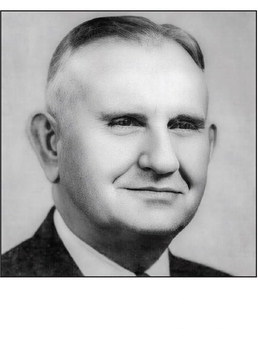
John S. Vaughn
Courtesy photo