
Across the southern edge of Oklahoma, where the wide Washita River once ran free and wild toward the Red, there existed a world now hidden beneath the waters. Towns once alive with the clatter of wagons, the laughter ofschoolchildren,thehum of gins, and the proud prayers of farmers stand silent today under the vast, glinting expanse of Lake Texoma.
The building of Denison Dam, completed in 1944, was a mighty work — a symbol of progress, of man’s dominion over nature, of safety bought aftertoomanyfloodshadtorn at the Red River valley. Yet it also brought sacrifice: the sacrifice of homes, histories, and dreams. In Oklahoma alone, proud towns such as Aylesworth, Woodville, Willis, Finchtown, Brownsville, McBride, Cumberland, and Enos were partially or entirely swallowed.
Once vibrant communities, these towns were sacrificed for the greater good of flood control and hydroelectric power generation. However, their histories remain an integral part of Oklahoma’s heritage.
The loss of these towns marked a significant transformation in the region’s landscape and history. While some residents relocated and establishednewcommunities nearby, the original sites of towns like Aylesworth and Woodville now lie beneath the lake’s surface, serving as silent reminders of the area’s past.
Each was a story. Each had a heartbeat. Each now lies entombed beneath the waters, remembered only in words, photographs, and fadingmemoriespassedfrom hand to hand.
In the grand, often tumultuous sweepofOklahomahistory, countless small towns rose and fell like the tides of an inland sea, bearing witness to the grit, ambition, and heartache of those who came to tame the frontier. Amongthesevanishedplaces is Aylesworth — a town born of promise, built on hope, and eventually sacrificed to the inexorable march of progress. Though today it sleeps beneath the waters of Lake Texoma, Aylesworth’s memory endures, whispering of a time when railroads, farms, and local spirit made even the smallest towns mighty in their way. Aylesworth stood as a crown jewel — small in numbers, perhaps, but rich beyond measure in spirit.
Aylesworth sprang to life in 1903, at the dawn of a new century, when the iron veins of the St. Louis, San Francisco and New Orleans Railroad pushed across the fertile lands of southern Indian Territory. The “Frisco,” as it was known, laid tracks eastward from Ardmore to Hugo, across the deep loamy fields where cotton grew tall and the prairie grasses rolled like waves in the wind.
Along that line, in 1902, a small but vital depot was built — Aylesworth. The famous little train, known affectionately as the “Dinky,” would puff its way across this route, carrying passengers and goods, news and dreams, into the heart of a growing land.
The town was named for Allison Leroy Aylesworth, a man whose legacy is written in the laws and lands of Oklahoma.
BorninWisconsinin1868, Aylesworth rose to national importance as Secretary of the Dawes Commission, the federal body responsible for negotiating the allotment of communal Native lands into individual ownership — a process meant to assimilate the Five Civilized Tribes into the American agrarian ideal, but one fraught with loss and controversy.
As secretary, Aylesworth played a crucial role in the administrative functions of the commission. His responsibilities included managing correspondence,maintaining records, and ensuring the proper documentation of agreementsandproceedings. One notable instance of his involvement was during the implementation of the Curtis Act of 1898, which extended the commission’s authority to proceed with land allotments without tribal consent. On the day the act was signed,Aylesworthcontacted Isparhecher, the principal chief of the Creek Nation, requesting the names of all members of the National Council and reminding him of the commission’s access to tribal rolls and records. From this, the government would dismantle centuries of communal landholding by seizing all reservation lands. Aylesworth’s diligent record-keeping helped produce the Dawes Rolls. These documents remain essential to genealogists and Native families even today.
In 1904, weary of Washington’s politics, Aylesworth resigned from the Dawes Commission and was later appointed as a special land inspector for the government. After holding that position for a few months, he resigned from his office and took a position with the Frisco Railroad. He returned to Indian Territory from Washington to handle townsite developments for the railroad. After working for the Frisco Railroad for several years, Aylesworth and his wife, Jesse Chambers Aylesworth, moved to Riverside County, California, due to his failing health. Allison Aylesworth died on June 21, 1918, at the age of 49 years.
The town's naming after him reflected the profound impact his administrative work had on reshaping the land and communities of the Indian Territory.
Set between Madill and Durant, nestled against the broad, life-giving waters of the Washita River, Aylesworth grew rapidly due to its position along the A. & C. Division of the Frisco Railroad. Two passenger trains ran daily, each way, offering residents excellent access to trade and travel.
At its zenith in the 1910s and 1920s, Aylesworth was hometobetween200and300 residents—a bustling little city by frontier standards. The town’s strategic location and fertile surrounding lands ensured steady and continuous growth, fostering a closeknit, industriouscommunity.
An hour’s ride by buggy from the Marshall County seat, Aylesworth was known acrosssouthernOklahomaas a lively, prosperous, and progressive little city. The town was blessed with a wealth of institutions that reflected its ambition.
The Washita Valley east of town was a wonder: rich, dark soil where corn stood like soldiers, where cotton bolls gleamed under the fierce summer sun, and where orchards and gardens flourished. Aylesworth’s economy was deeply rooted in agriculture.
Overelevenhundredbales of cotton were processed in a typical season, and local farmers frequently shipped out entire carloads of corn and hogs.
Westward lay the rolling prairies, perfect for cattle grazing. The open sky stretched blue and endless above the prairie grass, and in the mornings, the dew lay thick on the earth like a blessing. Major ranchers like N.H. Simmons and the Camden Brothers bolstered the town’s prosperity, shipping livestock, corn, and cotton by rail.
Aylesworth thrived on the back of its agriculture — and on the pride of its people.
TheFirstNationalBankof Aylesworth, chartered April 25, 1913, and managed by the able James N. King, offered farmersandmerchants a stable financial base. The Bank would later merge with the Durant National Bank in 1916, and through several further consolidations, ultimately become what is today First United Bank and Trust of Durant. In some sense, Aylesworth lives on today in that bank.
General stores such as those operated by F.H. Nash, W.L. Spikes, and W.E. Bass offered everything from dry goodstofarmingimplements, candy for children to muslin for pioneer women.
Two lumber yards, owned by D. Howard and J.D. Wilkens, supplied the timber that built homes, barns, fences, and dreams.
Cotton gins, run by Guinn & Spikes, worked tirelessly during harvest time, ginning over 1,100 bales in a typical year.
E.W. Hall’s blacksmith shop rang with the music of hammer and anvil, forging the very lifeblood of transportation and labor.
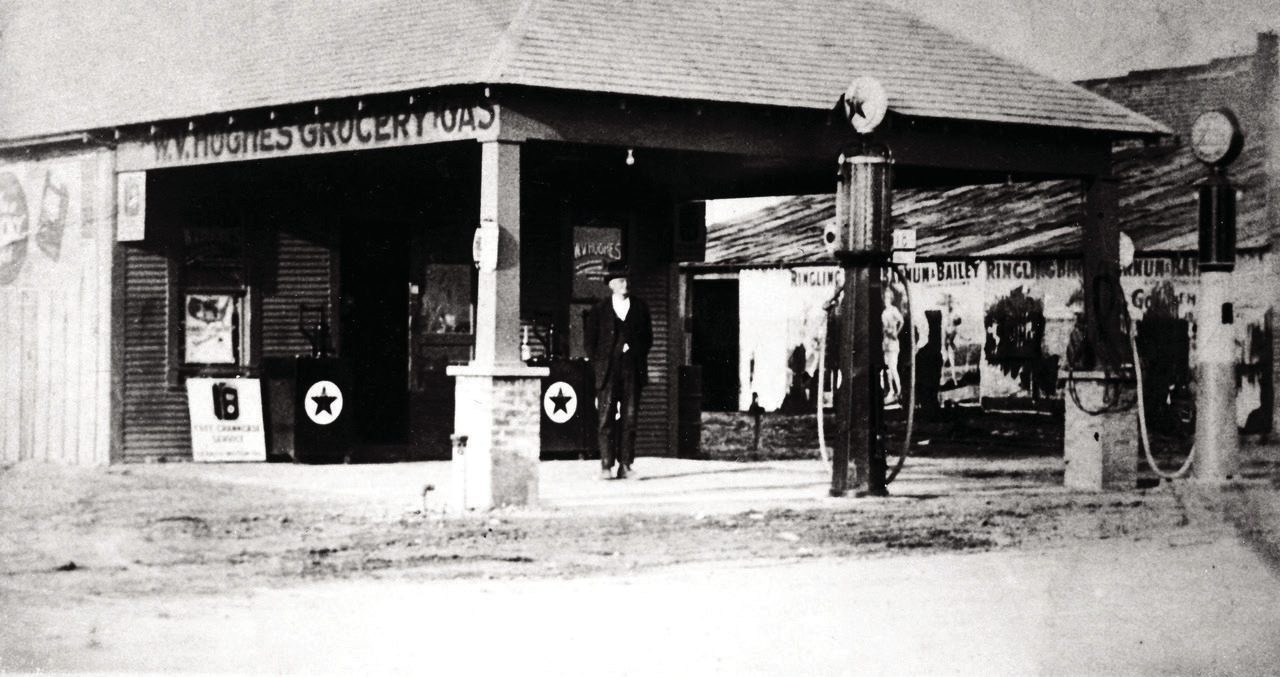
Hughes Grocery and Service Station, operated by W.V. Hughes, was a hub for provisions and fuel, as automobiles began to nudge horses aside. Hughes was your humble author’s maternal grandfather.
The City Drug Store dispensed medicine, while the Hotel, operated by J.F. Ross and his wife, was known across the county for its hearty meals and clean rooms.
Remarkably for a rural community, Aylesworth enjoyed excellent health standards, thanks to two capable physicians: Dr. Pain, a newcomer who quickly gained respect, and Dr. John A. Haynie, one of the earliest settlers in the area. Dr. Haynie was an esteemed physician and surgeon and was deemed one of the best physicians in the county. He was the longtime Secretary-Treasurer of the Marshall County Medical Society.
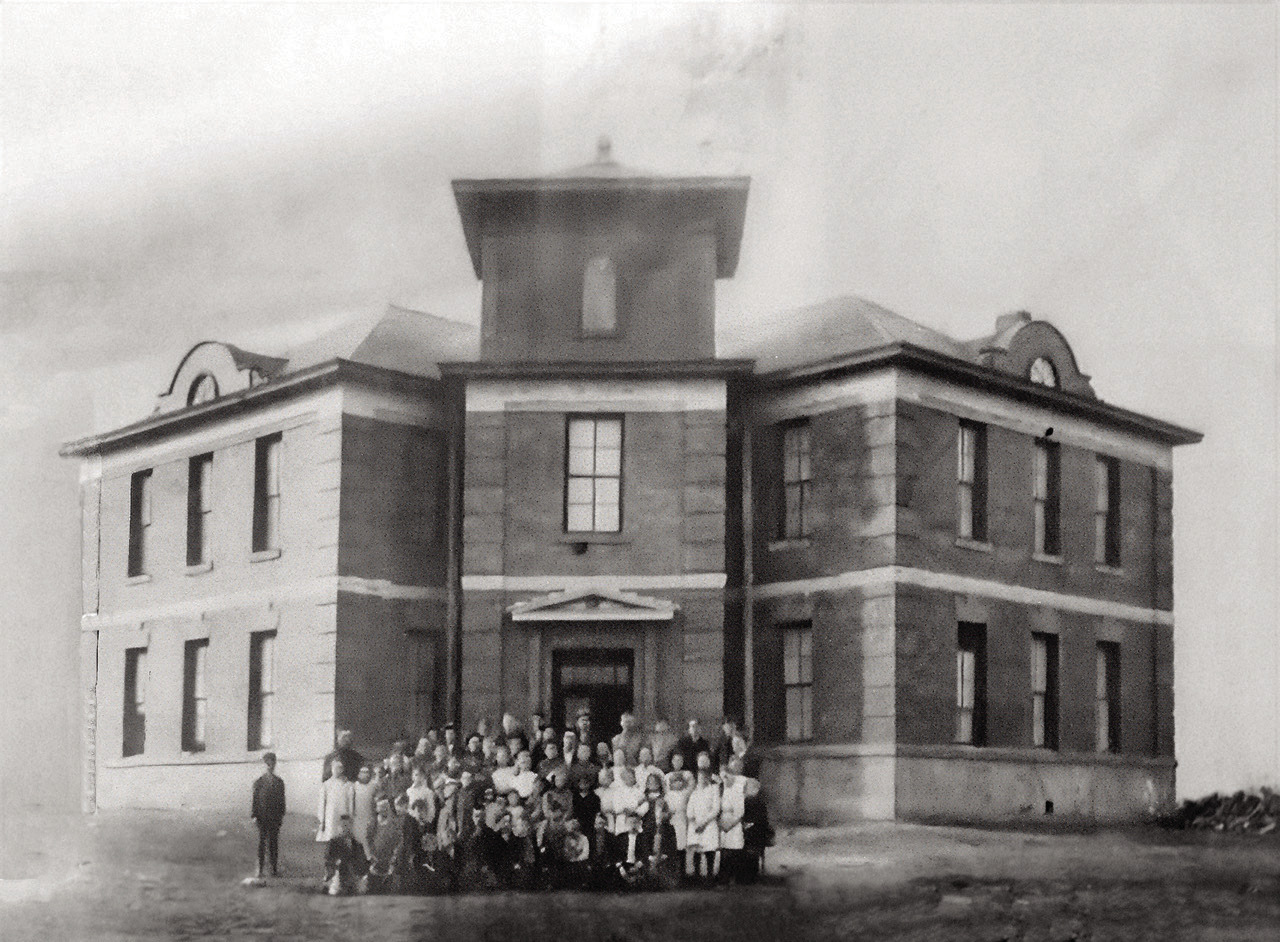
Education stood proudly in Aylesworth. Shortly after statehood, the town unanimously voted to issue bonds for a grand new $10,000 schoolhouse. Under the guidance of leaders like Professor J.T. Sneed, George S. Henry (my paternal grandfather), and Flora Scarborough, Aylesworth schools were among the best in Marshall County.
Religion, too, anchored the community. The Methodist Church held regular services, drawing farmers and merchants into fellowship and worship.
One unique institution set Aylesworth apart: the Aylesworth Prison Farm.
As part of Oklahoma’s broader penal philosophy, the state established the satellite prison farm where African American inmates could work the land.
At the Aylesworth Prison Farm, inmates cultivated cotton, corn, vegetables, and livestock under the watchful eyes of state supervisors. Their labor not only nourished the state’s prisons but also bolstered the economy of the surrounding area.
It was hard labor—days spent under the burning Oklahoma sun, hands thick withcalluses,backsbentwith toil—but it was considered preferable to life behind stone walls. The farm gave inmates a measure of dignity and purpose, and for some, the faint hope of redemption through honest work.
Yet even before the coming of the lake, hardship had visited Aylesworth.
The1920sand30sbrought drought and depression. The great Dust Bowl winds scoured the prairies, lifting the topsoil into angry, choking clouds. While the Oklahoma Panhandle bore the brunt of the severe drought and dust storms, the entire state, including the southern region, experienced devastatingeconomicandenvironmental consequences. Oklahoma faced a prolonged drought, leading to crop failures and livestock losses. Farmers around Aylesworth struggled to grow cotton and corn during the worst years (1934, 1936 especially). Soil erosion increased, though southern soils were somewhat more resistant than the Panhandle’s sandy topsoil. And many young men from Marshall County joined the Civilian Conservation Corps (CCC), sending money home because there were no jobs.
Thosewhostayedadapted as best they could: planting hardy crops, rotating fields, banding together in cooperatives, and clinging to one another for support.
Despite it all, Aylesworth endured — stubborn as mesquite, proud as a cotton field in bloom.
In 1938, the final blow fell. The U.S. Army Corps of Engineers announced that Denison Dam would be built across the Red River. Its mighty reservoir, Lake Texoma, would flood tens of thousands of acres, including the Washita Valley and Aylesworth.
Surveyors with clipboards and cold eyes came, measuring homes, fields, and dreams. Compensation was offered, but it could never truly pay for the loss of a lifetime’s labor. Some residents protested, but most knew the battle was lost. Sadly, appraisers sent by the U.S. Army Corps of Engineers used different standards when valuing Texas land vs. Oklahoma land. Texas land was often appraised at “best use” value for farming, ranching, and development. However, Oklahoma land, particularly tribal allotments or old Indian Territory grants, was appraised at “currentdepresseduse”value — meaning drought-stricken farmland was valued far less than its long-term worth.
In Texas, they assumed land would bounce back and stay valuable. In Oklahoma, they assumed the land was permanently ruined and paid less accordingly. Make no mistake—there was an undercurrent of bias at work. Many Washington bureaucrats, engineers, and officials in the 1930s and 40s looked downonruralsouthernOklahoma — seeing it as backward, poor, and expendable. Former tribal land areas, “Indian Territory,” carried a stigma of being “less valuable” in their minds. There was prejudice, pure and simple — economic, regional, and historical — that led to Oklahoma farmers being shortchanged compared to their Texas neighbors.
When the Denison Dam roseandLakeTexomaspread its waters, Texas landowners received payments that were often sufficient to rebuild homes, reestablish farms, and restart their lives. Oklahoma landowners, particularly around Aylesworth, Woodville, and Willis, were left with little — often too little to purchase comparable land elsewhere. Some rebuilt, but many simply left — drifting to cities, working in factories, and abandoning the land they had cherished. This created a deep and lasting wound in the memory of southern Oklahoma.
My maternal grandparents, who owned their own home, the W. V. Hughes grocery and service station, and some farmland, were paid so little for their properties that after the family moved to Kingston, they could only afford to rent a home and a space for a grocery store. From that point forward, the family lived well below the level they had enjoyed in Aylesworth. My family was not alone in this injustice.
By 1942, the exodus was underway. Churches held tearful final services. The school staged its last commencement. Businesses shuttered. Homes were moved, dismantled, or simply abandoned to the rising waters.
At Aylesworth High School, nine brave seniors — including Betty Jean Flynt (valedictorian) and Loverda White (salutatorian) — graduated in a final ceremony attended by the whole town. Reverand Coy Kirksey of Kingston gave the commencement sermon. Senator and future Oklahoma Governor Raymond Gary spoke of courage and sacrifice. Principal C.H. Gardner andSuperintendentGeneW. Flynt awarded diplomas.
Nine-tenths of the school district would soon be under water.
On the final day, the bells of Aylesworth rang for the last time.
Then came the waters.
By 1944, Aylesworth — its depot, school, homes, gins, farms, and prison farm — lay beneath the glinting expanse of Lake Texoma.
Yet memory is a stubborn thing.
In the years that followed, the old Aylesworth schoolhouse, perched above the waterline, became a beacon once more.
Under the leadership of Scoot Roberson of Ardmore and Mrs. Lena Swilling, annual reunions were organized. Hundreds of postcards weresenttoformerresidents.
Theygatheredwithbasket lunches under the Oklahoma sun, sharing old stories, old songs, old dreams.
“Uncle” Bud Harper, one of Aylesworth’s earliest settlers, spun tales of the days before fences, when the prairie stretched unbroken from Oakland to Governor Burney’s home. He recalled Jack Thomas’ general store, whereamanmightbuyasack of flour and a bolt of calico in the same breath.
Today, Lake Texoma serves as a vibrant hub of recreation and tourism. Yet, beneath its tranquil waters lie the remnants of Aylesworth. Fishermenoccasionallycatch glimpses of the past and report sightings of submerged foundations. When the lake level is low during drought, one can once again walk the old streets of Aylesworth and gaze upon the foundations and old bridge abutments.
Aylesworth may have disappeared from the land, but it lives on in the hearts and memories of those who came after. It serves as a testament to the courage, resilience, and spirit of the people who built it—and to the enduring human connection to the land, even when the land itself has vanished beneath the waves.
Aylesworth does not endure in stone or timber. It endures in the memories of sleighridesonmuddystreets; of school plays under oil lamps; of church picnics by the river; of harvest festivals and plow races; of cotton fields heavy with promise; of rail whistles echoing across the dawn.
It persists in the stubborn pride of the few who remain and remember. Sadly, only a handful of Aylesworth residents are left, and any graduates of Aylesworth High School who remain are at least 100 years old now.
Aylesworth is gone from the map, the fields, and the living earth.
Yet it lives. It lives wherever an old photograph is pulled from a drawer; wherever a story is told at a family gathering; wherever someone looks out across Lake Texoma and wonders what lies beneath.
It lives in the spirit of those who built it — in faith, labor, and hope.
And it shall live beneath the still, silent waters of Lake Texoma as long as memory endures.
Andaslongasmemoryendures, Aylesworth endures.