
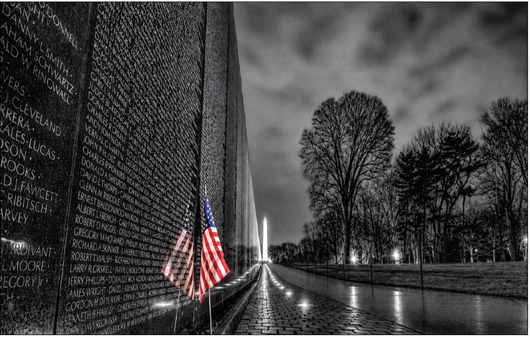
For this week’s column, I am stepping away briefly fromtheongoing“Courtroom Lion of Oklahoma” series. The old trials, legendary lawyers, dusty courtrooms, and forgotten legal battles of Indian Territory will still be waiting next Thursday. But some subjects deserve the right of way over even the strongest stories from the past. Some moments require us to stop what we are doing, step back from ordinary routines, and remember something larger than ourselves.
MemorialDayhasalready passed as this edition reaches readers. The holiday itself is now three days behind us. The long weekend crowds have already gone home from the lakes. The grills have cooled. The flags that fluttered along Main Street have begun disappearing from storefronts and porches. Summer in Oklahoma has quietly resumed its yearly march forward beneath the growing heat and green light of late May.
And yet perhaps there is something fitting about speaking of Memorial Day after the noise has faded. Because remembrance was never supposed to last only one Monday. Every year, Memorial Day arrives wrapped inside the unofficial beginning of summer. There are crowded highways stretching south toward the lake country. There are children laughing beneath sprinklers in front yards. There is the smell of charcoal drifting acrossneighborhoodsatdusk while families gather on patios and beneath shade trees. Ice chests rattle in truck beds. Folding chairs appear beside baseball diamonds and fishing docks. The entire country seems to exhale after winter and spring and lean toward summer.
But beneath all of that rests something older, quieter, and infinitely heavier.
Memorial Day is not fundamentally aboutsummer.It is not truly about cookouts or sales advertisements or long weekends. At its heart, Memorial Day is about absence. It is about the chair at the supper table that remained forever empty. It is about the young wife standing at a train station for the last time. It is about telegrams arriving in small towns. It is about folded flags carefully handed to trembling hands. It is about mothers who spent decadesafterwardwondering what their sons would have looked like as they grew old. It is about young Americans who walked into smoke, mud,oceans,jungles,deserts, mountains, freezing winters, artillery fire, machine gun fire and burning skies and never came home again.
In many respects, Memorial Day may be one of the mostsacredcivicobservances in the American tradition because it asks modern people to do something increasingly difficult in an age consumed by noise and distraction: remember.
Its roots reach back into the terrible aftermath of the Civil War. By 1865, America had endured a conflict so devastating that nearly every community in the nation carried scars from it. More Americans died in the Civil War than in nearly all other American wars combined. Entire towns lost generations of young men. Churches became hospitals. Farm fields became graveyards. Courthouse squares carried lists of sons who would never again walk home down familiar roads.
Andinthequietaftermath of that bloodshed, grieving families began decorating graves with flowers. There was no grand political movement behind it at first. No federal commission. No carefully designed national observance. It rose naturally out of sorrow itself. Mothers placed flowers beside headstones. Widows tied ribbons around markers. Former soldiers gathered to honor fallen comrades. In both the North and the South, communities began holding ceremonies of remembrance that became known as “Decoration Day.”
There is still disagreement amonghistoriansabout exactly where Memorial Day first began. Numerous towns claim some role in its creation. But perhaps that uncertainty itself says something important. Memorial Day was born not from politics but from grief. Ordinary Americans simply felt compelled to honor their dead.
In 1868, General John A. Logan formally called for a national day of remembrance. He selected May 30 because flowers would be blooming across much of the country. Graves would be decorated. Names would be spoken aloud once more.
And names matter. For decades, Memorial Day remained tied primarily to the memory of Civil War soldiers. But history did not stop. America marched into new wars, and new generations of casualty lists appeared in newspapers. Young men boarded troop trains, troop ships and aircraft. Some came home old before their time. Some never returned at all.
The trenches of World War I. The beaches of Normandy. The black volcanic sands of Iwo Jima. The frozen mountains of Korea. The suffocating jungles of Vietnam. The deserts of Iraq and Afghanistan.
With every generation, Memorial Day expanded until it became a national day of remembrance for all Americans who died in military service. The list became painfully long.
Of the 1,308,468 men and womenwhodiedinAmerica’s wars, a majority did not die by bullet or blade. Many were killed by something they could not see and did not yet fully understand: disease. Smallpox ravaged General George Washington’s Continental Army. Dysentery, diarrhea, malaria, and other invisible enemies accounted for much of the suffering and death in earlier wars. In the Civil War, disease claimed more lives than combat itself. For every three men killed in battle, five more died of disease.
That is one of the haunting truths of American military history. Death did not always come with the sound of cannon or rifle fire. Sometimes it came in a fevered tent. Sometimes it came through polluted water. Sometimes it came in the close quarters of a military camp, on a transport ship, or in a field hospital where doctors and nurses fought enemies they could not yet truly name.
President Woodrow Wilson was warned that sending ships full of soldiers to Europe during the Spanish flu pandemic could produce a catastrophe. It did. American soldiers crossed the ocean not only into war, but into one of the deadliest pandemics in modern history. Some men survived training, the voyage, and the battlefield, only to fall ill.
Even the Revolutionary War, remembered in portraits of Washington crossing the Delaware and patriots standing against British regulars, has its own buried chapters of sickness and loss. In 2019, construction workers digging a foundation in Lake George, New York, discovered the remains of 44 Continental soldiers and two children. By the time the workers realized they had uncovered human remains, approximately 70 dump trucks’ worth of dirt had already been removed. What remained were only “bits and pieces.”
After years of study, researchers came to believe those remains belonged to members of Benedict Arnold’s army. They had made an arduous journey toward Quebec City, only to be defeated by the British. On the trek home, weary troops broke out in smallpox. Too weak to continue, many were transported by boat to a hospital at the southern end of Lake George. Roughly 1,000 died. Their bodies were buriedinmassgravesaround Lake George.
That story may not be as familiar as Valley Forge or Yorktown. Those soldiers may not have names known to schoolchildren. But they wereasAmericanasanywho ever wore the uniform. They endured hunger, sickness, defeat, cold, exhaustion, and death in the earliest days of the nation.
The Civil War took the greatest toll of all American wars because nearly all who died on both sides were Americans. There were more casualties at the Battle of Gettysburg, fought July 1 through July 3, 1863, than intheRevolutionaryWarand the War of 1812 combined. And even in that terrible conflict, where fields such as Antietam, Shiloh, and Gettysburg became bywords for slaughter, disease remained a relentless killer.
The youngest American to die in battle was Charles King, a 13-year-old drummer boy in the 9th Pennsylvania Volunteers. He died of wounds sustained during the Battle of Antietam, the bloodiest single day in American military history. He was a child. Yet his name belongs to the long, sorrowful roll of Americans who gave all they had before they had even lived long enough to become men.
There are moments in history when numbers cease behaving like numbers and instead become wounds. More than 400,000 Americans died in World War II alone. More than 58,000 died in Vietnam. Thousands more died in Korea, Iraq, Afghanistan, and conflicts now remembered only dimly by much of the public.
Every white cross at Normandy, every marble stone at Arlington, every weathered military grave in rural Oklahoma cemeteries represents an entire universe interrupted.
A marriage never completed. Children never born. A father who never returned from war to hold his son. An old age never reached.
That is the true landscape of Memorial Day.
It is also important to remember that Memorial Day isdistinctfromVeteransDay. Veterans Day honors all who served in uniform. Memorial Day honors those who did not come home alive. It is devoted specifically to the war dead. That distinction matters because Memorial Day asks Americans to confront not simply service but sacrifice at its most final and irreversible level.
In small towns especially, Memorial Day once carried a solemnity that modern America sometimes struggles to preserve. Across Oklahoma, families dressed carefully and traveled to cemeteries carrying flowers in their hands. In many places, Decoration Day became one of the largest gatherings of the year. Entire extended families would arrive at country cemeteries in pickup trucks and old sedans carrying rakes, hoes, flowers, and water buckets. Graves would be cleaned carefully by hand. Weeds were pulled. Curbs were repainted. Faded flowers were replaced with fresh arrangements. Children wanderedamongheadstones while older relatives quietly told stories about people buried there.
Many country churches planned annual “cemetery homecomings” around Memorial Day itself. Dinner tables stretched beneath trees. Fried chicken, beans, pies, and cakes covered long rows of tables while families reunited beneath the hot Oklahoma wind. Veterans’ organizations stood in formation while buglers played “Taps.” Local ministers prayed over rows of graves. Rifle volleys cracked through the stillness. Elderly veterans removed their caps while mothers wiped tears from their eyes.
Forgenerations,Memorial Day in rural Oklahoma was not merely a holiday. It was a ritual of memory.
Even now, one can still see remnants of those old traditions continuing quietly across Oklahoma. Tiny Americanflagsappearbeside gravestones. Elderly veterans remove their hats as they pass memorials. Families cleanheadstonesbeneaththe late May sun. Thereisdignity in those rituals because they connect generations. They remind the living that they inherited something they themselves did not build alone.
Modern Americans sometimes speak casually about freedom as though it were automatic and permanent. History teaches otherwise. Nations are fragile things. Civilizations are not guaranteed to endure. Liberty itself is fragile. Every right Americans enjoy — speech, worship, assembly, elections, due process, trial by jury, private property, the right to criticize government openly without fear — ultimately survivesonlybecausegenerations were willing to defend it when called.
And that defense has never been free.
One of the great tragedies of modern life is how quickly sacrifice can disappear beneath the noise of modern culture. News cycles erase themselves by the hour. Entire wars pass across television screens and social media feeds with astonishing speed.Yesterday’sheroescan vanish from public attention almost overnight. Memorial Day stands against that forgetting. It insists that memory itself is a moral obligation.
The old cemeteries understand this better than we do.
Walk through the military section of almost any cemetery, and the dates alone tell the story of America. Here lies a boy from World War I who died at twentyone. Nearby rests a Marine killed in the Pacific in 1945. A few rows away lies a soldier who never came home from Vietnam. Then another from Iraq or Afghanistan. Different generations. Different wars. Yet all connected by the same final act of service.
The silence there feels different somehow.
And here in Marshall County, that remembrance stands carved in granite on the south side of the courthouse lawn in Madill.
Most residents know exactly where the VFW Memorial stands. They have passed it countless times. Lawyers hurry past it into court. Jurors cross nearby. Citizens walk by it while handling deeds, taxes, tags, and licenses. During community events, children play only yards away. Traffic moves past continuously while the memorial stands silent beneath Oklahoma skies.
Its placement beside the courthouse itself carries meaning, whether most people consciously realize it or not. Courthouses represent law, citizenship, rights, elections, juries, self-government, and the entire constitutional frameworkuponwhich American civic life rests. The memorial stands beside that courthouse because the men whose names are carved there died defending the very system the building represents.
And because human beings are creatures of habit, something familiar can slowly become invisible.
The memorial becomes part of the landscape itself. Not intentionally ignored. Simply absorbed into daily life.
ThatiswhyMemorialDay matters so much. It forces us to stop walking long enough to truly see what stands there.
Because those granite slabs are not merely pieces of stone. They are interrupted lives. They are young men from Marshall County who once attended local schools, worked farms and stores, sat beside family supper tables, courted sweethearts beneath Oklahomaskies,andplanned futures they never received.
Human beings have always erected memorials to their dead. Ancient civilizations raised stone markers above battlefields and burial grounds because memory fades unless it is preserved. Granite becomes a defense against forgetting. Monuments are not truly built for the dead. The dead no longer need them. Memorials are built for the living, so future generations will pause long enough to remember what others sacrificed before them.
That is exactly what stands on the courthouse lawn in Madill.
Oklahoma itself had only recently become a state when the First World War erupted across Europe. Statehood came in 1907. Marshall County itself was still young whenAmericaenteredWorld War I in 1917. Many of the roads here were still dirt. Much of the county still carried the roughness of frontier transition. Yet from this young county came young men willing to cross oceans into a war most of them could scarcelyhaveimaginedwhen they were boys growing up here.
The World War I dead memorialized on the courthouse lawn are: George R. Anderson Homer R. Armstrong Charles Boggess Burke Lewis Elmer Coffman Humphreys Colbert Clarence Denton Monte C. Fuller William Grider Robert Marion Halford Ross Herndon Lorenzo D. Herron Noble Lewis Budd Lewis Grover Samuel McConathy Fred McCarr Russel Marion Meyer Leslie L. Mitchell Joe R. Parker W. A. Sperry Benjamin Criswell Ward James Bertie Wheeler Today, those names may sound distant. But once they were living boys from Marshall County,suddenlythrust into the mechanized horror of trench warfare. Some likely had never traveled far from southern Oklahoma before finding themselves standing in Europe amid artillery fire, poison gas, mud, machine guns, influenza, infection, exhaustion, and death on an industrial scale previously unknown to mankind. Many Americans who survived the First World War returned home carrying memories they rarely spoke about for the remainder of their lives. Some who came home physically survived but emotionally never entirely left those battlefields behind.
For families back home in Marshall County, news traveledslowlyandpainfully. Parents waited for letters that sometimes took weeks to arrive. Newspapers carried casualty reports from distant battlefields. Then, sometimes, came the telegram. Entire neighborhoods understood the meaning of a Western Union messenger stopping in front of a particular house. Curtains moved. Neighbors watched silently from porches. In small communities, grief rarely remained private for long.
Then came another war, even larger.
World War II swept entire generations into uniform. Farms emptied. Schools lost students. Churches prayed over casualty lists printed week after week in newspapers across America. Gold Star banners appeared in windows. Railroad depots filled with tearful farewells. In small towns all across Oklahoma, mothers and fathers listened anxiously to radio reports from places they had never seen before — Guadalcanal, Anzio, Bastogne, Normandy, Okinawa.
Nearly every family in America was touched somehow.
The phrase “Gold Star family” itself emerged from that era. During both World WarIandWorldWarII,families often displayed service flags in their windows. A blue star represented a loved one servinginuniform.Butifthat servicememberdied,theblue star was replaced by a gold star. Entire neighborhoods understood immediately what that gold star meant. It meant a family inside that home had paid the highest price war could demand.
Marshall County did too. The World War II dead memorialized in Madill are: Jesse Leroy Adams Hollie Akin James C. Allen Dewey R. Barrett Frederick R. Beane Jr. Paul Blevins A. J. Brokeshoulder Jess F. Brown Enoch D. Caney R. D. Churchwell Melvin Coble Arnold W. Deshazer Joyle R. Deering Robert L. Duckett Hugh Allen Derrick William Paul Easley Garland Shelby Eddington Bennie Erickson Lonnie D. Everett John A. Freeman Justus M. Gilbert Clovis Gadberry James Hass Earl Harris Jr. Alvin Hartley Ray Lowe “Pete” Hendrix Tom J. Jackson Jourdan M. Johnson Jack Jones William Kenneth Lawson Emerson Lewis Thomas N. Lord Thomas W. Lowery Warren HarrellMcCutcheon Elsworth Montgomery Moses Jack Morgan Arthur Nelson Olen Ray Porter George E. Potts Woodrow Rabon Oliver M. Simpson Gerald O. Stout Clarence E. Stafford John Ables Scott Plez J. Scott Clarence D. Self Karl F. Setlife E. B. Setliff Don Southworth Lonnie Story Jackson Tom Aubrey E. Teague Charles F. Tillman A. J. Tumey Edwin K. Tutton Marvin Lester Vick Ralph Everett Ward Olan Wilkerson Horace Scott Williams Robert Ray Wilson It is difficult even to read so many names together without feeling the emotional weight of what this county lost. Some died on Pacific islands beneath unbearable heat and artillery fire. Others likely fell somewhere amid the forests and hedgerows of Europe. Some vanished beneath oceans. Some died in aircraft falling from the sky overdistantcontinents.Some were scarcely more than boys when they died.
And the deaths did not end with them alone. War deaths ripple outward across generations. Parents buried children they expected to outlive them. Young wives became widows before they had scarcely begun married life. Some fiancées never married afterward. Younger brothers grew up in homes permanently shadowed by absence. Some family names disappeared from entire branches of family trees because one young man never came home from war.
The dead vanish in a moment. The grief often lasts for decades.
Then came Korea, often called “The Forgotten War,” though it was never forgotten by the families who lost loved ones there. Korea brought bitter cold, mountain warfare, and brutal fighting far from home. Marshall County’s Korean War dead are: Paul A. Black Harold Gayle Eugene Grubbs Roy G. Kizer Kenneth E. Walker Then Vietnam. For an entire generation, Vietnam became both a battlefield overseas and an argument here at home. Yet amid all the politics and protests, young Americans still carried rifles through jungles and died far from Oklahoma. Thesoldiersthemselvesoften bore burdens far heavier than the political debates surrounding them. Many returned to a country deeply divided about the war itself. Many others never returned at all.
Marshall County’s Vietnam dead are: Carl Hershel Ballard Joe Ritchard Jordan Rory Antonio Madden AndevenmodernAmerica has continued adding names to the long roll of sacrifice. The wars following September 11 carried another generation into danger. Young Americans once again found themselves fighting in deserts and distant cities half a world away from Oklahoma.
Marshall County’s dead from Operation Iraqi Freedom are: Clint E. Williams Michael E. Thompson One of the most haunting truths about war is how young the dead almost always are. Old photographs tell the story painfully well. Freshfacesstarebackforever from yearbook portraits and military photographs. Smiles untouched by age. Teenagers become soldiers before they had fully become adults. Farm boys from Oklahoma. Small-town athletes. Young mechanics, ranch hands, students, and dreamers.
War memorials freeze them permanently at the age theydied.Theyneverbecame old men sitting at café counters on Main Street, drinking coffee. They never became retired farmers watching grandchildren play in the yard. Some never even reach the age at which many people first marry or begin careers.
Their futures remain permanently unfinished.
Lincoln understood the meaning of all this long before Marshall County even existed. Standing at Gettysburg in November 1863, four months after one of the bloodiest battles ever fought on American soil, Lincoln arrived at a landscape still scarred by death. Thousands of men had died there. Much of the battlefield still carried fresh graves. Families across America were still receiving newsofsonswhowouldnever come home.
Lincoln spoke for barely two minutes. And yet those few words became immortal because they distilled the meaning of sacrifice with almost biblical power. Standing among the graves of the fallen, he declared that the living could never truly consecrate the ground because “the brave men, living and dead, who struggled here, have consecrated it far above our poor power to add or detract.”
Then came the line that still echoes through American history more than 160 years later.
“They gave the last full measure of devotion.”
That is what stands silently written between the lines of every name carved upon the courthouse memorial in Madill. The last full measure. Not politics. Not slogans. Not internet arguments. Sacrifice.
Perhaps that is why old cemeteries feel different during Memorial Day week. The silence itself seems heavier somehow. Tiny American flags flutter beside stones while families move quietly among the graves beneath the Oklahoma sun. Elderly veterans remove their hats. Buglers play “Taps.” And for a brief moment, even restless children often grow quiet without fully understanding why.
Because somewhere deep inside, people still recognize the sacred when they encounter it.
And Memorial Day remains sacred. Not because of war itself, but because of love.
“Greater love hath no man than this,” Christ said in the Gospel of John, “that a man lay down his life for his friends.”
Those words have echoed across military funerals for generations because they speak to something eternal about sacrifice. The men whose names stand carved upon the courthouse lawn were not abstractions. They were human beings. They laughed, worried, hoped, loved, dreamed, and planned futures exactly as we do now.
And then history called their names.
Tonight, after the courthouse empties and traffic thins across Madill, the memorial will still stand quietly beneath the Oklahoma night. The courthouse lights will glow softly nearby. Cars will pass. People will hurry home. Summer will continue moving forward exactly as it always does.
And there in the darkness, the names will remain. Fixed in granite. Enduring long after the voices of those young men themselves have faded from living memory.
This week, even though Memorial Day has passed, it is still worth remembering. Slow down when passing the courthouse lawn. Read the names carefully. Say a few aloud.
Because people who forget their dead eventually forget themselves.
And perhaps, in the end, remembrance is the least the living owe those who gave everything.