

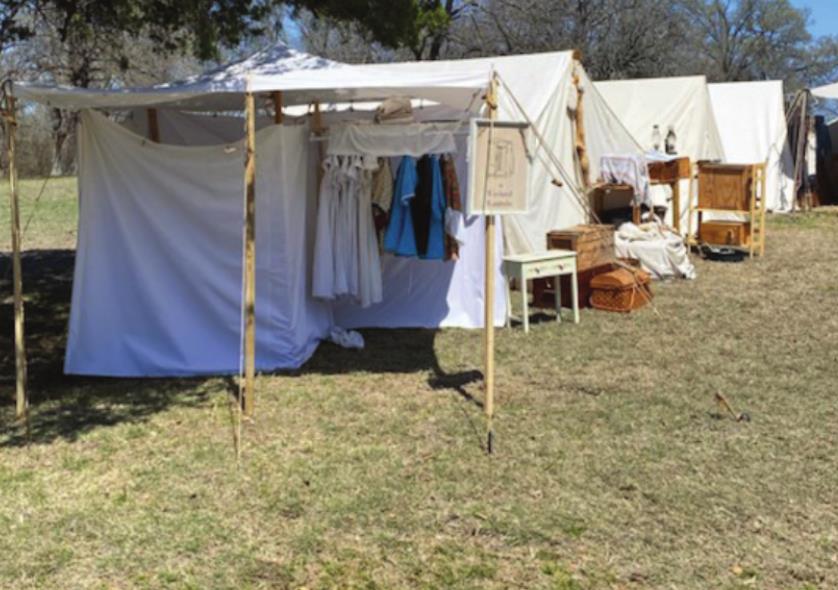
The annual Fort Washita Rendezvous in Chickasaw Country was held on March 30, 31, and April 1 ,2, 2022. The event was a hit and had a record turnout partly due to the beautiful weather and the welcome appeal of the grand historical Fort Washita site.
It is impossible to mention an event taking place at Fort Washita without including a bit of history about the site. That leads us down the path to some facts about the Fort.
Fort Washita is listed on the National Register of Historic places and is designated as a Historic Landmark, but the campus is much more than a register, it is a wealth of history for the Chickasaw Nation. The Fort was established in 1842 as the most southwest military post of the United States.
The mission of the post was to maintain peace for the Chickasaw and Choctaw Nations within their new lands pursuant to treaty obligations, according to the Chickasaw Nation website. One might ask the question, protect from what? Perils that these people faced in the new land included, attacks from plains Indians, the Texas militia, as well as diseases of which they had not previously faced.
Other perils included white trappers, mountain men, traders, all sorts of outlaws and some in-laws. When the Civil War broke out in 1861, the fort was abandoned by the United States. However, it was then occupied by the Confederates and massive destruction occurred during the war.
In looking around the grounds, one can see the remains of many large buildings. The floor and foundations are still intact and a few of the rock structures are still standing. Thanks to some needed rescue and preservation, a few of the original log buildings remain close to the same as when they were originally constructed and are currently in a usable state.
Once the visitors drive through the guard shack one could see the vast number of vehicles that were parked uniformly, thanks to many event volunteers. One parking attendant mentioned that at 2:00 p.m., over four thousand people were on the site making it the largest attendance on record. She also stated that Friday was another record-breaking attendance day.
The first booth was a food booth. It offered Pashofa with pork and corn, a common staple of the Chickasaw and Choctaw people at that time and still today. A glance around the rolling hills revealed many tents and teepees made of a white canvas that people were camping.
There were also timeperiod activities. Some of the many activities and demonstrations included a Chickasaw stomp dance, jewelry making, leather working, ax and bow and arrow practice, arrowhead making, fiddle playing, mule-pulled wagon rides, blacksmithing, wool weaving and spinning.
There were a multitude of food trucks that were serving an array of dishes. The Dulcimer Club had a large tent where they assembled for some grand music, a fully outfitted first aide tent, and many vendors with a vast number of handmade items.
The event has taken place annually for many years. Jeannie Johnson said she has attended and sold her handmade jewelry and goods over 30 years. Sadly, this year’s event was her last one because she is retiring and become an attendee and simply camp and enjoy the event in the future.
David Masopust had camp set up near the creek with authentic gear including a campfire and all the authentic equipment that would have been used in mid 1800. In the past Masopust had a dug-out canoe as well as skinning and tanning leather, but this year he sat up a camp that would make a person feel like they had stumbled back about 175 years.
The Fort Washita Rendezvous was a definite hit this year and remains one of the greatest preservations of a time that molded the Chickasaw and Choctaw Nations into the greats they are today. One might say the event captures the good old days and when many say were better times.
Either way, a big old Indian Nation thank you is in order to all the volunteers who helped in the event and a gentle thank you to Mother Nature for not being too harsh on such a wonderful piece of American history. Many guests had the opportunity to experience a close reminder of what the fore fathers and mothers experienced.