
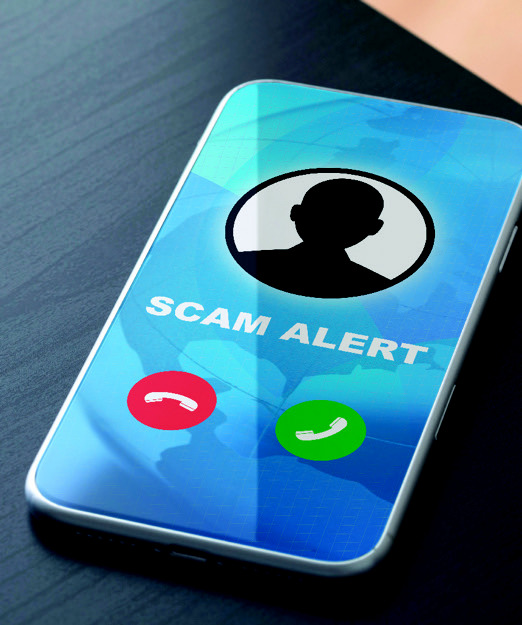
For years, there have been people out there who try to scam others out of their hard earned money. Over the past several years, scams have become more prevalent.
Thereseemstobemultiple factors that play into the reason whytherearemorescams now than in the past. Many people attribute increased online activity. The internet gives scammers a wider reach, easier access and wider literacy gaps - meaning, they target older people who aren’t really tech savvy.
The advances in technology also seem to spur the scammers. AI has become prevalent and makes it harder for people to spot a scam. The AI creates more convincing phishing emails, AI-generated voice calls and fake videos.
The AI also creates a more sophisticated impersonation of a victim’s family member or colleague. This makes it difficult to distinguish between the real person and the imposter.
Cryptocurrency makes it easy for scammers. Between the anonymity and how easy it is to transfer funds, this allows scammers to take the money and run.
Scammers also use emotional manipulation to dupe their victims. Often, emotional triggers like fear, greed or a sense of urgency is enough to make the victim bypass logical thinking and make a rash decision. Many times, scammers lead the victims to believe that a loved one is in danger.
Many of the scams circulating are imposter scams, investment scams, travel scams, tax-related scams, emergency scams, tech support scams, sweepstake scams and fake check scams.
The imposter scam is where somebody pretends to be a trusted friend or family member of the victim or government officials. Investment scams are where scammers create fake investment opportunities and use AI and deepfake technology -an instance where they take a video of somebody’s face and impose it on another’s body - to make them appear legitimate. This is where cryptocurrency is typically used.
Travel scams are where a “company” will offer toogood- to-be-true travel deals. These often occur during the holidays or high travel times.
One of the scams that is gaining steam is the driver scam.Thisiswherethescammer contacts somebody who does rideshares for compa- nies like Lyft or Uber.
The scammer tells the victim that they had a complaint from somebody who cancelled a ride because the one who showed up was not the correct person or vehicle listed on the app.
The scammer gains the victim’s trust because the scammer knows the victim’s last pickup and the name of the cancelled trip. Once they gain the victim’s trust, they tell the victim that they need to sign into their bank account to verify who they are. Sincethescammerknowskey information, the victim signs into their banking information and, voila, the scammer has access to the victim’s bank account.
Other rideshare scams are when they ask the driver to take them to a different destination then originally requested. The new destination is further and would cost more or the scammer can complain to the company that the driver didn’t take the correct route.
Something else that a scammer might do to a rideshare driver is cancel the ride midroute.Thescammerthen hopes that the driver doesn’t notice that the ride was cancelled, then, the driver doesn’t get paid.
With all of the scams circulating, it is important to learn tricks on how to not become a victim. People can visit consumer. ftc.gov to learn more aboutwhatscammersdoand the jargon they use.